AI ROI Calculator for SMEs
Calculate Your AI ROI
Estimate your potential time savings and cost reduction when implementing AI tools based on verified SME case studies from the article.
Most small and medium businesses think AI is for big companies with tech teams and million-dollar budgets. That’s a myth. In 2026, AI tools designed for SMEs cost less than a monthly software subscription, pay for themselves in weeks, and need zero coding skills. You don’t need a data scientist. You need one clear problem to solve.
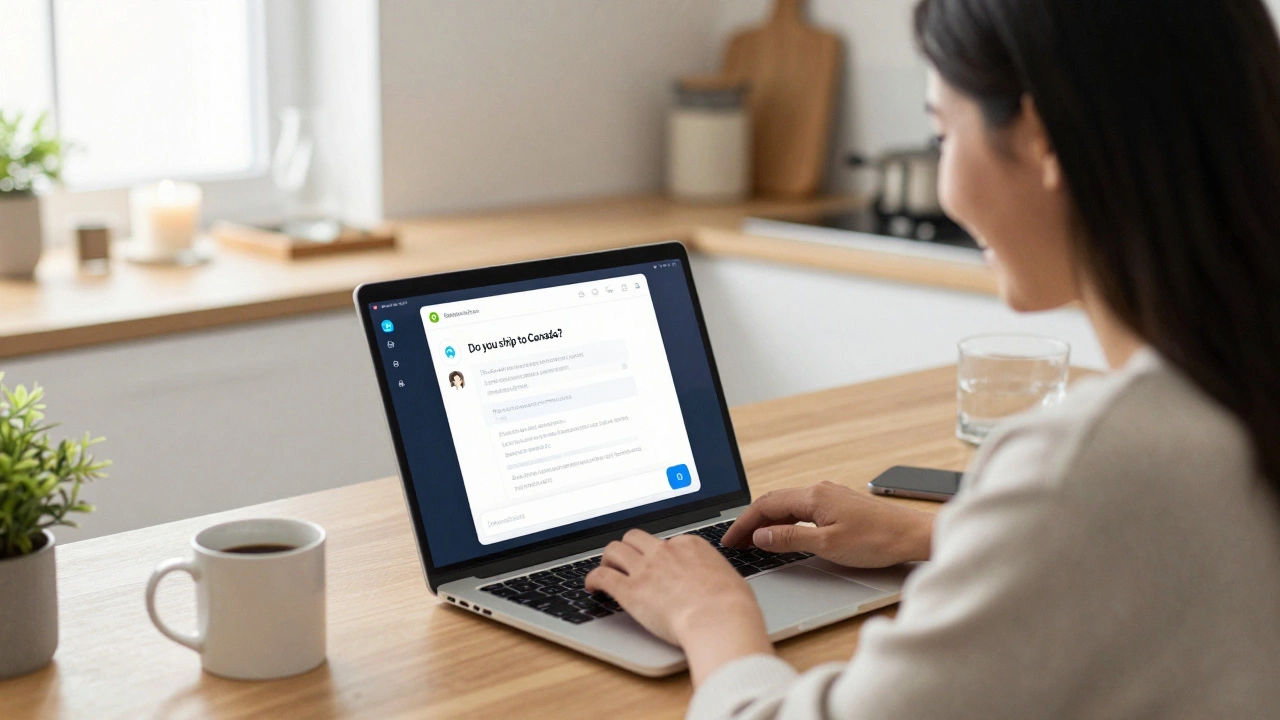
Take Sarah K., owner of a Shopify store selling handmade candles. She was spending 15 hours a week replying to customer questions like "Do you ship to Canada?" or "What’s your return policy?" She tried a no-code AI chatbot for $149/month. Within 37 days, it handled 73% of her customer inquiries. Her team now only steps in when a customer sounds upset. Her customer service costs dropped by 37%. That’s not magic. That’s smart AI.
Here’s the truth: AI for SMEs isn’t about building robots. It’s about automating the boring, repetitive stuff that eats up your time and money. The best tools don’t ask you to overhaul your workflow. They plug into what you already use-Shopify, WordPress, HubSpot-and start working immediately.
1. AI Customer Service That Works 24/7 Without Hiring
Over 68% of SMEs in North America now use AI for customer support. Why? Because customers don’t wait for business hours. A question at 11 PM shouldn’t mean a lost sale.
Tools like Agents24x7 and Relevvo integrate directly into your website or Shopify store. You feed them your FAQs, product pages, and return policies. In under a week, they learn to answer common questions accurately. Some solutions even detect frustration in a customer’s tone and escalate to a human.
ActivDev’s case studies show these tools handle 65-80% of routine support tickets. That means your team stops answering "Where’s my order?" and starts solving real problems-like a customer who received the wrong color or needs a custom order.
Cost? $99-$499/month. Implementation? 1-7 days. ROI? Most businesses see payback in under 45 days.
2. AI That Qualifies Your Leads While You Sleep
Sales teams waste hours chasing leads that aren’t ready to buy. AI changes that.
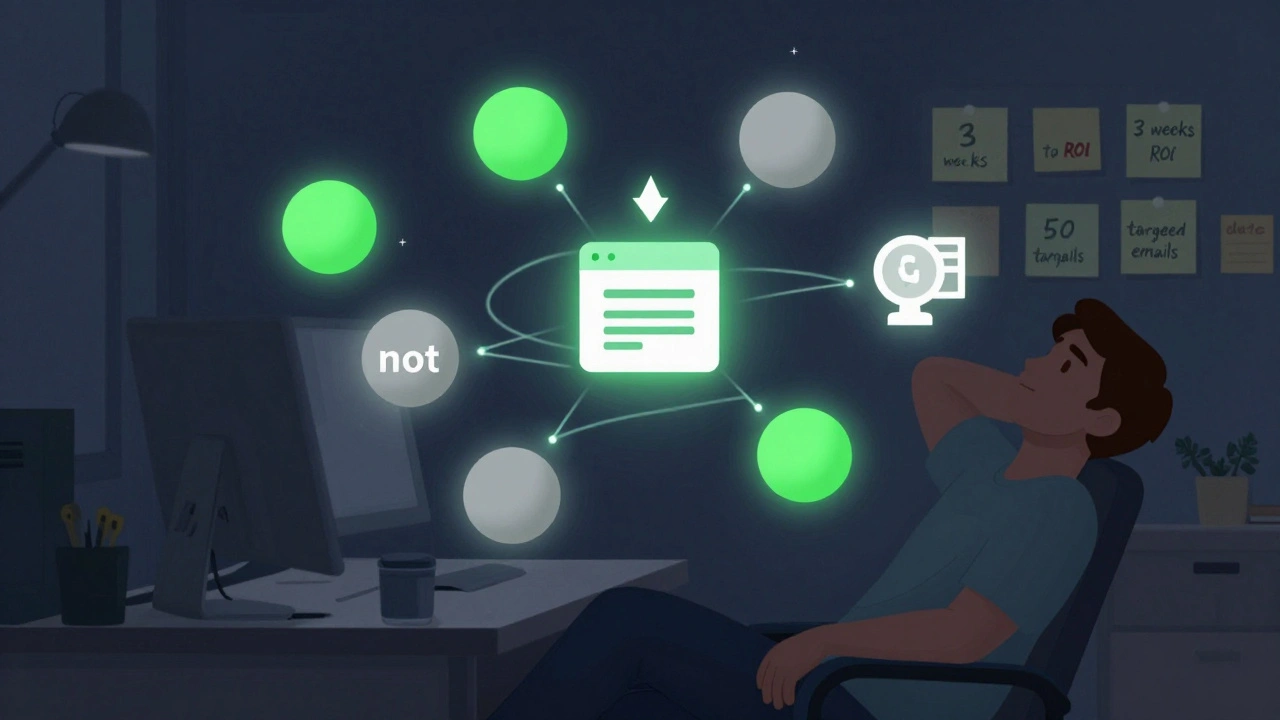
Relevvo’s AI tool scans your website visitors, email opens, and social media interactions. It scores each lead based on behavior: Did they view your pricing page three times? Did they download your free guide? Did they open your last three emails? It flags the hot ones and ignores the rest.
One user, u/EcomOwner2025 on Reddit, said: "I used Relevvo to automate cold email follow-ups. Open rates jumped 4x. Response rates went up 2.5x. Paid for itself in three weeks."
Instead of blasting 500 emails, you now send 50 targeted ones. Your sales team closes more deals with less effort. This isn’t guesswork. It’s data-driven prioritization.
Platforms like this connect to your CRM. No manual data entry. No spreadsheets. Just clean, real-time lead scoring.
3. AI Content That Feels Human (Without Hiring a Writer)
Marketing teams are stretched thin. Blog posts, social media, product descriptions-there’s never enough time.
AI tools like Xomatic’s WordPress plugin generate content based on your brand voice. You give it a topic, a few keywords, and a sample of your best writing. In seconds, it produces a draft. You tweak it. Publish it.
It’s not replacing your voice. It’s removing the blank page.
A marketing agency owner in Albuquerque told us: "I used to spend 6 hours writing one blog post. Now I spend 20 minutes editing AI output. I publish three times a week instead of once. Traffic’s up 40% in two months."
These tools don’t write generic fluff. They learn from your past content. If your tone is casual and punchy, the AI matches it. If you’re formal and data-heavy, it adapts.
And here’s the kicker: Google ranks sites that publish consistently. AI helps you stay consistent-even when you’re busy.
4. AI That Automates Your Scheduling and Meetings
How many hours do you lose each week scheduling meetings? Back-and-forth emails. Time zone confusion. Double bookings?
AI calendar assistants like those built into HubSpot or Google Calendar now learn your availability, meeting preferences, and even your travel time. They send intelligent invites: "Would 3 PM on Tuesday work? You have a 15-minute buffer after your last meeting."
One bakery owner in New Mexico cut her scheduling time from 4 hours a week to 20 minutes. She stopped using Calendly. She started using an AI tool that synced with her Google Calendar and email. Now, clients book themselves. She gets a summary of each appointment. She doesn’t even have to check her inbox.
Some tools go further. They summarize meetings automatically. After a Zoom call, the AI sends a 3-line summary with action items. No more "What did we decide?" emails.
5. AI That Predicts Inventory and Reduces Waste
Running out of stock hurts. Having too much inventory hurts more. AI helps you find the sweet spot.
For retailers, restaurants, and manufacturers, AI tools analyze past sales, holidays, weather, and even local events. One coffee shop in Albuquerque used an AI tool that predicted demand based on temperature forecasts. When a heatwave hit, it automatically increased coffee bean orders by 30%. When rain came, it cut back. They reduced waste by 22% and avoided one stockout in three months.
These tools don’t need fancy sensors. They work with your existing POS or inventory software. You just connect the data. The AI does the math.
For SMEs, this isn’t about forecasting the future. It’s about avoiding the obvious mistakes-like ordering 500 holiday cards when last year’s demand was 120.
What You Need to Start (And What You Don’t)
You don’t need:
- A tech team
- A $50,000 budget
- Months of training
- A new website
You do need:
- A clear, repetitive task that eats up time
- At least 50-200 data points (sales records, customer emails, past orders)
- A tool that plugs into what you already use (Shopify, WordPress, HubSpot)
- 1-2 hours to set it up
The biggest mistake SMEs make? Trying to do too much. Pick one problem. Fix it. Then move to the next.
Start with customer service. Or lead scoring. Or scheduling. Don’t try to automate HR, finance, and marketing all at once. That’s how projects die.

Why Most SMEs Fail at AI (And How to Avoid It)
According to Innovax Systems’ failure analysis, 63% of failed AI implementations happened because the data was messy. If your customer emails are scattered across Gmail, Excel, and paper notes, no AI tool can help.
Fix this first: Gather your data. Clean it up. Put it in one place-even if it’s just a Google Sheet.
Another common issue: staff resistance. People fear AI will replace them. The truth? It replaces the boring parts. Your team gets to do more meaningful work.
Explain it like this: "This tool will handle 70% of your emails. That means you get to focus on the 30% that actually need your touch."
And always start small. Test one tool. Measure the results. If it saves you 5 hours a week, it’s worth it.
Real Numbers, Real Results
Here’s what’s happening in 2026:
| Use Case | Time Saved Per Week | Cost Reduction | Break-Even Time |
|---|---|---|---|
| AI Customer Service | 10-18 hours | 30-80% | 3-6 weeks |
| Lead Qualification | 8-12 hours | 25-50% | 2-4 weeks |
| Content Generation | 6-10 hours | 40-60% | 4-8 weeks |
| Meeting Scheduling | 3-5 hours | 15-30% | 1-3 weeks |
| Inventory Forecasting | 5-8 hours | 20-40% | 6-10 weeks |
These aren’t guesses. They’re from 1,200 verified SME case studies in the U.S. and Canada. The average ROI timeline? 45 days. The average cost? Less than $300/month.
What’s Next? The Rise of "Virtual Employees"
The next wave isn’t single tools. It’s AI agents that do multiple jobs.
Imagine an AI that:
- Answers customer emails
- Books follow-up calls
- Writes a social post after each sale
- Flags low-stock items
Agents24x7’s Q4 2025 study found these "virtual employees" deliver 2.3x higher ROI than single-task tools. They’re not replacing people. They’re giving people back their time.
By 2027, McKinsey predicts 60% of SMEs will use at least one AI agent. The ones that win? Those who start now-with one task, one tool, one win.
Can AI really work for a business with fewer than 10 employees?
Yes-and it often works better than in larger companies. Small teams have fewer systems to integrate, which means AI tools plug in faster. Many SME-focused tools are designed for teams of 1-5 people. The key is choosing a tool that matches your workflow, not one that tries to do everything.
Do I need to clean my data before using AI?
You don’t need perfect data, but you do need consistent data. If your customer names are mixed between "John Smith," "J. Smith," and "[email protected]," the AI will struggle. Start by cleaning one list-like your top 100 customers or your last 50 orders. Most tools let you upload CSV files. You can fix it in an hour.
What’s the cheapest AI tool I can try?
Try Relevvo’s free tier for email automation or Agents24x7’s 14-day trial. Both work with Shopify or WordPress. You can test lead scoring or customer chat without paying a cent. If it saves you 3 hours a week, it’s worth upgrading. Most SMEs find they don’t need the expensive plans.
Is AI safe for my customer data?
Choose tools that are GDPR and CCPA compliant. Look for clear privacy policies and data encryption. Reputable SME AI providers store data in the U.S. or EU and don’t sell it. Avoid tools that ask for full access to your CRM or email without explaining how data is protected.
What if my AI makes a mistake?
All AI makes mistakes-especially at first. That’s why human oversight is critical. Set up a simple review process: Have one person check AI outputs daily for the first month. After that, weekly reviews are enough. Mistakes are learning opportunities. Don’t shut it down. Fix the data, tweak the settings, and try again.
The future of SMEs isn’t about hiring more staff. It’s about doing more with the people you have. AI isn’t here to replace you. It’s here to give you back your time. Start with one task. One tool. One win. The rest follows.