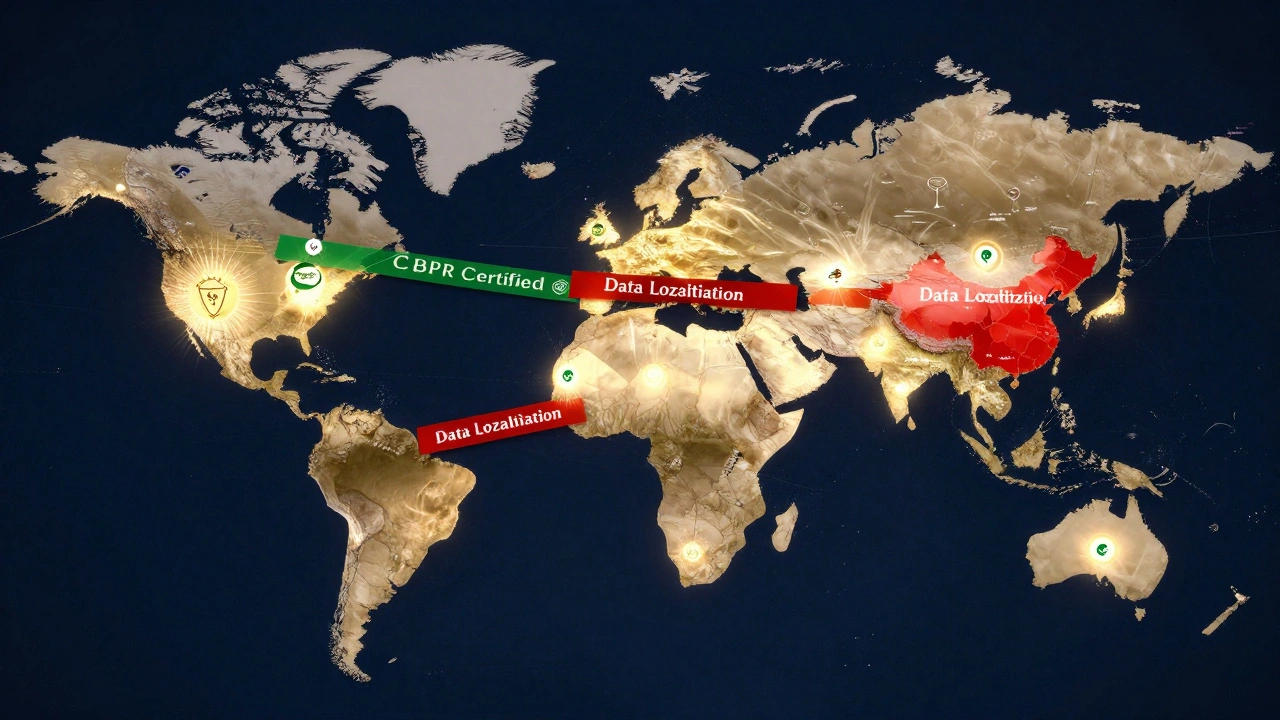
Global Finance: How Trade Wars, Sovereign Funds, and Currency Moves Shape Your Money

When we talk about global finance, the system of cross-border money flows, investment strategies, and economic policies that connect nations through capital. Also known as international finance, it's not just about Wall Street or the IMF—it's about how a seafood ban in China can crash a Japanese fishing town, or how a U.S. interest rate change makes investors borrow money in Japan to buy tech stocks. This isn't abstract theory. It's what’s in your grocery bill, your paycheck, and your retirement account.

Behind every big move in global finance, the system of cross-border money flows, investment strategies, and economic policies that connect nations through capital. Also known as international finance, it's not just about Wall Street or the IMF—it's about how a seafood ban in China can crash a Japanese fishing town, or how a U.S. interest rate change makes investors borrow money in Japan to buy tech stocks. is a hidden game of power. Take the dollar carry trade, a strategy where investors borrow low-interest currencies to invest in higher-yielding U.S. assets, then hedge against currency swings. Also known as currency arbitrage, it's how hedge funds make billions while ordinary people feel the ripple in their mortgage rates. Or look at sovereign wealth funds, state-owned investment pools that manage billions from oil, minerals, or trade surpluses to buy global assets. Also known as national investment funds, they’re shifting away from tech stocks—not because tech is weak, but because they’re tired of putting all their eggs in one basket. These aren’t random decisions. They’re reactions to trade wars, sanctions, and broken rules.

And when rules break down? That’s where international law, the set of treaties and courts meant to govern how nations interact, especially in disputes. Also known as public international law, it's the legal framework that sounds powerful but can’t force China to lift a seafood ban or make the U.S. pay up after breaking a trade deal. The ICJ, the United Nations’ top court for resolving disputes between countries. Also known as World Court, it’s like a referee with no authority to call a timeout. It can rule that a country broke the law—but if that country is powerful enough, it just walks away. That’s why tariffs, sanctions, and trade bans are the real tools of power today.

What you’ll find here isn’t just news. It’s the blueprint. You’ll see how tariff scenarios for 2026 will hit your wallet, why Japan lost $800 million overnight because of a single trade move, and how countries are trying to build accountability into pandemic treaties so they can’t just ignore health emergencies. These aren’t distant events. They’re the same forces shaping inflation, job markets, and investment risks right now. This collection cuts through the noise—showing you who wins, who loses, and why it matters to you.

Currency Hedging for Corporates: Contract Structures to Stabilize Cash Flows in Volatile FX Markets
Jeffrey Bardzell 31 March 2026 0 Comments

Currency Hedging for Corporates: Contract Structures to Stabilize Cash Flows in Volatile FX Markets

Discover how multinational corporations stabilize cash flows using advanced currency hedging strategies. Learn about forward contracts, natural hedging, and modern technology that protects margins in volatile markets.

Commodity Price Scenarios: Energy and Metals Volatility in a Security-Focused World
Jeffrey Bardzell 30 March 2026 0 Comments

Commodity Price Scenarios: Energy and Metals Volatility in a Security-Focused World

Explore the 2026 commodity price scenarios focusing on energy and metals volatility driven by security-centric geopolitics. Analyze diverging outlooks for oil, natural gas, copper, and gold amid shifting regulations.

EM Currency Outlook 2026: Real-Yield Leaders After Inflation Adjustments
Jeffrey Bardzell 28 March 2026 0 Comments

EM Currency Outlook 2026: Real-Yield Leaders After Inflation Adjustments

Explore 2026 emerging market currency outlooks focusing on real-yield advantages after inflation adjustments.

Climate Finance Mobilization: Closing the Investment Gap for Mitigation and Adaptation
Jeffrey Bardzell 27 March 2026 0 Comments

Climate Finance Mobilization: Closing the Investment Gap for Mitigation and Adaptation

Explore the massive gap between available climate finance and actual needs. Learn how public and private sectors interact to fund mitigation and adaptation projects globally.

Global Banking Stress Indicators: NPL Trends, Capital Buffers, and Contagion Pathways
Jeffrey Bardzell 21 March 2026 0 Comments

Global Banking Stress Indicators: NPL Trends, Capital Buffers, and Contagion Pathways

Global banking systems appear stable in 2026, but hidden stresses in NPLs, shrinking interest margins, and shadow lender exposure are building. The next crisis won't be a bank run - it'll be a quiet cascade of defaults, cyber disruptions, and regulatory gaps.

Corporate Treasury in 2025: Hedging, Liquidity, and Counterparty Risk Best Practices
Jeffrey Bardzell 19 March 2026 0 Comments

Corporate Treasury in 2025: Hedging, Liquidity, and Counterparty Risk Best Practices

In 2025, corporate treasury is no longer about counting cash-it’s about predicting, protecting, and using it strategically. Real-time visibility, automated hedging, AI-driven forecasting, and ESG-aligned finance are now the norm for top-performing treasuries.

Sovereign Risk Repricing: How Debt-to-GDP Dynamics Shape Emerging Market Capital Access
Jeffrey Bardzell 18 March 2026 0 Comments

Sovereign Risk Repricing: How Debt-to-GDP Dynamics Shape Emerging Market Capital Access

Sovereign risk repricing determines how easily emerging markets access capital. Rising debt-to-GDP ratios trigger higher borrowing costs, hurting both governments and private businesses. Markets react faster than rating agencies, making transparency and credibility critical.

Insurance and Catastrophe Bonds: How Climate Risk Is Priced in Reinsurance Markets
Jeffrey Bardzell 18 March 2026 0 Comments

Insurance and Catastrophe Bonds: How Climate Risk Is Priced in Reinsurance Markets

Catastrophe bonds are transforming how climate risk is priced in reinsurance markets, shifting billions in disaster exposure from insurers to global investors. With premiums falling but returns still strong, they’re becoming a cornerstone of modern risk finance.

Global South Representation: Voice, Voting Power, and Fairness in International Institutions
Jeffrey Bardzell 4 March 2026 0 Comments

Global South Representation: Voice, Voting Power, and Fairness in International Institutions

The Global South is reshaping global governance by demanding fair voting power in institutions like the IMF and UN. From BRICS expansion to South Africa’s ICJ case, developing nations are no longer asking for a seat at the table - they’re building their own.

FX-Linked Supply Contracts: How to Protect Margins in International Procurement
Jeffrey Bardzell 28 February 2026 0 Comments

FX-Linked Supply Contracts: How to Protect Margins in International Procurement

FX-linked supply contracts help businesses protect profit margins by tying international purchase prices to real-time exchange rates. This prevents currency swings from disrupting budgets, inventory, and supplier relationships.

Ukraine’s Governance Challenges: How Corruption Scandals Undermine Post-War Reconstruction and Aid
Jeffrey Bardzell 27 February 2026 0 Comments

Ukraine’s Governance Challenges: How Corruption Scandals Undermine Post-War Reconstruction and Aid

Ukraine’s post-war recovery is at risk as high-level corruption scandals, like the $110 million Operation Midas case, divert critical aid funds, erode international trust, and strengthen Russian influence through stolen money and compromised institutions.

Digital Trade Rules: Data Localization, Privacy Regulations, and Cross-Border Data Flows
Jeffrey Bardzell 24 February 2026 0 Comments

Digital Trade Rules: Data Localization, Privacy Regulations, and Cross-Border Data Flows

Digital trade rules are fragmenting global commerce. Data localization laws, privacy regulations, and conflicting cross-border data rules are creating legal traps for businesses. Here’s how companies can survive-and thrive-in 2026.