Arctic Shipping Time Calculator
The Northern Sea Route cuts shipping time between Asia and Europe by up to 40% compared to the Suez Canal. As sea ice melts faster than predicted, this strategic waterway is becoming increasingly important for global trade and military control.
According to the article, "The Northern Sea Route, running along Russia's northern coast, is now a lifeline for Moscow. It cuts shipping time between Asia and Europe by up to 40% compared to the Suez Canal. But Russia doesn't want just trade—it wants dominance."
The Arctic isn’t what it used to be. Ten years ago, it was a frozen backwater-remote, quiet, and mostly ignored by global powers. Today, it’s a frontline in a new kind of cold war. As sea ice melts faster than scientists predicted, Russia and NATO are racing to control what’s becoming one of the most strategic regions on Earth. This isn’t about conquering ice. It’s about controlling the future of shipping, energy, and nuclear deterrence-all unlocked by warming waters.
Russia’s Arctic Turn: From Development to Defense
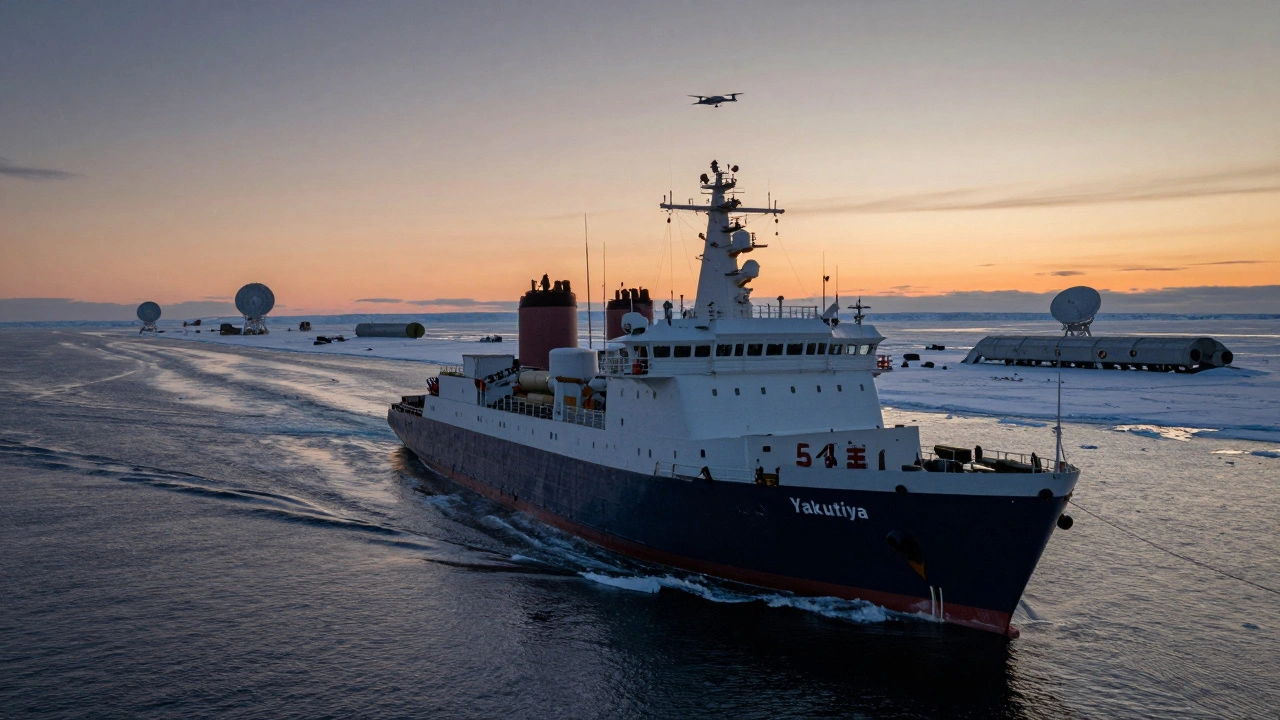
Russia didn’t wait for permission. After its invasion of Ukraine in 2022, Moscow shifted its entire Arctic strategy. No longer focused on economic development or scientific cooperation, Russia now treats the region as a military bastion. It reopened Cold War-era airfields, rebuilt deep-water ports, and deployed nuclear-powered icebreakers like the Yakutiya in early 2025. This isn’t just about clearing paths for cargo ships. It’s about controlling them.The Northern Sea Route, running along Russia’s northern coast, is now a lifeline for Moscow. It cuts shipping time between Asia and Europe by up to 40% compared to the Suez Canal. But Russia doesn’t want just trade-it wants dominance. Every icebreaker, every radar station, every satellite constellation is part of a larger plan: to make the Arctic a zone where Russia calls the shots. And it’s working. In 2023, Russia passed new laws giving its military full authority over navigation in Arctic waters, effectively turning international shipping into a state-controlled operation.
Behind this buildup is a doctrine from the 1970s called the "bastion" strategy. It’s simple: protect your nuclear submarines in heavily guarded waters. Russia’s ballistic missile subs are now hidden under ice, ready to strike from the North. And they’re not alone. Russia has tested nuclear-powered cruise missiles over the Arctic, using the region as a live-fire range. These aren’t theoretical weapons. They’re real. And they’re operational.
NATO’s Slow Start: Arctic Sentry and the Gap in Response
NATO didn’t ignore the Arctic. But it didn’t move fast enough. While Russia was rebuilding bases, NATO was debating. It wasn’t until February 2026 that NATO officially launched Arctic Sentry-a coordinated military initiative led by Joint Force Command Norfolk. The name sounds official. The reality? It’s reactive.Arctic Sentry combines exercises like Norway’s Cold Response and Denmark’s Arctic Endurance. Tens of thousands of troops are involved. They’re training for cold-weather combat, undersea warfare, and logistics in terrain where temperatures drop below -40°C. But here’s the problem: NATO still doesn’t have a unified Arctic command. No single headquarters. No permanent bases. No dedicated funding stream.
Finland and Sweden joining NATO in 2023 should have changed everything. Suddenly, NATO’s northern border stretched from Norway to the Barents Sea. But instead of ramping up presence, NATO doubled down on diplomacy. Russia saw that hesitation. And it acted.
NATO’s vulnerability isn’t just in numbers-it’s in infrastructure. Undersea cables that carry military communications? Russian submarines can cut them. Ports that supply NATO forces? They’re far from home, poorly defended, and vulnerable to sabotage. Russia doesn’t need to fire a shot. It just needs to make NATO’s logistics fail.
The China Factor: A Silent Partner in the North
Russia isn’t acting alone. In 2025, Russian and Chinese naval vessels began joint patrols north of Alaska-right where U.S. and Canadian radar systems are weakest. These aren’t just goodwill missions. They’re intelligence-gathering ops. Satellites, sonar arrays, and electronic surveillance gear are being tested side by side. NATO’s top military commander warned in late 2025 that this cooperation is aimed at "undermining alliance cohesion" in the High North.China doesn’t have Arctic territory. But it has money, technology, and ambition. It’s investing in Russian ports. It’s buying Arctic shipping rights. And it’s using its Belt and Road Initiative to build ice-class vessels that could one day carry cargo through the Northern Sea Route. For Moscow, this is a win-win: China gets access. Russia gets a shield against Western pressure.
For NATO, it’s a nightmare. A two-front Arctic threat-Russia with its nukes and infrastructure, China with its economic leverage-isn’t just a possibility. It’s already here.
Climate Change: The Real Weapon
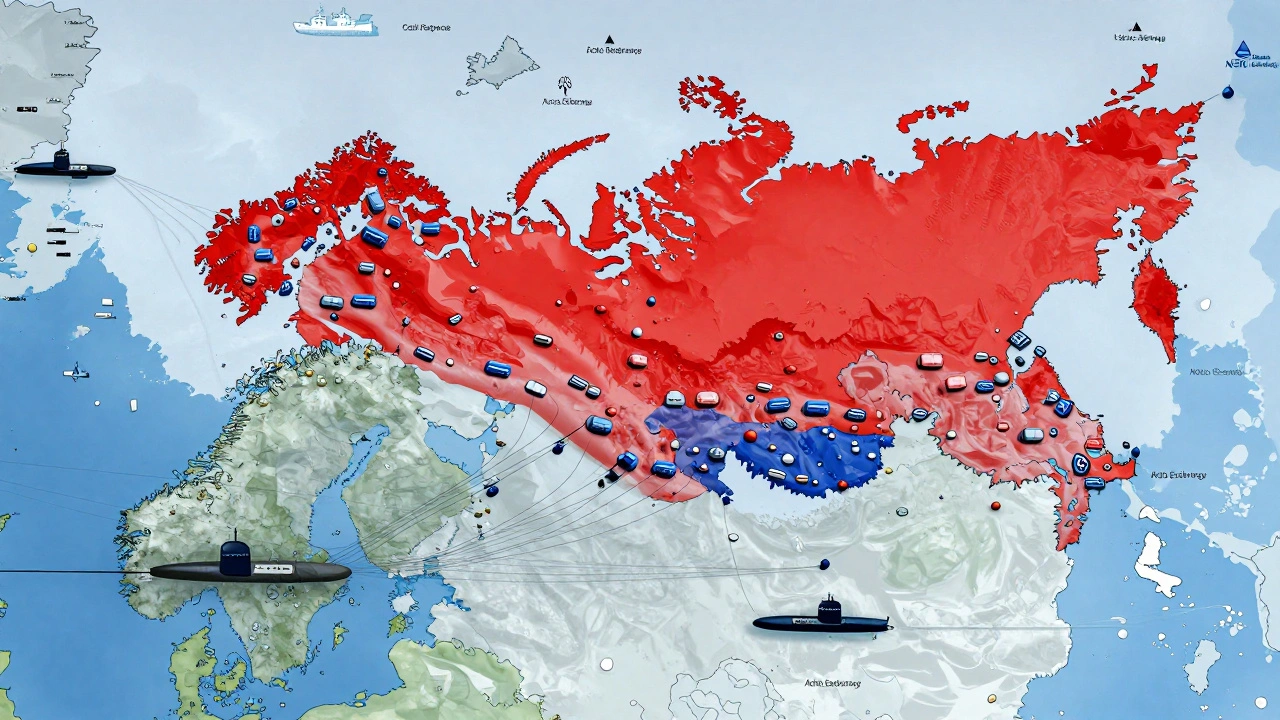
None of this would be happening without climate change. The Arctic is warming four times faster than the global average. Sea ice is shrinking by 13% every decade. In 2024, the Northwest Passage opened fully for the first time in recorded history. In 2025, commercial ships carried 11 million tons of cargo through the Northern Sea Route-up 300% from just five years earlier.But this isn’t just about trade. It’s about access. Ice-free waters mean submarines can move undetected. Airplanes can fly longer missions. Drones can patrol for weeks without refueling. The Arctic, once a barrier, is now a highway. And Russia built the toll booths.
What’s worse? Russia’s leaders know this. They’ve said it publicly: "The Arctic is not a shared space. It is our backyard." And they’re acting like it. While NATO debates rules, Russia is building bases, installing missile systems, and deploying nuclear-capable ships. Climate change didn’t cause this conflict. But it gave Russia the opening it needed.
Who’s Really in Control?
There’s a dangerous myth out there: that the Arctic is governed by international law. The UN Convention on the Law of the Sea says coastal states have rights up to 200 nautical miles. Beyond that, it’s common ground. But Russia doesn’t believe that. It claims the entire Northern Sea Route as internal waters. It denies foreign ships the right of transit. And it’s backed that claim with missiles, submarines, and satellites.NATO says it supports international law. But its actions tell a different story. Arctic Sentry isn’t about law-it’s about deterrence. It’s about showing Russia that NATO can respond. But can it? The truth is, NATO’s response is fragmented. Canada and Norway have strong Arctic forces. But France? Germany? The UK? They’re still focused on Europe and the Middle East.
Russia, on the other hand, has one goal: make the Arctic too risky for NATO to operate. It doesn’t need to win a war. It just needs to make NATO think twice before sending a ship, a plane, or a submarine into the region. And so far, it’s working.
The Nuclear Shadow
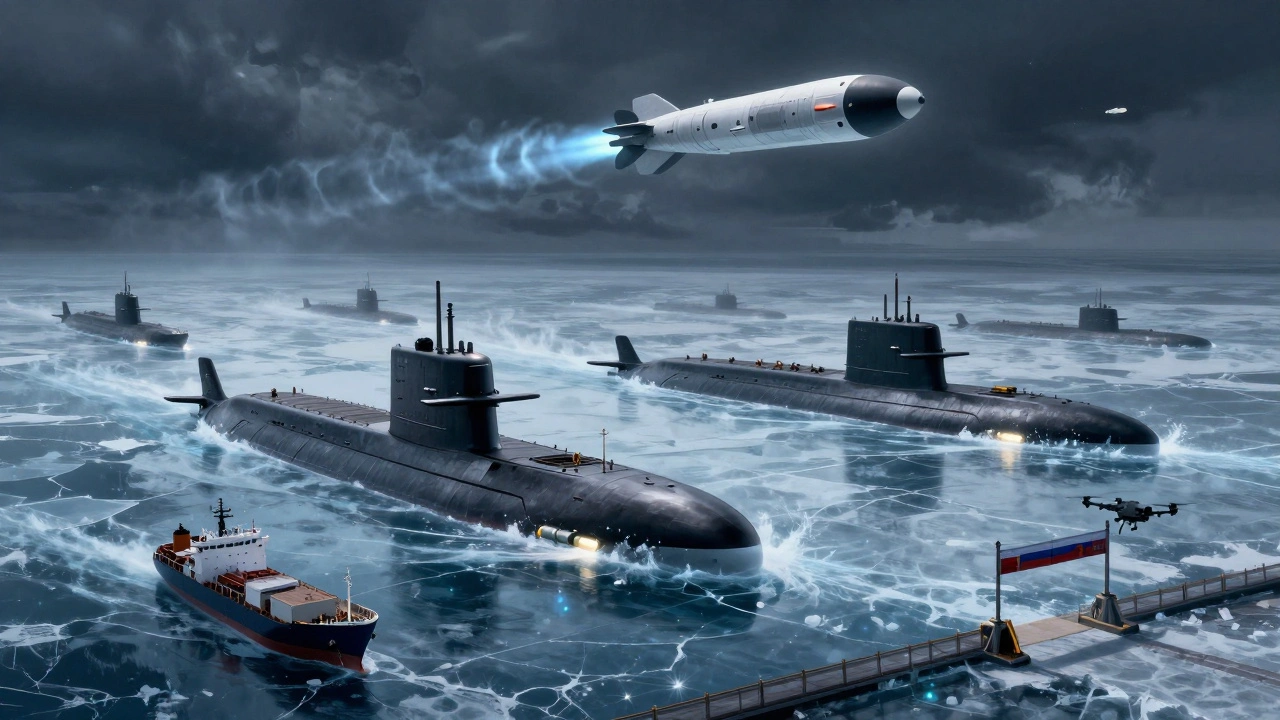
Let’s not pretend this is just about ships and ports. The Arctic is the world’s last nuclear standoff zone. Both Russia and NATO keep nuclear-armed submarines hidden under the ice. Russia’s Borei-class subs are armed with Bulava missiles. NATO’s Ohio-class subs carry Trident II missiles. They’re always on patrol. Always ready.And they’re not just hiding. They’re testing. Russia has launched nuclear-powered cruise missiles from Arctic waters-missiles that can fly for thousands of miles, evade radar, and carry warheads. NATO doesn’t have anything like it. And it doesn’t plan to build one.
This isn’t a game. It’s deterrence. Russia wants to make sure that if NATO ever tries to cut off its supply lines, or threaten its homeland, Russia can strike back from the North. And with ice melting, those strike routes are clearer than ever.
The Road Ahead: Escalation, Not Cooperation
The Arctic is no longer a zone of peace. It’s a zone of pressure. Russia is betting that NATO won’t act decisively. That its members will argue over budgets. That the U.S. will pull back. And so far, Russia’s gamble is paying off.NATO’s Arctic Sentry is a start. But it’s not a strategy. It’s a reaction. Without permanent bases, without integrated command, without clear red lines, NATO is playing defense in a game Russia designed.
The ice will keep melting. More shipping lanes will open. More resources will be discovered. And both sides will keep building. Russia will keep expanding its Arctic footprint. NATO will keep scrambling to catch up.
There’s no treaty to save us. No UN resolution that will stop this. The Arctic is becoming what every great power wants: a strategic asset. And whoever controls it first, controls the future.
Why is Russia militarizing the Arctic more than NATO?
Russia sees the Arctic as its core strategic zone-not just for resources, but for nuclear deterrence. It’s rebuilding Cold War infrastructure, deploying nuclear icebreakers, and testing new weapons in the region. NATO, by contrast, lacks a unified Arctic command, permanent bases, or dedicated funding. Russia acts first; NATO reacts. This asymmetry gives Russia the initiative.
How is climate change directly enabling Arctic militarization?
Melting sea ice opens the Northern Sea Route for year-round shipping and creates new operational space for submarines, aircraft, and drones. Previously inaccessible areas are now navigable, allowing militaries to establish bases, conduct patrols, and test weapons. Russia has capitalized on this faster than any other nation, using the changing environment to expand its military reach.
What role does China play in Arctic militarization?
China doesn’t have Arctic territory, but it’s partnering with Russia on joint patrols, port investments, and ice-class shipping. These collaborations help Russia extend its influence while giving China access to Arctic trade routes. NATO views this as a coordinated effort to weaken alliance unity and challenge Western dominance in the region.
Is NATO’s Arctic Sentry enough to counter Russia?
Arctic Sentry is a step forward, but it’s not a strategy. It’s a collection of exercises without permanent infrastructure, unified command, or long-term funding. Russia’s military presence is permanent and growing. NATO’s is temporary and reactive. Until NATO builds bases, secures undersea cables, and commits real resources, Arctic Sentry won’t change the balance of power.
Why does Russia claim the Northern Sea Route as internal waters?
Russia argues that the route runs so close to its coast that it qualifies as internal waters under its interpretation of international law. While the UN Convention on the Law of the Sea allows for exclusive economic zones, Russia refuses to recognize foreign transit rights. This lets it control all shipping, demand permits, and block access-turning a global shipping lane into a Russian-controlled corridor.
Could the Arctic become a nuclear conflict zone?
It’s not likely to start there, but the Arctic is already a nuclear flashpoint. Both Russia and NATO keep nuclear-armed submarines hidden under the ice. Russia tests nuclear-powered cruise missiles in the region. Any military incident-like a submarine collision, a drone interception, or a port sabotage-could escalate quickly. The Arctic’s isolation and lack of communication infrastructure make crisis management harder, increasing the risk of miscalculation.