What You Need to Know
- The Core Shift: By 2026, governments are moving from one-way broadcasting to two-way relational dialogue with residents.
- New Structures: Traditional town halls are being redesigned using lotteries and citizen assemblies to improve representation.
- Digital Integration: Online tools now co-create policy rather than just collecting feedback after decisions are made.
- Funding Support: Over 12,500 organizations are mapped in the Healthy Democracy Ecosystem to coordinate local efforts.
- Trust Building: Evidence shows local reforms significantly increase trust in institutions when implemented correctly.
Why Civic Engagement is Changing in 2026
If you have ever walked out of a public meeting feeling unheard, you aren't alone. For decades, many local meetings operated on a broken promise: "Come listen, don't expect to change anything." But as we move through March 2026, something is shifting across the United States. We are seeing a fundamental renewal in how Civic Participation Renewal operates in our communities. This isn't just about better PowerPoint slides; it is a structural redesign of how power flows between the government and the governed.
We are witnessing a transition from transactional communication-where agencies simply inform people-to relational dialogue. In a relational model, the agency listens, adapts, and invites residents into actual decision-making processes. This shift addresses a critical gap identified by the National Civic League: while people feel disconnected, they still deeply care about their communities. They want tools that actually let them influence collective decisions, not just express grievances.
This renewal effort combines old-fashioned deliberation with modern technology. It relies on the belief that trust is built when people see themselves represented fairly in the process. The momentum behind this movement has become visible in concrete ways recently. For instance, the Center for Democracy Innovation reports that the Healthy Democracy Ecosystem Map now tracks over 12,500 organizations working specifically on civic health. That represents an unprecedented coordination of nonprofit groups, community foundations, and tech providers all working toward the same goal of rebuilding public trust.
Redesigning Town Halls and Deliberative Spaces
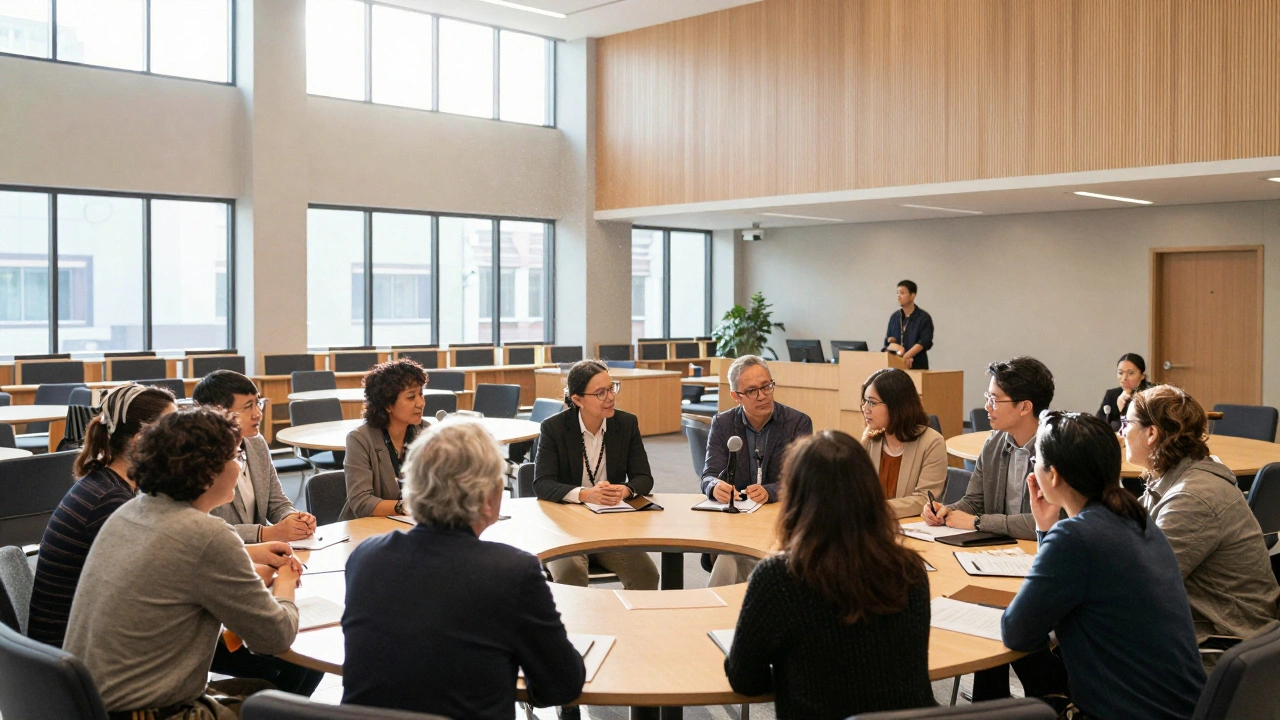
Traditional town halls often suffer from low attendance or become dominated by the loudest voices. To fix this, municipalities in 2026 are adopting innovative structures like deliberative democracy and citizen lotteries. In Decatur, Georgia, city leaders recently revised their charter using a commission partly assembled through a civic lottery. This approach ensures that participants reflect the actual demographic makeup of the city rather than just those who volunteer.
This method moves beyond traditional appointments or elections. When a group of ordinary citizens reviews policy recommendations together, the resulting advice tends to be more balanced and practical. The Better Public Meetings initiative is currently expanding this philosophy to cities like Anchorage, Alaska, Rochester, Minnesota, and New York City. These programs aim to transform meetings from performance stages into genuine problem-solving workshops.
In addition to lotteries, some cities are experimenting with participatory theater experiences alongside standard meetings. Perfect City is working in several locations to use drama and improvisation to help residents understand complex budgetary issues. It sounds unusual, but putting policy in narrative form helps people grasp the trade-offs involved in public spending. Local funders are backing these ideas too. The Community Foundations for Civic Health initiative has convened nearly 100 local funders in Chicago to showcase these innovations. Now, this program is scaling to states like Iowa, Kentucky, Colorado, Michigan, Delaware, and Wisconsin, offering formal learning cohorts and funding for civic health planning.

Digital Platforms as Relationship Builders
Digital tools used to be treated as bulletin boards where agencies posted PDFs and waited for emails. Today, forward-thinking agencies treat digital platforms as conversation starters. The trend for 2026 involves live question-and-answer sessions and feedback portals that integrate directly into decision workflows. When residents post a comment online, someone acknowledges and responds to it within days, not months.
These platforms signal a massive cultural shift. The old model was, "We inform, you listen." The new reality demands, "We listen, we adapt." Data from recent case studies show that when participatory platforms turn campaigns into participatory experiences, they generate millions of impressions and foster a renewed sense of ownership among residents.
However, technology alone doesn't fix broken systems. Smart communicators are realizing that tone matters more than technical jargon. Agencies are showing up at school meetings, churches, and local forums to share updates through trusted community voices. This is what practitioners call "hyper-local, human communication." While facts provide credibility, stories build the emotional connection required to rebuild trust. Research supports this, indicating that emotionally resonant narratives are essential for bridging the gap between skepticism and support.
Building Civic Health Through Leadership Development
Sustainable change requires capable people. In places like Franklin, Tennessee, and Edinburg, Texas, partnerships with groups like the Bridge Alliance are helping identify both established and emerging leaders. These partners deploy new civic engagement skills on the ground. This skill-building is vital because a well-designed meeting fails if the facilitator cannot manage conflict constructively.
Funding these efforts is becoming easier. Colorado released the Civic Health Action Guide this year, describing a wide range of approaches for local leaders. Major backers like El Pomar and Boettcher Foundations are supporting workshops to implement this guide. The goal is to equip leaders with the ability to measure outcomes, not just count attendance figures.
A crucial part of this infrastructure is the Yale Innovation Summit, scheduled for May 27-28, 2026. The event's Civic Track specifically asks system-builders-architects, policymakers, and founders-"What does it take to build institutions that actually work for people?" Caroline Tanbee Smith, serving as Programming Lead for the track, summarized the guiding philosophy of the year as focusing on the concept of the "neighbor." This framing emphasizes that civic innovation is not just about grand policy changes but also about everyday acts of care that strengthen the social fabric.

Measuring Impact and Trust
How do we know these changes are working? The National Civic League conducted national survey research in partnership with ActiVote. Their report, "Disconnected but Hopeful," reveals measurable American support for civic reforms. People actively back reforms that give them greater voice, such as civic assemblies and participatory budgeting.
We can see the results in early indicators from 2026. Scholarly literature reviewed by the Center indicates that local reforms can meaningfully strengthen three types of trust: trust among people, trust in institutions, and trust in information. This research is documented in partnership with $1 Billion for Trust, providing evidence-based findings for future policy decisions.
| Feature | Traditional Model (Pre-Renewal) | Renewed Model (2026+) |
|---|---|---|
| Communication Style | Transactional (One-Way Broadcast) | Relational Dialogue (Two-Way Exchange) |
| Participant Selection | Self-Selection (Loud Voices Only) | Lottery/Demographic Balance (Representative Groups) |
| Digital Usage | Publishing Documents/Surveys | Codification of Policy/Live Q&A |
| Trust Outcome | Erosion of Institutional Confidence | Rebuilding Trust via Transparency |
| Leadership Focus | Expert-Led Decision Making | Co-Creation with Residents |
Connecting to Broader Goals
This renewal effort ties into America's approaching 250th anniversary milestone. Educational institutions are preparing students for these realities. Teachers are developing redesigned civics units focused on media literacy and public participation. The James G. Martin Center has documented these initiatives, noting that education is key to building long-term civic infrastructure.
Philanthropic sectors are also driving this change. Nonprofits are entering the year positioned to influence policy and reinforce stability. Academic institutions are following suit; John Barth has endowed a new democracy innovation prize at George Washington University. This contribution adds to a growing community committed to civic renewal.
If 2020 taught governments how to communicate during a crisis, 2026 is teaching them how to connect in an era defined by accountability. Forward-thinking agencies are embracing the public trust doctrine. This means viewing government resources-from clean air to reliable information-as shared assets held in trust for the people. By prioritizing transparency and place-based innovation, these efforts are laying the groundwork for a healthier democracy in the years ahead.
What exactly is Civic Participation Renewal?
It is a coordinated movement aimed at rebuilding public trust by shifting from transactional government communication to relational dialogue. It involves redesigning public meetings, using digital tools for co-creation, and training leaders in civic health skills to give residents authentic voice in public decisions.
How do digital platforms improve civic engagement?
Modern platforms go beyond static surveys. They facilitate live Q&A sessions and allow residents to participate directly in drafting policies. Effective usage creates millions of impressions and fosters a sense of ownership, turning passive observers into active partners in governance.
Are traditional town halls being replaced?
They are evolving rather than disappearing. The "Better Public Meetings" initiative improves how residents engage during meetings, adding theater experiences and ensuring diverse representation through lotteries, which prevents meetings from being dominated by vocal minorities.
Who is funding these civic innovations?
Multiple sources are supporting the work, including major foundations like El Pomar and Boettcher. The Community Foundations for Civic Health initiative has already gathered nearly 100 local funders, and the Healthy Democracy Ecosystem Map now tracks over 12,500 organizations involved in the sector.
Does changing the format actually rebuild trust?
Yes. Research supported by $1 Billion for Trust confirms that local reforms like civic assemblies and improved meetings can strengthen trust among people, in institutions, and in information. Survey data indicates Americans strongly support reforms that provide them with greater voice in governance.