Grid Interconnection Time Calculator
Project Information
Grid Connection Method
Estimated Timeline
Traditional:
Private Wire:
Bankability Impact
When you hear about clean energy going mainstream, you picture wind farms stretching across plains or solar panels covering deserts. But the real story isn’t about scale-it’s about speed. And right now, the fastest way to get clean tech onto the grid isn’t through utility pipelines or federal permits. It’s through private wires, data centers, and battery packs built right next to the machines that need power the most.
Why Pilot Projects Keep Sticking
Clean tech has spent decades as a demo. Solar panels on school roofs. Small battery systems in remote towns. Wind turbines tested in controlled zones. These pilots proved the tech works. But they didn’t prove it could scale. Why? Because the grid wasn’t built for this. In 2021, over 427 gigawatts of clean energy projects sat in interconnection queues across the U.S. That’s more than the entire U.S. power system from 1990. Today, the average wait time to connect a project to the grid is still three years. Three years. That’s longer than most venture capital funds last. It’s longer than most corporate budgets allow. It kills bankability. And it’s not just delays. The rules themselves are outdated. Regional energy markets were designed for coal plants and gas turbines-big, steady, predictable power. But solar and batteries? They’re messy. They come and go with the sun. They charge when no one’s looking and discharge when demand spikes. The market doesn’t know how to pay for that. So investors walk away.The Supply Chain Crunch
You can’t build batteries without lithium, nickel, and graphite. And right now, over 80% of those raw materials come from China. Even if you build a factory in Texas, the minerals still have to travel halfway around the world. That’s not resilience. That’s risk. Recycling is supposed to fix this. But recycling plants are scarce. The U.S. has less than 10 commercial lithium-ion battery recyclers. Most end up in landfills or shipped overseas. The environmental cost of mining doesn’t disappear just because the battery is in a Tesla. To make clean tech truly clean, we need closed-loop supply chains-from mine to battery to recycle-built on U.S. soil, with fair labor and clean water standards. That’s not a nice-to-have. It’s the only path to long-term scale.Enter the Data Centers
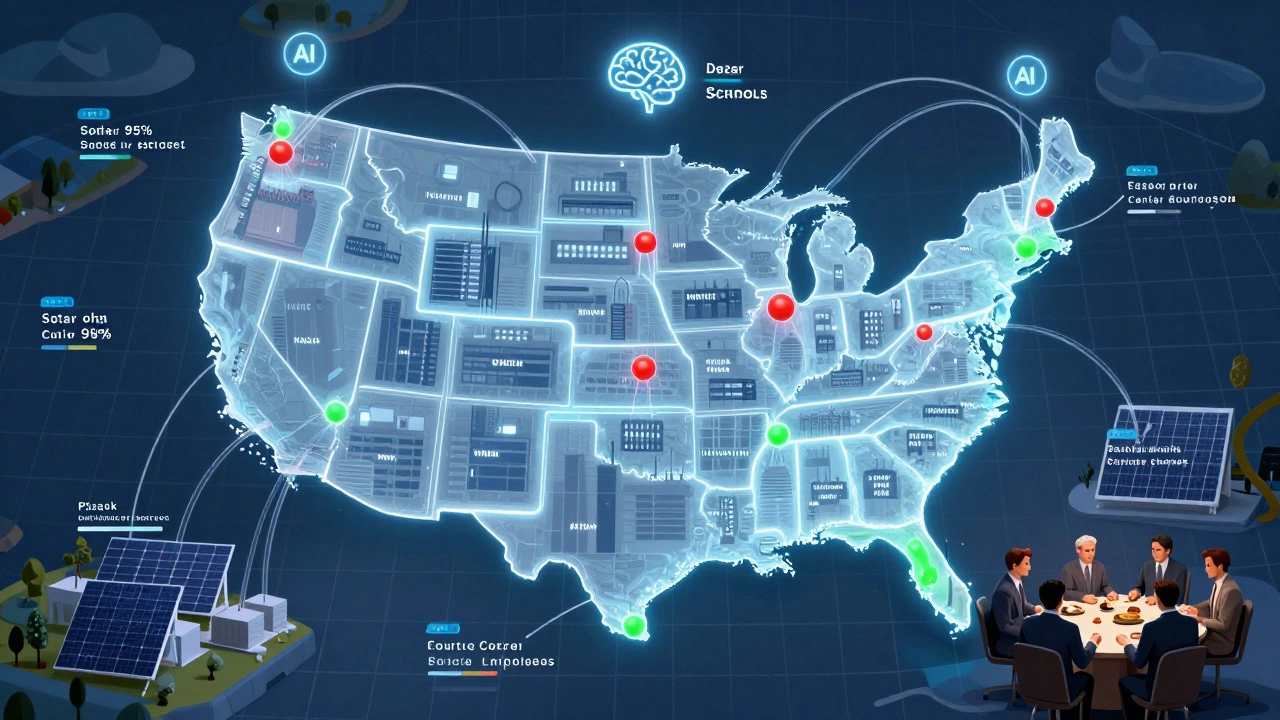
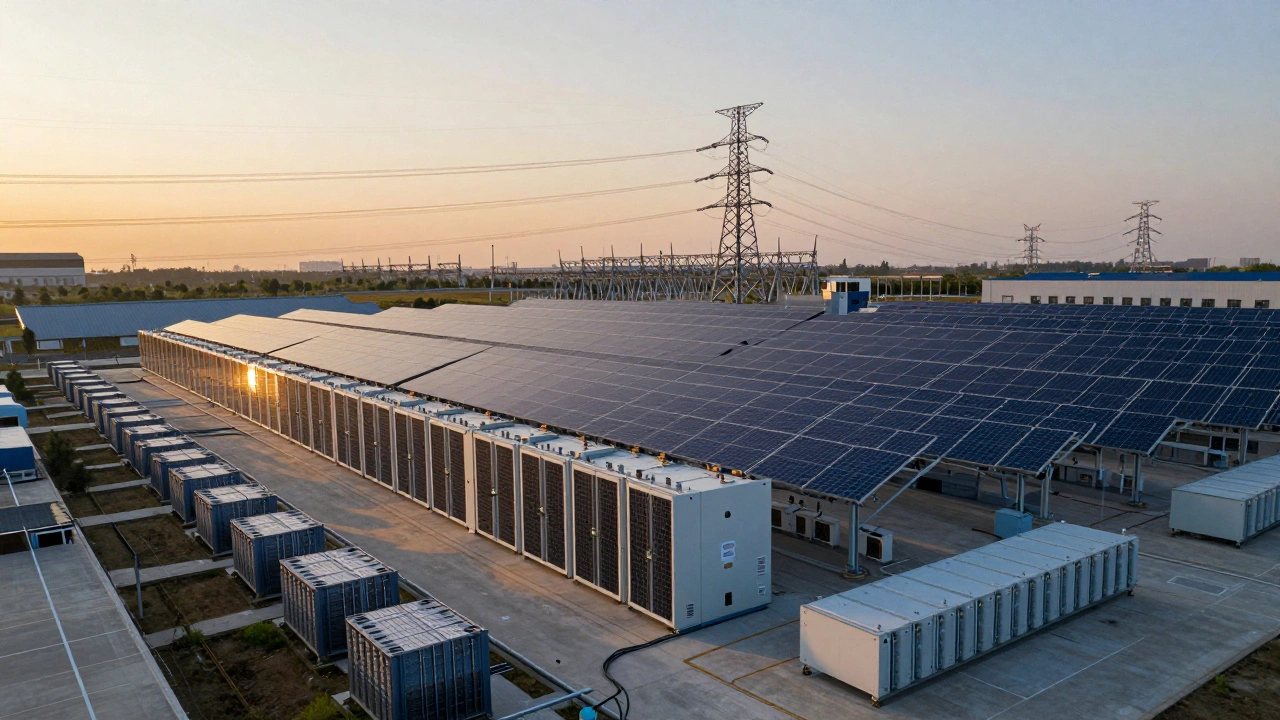
Here’s where things get interesting. In 2025, AI data centers announced over 24 gigawatts of new power demand. That’s more than the entire state of New Mexico uses in a year. And they don’t have three years to wait for the grid. They need power now. So they’re building their own. Alphabet bought Intersect Power for $4.75 billion-not to run ads, but to build solar and storage farms right next to their data centers. They’re using something called "private wire"-a direct power line that skips the public grid entirely. No interconnection queue. No regulatory delays. No market rules that don’t fit. In Q3 2025, developers added 45 gigawatts of new solar and storage capacity to U.S. pipelines. Almost all of it was tied to data centers, manufacturing hubs, or industrial campuses. These aren’t "renewable projects." They’re power plants built for specific, high-value customers. And they’re bypassing the old system entirely.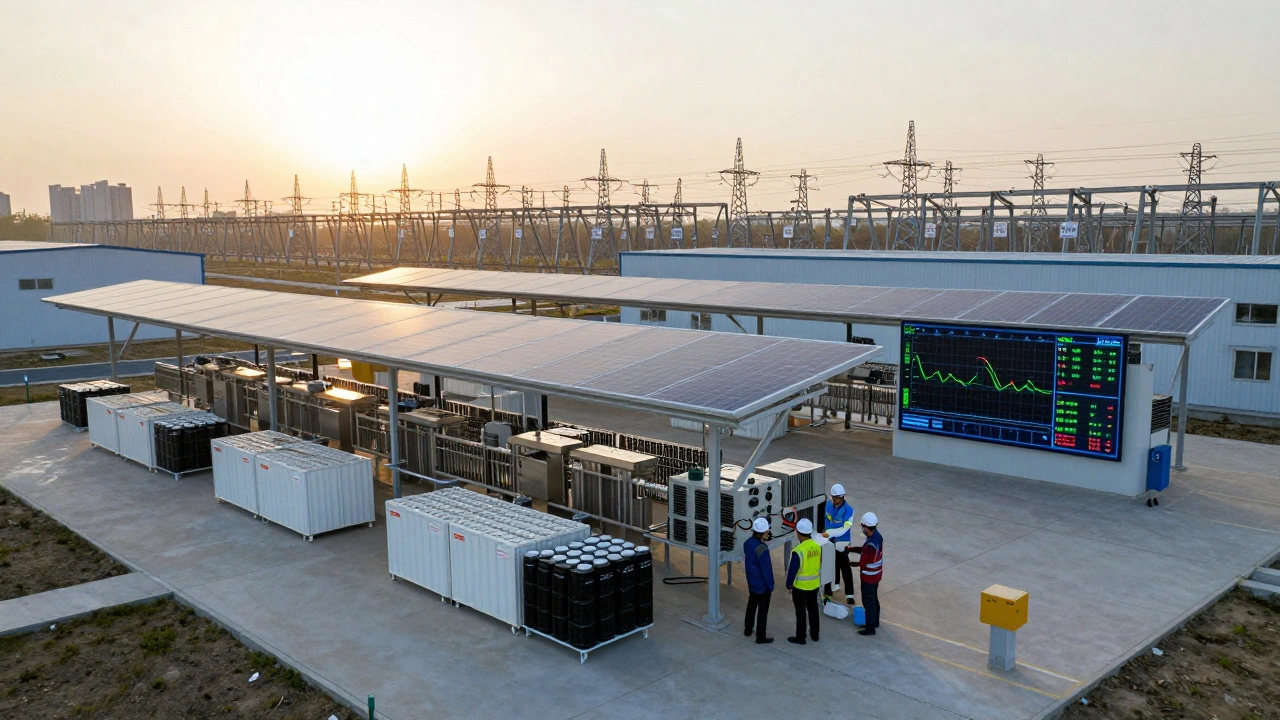
Why Modularity Wins
Think about a gas plant. You need a huge foundation, years of permitting, a pipeline for fuel, and a cooling system. Build it wrong, and you lose billions. Now think about solar panels and batteries. You can add one more row of panels. Add two more battery containers. Scale it like Lego blocks. No need to wait for a single, massive permit. You can start small, prove the economics, then expand. That’s why solar and storage made up 91% of all new clean power added in late 2025. They’re the only technology that scales as fast as demand. And they’re not just for data centers. Factories are using them to avoid peak power charges. Schools are using them to stay online during outages. Even Walmart is installing behind-the-meter storage to smooth out its energy bills. Modular doesn’t mean small. It means flexible. And flexibility is what unlocks bankability.Grids Are Getting Smarter
The grid isn’t dead-it’s being upgraded. Distributed Energy Resource Management Systems (DERMs) are now the brains behind modern grids. These aren’t just software. They’re real-time control systems that track every solar panel, EV charger, and battery on the network. They balance supply and demand by the second. They predict when clouds will roll in and adjust storage discharge before the lights flicker. AI is making this possible. Forecasting solar output with 95% accuracy isn’t science fiction anymore. It’s standard for project developers. That kind of predictability turns a risky investment into a bankable one. Investors don’t want guesses. They want numbers. And now, they’re getting them.