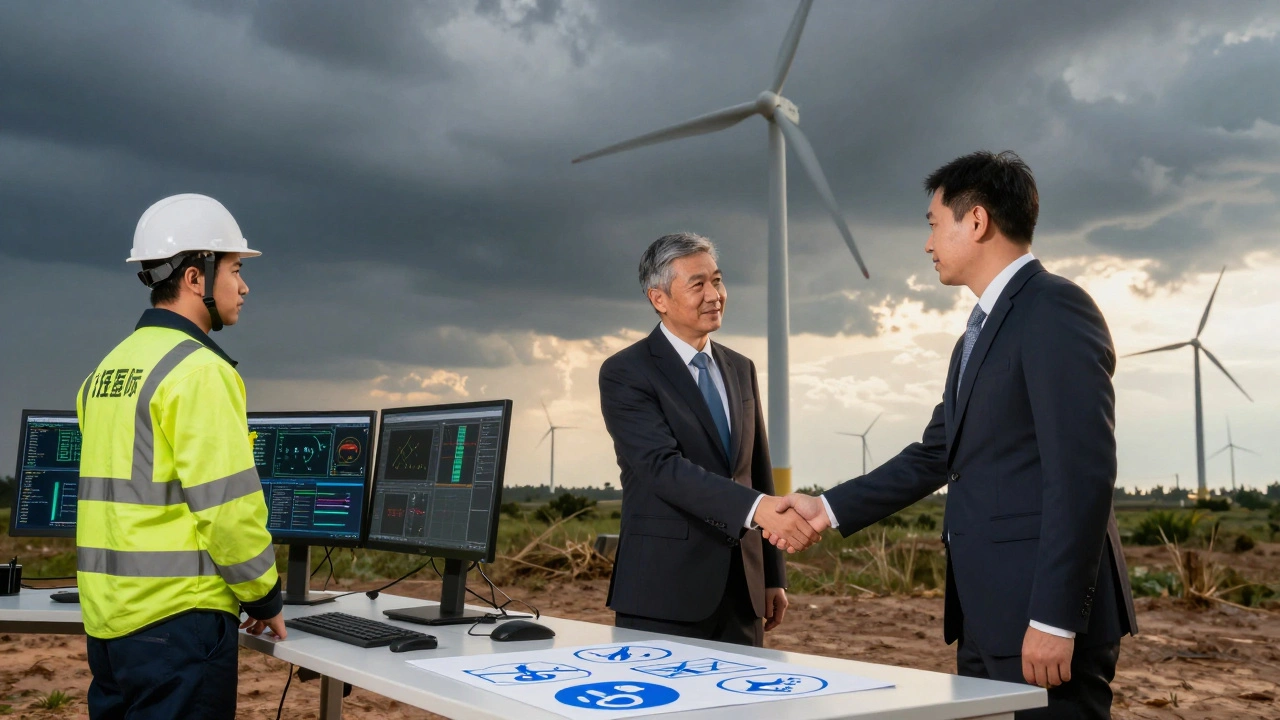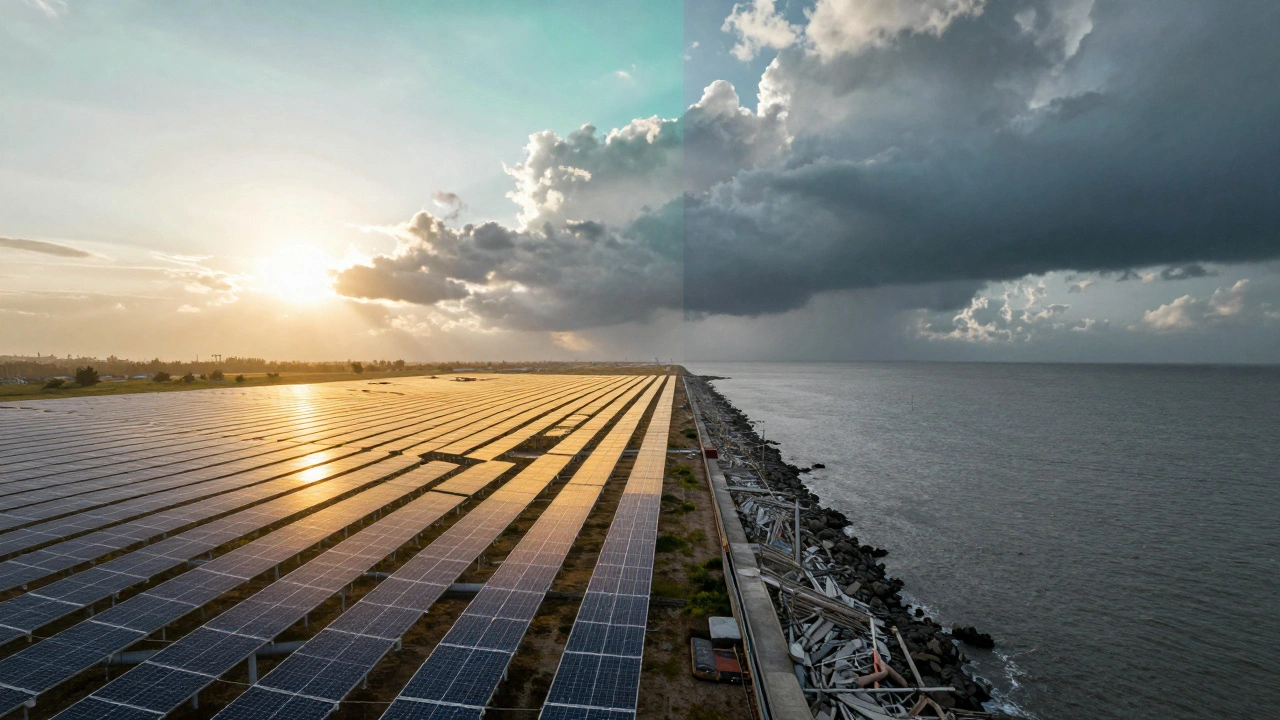
Climate finance is more than just aid; it is the systematic movement of capital designed to stabilize our planet's temperature. As of early 2026, the conversation has shifted from simple promises to hard execution. We know the numbers now. In 2023, global climate finance reached roughly $1.9 trillion. That sounds like a massive achievement until you look at the demand side. Experts estimate we need between $8 trillion and $10 trillion annually to meet safety targets. We are currently funding less than 20 percent of what is actually required. This isn't just a shortfall; it is a crisis of capital allocation that determines whether communities survive extreme weather or face economic collapse.
The Divide Between Mitigation and Adaptation
To understand where the money is stuck, we must separate the two main goals of climate action. Mitigation involves stopping carbon emissions-like building solar farms or electrifying transport. Adaptation means helping societies cope with changes already happening-like reinforcing sea walls or drought-proofing agriculture. Currently, these buckets are unbalanced.
The market prefers clean technology. According to the OPEC Fund's 2025 report, nearly half of all mitigation finance goes toward clean energy alone. Investors see clear revenue models here; they sell electricity and expect returns. Adaptation looks different. Building a flood defense system for a city doesn't generate direct profit for a bank. Consequently, adaptation receives far less attention. Developing nations need over $380 billion a year just for adaptation by 2030. Yet, current flows sit at less than one-fifth of that amount. If we ignore adaptation, we risk fixing the carbon problem while the climate crisis destroys the economy we built to solve it.
| Metric | Mitigation | Adaptation |
|---|---|---|
| Share of Total Climate Finance | ~80% | ~20% |
| Primary Investor Base | Private Equity, Corporates | Public Grants, NGOs |
| Projected 2030 Need | $7 Trillion | $380 Billion+ |
Where the Capital Comes From
You might assume big banks and corporations lead the charge on green growth. The data tells a different story. In 2024 and 2025, public actors-governments, multilateral agencies, and state-owned funds-provided about 89.4 percent of total climate finance. The private sector contributed only about 10.6 percent. This heavy reliance on taxpayer money creates a bottleneck. Governments have limited budgets, especially after global economic tightening in the early 2020s.
When we look at where this public money goes, geography plays a huge role. In 2023, 80 percent of all climate finance was raised domestically within countries like China, the US, and EU members. While impressive, this leaves the Least Developed Countries (LDCs) starving for resources. Cross-border private investment to emerging markets grew from $19 billion in 2018 to $42 billion in 2023. That is progress, but it is barely a drop in the bucket compared to the $2.4 trillion needed annually for emerging economies excluding China.
Mobilization Engines: How MDBs Work
If public money is scarce and private money is risk-averse, how do we bridge the gap? The answer lies in Multilateral Development Banks (MDBs) like the World Bank and the Asian Development Bank. These institutions act as engines. They take their own capital and combine it with guarantees or low-interest loans to convince private investors to jump in.
Recent strategies announced ahead of COP30 targeted leveraging $65 billion in private finance by 2030, up from around $15 billion in 2022. To achieve this, MDBs are shifting from just providing loans to providing "de-risking" tools. For example, an MDB might guarantee a loan for a dam project in a developing nation. If the borrower defaults, the MDB pays. This removes the biggest barrier for pension funds or insurance companies worried about political instability. Successful pilots, like Brazil's Amazon Fund, show that coordinated approaches with dedicated governance can attract significant private capital once the initial trust is established.
Barriers Stalling Private Investment
Despite the potential, private capital remains cautious. Why? A 2025 analysis by the NDC Partnership highlights three major friction points:
- Fragmented Planning: Many developing nations lack a unified roadmap for investment. Investors don't want to wait years for a government to approve a single project pipeline.
- Risk Perception: Currency fluctuations and regulatory uncertainty in emerging markets make long-term returns unpredictable. Without currency hedging, investing in solar farms in Africa looks too volatile compared to stable markets.
- Standardization Issues: Unlike mitigation (where a megawatt of wind power is easily measured), adaptation results are harder to quantify. Insurance companies are trying to fix this with parametric products that trigger payouts based on weather events rather than damage assessments, growing at 25% annually. Still, coverage is mostly concentrated in middle-income countries.
The New Financial Targets
We are operating under a new financial framework. The original goal of $100 billion per year for developing nations was met, technically, but it quickly became insufficient. At COP29 in Baku (November 2024), governments agreed on the New Collective Quantified Goal (NCQG). This sets a new floor of $300 billion per year by 2035 for developing countries' climate action. There is also an aspiration to reach $1.3 trillion annually, outlined in the Baku to Belém Roadmap.
Even with this increase, the math remains difficult. The World Bank estimates needs at $8 trillion globally per year. The NCQG addresses only the *international* aid portion, not the total capital required for decarbonization. Bridging this will require developed countries to increase bilateral climate finance by 15-20% annually-a steep climb when domestic spending priorities elsewhere are competing for funds.
A Look Ahead for 2026
As we move further into 2026, the pressure is on the implementation. Following the COP30 summit in Belém last year, country platforms are being activated to streamline project approvals. Nations that have dedicated climate finance units are seeing mobilization rates 30-50 percent higher than those without. The lesson is clear: administrative capacity matters as much as the money itself. Innovative mechanisms like blended finance, where public capital takes the first loss, are becoming standard practice. However, to truly close the gap, we need a structural shift where private equity treats resilience as an asset class, not just a charity case.
Frequently Asked Questions
What is the difference between climate finance and general development aid?
Climate finance is specifically earmarked for activities that address climate change, either by reducing emissions (mitigation) or helping systems cope with climate impacts (adaptation). General development aid supports broader economic growth, health, or education without necessarily tying funds to climate outcomes. Climate finance requires tracking carbon metrics or resilience improvements.
Is the $100 billion target achieved?
Yes, the collective goal of $100 billion per year for developing countries was formally met around 2022 according to OECD data. However, experts argue it was an understatement of actual needs. The new NCQG target set in late 2024 aims for significantly higher amounts starting in 2025, moving toward $300 billion annually by 2035.
Why does the private sector invest less in climate projects?
Private investors view many climate projects, particularly adaptation efforts in developing nations, as high-risk due to political instability, currency volatility, and lower projected financial returns compared to traditional assets. Public instruments like guarantees and concessional loans are often needed to bridge this gap.
What are Multilateral Development Banks (MDBs)?
MDBs are international financial institutions, such as the World Bank, created by governments to lend money to countries in need. In climate finance, they play a crucial role in 'mobilization,' using their creditworthiness to encourage private investors to fund projects they would otherwise avoid.
How much money is actually needed for climate action?
Estimates vary, but the World Bank suggests a need for $8 trillion to $10 trillion annually to meet global climate goals. This rises to even higher levels if nature restoration and full economic adaptation are included in the calculation.