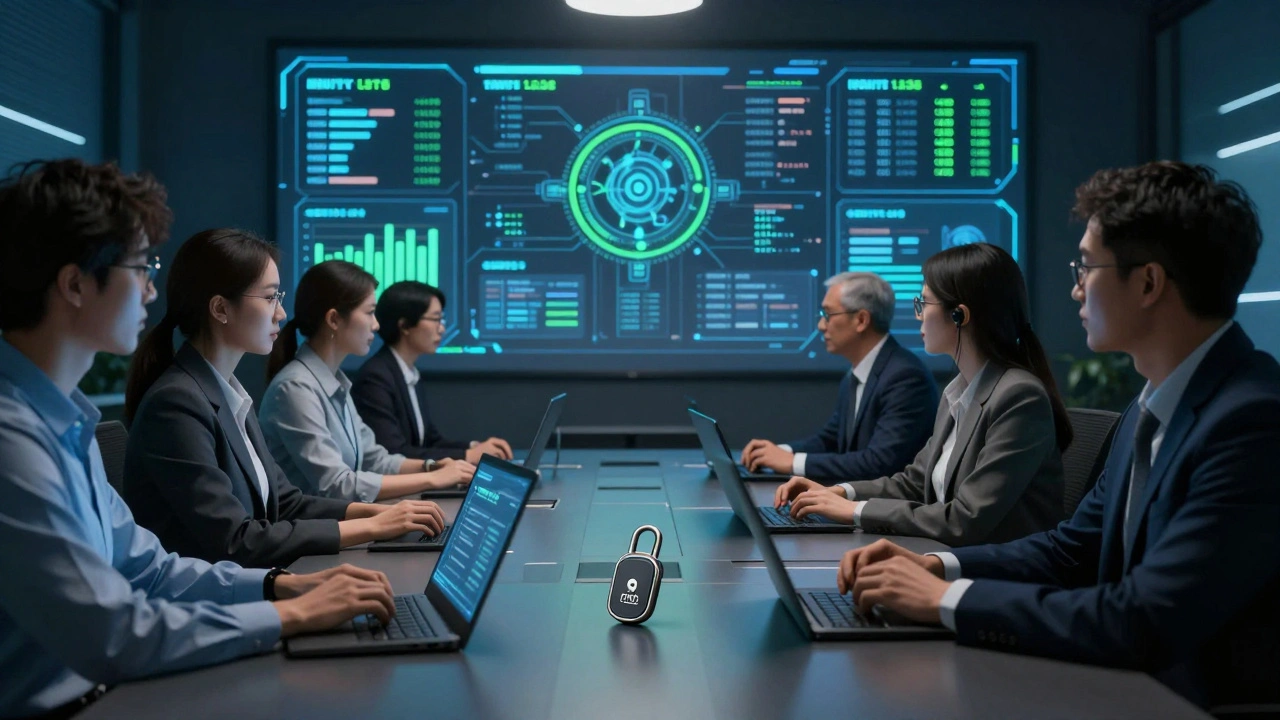
Vulnerability Prioritization Calculator
Prioritize Your Patching Efforts
Based on article insights: "You don't need to patch every vulnerability. You need to patch the ones attackers are already using."
Score indicates priority level
Why this matters: "Patching isn't about updates—it's about exploits." This score reflects how quickly you should patch based on real-world attack patterns.
When a company loses access to its data, systems, or people-not because of a natural disaster, but because of a single stolen password-the real damage isn’t the downtime. It’s the lost trust, the legal fallout, and the quiet panic in the boardroom. In 2026, corporate security isn’t about firewalls and antivirus software anymore. It’s about building systems so resilient that even when attackers get in, they can’t win. This isn’t theory. It’s what the best-run companies do every day.
Identity Is the New Perimeter
The old idea of a network boundary is gone. Attackers don’t need to break through walls anymore. They just need to steal a login. That’s why identity governance is now the first line of defense. Every admin account, every service account, every API key must have a single owner, mandatory multi-factor authentication, and a scheduled rotation date. Shared logins? Gone. Passwords alone? Not enough. Organizations that survive ransomware in 2026 all do one thing right: they treat credentials like nuclear launch codes. MFA isn’t optional for executives or IT staff-it’s enforced with phishing-resistant methods like FIDO2 keys. Privileged access reviews happen monthly, not annually. And every machine identity-like a server’s API token-is tracked, logged, and rotated every 90 days. If you can’t prove who’s doing what, and when, you’re already compromised.Patching Isn’t About Updates-It’s About Exploits
You don’t need to patch every vulnerability. You need to patch the ones attackers are already using. In 2026, every security team tracks the CISA Known Exploited Vulnerabilities (KEV) list like a weather alert. If a flaw is being actively weaponized in the wild, you fix it within 72 hours. Period. No more waiting for quarterly patch cycles. This shift requires real-time visibility. Systems must auto-detect configuration drift-like a server suddenly running an outdated OS-and auto-remediate where possible. Endpoints, cloud accounts, and SaaS apps all need baseline configurations. If something changes without approval, the system flags it. And you don’t just log it-you fix it, fast.Backups Don’t Matter Unless You Can Restore Them
Most companies think backups are insurance. In 2026, they’re your only lifeline. And if your backups can be deleted, encrypted, or overwritten by the same attacker who hit your network, they’re useless. The new standard? Immutable backups. These are copies of your data that can’t be altered-even by admins or hackers. They’re stored offline, air-gapped, or in separate cloud accounts with credentials locked down tighter than your main systems. You don’t just back up files. You back up identity systems, database schemas, and application configurations. And you test restoration every single month. Not a demo. Not a checklist. A full restore of your most critical systems, including user accounts and access permissions. If it takes more than four hours to bring back your payroll or CRM, you’re not ready. The goal isn’t just to recover. It’s to recover faster than the attacker can demand a ransom.Zero Trust Isn’t a Buzzword-It’s a Requirement
Zero Trust means one thing: no one gets a free pass. Not your CFO. Not your intern. Not your laptop. Every login, every API call, every file access is checked-continuously. In 2026, authentication doesn’t stop at the login screen. Systems monitor typing speed, mouse movements, device health, and network location throughout the session. If someone suddenly accesses a financial system from a new country while using a compromised device, access is automatically restricted-not cut off, but stepped up. Maybe they need to scan their face. Maybe they need to answer a dynamic challenge. This isn’t about inconvenience. It’s about survival. Companies using Zero Trust see 70% fewer successful breaches. And it’s not just for employees. Third-party vendors, contractors, and partners must also pass the same checks. No exceptions.
Incident Response Is a Team Sport
You can’t respond to a cyberattack with just your IT team. Legal, PR, HR, finance, and operations all need to be in the room before the first alert sounds. Quarterly tabletop exercises are now mandatory. These aren’t drills. They’re simulations. A fake ransomware attack. A leaked customer database. A vendor breach that cascades into your systems. Teams act out their roles: who calls the CEO? Who drafts the customer notice? Who talks to regulators? The best teams don’t wait for chaos. They map out escalation paths, communication channels, and decision rights ahead of time. If the CISO is out sick, who approves the shutdown? If the legal team is overloaded, who signs off on the breach disclosure? These aren’t hypotheticals-they’re documented, rehearsed, and tested.Third Parties Are Your Weakest Link
A hacker doesn’t need to break into your system. They just need to break into your cloud hosting provider, your payroll vendor, or your software supplier. In 2026, every critical vendor is reviewed like a potential employee. You demand SOC 2 reports. You require Software Bills of Materials (SBOMs) for every app they deliver. You scan their code for open-source vulnerabilities. You lock down integrations with Zero Trust controls. And you keep a living inventory. Not a spreadsheet. A dynamic system that auto-updates when a vendor is acquired, merges, or changes platforms. If a vendor you rely on gets breached, you need to know within hours-not weeks.AI Is Your Co-Pilot, Not Your Commander
AI doesn’t replace security teams. It makes them faster. In 2026, AI tools scan millions of events per second-not to make decisions, but to surface the ones that matter. An AI system might notice that a user in accounting suddenly accessed 300 files they’ve never touched before. It doesn’t lock them out. It flags it. Then, a human investigates. Was it a mistake? A rogue insider? A compromised account? AI also powers dynamic scenario modeling. It simulates what happens if your primary data center goes down, your cloud provider has an outage, or a supply chain partner halts shipments. These aren’t theoretical exercises. They’re run weekly. And the results feed directly into your recovery plans.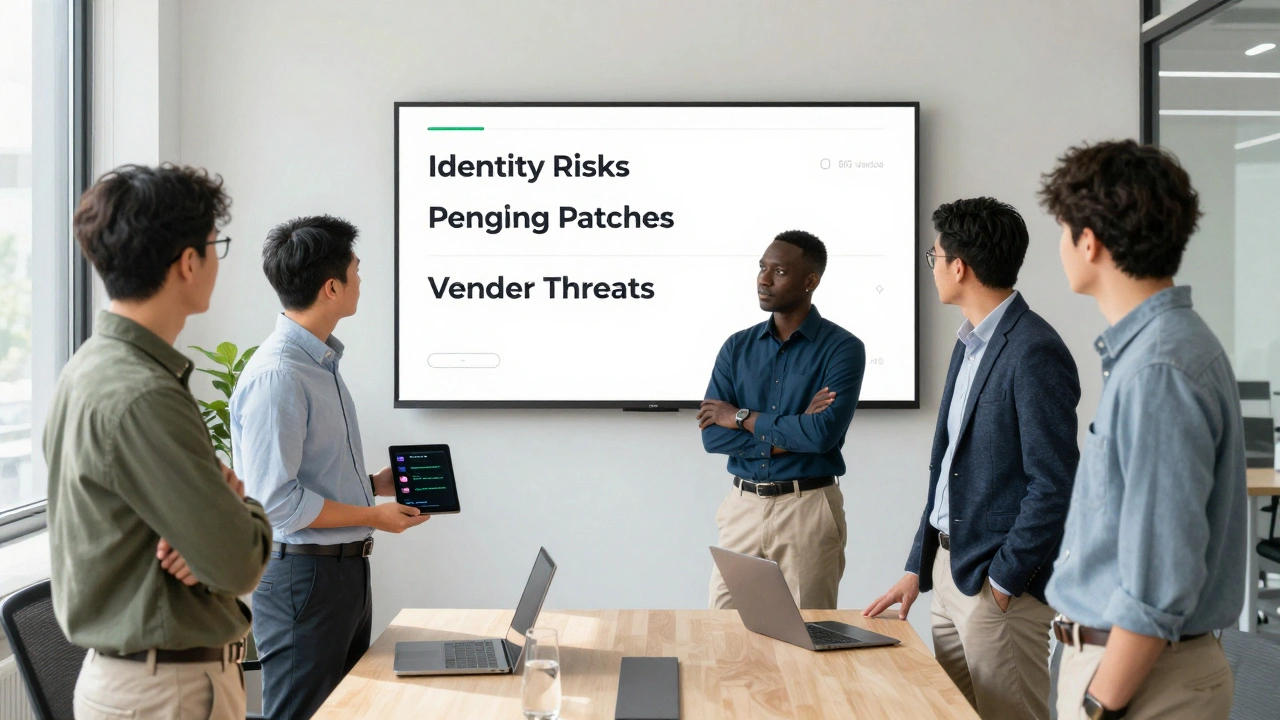
Quantum Threats Are Real-And You’re Already Behind
You might think quantum computing is science fiction. It’s not. Governments and major corporations are already testing quantum-resistant encryption. The U.S. NIST has released the first standards. And in 2026, insurers are asking for proof you’re preparing. Start now. Identify your most critical systems: authentication, financial transactions, customer data. These need migration plans by 2027. Less critical systems? You have until 2029. But if you wait until 2028, you’ll be too late. Document your roadmap. Show auditors you’re not ignoring it.Weekly Cadence-No More "Security Reports"
Forget monthly security dashboards. In 2026, the most effective companies run a 15-minute weekly meeting. Just four items:- What patches are still pending? Who owns them?
- What identity risks are active? Any unused admin accounts?
- What are the top three alerts this week? Are they false positives or real threats?
- Which vendors need reevaluation? Any new risks?