EU Workforce Dependency Simulator
Based on the article's data, simulate how a shrinking workforce affects the society. Adjust the variables to see the resulting Dependency Ratio.
Economic Outlook
The "1.25" Crisis
When the ratio drops toward 1.25, public finances face extreme strain as pension and healthcare costs skyrocket.
Innovation Gap
Fewer young workers leads to a loss of "innovation potential," slowing the GDP growth of the entire region.
Mitigation Factor
Digitalization and automation can effectively increase the "output per worker," offsetting the population drop.
Key Takeaways
- Europe is projected to lose 1 to 2 million workers annually in the coming decades.
- Fertility rates in several EU nations have fallen to nearly half the replacement level.
- Reliance on migration has delayed the population drop, but political tension complicates recruitment.
- Digital infrastructure and productivity gains are the primary levers to offset a smaller workforce.
- Current EU funding lacks a dedicated mechanism for structural demographic decline.
The Math of a Shrinking Society
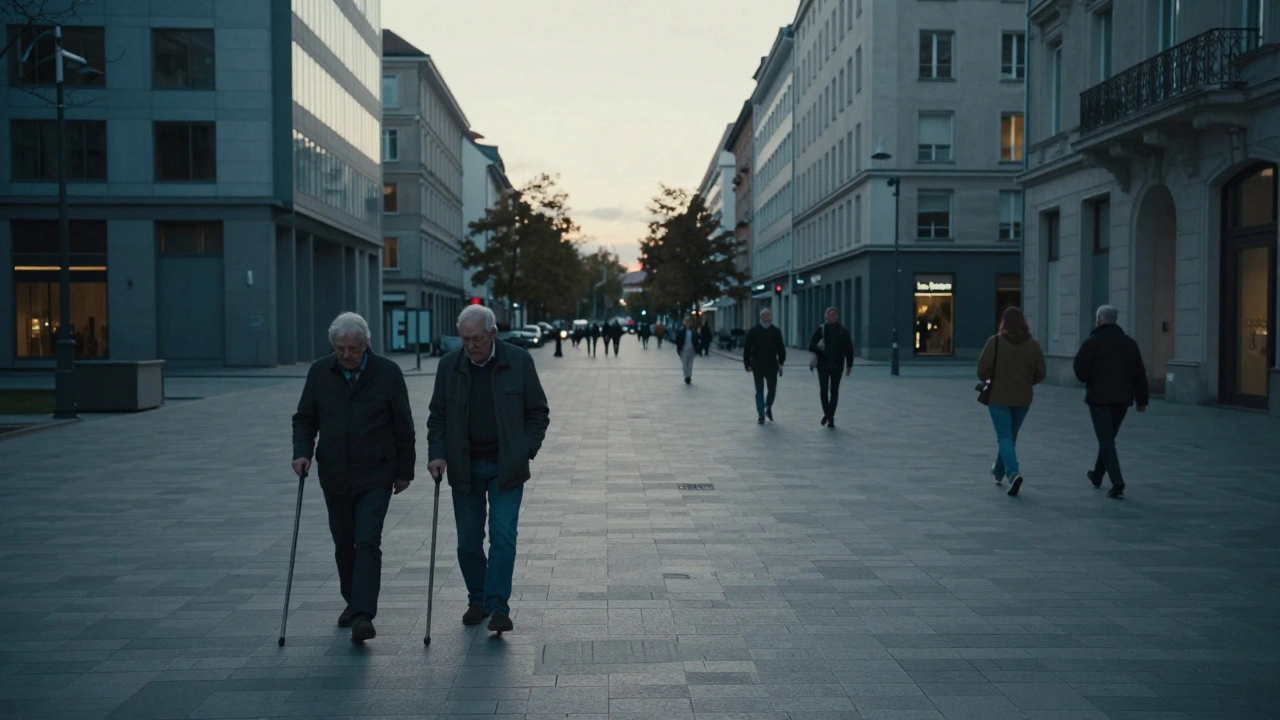
To understand the scale of the problem, we have to look at the dependency ratio. Currently, about 20 percent of Europeans are over 65. By the 2050s, that number will jump to one-third. By the 2080s, the situation becomes stark: there will be only five working-age adults for every four dependents. This creates a massive strain on Public Finances, as fewer taxpayers must support a growing number of pensioners and healthcare needs.
The most immediate hit is felt in the labor market. The European Union is a political and economic union of 27 member states that currently manages a population of approximately 450 million people. It is expected to see 55-70% of its regions suffer a labor force decline of 10% or more. Eastern Europe is hit even harder, with some regions seeing a workforce drop of over 30%. When you lose that many people, you don't just lose workers; you lose the "innovation potential"-the fresh ideas and energy that drive economic growth.
Where the Workers Are Vanishing
It's not just a general shortage; it's a crisis in specific, critical sectors. Companies across the EU are currently scrambling to find qualified staff in healthcare and information technology. If you can't find a nurse for a hospital or a developer for a tech firm, the quality of life drops and the economy stagnates. This is why population decline in Europe is treated as a strategic threat rather than just a statistical curiosity.
| Metric | Current Status / Value | Target/Replacement Level | Economic Impact |
|---|---|---|---|
| Total Fertility Rate (TFR) | 1.37 (EU Avg) / ~1.0 (Italy/Spain) | 2.1 | Shrinking native-born workforce |
| Elderly Population (% > 65) | ~20% | Stable/Manageable | Increased pension & health costs |
| Annual Worker Loss | 1-2 Million | Net Zero or Growth | Reduced GDP & competitiveness |
| Regional Decline (East EU) | Up to 30% loss | Population Stability | Ghost towns & infrastructure decay |

The Three-Pronged Strategy for Survival
Policymakers aren't just sitting back. They've identified three main ways to fight this trend, though none of them are a "silver bullet."
First, there's the push for fertility. Governments are trying to make having children a "rational choice" again. This means offering housing subsidies, better childcare, and tax breaks. However, let's be honest: these policies haven't stopped the slide. Even in countries with robust family support, the birth rates remain stubbornly low.
Second, we need to maximize the people who are already here. This means getting more women and young people into the workforce. If a significant portion of the population is underemployed or stays out of the market due to outdated social norms or lack of flexibility, the economy wastes its remaining assets.
Third, and perhaps most controversially, is Migration is the movement of people from one place to another, used by the EU as a tool to offset natural population decline. For the last decade, net migration is the only reason the EU's population hasn't crashed already. Countries like Germany and Italy are competing for skilled workers by simplifying residence permits. But there's a catch: the EU Blue Card-a work permit for highly skilled non-EU nationals-has had limited success. Why? Because the political climate is often hostile toward immigrants, and skilled professionals from the US, India, or Canada aren't going to move to a place where they feel unwelcome.
Saving the Rural Heartland via Digitalization
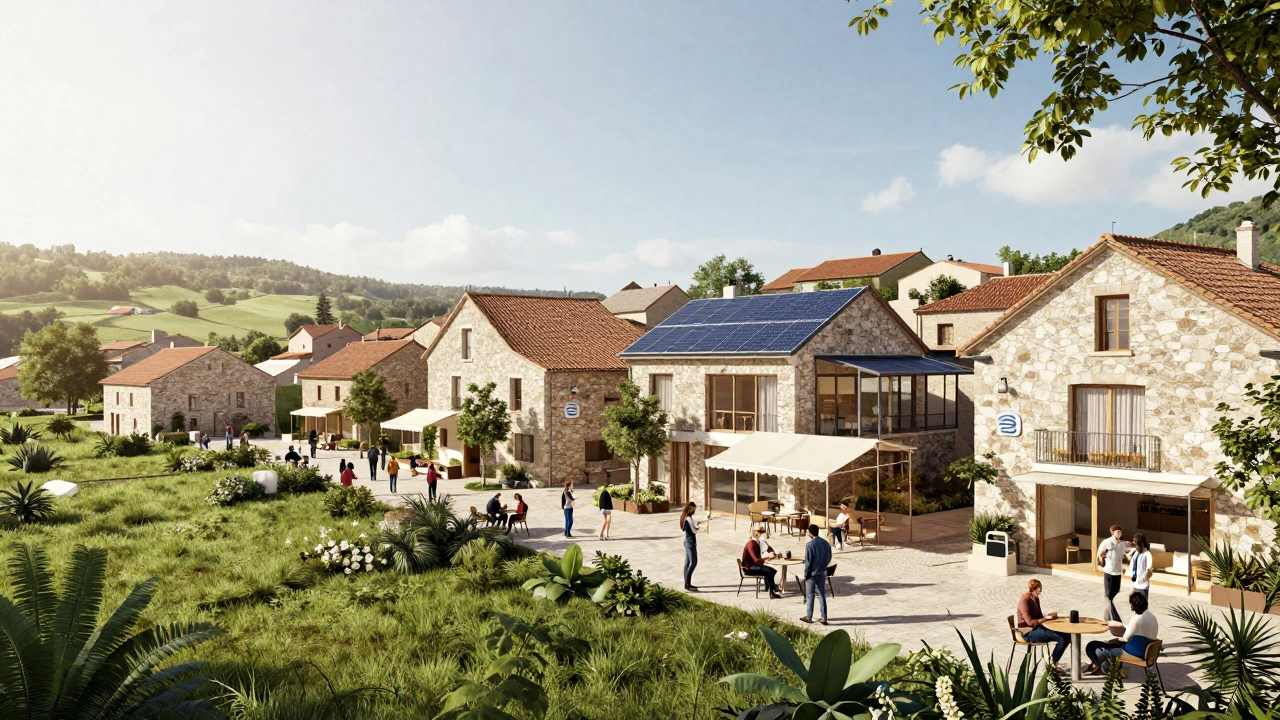
One of the biggest fears is that the interior of Europe will simply disappear, leaving only a few massive "megacities." But there is a counter-strategy: smart cohesion. Instead of just throwing money at dying towns to keep them on life support, the focus is shifting toward digital infrastructure.
If you have lightning-fast internet and a reliable digital ecosystem in a small village in Poland or Spain, you can run a global consultancy or a software firm from your living room. Digitalization enables remote work, which allows young families to move out of overcrowded cities and back into rural areas. When you combine high-speed connectivity with housing subsidies, you create an environment where a young entrepreneur might actually choose a small town over a concrete jungle.
The Need for a Demographic Transition Fund
Right now, the EU uses "Structural and Cohesion Funds" to reduce disparities between rich and poor regions. The problem is that these funds weren't designed for a world where the population is actually disappearing. You can't just build a new bridge if there's no one left to drive across it.
There is a growing call for a European Demographic Transition Fund. This would be a dedicated financial tool to help aging or depopulating regions adapt. Instead of just redistribution, this fund would incentivize innovation-like automating healthcare delivery or repurposing empty buildings for new industries. It's about "demographic adaptability" rather than just survival.
Integrating Demography into Strategic Planning
For too long, population decline has been treated as a side issue-something for sociologists to worry about. Now, it needs to be treated like climate change: a horizontal factor that affects every single policy. This is why some are calling for a dedicated EU Commissioner for demographic issues.
Demographic data needs to be baked into the European Semester, which is the EU's annual coordination mechanism for budgets and reforms. If you're planning a 10-year investment strategy for a region but ignore the fact that 20% of the workforce will be gone by the time the project is finished, your plan is useless. We need a coherent narrative that aligns economic goals with the reality of a smaller, older population.
Will migration completely solve the labor shortage?
Not entirely. While migration fills immediate gaps in healthcare and IT, it doesn't solve the underlying structural issue of an aging native population. Furthermore, global competition for talent means Europe must improve its "brand" and political openness to attract the most skilled workers.
Why aren't family-friendly policies increasing birth rates?
Financial incentives like tax breaks and subsidies help, but they don't address broader cultural and economic shifts. High housing costs, career instability, and changing social values have pushed the fertility rate far below the replacement level of 2.1, and money alone rarely reverses this trend.
Can automation replace the missing workers?
Automation and AI can handle many repetitive tasks and increase productivity, which is essential. However, they cannot replace the "human touch" required in healthcare, elderly care, and complex social services-precisely the sectors where the shortages are most acute.
What happens to empty towns in depopulating regions?
Without intervention, these areas face economic collapse. However, with digital infrastructure and targeted support for entrepreneurs, some of these areas can be repurposed for remote work hubs or sustainable tourism, leveraging their excess space as an asset rather than a liability.
How does population decline affect the EU's global competitiveness?
A shrinking workforce leads to lower GDP growth and a smaller internal market. It also reduces the number of young innovators and entrepreneurs, potentially causing Europe to fall behind the US and China in technological breakthroughs and industrial scale.
Next Steps for Different Stakeholders
For Business Owners: Stop relying on the "old way" of hiring. Invest in automation and look toward remote-first hiring models that allow you to tap into talent in declining rural regions or from third-country migrants.
For Regional Policymakers: Stop focusing on traditional industrial parks. Pivot your budget toward high-speed digital infrastructure and housing incentives that attract young families back to your community.
For EU Strategists: Move beyond the Blue Card. Create a unified, welcoming migration framework that reduces political friction and makes the EU an attractive destination for the global "creative class."