
EV Smart Charging Optimizer
Your Scenario
Impact Analysis
Traditional Public Charging
High cost + Grid Peak Strain
Smart Home Charging
Off-peak rates + Grid Stability
Grid Load Visualization
We stand at a critical juncture in March 2026. The conversation around Electric Vehicle Charging Infrastructure has shifted from "when will it arrive" to "can we actually handle it." The numbers tell a stark story about the pressure mounting on our power systems. While the industry projects the charging market to reach over USD 322 billion by 2035, the immediate reality involves balancing 33 million vehicles against an aging Electrical Grid. The fear isn't just about running out of gas stations; it is about lighting up every outlet during prime hours and blowing transformers.
Most people assume the solution lies in building more superchargers everywhere. However, the math doesn't support that approach. If we try to replicate the gasoline station model using high-power chargers, we collapse the grid. A single ultra-fast charger needs 756 kilowatts-that is enough power to run roughly 350 homes simultaneously. Deploying those widely simply isn't viable for residential networks. Instead, the strategy that keeps the lights on relies on distributed, slower charging handled at home and workplaces.
The Shift Toward Residential Charging Dominance
Data from the National Laboratory of the Rockies offers a clear blueprint for survival. By 2030, we expect 28 million charging ports to come online. Of those, 92%-roughly 25.7 million units-will be private Level 1 and Level 2 chargers installed at homes. This distribution is the secret sauce for grid stability. When 80% of all EV charging happens overnight at a single-family home, the load spreads across a much wider time window than if everyone rushed to a public DC fast charger at noon.
This setup changes the economic equation entirely. Homeowners avoid the steep fees associated with public fast charging while utilities benefit from predictable load patterns. Even multi-unit dwellings are adopting this model. An estimated 2.1 million ports will serve apartments and condos, though this segment faces higher retrofitting costs due to shared panel capacity. The remaining 1% of ports-only about 182,000-are dedicated public DC fast chargers. They exist for long-distance travel corridors, not daily commutes. Recognizing this split prevents cities from pouring money into unnecessary infrastructure that creates grid bottlenecks.
Understanding Grid Capacity Constraints
Why does the timing of your charge matter so much? It comes down to peak demand spikes. Between 2011 and 2021, flexible EV loads already saved ratepayers over USD 3 billion. That figure highlights what is lost when EVs act as static drains rather than responsive assets. In 2026, ChargePoint network data showed session volumes climbing 34% annually while port expansion only kept pace with the top 190,000 new ports. Utilization grew faster than supply, meaning existing hardware is working harder. If millions of drivers plug in exactly when they return from work, localized distribution feeders in suburbs will trip.
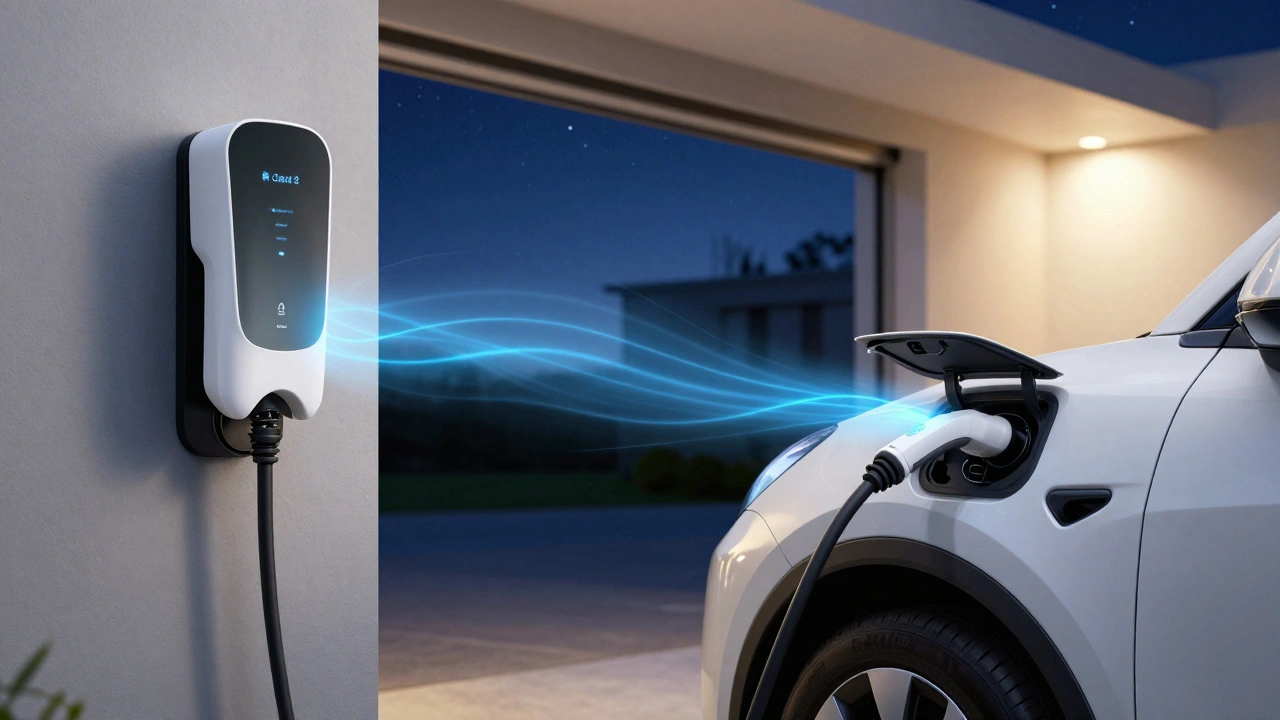
The solution isn't just building new power plants; it is smarter consumption. Smart Charging acts as the digital layer managing this flow. These systems communicate with the Utility Companies to defer charging until off-peak hours or renewable surpluses occur. For instance, if wind generation is high and demand is low at midnight, your car gets priority. During a hot August afternoon when cooling peaks, it waits. This flexibility alone can prevent billions in upgrade costs for transmission lines.
| Charging Type | Projected Ports | Share of Total | Primary Location |
|---|---|---|---|
| Private Level 1 & 2 | 25.7 Million | 92% | Single-Family Homes |
| Public/Private L2 | 2.1 Million | 7.6% | Apartments, Workplaces, Retail |
| DC Fast Charging | 0.18 Million | 0.4% | Highway Corridors |
Commercializing Vehicle-to-Grid Technology
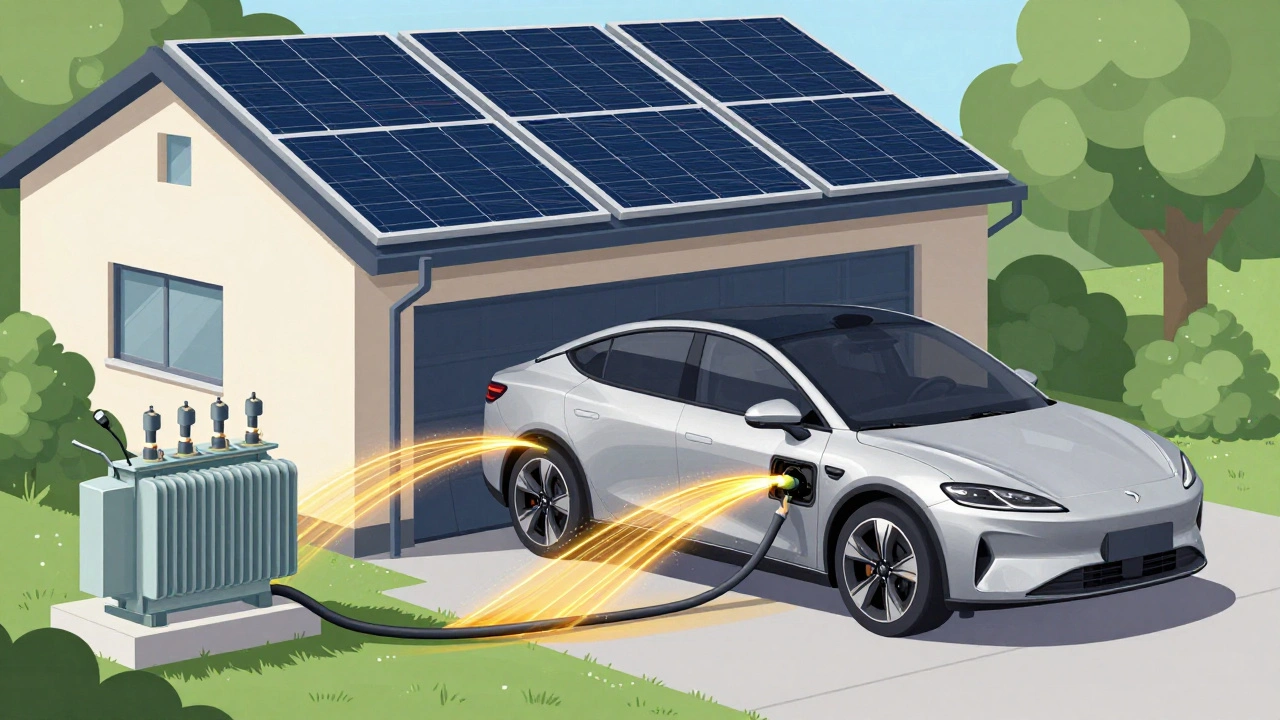
In 2026, we are seeing a watershed moment with Vehicle-to-Grid (V2G) moving from pilot programs to standard operations. Previously, your car was just a battery that consumed energy. Now, under standards like ISO 15118-20, it becomes a storage asset you can monetize. The technology allows bidirectional flow. When the grid strains during a heatwave, your parked vehicle can discharge stored kilowatt-hours back to the local transformer to stabilize voltage levels.
Economic incentives are already driving adoption here. In the United Kingdom, individual owners earn roughly GBP 320 per vehicle annually through tariffs like Octopus Power Pack. The National Grid there expects to need 20 gigawatts of flexibility by 2030. Cybersecurity has become the biggest hurdle for V2G since connecting cars to the utility requires secure authentication to prevent hacking. As deployment grows, regulations mandate these security protocols strictly. Kerbside charging is also evolving; with 9.3 million UK households lacking off-street parking, street-side V2G deployments are following a five-step audit process to accelerate market entry.
Policy Frameworks Driving Deployment
Government funding remains the backbone of this scaling effort. The U.S. government allocated over USD 1.5 billion via the National Electric Vehicle Infrastructure (NEVI) Formula Program. This supports development along approximately 75,000 miles of highways. The goal is to install at least 500,000 devices by 2030, focusing on reliability rather than just quantity. In 2026, uptime became a more critical metric than speed for operators. Retail companies are stepping in where governments slow, investing in depot chargers for fleets and workplace stations to capture tax credits.
However, gaps persist geographically. Metropolitan areas enjoy dense charger concentrations, leaving rural regions vulnerable to isolation. International disparities are even sharper. India currently struggles with roughly 200 electric vehicles competing for every single public charging point. That ratio signals acute infrastructure deficits compared to developed markets. Bridging this gap requires not just capital, but significant investment in grid modernization to match vehicle fleet growth rates locally.
Long-Term Projections and Sustainability
Looking past the immediate decade, the trajectory remains steady. Through 2040, the sector is expected to grow at a compound annual rate of 12.3%, reaching 206.6 million total ports globally. The dominance of residential charging holds true even then, with an estimated 133 million residential ports. This confirms a fundamental shift in energy architecture. We aren't replacing fuel pumps one-for-one with fast chargers. We are turning every driveway into a managed node within the broader Renewable Energy ecosystem.
Integrating solar and wind directly into charging stations reduces carbon footprints further. Public-private partnerships are accelerating this deployment by sharing logistical burdens. Ultimately, the challenge isn't technological anymore; it is logistical and financial. Executing the installation of millions of ports while maintaining real-time communication with substations defines success.
Will widespread EV adoption crash the power grid?
Not if managed correctly. Current projections indicate that 80% of charging occurs at home, primarily overnight. Smart Charging technology smooths this load, preventing simultaneous peaking that historically damages grid stability.
Is ultra-fast charging the future of infrastructure?
Ultra-fast charging requires massive power (up to 756kW) which strains local substations. The preferred model focuses on ubiquitous Level 2 charging for daily use and limited DC fast chargers for highway travel.
How does Vehicle-to-Grid (V2G) help homeowners?
V2G allows your EV battery to sell energy back to the grid during high-demand periods. In markets like the UK, owners can generate significant monthly revenue through demand response programs.
What role do utility companies play in 2026?
Utilities now manage real-time pricing and direct charging windows to prevent transformer overload. They incentivize night-time charging when renewable energy generation is highest.
Are there differences in EV infrastructure globally?
Yes. Developed markets focus on grid integration and reliability, while emerging economies like India face basic deficits with hundreds of cars per single charging station.