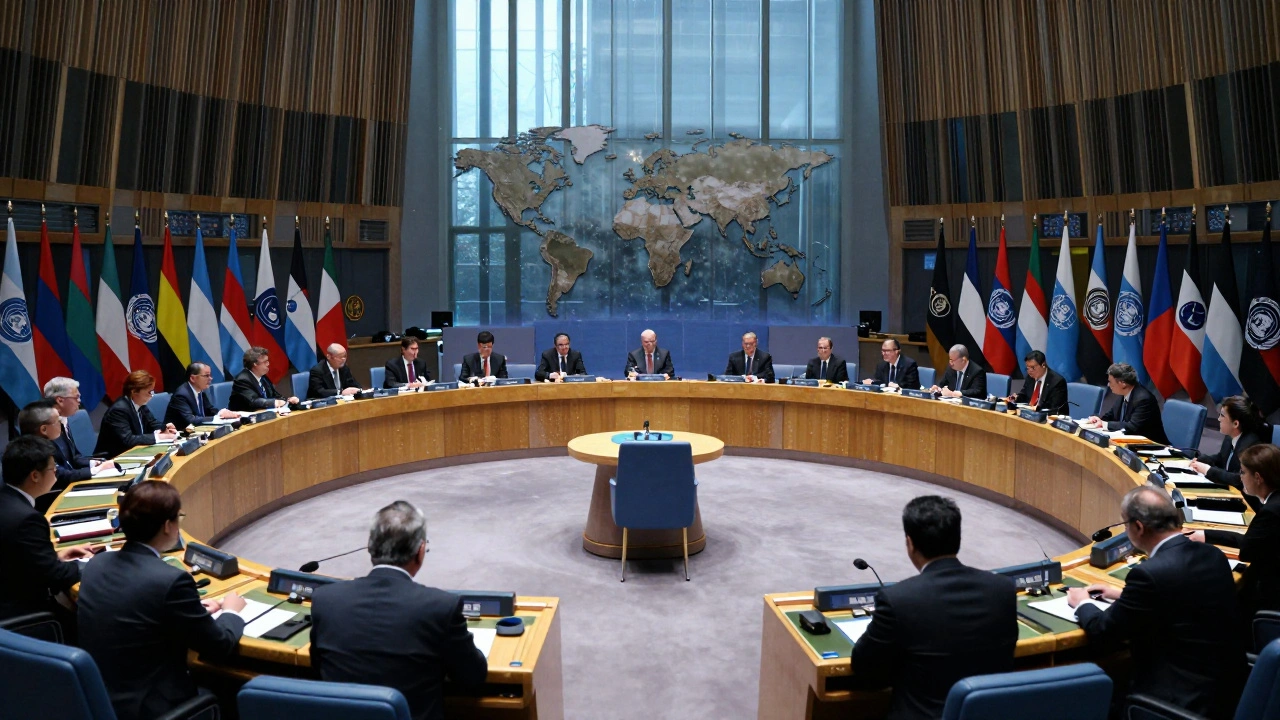
Resolution 2803 Scenario Simulator
Test the stability of the November 2025 Framework. Adjust the deployment and compliance levels to see the projected outcome by December 2027.
ISF Deployment
Select the number of neutrality-focused nations deploying troops:
Compliance Metrics
Voluntary disarmament by armed groups is crucial but difficult.
Aid Logistics
Ensure supplies reach the 1.4M displaced without diversion.
Quick Summary
- The UN Security Council endorsed Resolution 2803 in November 2025, authorizing a transitional governance board for Gaza.
- A multinational International Stabilization Force (ISF) is deployed to oversee security and demilitarization.
- Implementation relies on parallel withdrawal by Israeli forces and voluntary disarmament by Palestinian armed groups.
- Five nations have committed troops, though full buy-in from local factions remains a diplomatic challenge.
- The plan aims to establish a reformed Palestinian Authority by the end of 2027.
The situation on the ground has shifted dramatically over the last eighteen months. When we look at the landscape in late March 2026, the Gaza Stabilization Proposal represents a pivotal moment in decades of conflict. It is no longer just theory; it is an active operational framework authorized by the world's body of security governance. The core document driving this effort is Resolution 2803A formal UN Security Council resolution adopted on November 17, 2025, mandating a ceasefire and transitional administration. But does the ink on the paper hold up against the dust on the streets? That is the question every observer is asking today.
We are operating under a timeline that feels tight but historically unprecedented. The truce held in October 2025 marked the beginning of Phase One. Now, nearly five months later, the focus has shifted from stopping shots to building structures. The goal is explicit: move toward a reformed Palestinian AuthorityThe governing body intended to administer the West Bank and Gaza Strip post-conflict capable of handling its own affairs. By December 2027, the mandate expires unless extended. This creates a pressure cooker environment where progress must be visible, measurable, and sustained.
The Architectural Blueprint: From Concept to Mandate
To understand where we stand in March 2026, we have to rewind to how this came together. It started with a rough draft prepared by Tony BlairFormer British Prime Minister who developed the initial draft peace plan in July 2025 earlier in the year. It was quickly refined by Washington. The resulting 20-point peace plan gained traction because it wasn't just imposed; it was negotiated between adversaries. When President Donald Trump presented his version in September 2025, he brought weight behind the concept. By October, both Israel and HamasA Palestinian Sunni-Islamic fundamentalist organization designated as a terrorist group by many nations had signaled agreement on the immediate ceasefire terms.
This diplomatic momentum led directly to the vote on the Security Council floor. Resolution 2803 passed with 13 votes in favor, none against. Even the abstentions from China and Russia were significant-they didn't block the plan. This level of consensus is rare in modern diplomacy. The resolution established the legal foundation for everything happening now. Without it, the deployment of foreign troops would lack authorization. With it, the United NationsAn intergovernmental organization tasked with maintaining international peace and security has a clear legal pathway to intervene.
At the heart of this architecture is the Board of PeaceA multinational oversight body designed to administer Gaza during the interim period. Think of this as the executive committee of the transition. It isn't just another UN committee sitting in a conference room. It has operational teeth. Under its umbrella sits the National Committee for the Administration of Gaza (NCAG). This body is tasked with the nitty-gritty of governance: running hospitals, clearing rubble, managing schools. It is the bridge between military control and civil administration.
Security on the Ground: The International Stabilization Force
You cannot govern without security, and that is where the complexity truly sets in. The plan mandates the creation of the
Contributing Country
Region
Role Focus
Indonesia
Southeast Asia
Troop Deployment
Morocco
North Africa
Troop Deployment
Kazakhstan
Central Asia
Troop Deployment
Kosovo
Europe
Troop Deployment
Albania
Europe
Troop Deployment
This mix is deliberate. You see Indonesia, Morocco, Kazakhstan, Kosovo, and Albania all contributing troops. Why these countries? None of them are traditional superpowers in the region. They offer a degree of neutrality that major powers like France or Germany might lack. Their presence signals global buy-in rather than regional sectarian intervention. The force is mandated to protect civilians, escort aid, and oversee the withdrawal of other military actors.
The role of the ISF is distinct from enforcement. As academic analysts note, expecting this force to forcibly disarm every militant group is unrealistic. The plan relies heavily on voluntary compliance. This nuance is crucial. If the locals decide not to hand over weapons, the ISF is not designed to storm every hillside home. Instead, they provide a secure perimeter while negotiations happen inside. This design avoids turning peacekeepers into combatants, which often backfires in similar missions.
The Governance Gap: Who Runs Gaza?
The ultimate goal isn't permanent UN rule; it's handing power back to Palestinians. The transitional governance structure is centered on the idea of reforming the Palestinian Authority. Currently, the NCAG is vetting thousands of candidates for civilian police roles. This is slow work. Insecurity breeds corruption, and vetting takes time. High Representative Nickolay MladenovAppointed as the High Representative for Gaza under the Board of Peace framework in 2026 addressed the Security Council recently, emphasizing that the end state is self-determination. He stated clearly that there is "no credible path... if Gaza remains under the control of Hamas."
This statement highlights the friction point. The guarantor nations-US, Egypt, Turkey, and Qatar-are pushing hard for the dismantling of armed wings. The decommissioning framework operates on reciprocity. As the ISF takes over street security, Israeli forces withdraw. Simultaneously, Palestinian armed groups must decommission. It is a synchronized dance. If one side pauses, the whole process stalls. The report indicates that serious discussions regarding acceptance are underway as of late March, but final signatures on the decommissioning charter are still pending.
Humanitarian Reality vs. Political Ambitions
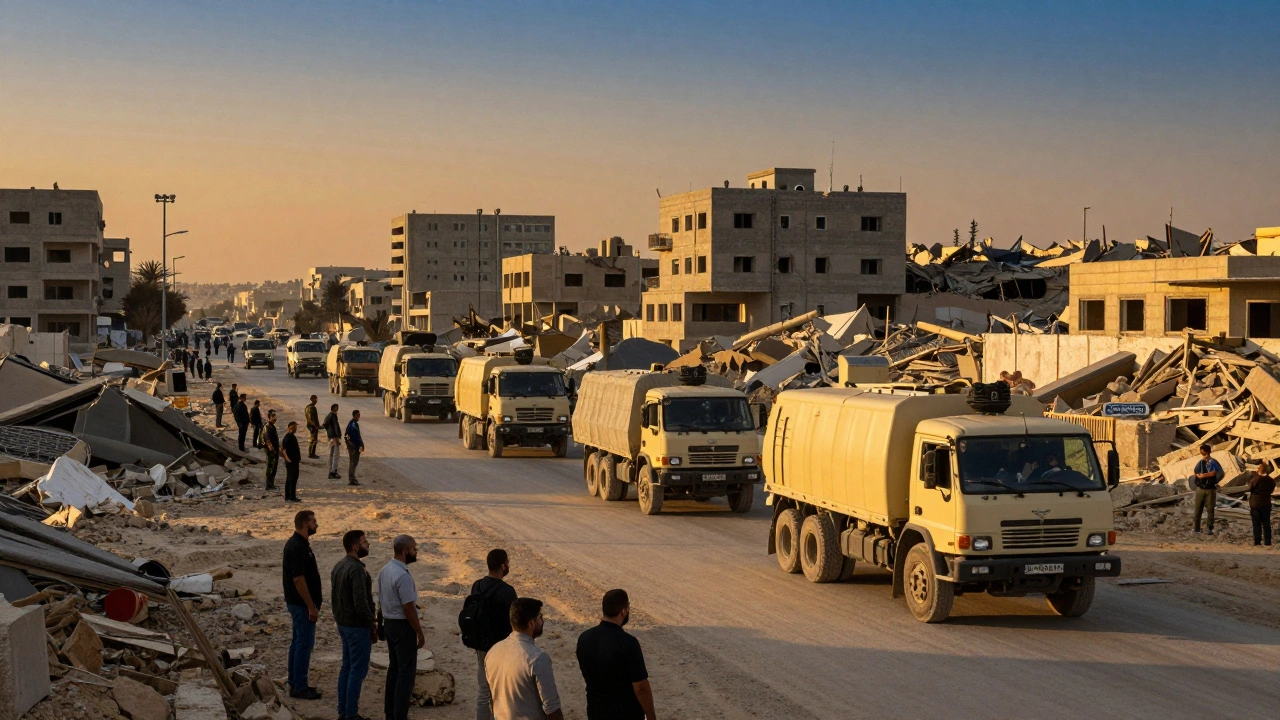
Bureaucracy often ignores the human cost, but here the numbers are stark. Approximately 1.4 million people remain displaced across roughly 1,200 sites. These figures represent more than half of the pre-2023 population. Many are living in overcrowded conditions that violate basic sanitary standards. The stabilization plan explicitly mentions coordinating aid so it doesn't get diverted. This addresses a long-standing logistical nightmare where supplies ended up in the wrong hands.
The UN is tasked with facilitating aid through the Board. However, access roads matter. The ISF escorts these convoys through safe corridors. If those corridors close, the political framework collapses regardless of how good the paperwork is. The humanitarian component acts as a litmus test for the entire mission. If people continue to starve or lack shelter, the "legitimacy" of the deal evaporates locally.

Feasibility Constraints and Risks
Is this actually working? There are red flags. The dependency on voluntary disarmament is the biggest risk. The High Representative noted that success depends on factions accepting the framework. Right now, that acceptance isn't total. Diplomatic pressure is being applied by the Security Council members to urge compliance. It sounds nice, but political will fluctuates. A change in domestic politics within the guarantor nations could unravel the guarantees.
Another constraint is the definition of security. The resolution states Israeli forces withdraw based on milestones linked to demilitarization. What are those milestones? The text is vague on metrics. How much destruction counts as "demilitarized"? Who decides when a terror threat is gone? These ambiguous terms leave room for interpretation and delay. Operational leaders on the ground need clear rules of engagement, but politicians in capitals prefer flexibility to maintain leverage.
Political Horizon: The Two-State Solution
Long-term vision matters. Mladenov explicitly linked this recovery to a two-state solution. This stabilizes the expectation that this isn't a temporary patch job. It is a bridge. By anchoring the transition to a broader peace settlement, the plan appeals to the international community's historical preference for partition. However, the gap between a stable Gaza and a sovereign Palestinian state is massive. Bridging that requires economic viability and political reconciliation, which are not currently addressed in the immediate mandate.
The geopolitical coalition is unique too. You have Kosovo and Albania contributing to an Arab conflict. It suggests a globalization of the peacekeeping effort. It dilutes the perception of Western imposition. Yet, it also means accountability is distributed. If things go wrong, blame can be shared among many capitals, potentially reducing effective responsibility.
Frequently Asked Questions
When does the Gaza Stabilization Plan officially expire?
The mandate set by Resolution 2803 is authorized until December 31, 2027. This endpoint is subject to review and extension by the Security Council based on progress reports submitted every six months.
Which countries are providing troops to the International Stabilization Force?
As of March 2026, five nations have formally committed troops: Indonesia, Morocco, Kazakhstan, Kosovo, and Albania. These contributions come from diverse regions to ensure neutrality.
What happens if Hamas refuses to disarm voluntarily?
The plan relies on reciprocal withdrawal with Israeli forces. Forced disarmament is considered beyond the ISF's realistic capability. Continued refusal would likely stall the transition and require renewed diplomatic pressure from the Security Council.
Who leads the administrative governance of Gaza during this period?
The National Committee for the Administration of Gaza (NCAG) acts as the primary administrative body. It operates under the oversight of the multinational Board of Peace and the UN-appointed High Representative.
Is this plan leading to an independent Palestinian state?
Yes, the long-term goal defined by the High Representative includes a pathway to Palestinian self-determination and statehood, framing this stabilization phase as a bridge to a final two-state solution.