Catastrophe Bond Risk & Return Calculator
Based on historical data, about 70% of cat bonds mature without triggering
When Hurricane Ian hit Florida in 2022, insurers faced a $50 billion loss. Traditional reinsurance couldn’t cover it all. So who paid the rest? Investors in catastrophe bonds.
These aren’t your typical bonds. They’re financial tools built to absorb the cost of natural disasters - hurricanes, wildfires, floods - and shift that risk from insurance companies to Wall Street. As climate change makes extreme weather more frequent and expensive, catastrophe bonds have become a core part of how the global reinsurance system stays alive.
What Exactly Is a Catastrophe Bond?
A catastrophe bond (or cat bond) is a reinsurance contract wrapped in a bond. Here’s how it works: an insurance company or reinsurer creates a special legal entity called a Special Purpose Vehicle (SPV). Investors buy bonds issued by that SPV. Their money gets locked into low-risk assets like U.S. Treasury bills. In return, they earn interest - higher than normal bonds - because they’re taking on a big risk.
If a predefined disaster happens - say, a Category 4 hurricane makes landfall in Florida - the SPV uses the investors’ money to pay the insurer. The investors lose part or all of their principal. If nothing happens, they get their money back plus the high interest.
Unlike traditional reinsurance, which renews yearly and relies on claims adjustments, cat bonds use parametric triggers. That means payment isn’t based on how much damage occurred. It’s based on objective data: wind speed, earthquake magnitude, or wildfire burn area. No disputes. No delays. If the trigger is hit, the payout is automatic.
Why Are Cat Bonds So Important Now?
In 2025, natural disasters cost the world $107 billion. The U.S. alone accounted for most of the insured losses - California wildfires, Midwest tornado outbreaks, Gulf Coast hurricanes. But here’s the problem: less than 60% of global weather-related losses are covered by insurance. That leaves governments, businesses, and families to pick up the $150 billion gap.
Traditional reinsurance is shrinking. Insurers are pulling out of high-risk areas. After California’s wildfire losses, many companies refused to renew policies. The state had to force them back in - but only if they could use better modeling and raise rates. That meant they needed more reinsurance. And when traditional reinsurers couldn’t or wouldn’t take on more risk, the market turned to cat bonds.
Reinsurers prefer cat bonds because they’re cheaper than raising equity. The cost of raising capital for reinsurers is often higher than the premiums they pay on cat bonds. Securitizing risk lets them offload exposure without diluting ownership or increasing debt.
How Are Cat Bonds Priced?
Pricing these bonds isn’t guesswork. It’s math - advanced math. Actuaries and quants use models based on inhomogeneous Poisson processes to estimate how often storms or fires will hit. They factor in seasonal patterns - hurricanes are more likely in August than January. Climate change is now baked into these models. Investors aren’t just pricing today’s risk. They’re pricing tomorrow’s.
The key is the risk premium. This is the extra return investors demand for taking on disaster risk. In early 2023, that premium was around 11%. By early 2026, it dropped to 5.2%. Why? Because the market got flooded with new cat bonds. More supply. Less scarcity. And fewer big losses in 2024 meant investors didn’t lose money - so they accepted lower returns.
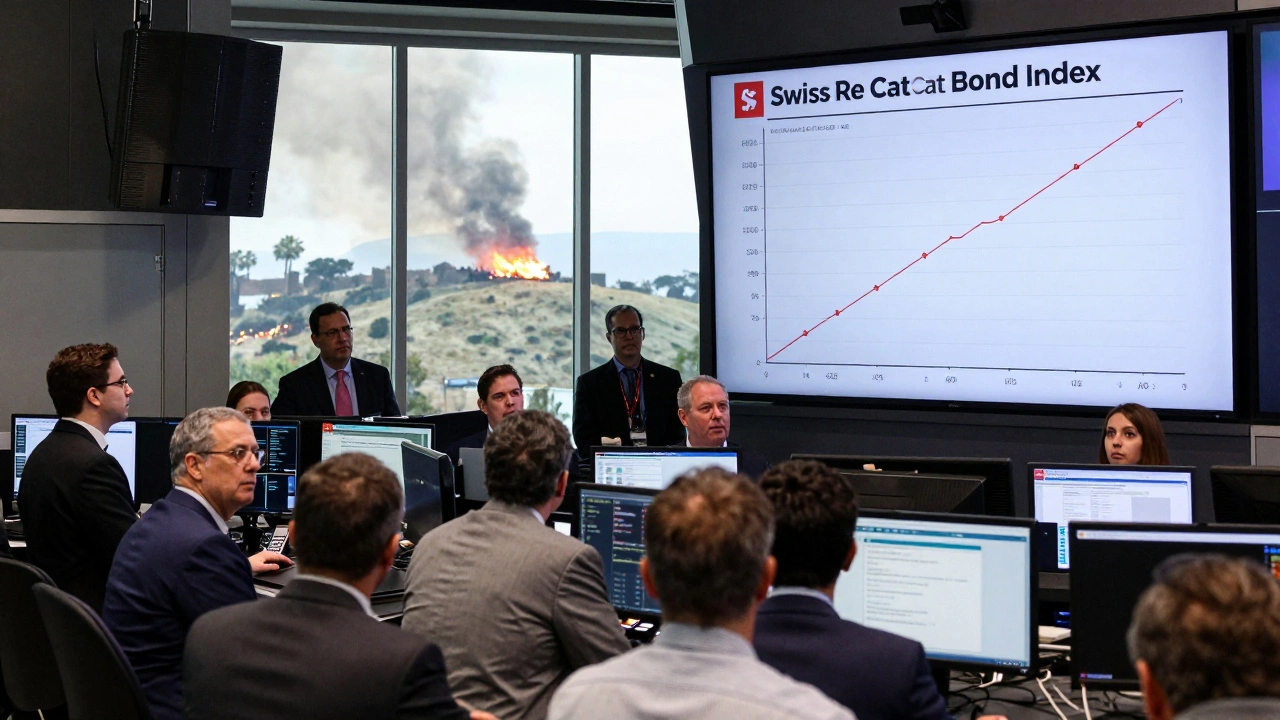
But here’s the twist: even with lower premiums, cat bonds still outperformed most fixed-income assets. The Swiss Re Global Cat Bond Index returned 61% between 2021 and 2025. Even in 2024, when no major event hit, returns stayed above 11%. That’s because investors aren’t just betting on disasters - they’re betting on the absence of disasters.
Triggers and Tranches: The Hidden Structure
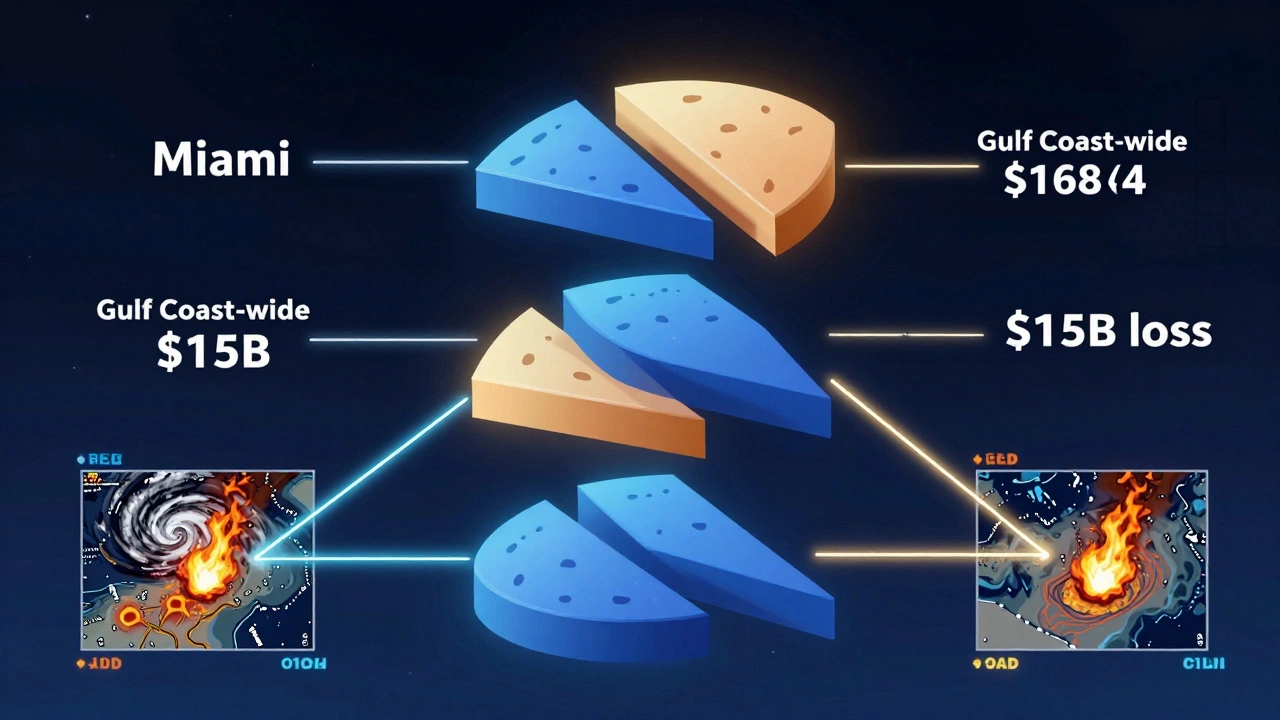
Not all cat bonds are the same. Many have multiple tranches - layers of risk. Think of them like slices of a pie.
- The first tranche might pay out only if a storm exceeds Category 4 and hits Miami.
- The second tranche pays if it hits any coastal city from Tampa to Charleston.
- The third tranche pays if the total insured loss in Florida hits $15 billion.
Investors choose which tranche they want. Higher risk = higher return. Lower risk = lower return. This lets institutional investors - pension funds, hedge funds, sovereign wealth funds - tailor their exposure.
Parametric triggers also vary. Some use wind speed. Others use seismic intensity. A few now use satellite data to measure wildfire burn area. The more precise the trigger, the less room for argument. That’s why cat bonds are replacing older reinsurance contracts - they’re transparent, fast, and predictable.
Climate Change Is Changing the Game
Extreme heat is now the deadliest climate risk - causing nearly 500,000 deaths a year, more than all hurricanes, floods, and earthquakes combined. Yet, there are almost no cat bonds for heat. Why? Because heat isn’t localized. You can’t set a trigger for “115°F in Phoenix for 10 days” and say, “Pay out.” Heat kills slowly, across continents. It’s hard to model. It’s hard to insure.
But hurricanes? Easy. Wildfires? Getting easier. Earthquakes? Well-understood. So the market focuses where it can measure. That’s why U.S. hurricane risk dominates the cat bond market. Over 60% of all cat bonds cover North Atlantic hurricanes.
Still, investors are starting to price in long-term climate trends. Some market studies show an upward-sloping term structure - meaning longer-term bonds (3-5 years) carry higher yields than short-term ones. That’s unusual. Normally, longer bonds pay less. But here, investors are betting that climate change will make disasters worse over time. They’re demanding more return for holding the bond longer.
The Market Is Cooling - But Not Because the Risk Is Lower
With cat bond premiums falling from 11% to 5.2%, some analysts warn of a “softening” in the reinsurance market. Barclays says this compression could hurt traditional reinsurers. If capital markets are willing to take risk at 5%, why would reinsurers charge 10%?
But don’t mistake lower premiums for lower risk. The risk hasn’t gone down. It’s gone up. The number of billion-dollar disasters has doubled since 2010. The cost of rebuilding has climbed 40% due to inflation, labor shortages, and supply chain issues. What’s changed is that investors now see cat bonds as a legitimate asset class - not a gamble.
Pension funds and endowments are allocating more to them. Why? Because they’re uncorrelated with stocks and bonds. When the market crashes, cat bonds often pay out. When a hurricane hits, stocks fall - but cat bond investors get paid. That makes them a hedge, not just a yield play.
What’s Next?
The cat bond market is still small - about $90 billion in outstanding issuance as of early 2026. Compare that to the $1.2 trillion global reinsurance market. But it’s growing fast. New triggers are being developed for droughts, flood zones, and even crop failures. The World Bank and IMF are pushing for cat bonds to cover developing nations - where 80% of disaster losses go uninsured.
Regulators are watching closely. California’s wildfire reforms show how government policy can force the market to adapt. Other states may follow. If more insurers are required to cover high-risk areas, demand for cat bonds will rise.
One thing is clear: as climate risk becomes the biggest financial threat of the 21st century, the world won’t rely on governments alone to pay for it. It will rely on investors - and the bonds they buy.
How do catastrophe bonds differ from traditional reinsurance?
Traditional reinsurance is a contract between insurers that renews annually and pays based on actual loss assessments, which can take months or years. Catastrophe bonds are issued to investors, use pre-defined parametric triggers (like wind speed or earthquake magnitude), and pay out automatically when conditions are met. They’re faster, more transparent, and last 2-5 years instead of one.
Why are investors buying catastrophe bonds despite the risk of losing money?
Because they offer high returns with low correlation to financial markets. Between 2021 and 2025, cat bonds returned 61% on average. Even in 2024, with no major disasters, returns were 11%. Investors earn a risk premium (currently around 5.2%) on top of Treasury yields. For institutional investors, this is a reliable income stream with portfolio diversification benefits.
What role does climate change play in cat bond pricing?
Climate change is now a core input in pricing models. Historically, models used past data. Now, they factor in projected increases in storm intensity, wildfire frequency, and sea level rise. Some cat bonds already show higher yields for longer terms - suggesting investors expect worse disasters in the future. This is reshaping how risk is priced across the entire reinsurance industry.
Why are parametric triggers used instead of actual loss calculations?
Parametric triggers eliminate disputes and delays. Instead of waiting for claims adjusters to assess millions of damaged homes, payment is triggered by objective data - like NOAA wind measurements or satellite fire maps. This makes payouts faster, cheaper, and more reliable, which is critical after a disaster when cash is needed immediately.
Are catastrophe bonds a good investment for individual investors?
Most cat bonds are sold to institutional investors - pension funds, hedge funds, insurance companies. They require large minimum investments, often $1 million or more. Retail investors can gain exposure through ETFs or mutual funds that hold cat bonds, but these are rare and carry high volatility. For most individuals, they’re not practical unless held as part of a diversified institutional portfolio.
What happens if no disaster occurs during the bond term?
If no qualifying event occurs, the investor gets their full principal back along with all interest payments. This is why cat bonds have delivered strong returns even in years with no major disasters - investors keep the premium and their capital. In fact, most cat bonds mature without any payout.