Methane Reduction Calculator
Calculate Your Methane Reduction Impact
See how quickly methane reduction technologies can pay for themselves while helping the planet.
Results will appear here
Select your sector and technology, then enter your operational data to see potential savings.
When you think about climate change, CO2 usually comes to mind. But methane? It’s 80 times more powerful at trapping heat than CO2 over 20 years. And here’s the kicker: methane emissions from just three sectors - oil and gas, agriculture, and waste - make up nearly 40% of human-caused warming. The good news? We don’t need futuristic tech to cut them. We have tools today that work, pay for themselves, and can slash emissions in months, not decades.
Oil and Gas: The Low-Hanging Fruit
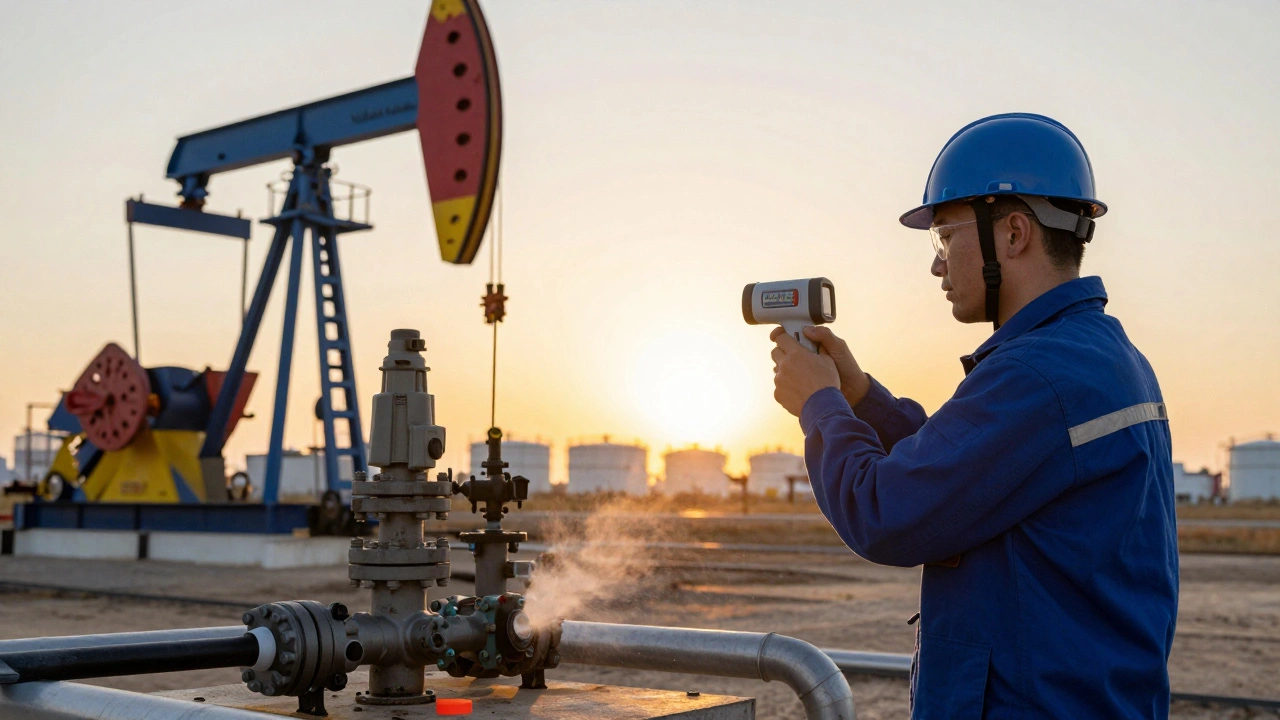
The oil and gas industry is the easiest place to start. Why? Because methane leaks aren’t just pollution - they’re lost money. Every cubic foot of gas that escapes is a foot you could’ve sold. Companies that fix leaks aren’t just helping the planet - they’re boosting profits.
According to the International Energy Agency, we can cut oil and gas methane emissions by 75% using today’s technology. McKinsey says half of that reduction can happen at no net cost. That’s not a guess. It’s based on real data from thousands of sites. The biggest sources? Seven main ones:
- Pneumatic controllers (valves that vent gas to operate)
- Compressor seals (where gas leaks around moving parts)
- Tank vents (hydrocarbon vapors escaping from storage)
- Well completions (gas released during drilling)
- Oil well flaring (burning off excess gas)
- Dehydrators (devices that remove water from gas)
- Leaks from pipes, valves, and fittings
Fixing these isn’t rocket science. For pneumatic controllers, switching to zero-bleed models stops gas from venting entirely. Some run on solar power. Others use electricity or compressed air. It’s a one-time install, and the gas you save pays for it in under a year.
Compressor seals? Replace wet seals with dry ones. Or redirect the vented gas back into the pipeline. Both cuts are simple, cheap, and reduce emissions by 90% or more. Tank vents? Install vapor recovery units. These small compressors capture vapors and send them straight to market. No more flaring. No more waste. Just revenue.
For well completions, Reduced Emissions Completions (REC) capture 95%+ of the gas that would’ve been released. In the U.S., this is now required for new wells. But many older sites still vent. Retrofitting them pays off fast. The Global Methane Initiative found projects like these have payback periods of just 3 to 18 months.
Dehydrators and Flaring: Easy Fixes, Big Payoffs
Dehydrators remove water from natural gas so it doesn’t corrode pipes. But they vent methane while doing it. Simple fixes? Route the vent gas to a burner that heats the glycol fluid - you’re using the methane to power your own equipment. Or install a condenser to capture heavier compounds. Even a flare, if properly maintained, burns off 95% of the methane. The key is not to let it go unlit.
Flaring gets a bad rap, but it’s not all bad. When gas can’t reach a pipeline, burning it is better than releasing it. But routine flaring? That’s lazy. The U.S. EPA’s new rules phase out routine flaring by 2027. Companies that act now avoid fines and gain goodwill. The Super-Emitter Program, part of the Inflation Reduction Act, uses satellites and drones to find big leaks - and penalize the worst offenders. That’s not regulation. It’s accountability.
Agriculture: Livestock, Manure, and Feed
Agriculture produces more methane than oil and gas. Mostly from cows. Each cow belches out 220 pounds of methane a year. That’s like driving a car 3,000 miles. But here’s the thing: we can cut this fast.
Feed additives like 3-NOP reduce methane from digestion by up to 30%. It’s been tested in over 100 farms. The cost? Less than $1 per cow per month. The payoff? Lower emissions and better feed efficiency. Cows gain weight faster. Farmers save on feed. It’s a win-win.
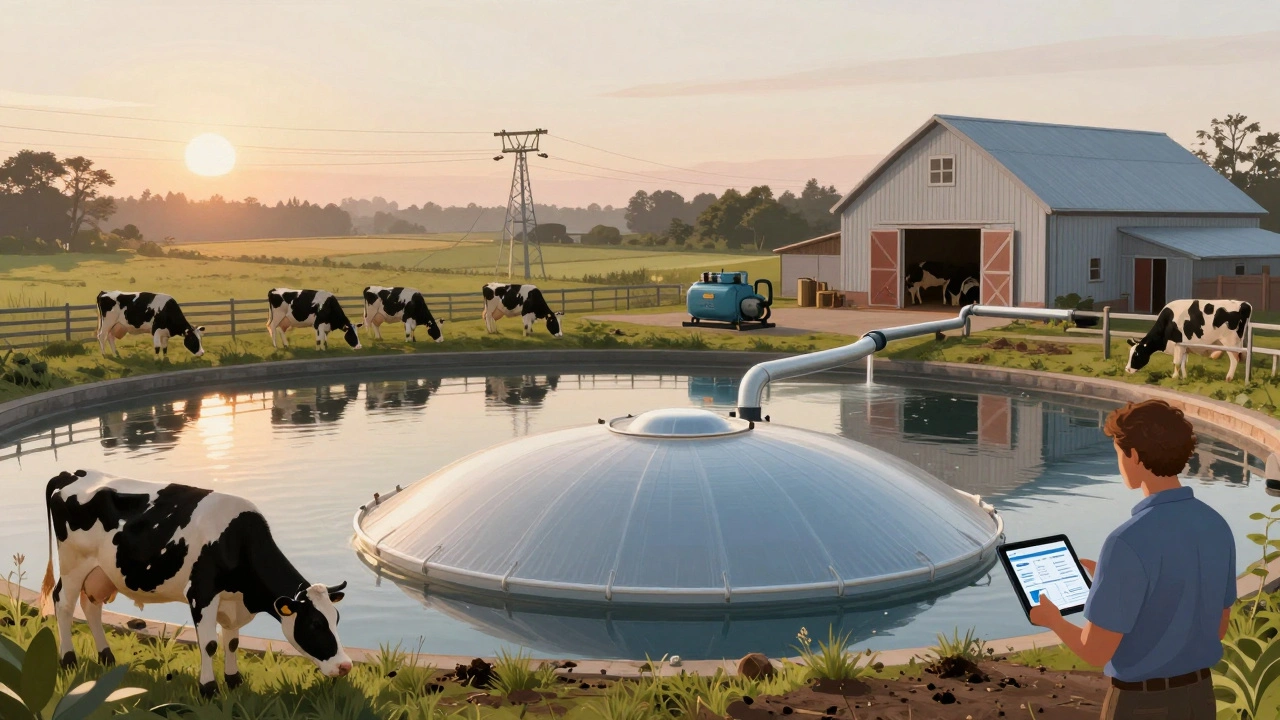
Manure storage is another big source. Open lagoons? They’re methane factories. Cover them with floating membranes or biogas digesters. These systems capture the gas, turn it into electricity, and cut emissions by 70%. In California, dairy farms with digesters get paid for carbon credits. In Europe, they get subsidies. In the U.S., the Inflation Reduction Act now funds manure digester projects. The payback? 2 to 5 years. Some are even faster.
And it’s not just cows. Pigs, chickens, and even rice paddies emit methane. For rice, switching from continuous flooding to alternate wetting and drying cuts emissions by 45%. It’s a simple change in irrigation. No new machines. Just smarter water use.
Waste: Landfills and Wastewater
Landfills are the third-largest source of human-caused methane. Organic waste - food scraps, yard trimmings, paper - breaks down and releases gas. But if you capture it, you turn trash into energy.
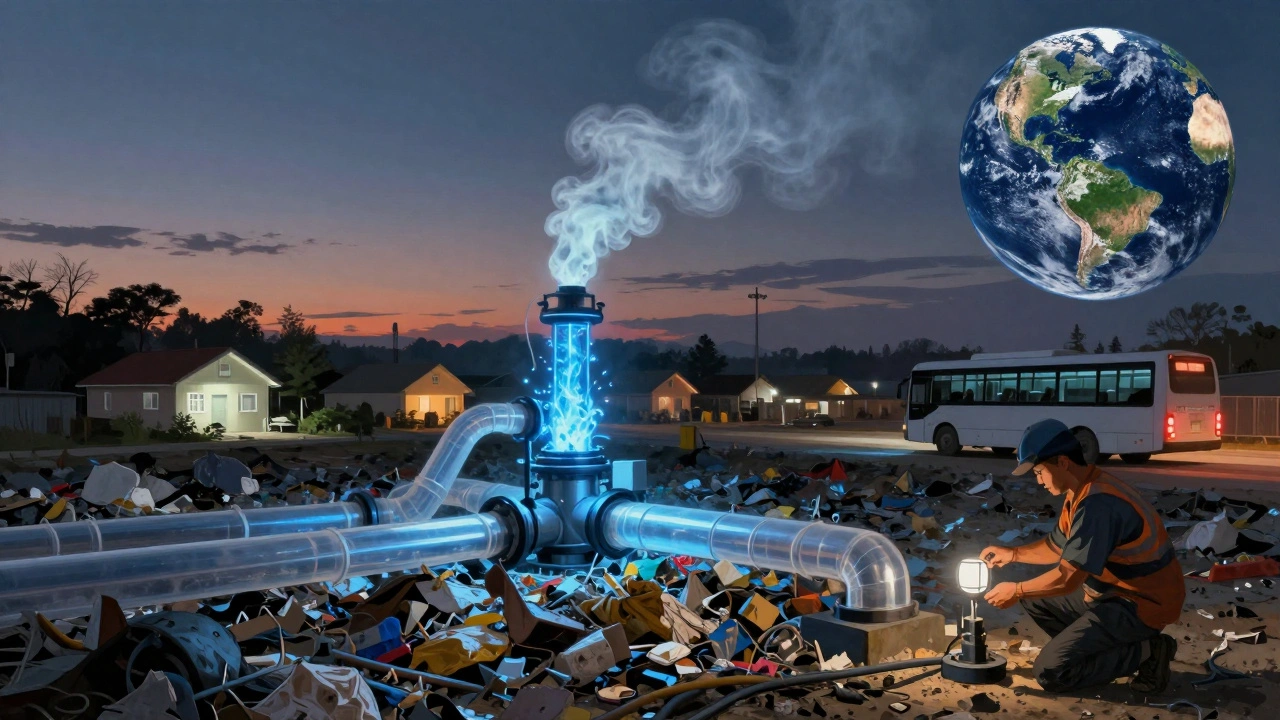
Landfill gas capture systems use pipes and pumps to suck methane out of the waste pile. That gas can power generators, heat buildings, or even fuel buses. The EPA says over 600 U.S. landfills already do this. But thousands more don’t. Installing a system costs $1 million to $5 million. But the gas it produces? Worth $2 million to $10 million over 10 years. Payback? 3 to 7 years. And with federal grants now available, many projects are fully funded.
Wastewater treatment plants? They emit methane from sludge. Covering digesters and capturing biogas cuts emissions by 80%. Some plants now use that gas to power their own operations. They don’t pay for electricity anymore. They sell the surplus. In New York City, the Newtown Creek plant generates enough power for 30,000 homes. That’s not science fiction. That’s today’s reality.
Why Now? The Business Case Is Clear
Companies that act early aren’t just doing the right thing - they’re getting ahead.
- Investors are asking: What’s your methane strategy?
- Regulators are watching: The EPA’s Super-Emitter Program is live.
- Customers care: Oil and gas buyers now demand methane data.
- Markets reward: Carbon credits, tax credits, and grants are flowing.
The Methane Guiding Principles, backed by 45 global companies, say methane reduction must be embedded in company culture. That means training staff, setting targets, and measuring everything. The best performers now report methane intensity down to 0.25% - and they’re aiming for 0.20% by 2025.
There’s no waiting for tomorrow. The tools are here. The money is here. The pressure is here. The only question is: who will act first?
What’s Holding People Back?
Two things: misinformation and inertia.
Some still think methane tech is too expensive. But the data says otherwise. Most fixes pay for themselves. Others think it’s too complicated. But the solutions are simple: replace a valve. Cover a lagoon. Install a sensor. No PhD required.
The real barrier? Leadership. If the plant manager doesn’t care, nothing changes. If the CEO doesn’t set targets, no one gets rewarded. Methane reduction isn’t a project. It’s a mindset. It’s about seeing gas not as waste - but as profit.
| Source | Technology | Reduction Potential | Payback Period | Key Benefit |
|---|---|---|---|---|
| Oil & Gas - Pneumatic Controllers | Zero-bleed controllers | 70-90% | 3-12 months | Eliminates venting; uses solar or electricity |
| Oil & Gas - Compressor Seals | Dry seals or gas redirection | 80-95% | 6-18 months | Prevents leaks; no new equipment needed |
| Oil & Gas - Tank Vents | Vapor recovery units | 85-95% | 4-16 months | Captures gas for sale; reduces air pollution |
| Oil & Gas - Well Completions | Reduced Emissions Completions (REC) | 95% | Immediate | Standard for new wells; retrofit pays fast |
| Agriculture - Livestock | Feed additives (e.g., 3-NOP) | 25-30% | 1-3 months | Improves feed efficiency; lowers cost per pound |
| Agriculture - Manure | Biogas digesters | 70-80% | 2-5 years | Generates electricity; qualifies for grants |
| Waste - Landfills | Gas collection systems | 80-90% | 3-7 years | Turns trash into power; sells carbon credits |
| Waste - Wastewater | Biogas capture from digesters | 80% | 2-4 years | Offsets energy costs; reduces odor |
What Comes Next?
Don’t wait for a regulation. Don’t wait for a grant. Start where you are.
- Oil and gas operators: Audit your sites. Use infrared cameras or drones to find leaks. Fix the top 5 sources. Track your progress monthly.
- Farmers: Talk to your feed supplier about 3-NOP. Ask about state programs that help pay for digesters.
- Municipal leaders: If you run a landfill or wastewater plant, check if federal funding is still available. Apply now - grants won’t last forever.
The next five years will define whether we meet climate goals. Methane is the fastest, cheapest lever we have. And unlike CO2, which lingers for centuries, methane breaks down in a decade. Cut it now, and the planet cools faster.
Is methane really that much worse than CO2?
Yes. Over 20 years, one ton of methane traps 80 times more heat than one ton of CO2. That’s why cutting methane now gives you the fastest climate payoff. Even if CO2 stays high, reducing methane can slow warming for the next 10 to 15 years.
Do I need to spend millions to cut methane?
No. Many fixes cost under $10,000. Replacing a pneumatic controller? $5,000. Installing a vapor recovery unit? $50,000. But both pay for themselves in under two years. The biggest investments - like digesters or landfill gas systems - cost more, but they’re often fully funded by grants or tax credits.
Are there government incentives for methane reduction?
Yes. The Inflation Reduction Act (2022) includes $1.7 billion for methane reduction in oil and gas, agriculture, and waste. There are also EPA grants, USDA programs for dairy digesters, and state-level carbon credit markets. You don’t have to pay out of pocket - many projects are fully subsidized.
Can small farms or independent operators afford this?
Absolutely. A small dairy farm with 100 cows can install a digester for under $200,000 - and get 70% of that covered by federal grants. Feed additives cost less than $1 per cow per month. Many cooperatives now pool resources to share equipment. You don’t need to be a giant to act.
What if I’m not in the U.S.? Do these solutions still work?
Yes. These technologies are used globally. Zero-bleed controllers are installed in Canada, Australia, and the Middle East. Landfill gas systems operate in Brazil, India, and Nigeria. The math doesn’t change: methane is wasted money everywhere. The tools are universal.
How do I know if my methane reduction efforts are working?
Start by measuring. Use handheld infrared cameras - they cost under $10,000 and can scan a whole site in a day. Many companies now use satellite data or drones for regular monitoring. Track your emissions intensity (methane per barrel of oil or per ton of manure). Set a goal: cut it by 30% in 18 months. Then measure again.