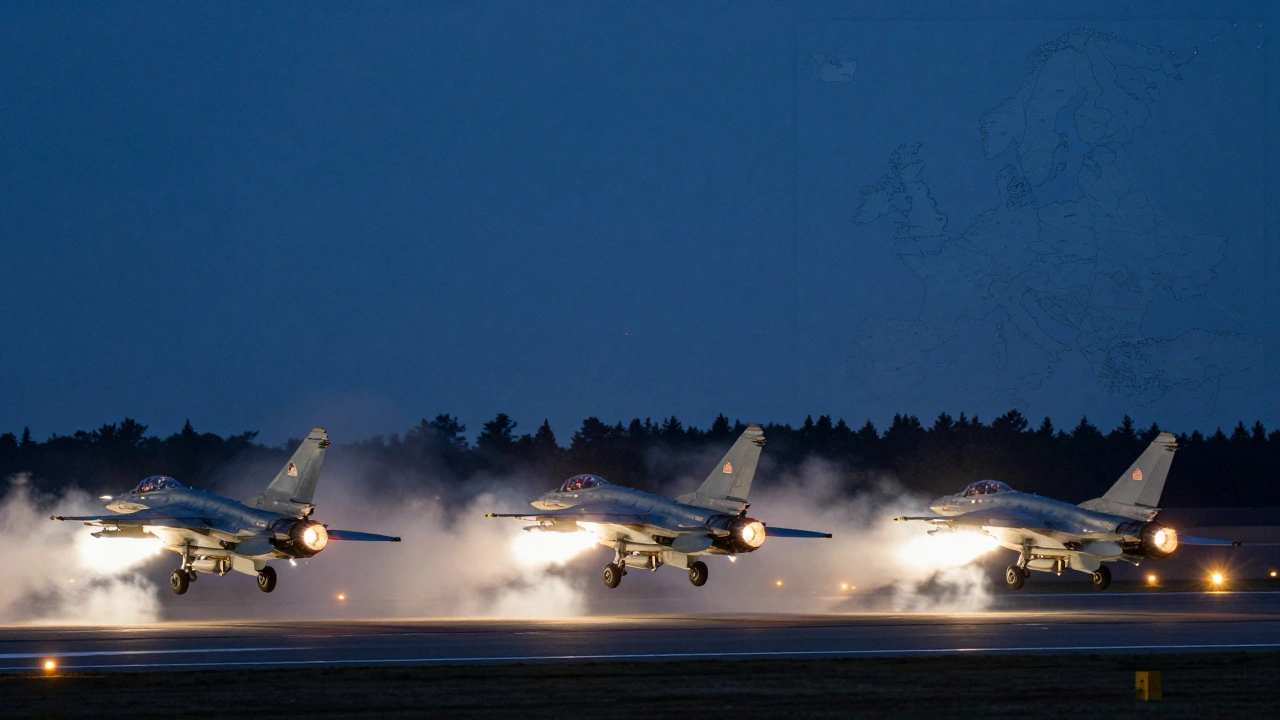
When Russia launched its full-scale invasion of Ukraine in 2022, NATO didn’t just watch from the sidelines. It started rewriting its entire air defense playbook. The war didn’t just change the battlefield in Eastern Europe-it forced the Alliance to rethink how it protects its own borders. One of the most visible responses? A massive, ongoing upgrade to NATO Air Policing.
What NATO Air Policing Actually Does
NATO Air Policing isn’t about attacking. It’s about watching. It’s about being ready. Since 2004, when the Baltic states joined NATO, the Alliance has kept fighter jets on standby at air bases in Lithuania, Estonia, and now Latvia. These aren’t permanent bases-they’re rotational. One month, it’s Canadian jets. Next, Spanish. Then Turkish. The point isn’t to have a huge force on the ground. It’s to show that if a Russian plane shows up near a NATO border without identifying itself, someone will scramble to intercept it-fast.Here’s how it works: three Combined Air Operations Centres (CAOCs) in Spain, Germany, and Norway monitor up to 30,000 air movements every single day. When something strange happens-say, a Russian surveillance jet flying close to Estonia’s border without a transponder-the nearest CAOC orders a fighter to take off. Pilots at Šiauliai Air Base in Lithuania have just 15 minutes to get airborne. No time for coffee. No time for paperwork. Just boots on the runway, engines roaring.
The Shift After Russia’s Escalation
Before 2022, most scrambles were routine. A Russian plane veered off course. A civilian drone wandered too close. NATO responded, logged it, and moved on. But after Russia’s full invasion of Ukraine, everything changed. In the year leading up to March 2026, NATO recorded over 500 rapid-response launches. That’s more than double the number from just two years earlier.The real wake-up call came in September 2025. Dozens of Russian drones and crewed aircraft crossed into NATO airspace. Not once. Not twice. Multiple times, over several days. Some were reconnaissance drones. Others were fighter jets testing NATO’s reaction time. One flew so close to Polish airspace that Dutch F-35s, operating under NATO command, shot them down. Not with expensive missiles. With precision strikes that proved drones could be intercepted without burning through a $1 million air-to-air missile.
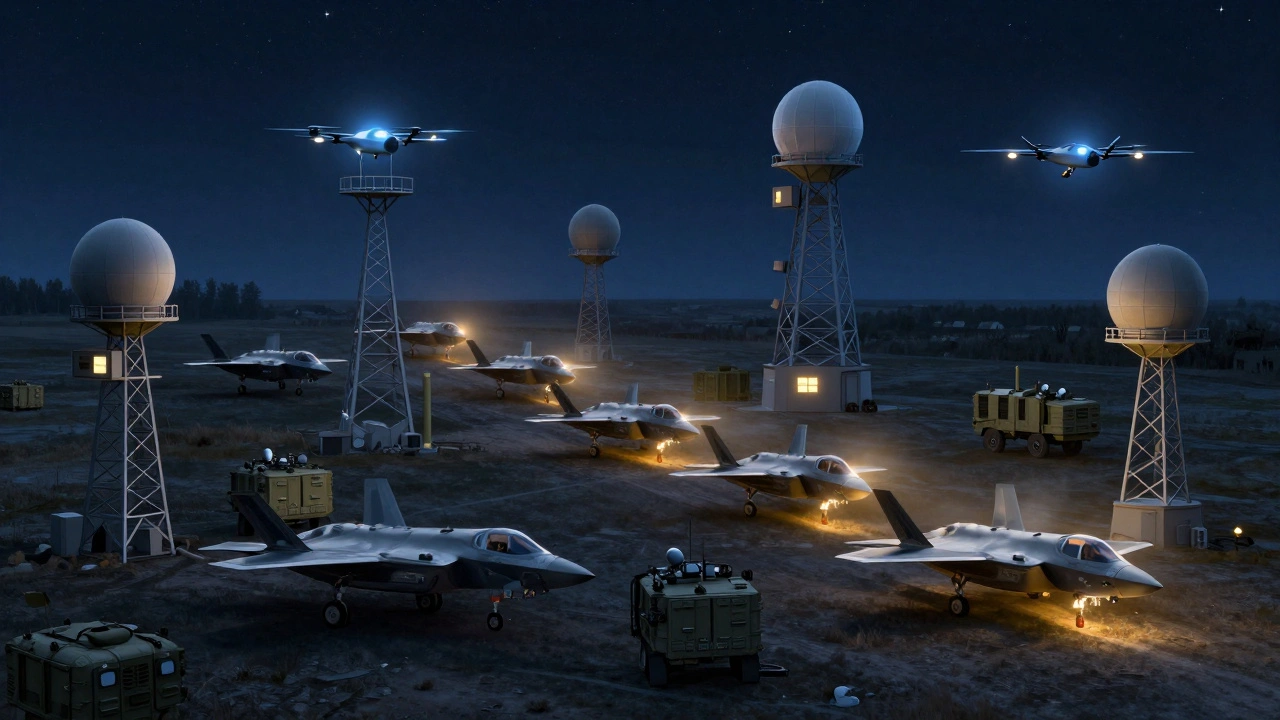
That’s when NATO launched Eastern Sentry-a new, multi-domain operation that doesn’t just rely on fighter jets. It adds ground-based air defense systems, electronic warfare units, and drone detection networks. It’s no longer just about watching the sky. It’s about building layers. Radar. Missiles. Drones. Jamming. All working together.
How the Ukraine War Changed the Rules
NATO used to prepare for wars fought by big planes and big missiles. Ukraine showed them a new kind of war: cheap drones, swarm attacks, cruise missiles launched from hundreds of kilometers away. And it forced NATO to adapt.Before, air defense meant intercepting a single jet with a single missile. Now, NATO is learning to deal with 20 drones at once. The Dutch F-35s in Poland didn’t just shoot down one drone-they proved a new tactic: using advanced sensors and smart targeting to take out low-flying, slow-moving threats without wasting expensive ordnance. That’s a game-changer. It means NATO can now defend its airspace without bankrupting itself.
NATO’s General Grynkewich says the Alliance is rewriting its entire air defense plan for the first time in decades. By summer 2026, the new system will be in place. It won’t just be about where jets are stationed. It’ll be about how they talk to each other. How radar data flows. How drones are tracked. How ground systems and fighter jets share targets in real time. This isn’t an upgrade. It’s a complete rebuild.
Turkey’s Expanded Role
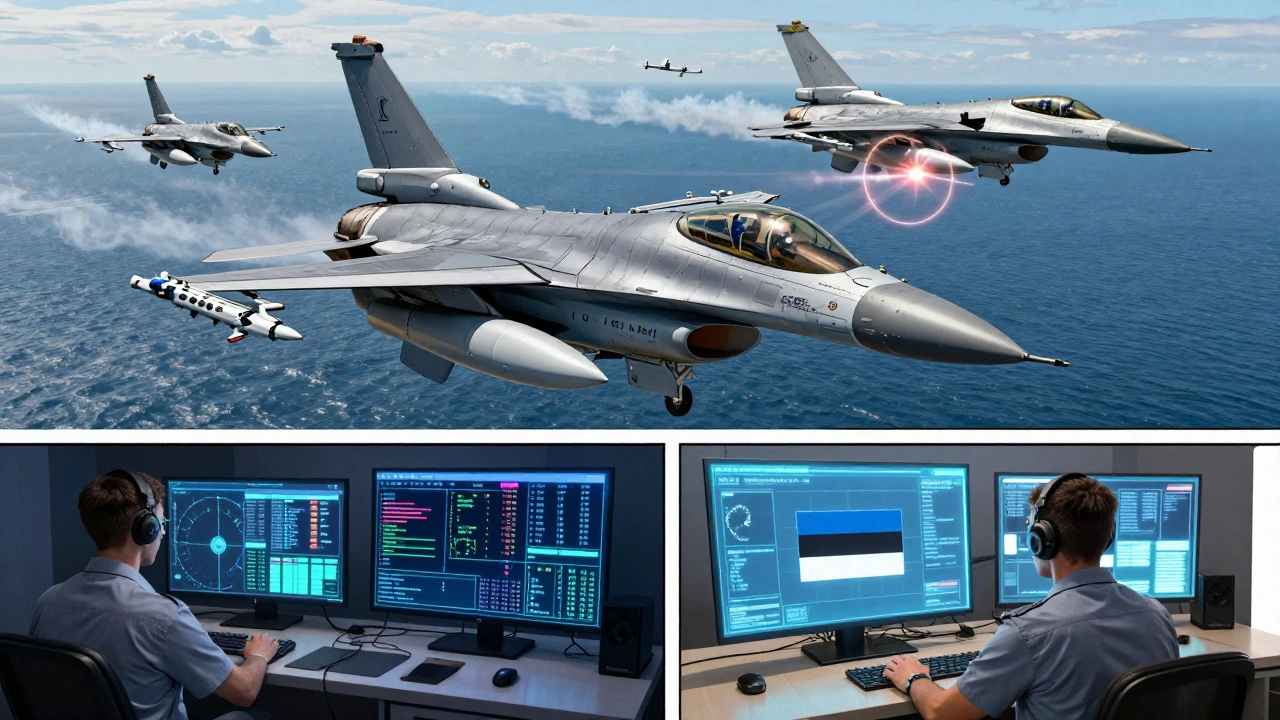
One of the biggest changes in 2026 is Turkey’s expanded commitment. In January, Ankara announced it would send F-16s to Estonia for four months starting in August-months earlier than planned. Then, in December, those same jets will move to Romania. Turkey’s last NATO air policing mission was in 2021. Now, they’re doubling down.Why? Because Turkey has one of the largest and most experienced air forces in NATO. And they’ve done this before. In 2021, they flew 30 sorties in Poland, intercepting Russian planes and training with Polish pilots. They know how to handle the pressure. Now, they’re being asked to do it again-on a larger scale.
This isn’t just about adding more jets. It’s about filling gaps. Spain sends EF-18Ms. The U.S. sends F-15s. Now, Turkey brings F-16s-proven, reliable, and numerous. It means NATO can keep jets in the air longer without burning out pilots or overusing one country’s resources.
The Three Bases, One Mission
NATO’s air policing mission used to be focused on Lithuania. Now, it’s a triangle. Šiauliai in Lithuania. Ämari in Estonia. And Lielvārde in Latvia-added in 2024. Each base hosts rotating fighter squadrons. Each one is connected to the same command system. Each one has the same mission: intercept, identify, respond.Why three bases? Because Russia doesn’t just threaten one country. It threatens the whole eastern flank. If you only guard one point, you leave the others open. By spreading out, NATO makes it harder for Russia to test any single point. And if one base goes offline-say, due to weather or maintenance-the others pick up the slack.
The Bigger Picture: Deterrence Without War
NATO Air Policing isn’t meant to start a war. It’s meant to prevent one. Every time a Russian jet turns back after being intercepted, it’s a message: We’re watching. We’re ready. And we won’t let you push us.There have been no shots fired. No downed aircraft. No casualties. That’s the point. The mission works because Russia knows it can’t win by testing NATO’s patience. The Alliance doesn’t need to shoot down every plane. It just needs to show it can respond-every time.
Some experts now talk about a "SkyShield" concept: using NATO fighter jets to patrol Ukrainian airspace from bases in Poland or Romania, protecting cities and infrastructure from missile strikes. It’s controversial. It could be seen as direct involvement in the war. But the precedent exists. NATO has been flying patrols over the Baltics for 20 years without triggering conflict. The same model could work elsewhere.
What’s Next
By the end of 2026, NATO will have:- A completely redesigned air and missile defense system, built on lessons from Ukraine
- Turkey’s F-16s permanently integrated into rotations across the eastern flank
- Eastern Sentry running as a permanent feature, not a temporary response
- More drone-specific defenses, reducing reliance on expensive missiles
- Full integration of all three Baltic bases under one coordinated command
The threat isn’t going away. Russia still flies near NATO borders. Drones still cross the line. Missiles still launch from distant bases. But NATO isn’t reacting anymore. It’s preparing. And that’s what makes the difference.
What is NATO Air Policing?
NATO Air Policing is a collective defense mission where Allied fighter jets are deployed on rotation to protect the airspace of NATO countries that don’t have their own air defense capabilities. It’s not an offensive operation-it’s a 24/7 readiness system designed to intercept unidentified or suspicious aircraft near NATO borders. The mission began in 2004 over the Baltics and has expanded since Russia’s aggression in Ukraine.
Why did NATO expand air policing to Latvia in 2024?
Latvia’s Lielvārde Air Base was added in 2024 to create a three-base coverage network across the Baltic states. This ensures NATO can respond to threats anywhere along its eastern flank without overextending resources at any single base. It also reduces the distance fighter jets must fly to intercept incoming aircraft, cutting response time and increasing operational flexibility.
How do NATO pilots respond to Russian incursions?
When an unidentified aircraft enters NATO airspace or behaves suspiciously, the relevant Combined Air Operations Centre (CAOC) orders the nearest fighter jet to scramble. Pilots at bases like Šiauliai have 15 minutes to take off. They fly to intercept, identify the aircraft using radar and transponder data, and report back. If the aircraft doesn’t comply, they may escort it out of NATO airspace. No weapons are fired unless there’s a direct threat.
What role do drones play in NATO’s current air defense strategy?
Drones have become the biggest challenge. Russia uses them for reconnaissance, targeting, and even attacks. NATO now trains specifically to detect and neutralize small, slow-moving drones without using expensive missiles. Dutch F-35s proved this in 2025 by shooting down multiple drones over Polish airspace using precision sensors and low-cost intercept methods. This is reshaping how NATO spends its air defense budget.
Is NATO considering flying combat patrols over Ukraine?
Some experts and politicians have proposed a "SkyShield" model-using NATO jets to patrol Ukrainian skies from bases in Poland or Romania. While not officially adopted, the idea is being studied. NATO’s experience with Baltic Air Policing shows it’s possible to operate near conflict zones without triggering direct war. But any decision to extend patrols into Ukraine would require unanimous Alliance approval and carry major political risks.