NbS Strategy Selector: Matching Business Needs to Ecosystems
How to use: Identify your primary business challenge or operational risk below to see which Nature-Based Solution (NbS) provides the most effective mitigation and ecological benefit.
Forest Ecosystems
High-capacity carbon removal & terrestrial biodiversity.
Wetland Ecosystems
Water filtration, storm protection & dense storage.
Biodiversity Nets
Resilience, pollination & watershed health.
Select an ecosystem above to explore its strategic applications for your corporate climate plan.
Forest-Based Strategic Integration
Best for these Business Challenges:
- Massive CO2 emission offsets
- Preventing landslides on operational slopes
- Protecting terrestrial supply chain habitats
Recommended Actions:
Native Replanting: Use indigenous species to create resilient corridors for wildlife.
Wetland-Based Strategic Integration
Best for these Business Challenges:
- Coastal facility storm surge risk
- Water pollution & sediment runoff
- High-density carbon storage per acre
Recommended Actions:
Peatland Protection: Prevent the release of ancient stored carbon from soil degradation.
Biodiversity & Watershed Integration
Best for these Business Challenges:
- Agricultural supply chain instability
- Water scarcity or erratic river flows
- Pollinator loss affecting raw materials
Recommended Actions:
Greenways: Create wildlife corridors to prevent genetic bottlenecks in fragmented habitats.
Why Forests Are the Heavy Lifters of Carbon Removal
If you look at any corporate sustainability report, forests usually top the list. It's not just because they look good in brochures. Forests are complex ecosystems that serve as the primary terrestrial habitat for 80% of all species and act as massive carbon sinks. They don't just store carbon; they regulate the entire climate, recharge groundwater, and act as natural flood barriers. The stakes are incredibly high here. Research by the World Wildlife Fund (WWF) in 2022 pointed out that deforestation currently accounts for nearly 15% of global CO2 emissions. If we don't stop this trend by 2030, hitting the 1.5°C warming limit is essentially impossible.
For a company, integrating forest-based NbS means moving beyond simple tree planting. Real impact comes from avoided forest conversion-essentially making sure that high-carbon forests stay standing through strict regulatory frameworks and transparent monitoring. Consider reduced-impact logging or fire management strategies. Instead of letting a forest become a tinderbox, using prescribed burns manages invasive flammable grasses, which actually improves soil health and prevents the massive, uncontrolled wildfires that release centuries of stored carbon back into the air in a single afternoon.
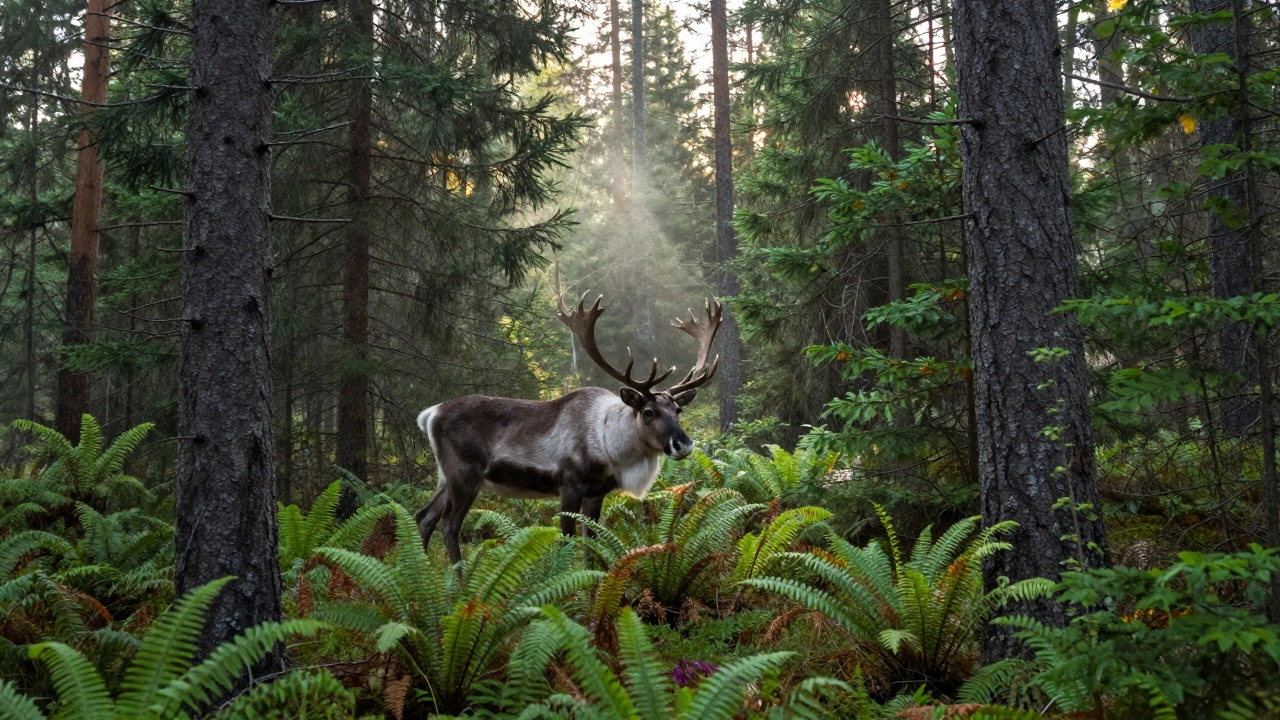
A great real-world example of this is the effort to protect the boreal Woodland Caribou in Ontario. This isn't just about saving one animal; it involves restoring the surrounding wetlands and planting native tree species to create a resilient ecosystem that supports both the caribou and the climate.
Wetlands: The Planet's Kidneys
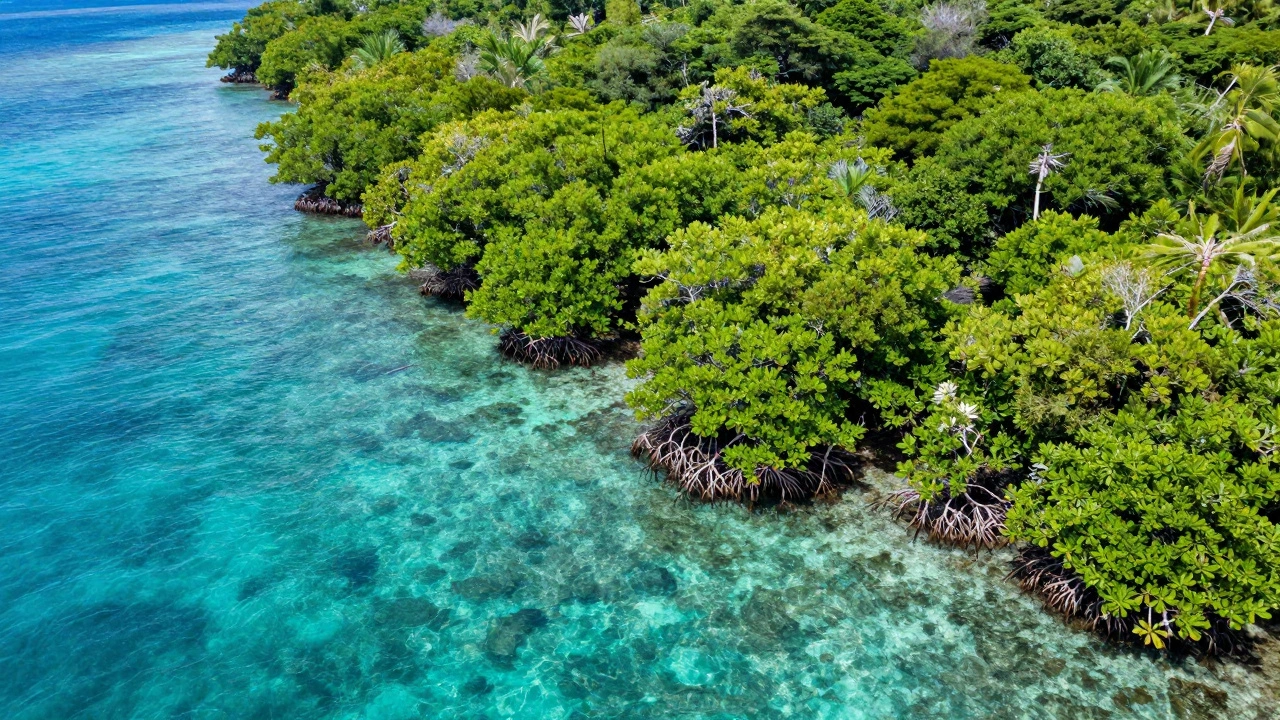
We often talk about forests as the lungs of the earth, but Wetlands are ecosystems such as marshes, swamps, and mangroves that filter water and sequester disproportionate amounts of carbon compared to their size. Think of them as the planet's kidneys. They filter out pollutants and prevent the land from washing away. In fact, wetlands can strip up to 60% of heavy metals from water and trap 90% of the sediment and nutrients like nitrogen that would otherwise cause toxic algae blooms in our oceans.
The tragedy is that we've lost about 90% of the world's wetlands since 1900. For a corporation, investing in wetland restoration is one of the most cost-effective ways to manage disaster risk. Mangroves, for instance, are incredible assets. They protect coastal infrastructure from storm surges and serve as nurseries for fish. In the Seychelles, the government is partnering with local leaders to restore mangroves. These forests can store roughly 2.5 million tonnes of CO2-equivalent-which is the same as taking 500,000 cars off the road for a full year. Plus, because fisheries contribute a fifth of the Seychelles' GDP, this is a win for the economy as much as the environment.
| Attribute | Forest Ecosystems | Wetland Ecosystems |
|---|---|---|
| Primary Climate Function | Massive Carbon Sequestration | High-Density Carbon Storage & Water Filtration |
| Key Biodiversity Role | Habitat for 80% of terrestrial species | Fisheries nursery and migratory bird stopovers |
| Disaster Mitigation | Groundwater recharge & landslide prevention | Storm surge protection & flood buffering |
| Typical NbS Action | Avoided conversion & native replanting | Mangrove restoration & peatland protection |
Integrating Biodiversity into the Corporate Bottom Line
For too long, companies treated "climate change" and "biodiversity loss" as two separate problems. They'd buy carbon credits to offset emissions while ignoring the fact that the monoculture pine plantation they funded was a biological desert. Nature-Based Solutions bridge this gap by requiring a "biodiversity net gain." This means the project must leave the environment better than it found it.
When a company invests in Biodiversity is the variety of all living things and their interactions, which ensures ecosystem resilience and stability. they are essentially buying insurance for the planet. Diverse ecosystems are more resilient to pests, diseases, and extreme weather. If a company's supply chain depends on agriculture, protecting the pollinators and the soil microbiome through NbS is a direct risk-mitigation strategy. It's not charity; it's securing the raw materials they need to exist in 20 years.
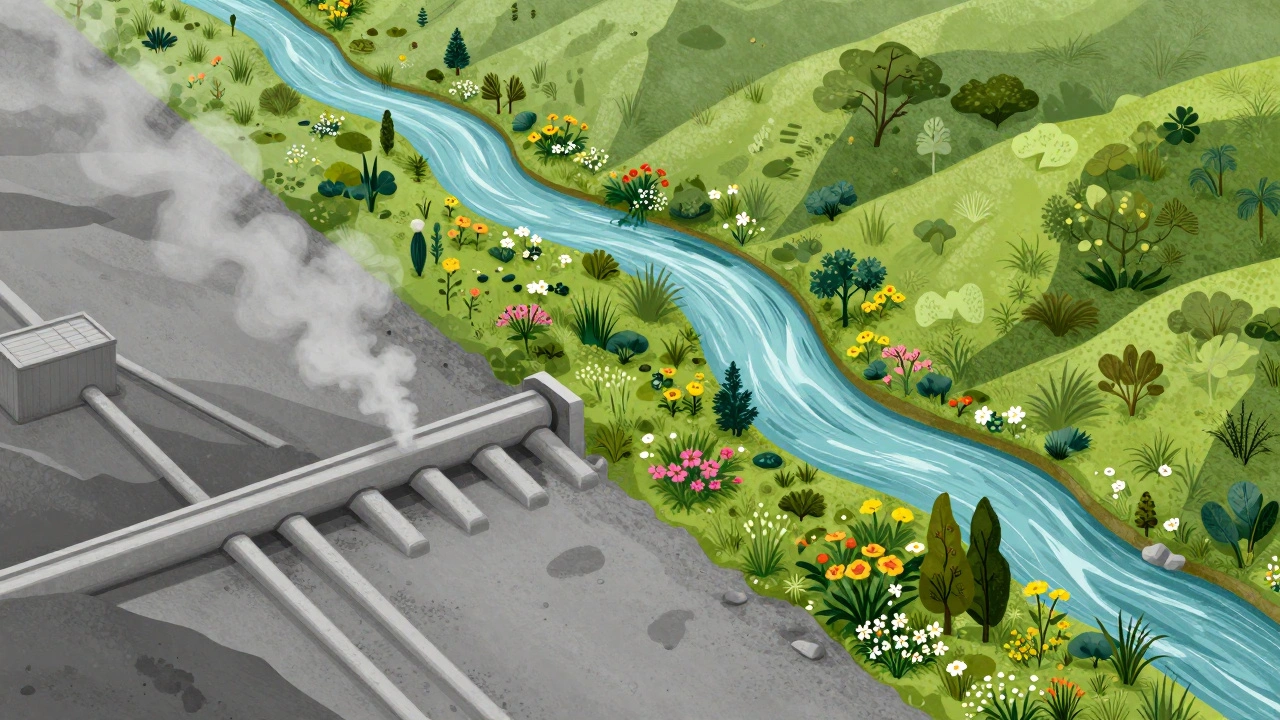
One of the most urgent areas for biodiversity-focused NbS is watershed restoration. Since 1970, freshwater species populations have plummeted by 84%. This is largely due to the degradation of watersheds-the land from which precipitation has collected. By removing invasive, water-thirsty plants (some projects have already cleared 19,000 hectares), companies can help restore the natural flow of rivers, reducing the severity of both droughts and floods that disrupt global trade.
From Strategy to Action: Practical Implementation
So, how does a company actually put this into a climate plan? It starts with moving away from generic offsets and toward site-specific restoration. Instead of paying for a random forest in another hemisphere, a company can look at its own operational footprint. If they have factories near coastlines, restoring a local salt marsh is more valuable than a distant forest because it provides a physical buffer against sea-level rise.
Practical applications of NbS include:
- Slope Vegetation: Planting native shrubs and trees on hillsides to stop landslides and soil erosion.
- Greenways and Corridors: Creating strips of natural habitat that allow wildlife to move between fragmented forests, preventing genetic bottlenecks.
- Integrated Water Resource Management: Using nature to manage stormwater and rainwater, which is often cheaper and more effective than building massive concrete sewers.
- Alternative Fuel Transitions: Reducing the need for wood fuel harvest by investing in solar or methane from agricultural waste, which prevents the degradation of local woodlands.
The financial side of this is also evolving. The UNEP FI is the United Nations Environment Programme Finance Initiative, which provides guidance to financial institutions on integrating sustainability into banking and investment. has highlighted that financial institutions can use forest-based NbS to meet net-zero targets while delivering long-term ecological restoration. This transforms a "cost" into an "asset," where the natural capital of a restored ecosystem increases the value of the land and the security of the investment.
The Global Framework: Why It Matters Now
Companies aren't doing this in a vacuum. There is a massive global push toward these standards. Over 92% of national climate targets now explicitly mention nature-based solutions. This is backed by the heavyweights: the Intergovernmental Panel on Climate Change (IPCC) and the Intergovernmental Science-Policy Platform on Biodiversity and Ecosystem Services (IPBES).
If your corporate plan doesn't align with the Paris Agreement is a legally binding international treaty on climate change adopted in 2015 to limit global warming to well below 2 degrees Celsius. or the Kunming-Montreal Global Biodiversity Framework, you're essentially planning for a world that no longer exists. These frameworks, along with the Sustainable Development Goals (SDGs), create a roadmap where nature is the primary infrastructure for survival. Whether it's SDG 6 (Clean Water) or SDG 15 (Life on Land), the goal is the same: stop the bleed and start the regrowth.
By integrating these solutions, businesses solve multiple problems at once. They don't just lower their carbon footprint; they reduce disaster risk, ensure food and water security, and create "green jobs" in restoration and management. It's a shift from a subtractive economy (taking from nature to grow) to a regenerative one (growing by restoring nature).
Are nature-based solutions more expensive than traditional infrastructure?
Actually, they are often significantly cheaper. While a concrete sea wall has a high upfront cost and requires constant maintenance, a restored mangrove forest grows on its own, self-repairs after storms, and provides additional economic benefits like supporting local fisheries.
Can a company really claim net-zero just by planting trees?
No. Planting trees is a tool, not a total solution. A credible climate plan must first prioritize the absolute reduction of emissions. NbS should be used to address the "residual emissions" that cannot be eliminated, and they must be paired with avoided deforestation to be effective.
What is the difference between reforestation and afforestation?
Reforestation is the process of replanting an area that was recently forested. Afforestation is planting a forest in an area where there wasn't one previously. For biodiversity, reforestation with native species is generally much more valuable than afforestation, which can sometimes involve non-native species that disrupt local ecosystems.
How do Nature-Based Solutions help with water scarcity?
NbS like watershed restoration and the protection of wetlands allow the land to act as a sponge. Instead of rainwater running off a concrete surface and causing a flood, the soil and vegetation absorb and filter the water, recharging underground aquifers and maintaining a steady flow of water during dry seasons.
Who should be involved in the design of these projects?
Local communities and Indigenous Peoples are critical. They possess the traditional ecological knowledge required to know which species are native and how the land behaves. Projects implemented without their full engagement and consent often fail because they ignore the complex local biological and social dynamics.