Ransom Payment Impact Calculator
Based on Nigeria's security crisis: over 300 children kidnapped in Niger State and 172 church attendees taken in Kajuru, ransom payments fund the cycle of violence. This tool shows how these funds could have been used for security and development.
Since early 2025, Nigeria has slipped into a new phase of violence-one that doesn’t just kill, but erodes trust, fractures communities, and weakens the very idea that the state can protect its people. It’s not just about bombs or bullets anymore. It’s about what happens when armed men walk into a church on Sunday morning and take over 160 people hostage. Or when a school full of children vanishes in a single night. And then, after weeks of silence, some are found. Others aren’t.
Churches Under Fire
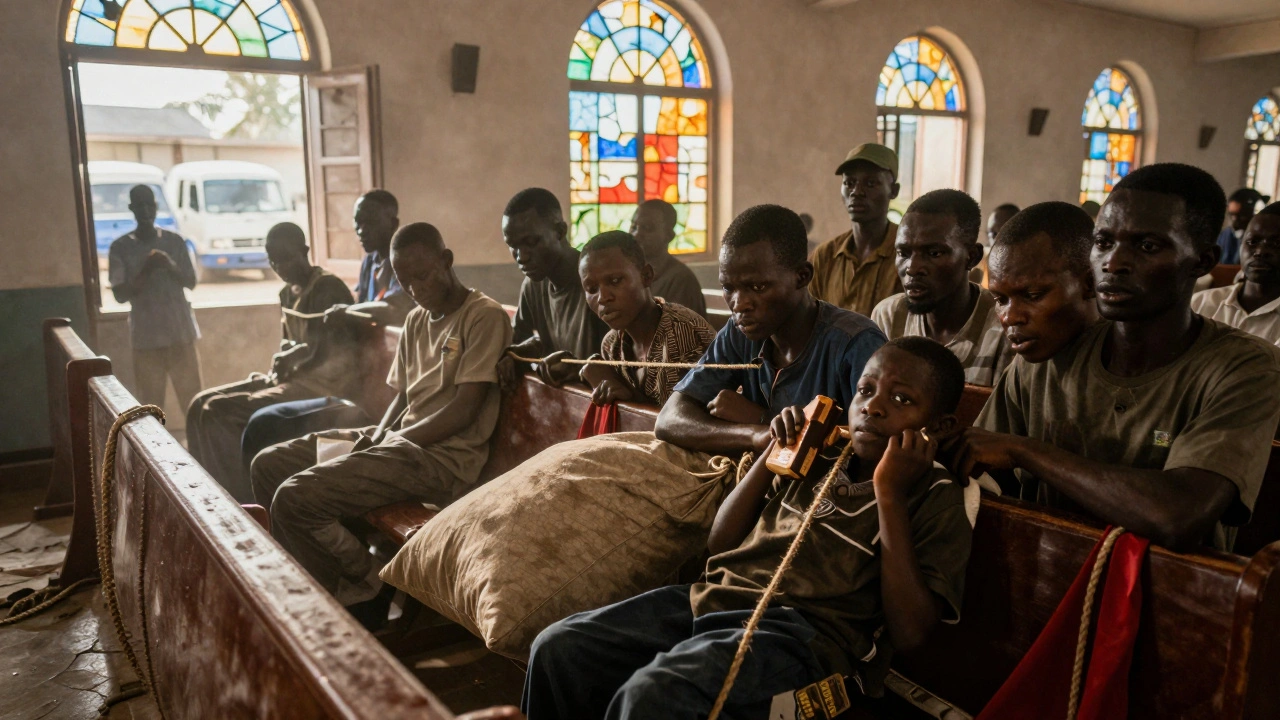
On January 18, 2026, three churches in Kajuru, Kaduna State, were attacked during Sunday services. The Cherubim and Seraphim Church, the Evangelical Church Winning All, and another C&S branch-all hit within hours. Survivors say the attackers didn’t just shoot. They went room to room, pulling people out of pews, tying them up, and dragging them into waiting trucks. At least 172 were taken. Nine escaped right away. By February, 80 more managed to flee or were released. But 83 remained missing for weeks. The military eventually rescued them, but not before families spent nights praying, not knowing if their loved ones were alive.
This wasn’t an isolated event. In November 2025, over 300 children were kidnapped from a Catholic school in Niger State. The world watched. The government promised action. Then, in February 2026, gunmen attacked Holy Trinity Church in Karku, killed the priest’s bodyguard, and took Father Nathaniel Asuwaye along with ten others. The same week, a mosque in the same region was raided. A local imam and four of his congregants were abducted. The message was clear: no place was safe. Not for Christians. Not for Muslims. Not for anyone who refused to bend.
Who’s Behind It?
The Nigerian government keeps changing its story. Sometimes, it blames Fulani herdsmen. Other times, it points to Boko Haram. Then, it says Islamic State West Africa Province (ISWAP) is behind it. The truth? All of them are involved-and so are criminal gangs that have nothing to do with religion.
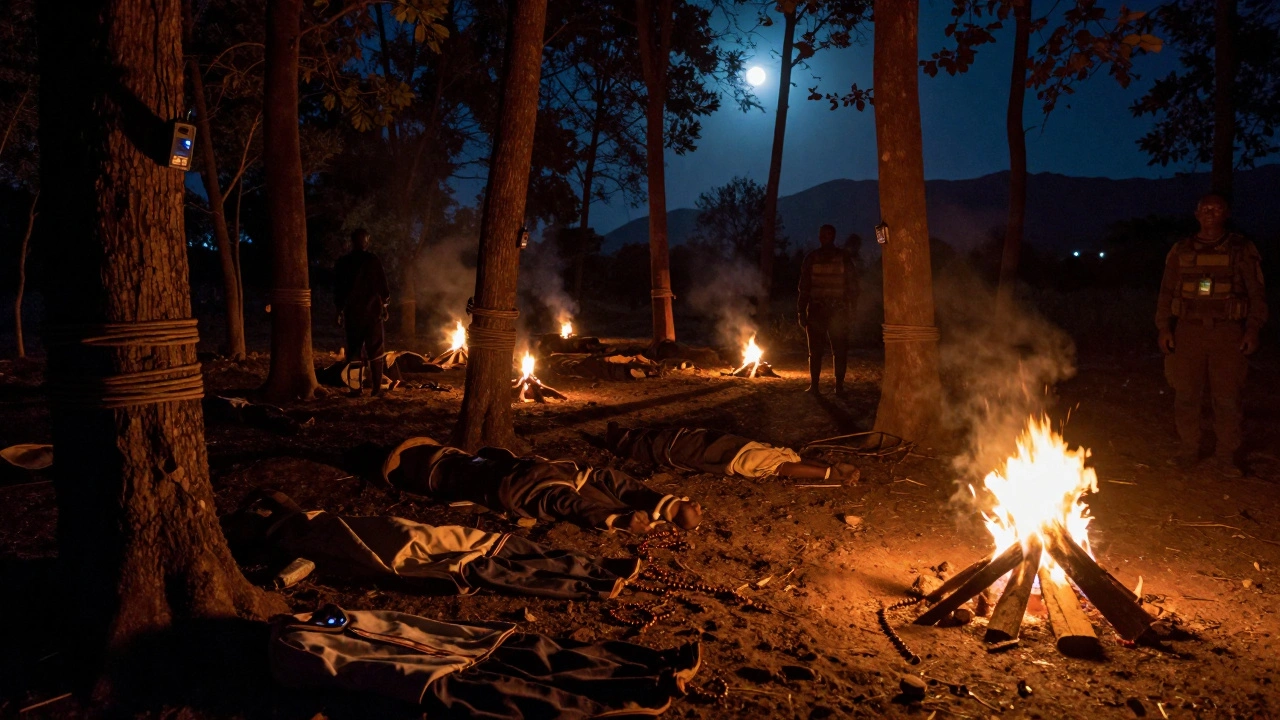
Boko Haram has been around since 2002. It started as a radical sect that hated Western education. By 2015, it pledged loyalty to ISIS and became ISWAP. Their goal? To impose a strict version of Islamic law across northern Nigeria. But over time, their funding shifted. Ransom payments became more reliable than ideology. Now, kidnapping isn’t just a weapon-it’s a business. A single school abduction can bring in millions of naira. Bandits who once stole cattle now run organized kidnapping rings with GPS trackers, encrypted radios, and safe houses in the forests of Kaduna and Niger.
And here’s the twist: many victims aren’t Christians at all. In Woro, Kwara State, over 160 people were killed in February 2026. Most were Muslim. Why? Because they refused to join the militants’ extremist version of Islam. Homes were burned. Markets looted. Villagers told to convert or die. This isn’t a Christian-Muslim war. It’s a war against anyone who won’t submit.
The Collapse of Security
Nigeria’s army has 200,000 soldiers. It has drones. It has U.S. training. Yet, in rural areas, it doesn’t show up until after the attack. In Kajuru, locals say soldiers arrive two days later-sometimes after the bodies are buried. In 2022, the National Assembly passed a law banning ransom payments. The idea was simple: no money, no kidnappings. But it didn’t work. Bandits don’t care about laws. They know families will pay. They know churches will collect donations. They know the government won’t stop them.
President Tinubu sent a battalion to Kwara after Woro. He said the situation was under control. But in Kaduna, over 200 people were abducted in three separate incidents between January and February. All were eventually released. The government called it a victory. Families called it a miracle. But why did it take weeks? Why did it take military intervention? Why wasn’t it prevented?
The answer is simple: the state has given up on protecting its people in the north. Police stations are empty. Checkpoints are manned by unpaid guards. Roads are unsafe after dark. In places like Zonkwa and Kauru, people don’t go to church anymore. They gather in secret. Some have stopped going altogether.
What This Means for West Africa
Nigeria isn’t just falling apart. It’s dragging the region down with it. When 500 people are kidnapped in a month, they don’t just disappear. Their families flee. They cross into Niger. They move into Cameroon. They crowd into Benin. Refugee camps in neighboring countries are swelling. And with them come weapons, rumors, and radical ideas.
ISWAP doesn’t care about borders. It has cells in Niger, Chad, and Mali. Bandits sell weapons to armed groups in Burkina Faso. The same trucks that carry kidnapped children in Kaduna have been spotted in northern Benin. This isn’t Nigeria’s problem. It’s West Africa’s crisis. And if Nigeria can’t control its own territory, who can?
Regional leaders have stayed quiet. ECOWAS hasn’t issued a statement. The African Union hasn’t sent peacekeepers. The U.S. labeled Nigeria a "Country of Particular Concern" for religious persecution-but didn’t offer troops or intelligence. Europe offered aid. But aid doesn’t stop bullets.
Who’s Left to Act?
The Catholic Church in Nigeria has become one of the few voices still demanding action. The Catholic Secretariat called the attacks "a betrayal of Nigerians’ right to live in peace." Bishops have met with military commanders. They’ve written to the president. They’ve held vigils across the country. But they’re not soldiers. They’re not police. They’re priests.
Meanwhile, ordinary Nigerians are organizing. In Jos, women form patrols after dark. In Kano, youth groups train in first aid and emergency response. In Abuja, lawyers file lawsuits against the government for failing to protect citizens. But these are drops in an ocean.
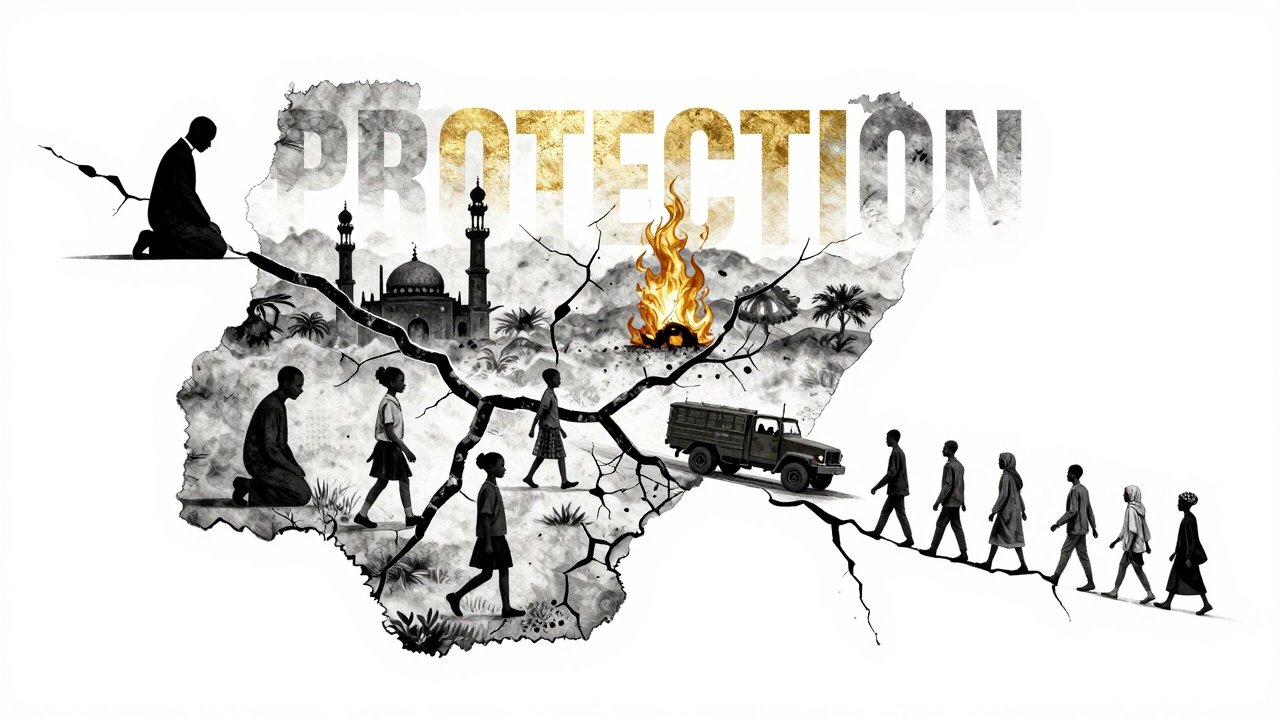
What’s missing? A real plan. Not promises. Not press releases. Not military parades. A coordinated strategy that combines intelligence, community policing, economic opportunity for youth, and long-term deradicalization programs. Right now, Nigeria is reacting to horror after horror. It’s not preventing it.
The Human Cost
Behind every number is a name. Amina, 14, taken from her Sunday school class. Pastor Samuel, who refused to flee his church and was shot in front of his congregation. Ibrahim, the imam who was kidnapped alongside the priest-both held together, both praying for the same thing: to see their families again.
Children who survived the school abductions now flinch at loud noises. Parents who lost their kids to ransom demands now work two jobs just to pay for food. Churches have stopped ringing bells before service. No one wants to alert the attackers.
This isn’t just about religion. It’s about dignity. It’s about the right to walk to church without fearing you won’t come back. It’s about a government that was supposed to protect its people-and didn’t.
And if Nigeria can’t fix this, what hope is there for the rest of West Africa?