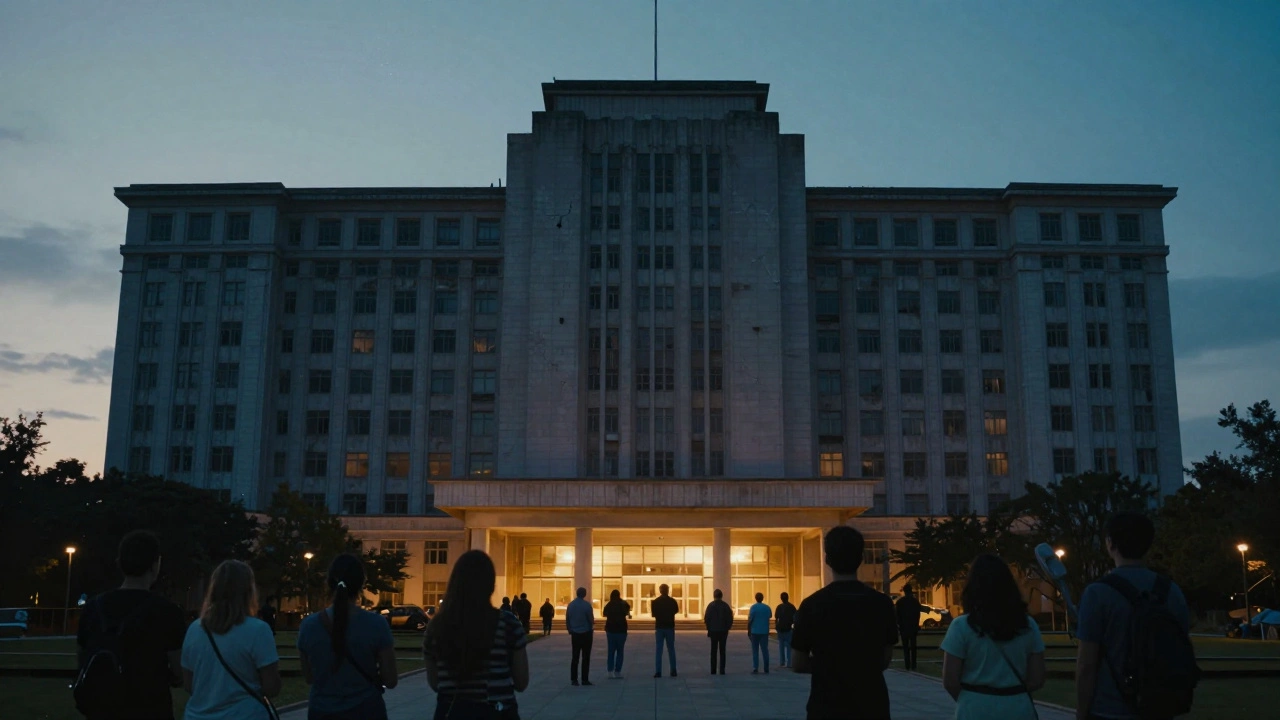
Governance Stability & Trust Calculator
Based on the 2026 Edelman Trust Barometer and Transparency International data, simulate how different societal factors impact a nation's "Trust Index".
Projecting Trust
Compare your result to the global 2026 baseline.
YOUR SIMULATION
The Great Erosion: Trust Hits Historic Lows
We are living through something that feels unprecedented. By mid-2026, the foundation holding societies together-confidence in leadership-is cracking. It isn't just a bad election year; it is a systemic shift. When you look at the numbers, the picture is stark. Across the globe, people are retreating from public life and moving back toward their own front porches.
Public Trust, defined as the belief citizens have that authorities will act in the public interest, has become scarce currency. In January 2026, the Edelman Trust Barometer, a major annual study tracking institutional credibility, confirmed what many suspected: governments are struggling. Only 53% of respondents worldwide say they believe their government will do the right thing most of the time. While that sounds like a majority, it represents a statistical collapse compared to previous decades where institutions were given the benefit of the doubt.
The American Context: A Sharp Decline in Competence
Here in the United States, the drop-off is particularly sharp. You might feel it when you talk to neighbors or watch the news cycle churn without resolution. The data backs this gut feeling. The U.S. government sits at historic lows for approval ratings. According to aggregated polling data from the end of 2025, barely 17% of Americans stated they trust the federal government to do what is right. Think about that number. If you go back to October 2001, after the events of that changed the world, trust was sitting at 54%. That is a 37-point plunge over roughly twenty-four years.
It gets deeper when we look at corruption. Transparency International, an organization dedicated to fighting public corruption, released its Corruption Perception Index (CPI) for late 2025. This index ranks countries based on how corrupt their public sector is perceived to be. The U.S. slipped significantly, hitting a rank of 29th out of 182 countries with a score of 64 out of 100. To put that in perspective, a score of 100 means completely clean governance, while 0 is highly corrupt. In 2017, the score was 75. That steady decline tells us that over eight years, the perception of cleanliness has deteriorated consistently.
| Metric | Year 2001 Peak | Year 2025 Low |
|---|---|---|
| Trust in Federal Govt (Pew) | 54% | 17% |
| Corruption Score (Transparency Intl.) | N/A | 64/100 |
| CPI Ranking | N/A | 29th |
It's Not Just Us: A Global Trend
You might wonder if this is an isolated problem with Washington politics. It is not. The 2026 Edelman report covered 28 countries, and in 14 of them, government remains distrusted. In fact, trust in government leaders dropped by 16 percentage points globally over just five years. For comparison, trust in major news organizations dropped 11 points, showing that while the media is under fire, the actual machinery of the state is bearing the brunt.
Look at the other established democracies. They aren't immune. The United Kingdom shows only 15% trust in their national government. Germany mirrors this with 13%. These aren't developing nations facing instability; these are mature economies. Even in places historically known for strong institutions, like New Zealand (scoring 81/100 on anti-corruption metrics) and Sweden (80/100), transparency reports indicate a worrying downward trend. The narrative of "Western decline" often carries ideological baggage, but these numbers reflect raw sentiment.

The Shift: From Institutions to Individuals
If trust isn't going to the government, where is it going? People need to rely on *something*. We are seeing a massive pivot away from large structures toward personal networks. The Edelman data reveals a fascinating inversion: trust in neighbors rose by 11 percentage points. Trust in family also went up by 11 points. People are tightening their circle of reliability.
Perhaps most surprising is the corporate shift. Businesses are now seen as significantly more competent than governments. In both high-income and low-income brackets, companies rate 43 percentage points higher in competence than the state. Why does a local CEO seem safer than a Senator? It suggests a desire for results over rhetoric. When governments fail to deliver basic security or economic stability, the private sector steps into the vacuum as the perceived authority figure.
Cracks in the System: Causes and Corruptions
What drives this? It is rarely one single event. It is cumulative stress. Transparency International highlighted that policies implemented in recent administrations have hindered the ability to fight public corruption effectively. Measures that pause investigations into foreign bribery or cut funding for civil society don't happen in a vacuum; they signal tolerance. When watchdogs are weakened, the perception of rot increases.
Furthermore, the concept of "shared reality" is breaking down. Between 2019 and 2024, the percentage of people rating their government as competent fell by over 10 points. Conversely, the percentage fearing that officials lie to them rose by a similar margin. A 2025 World Social Report from the United Nations notes that growing insecurity and inequality are long-term drivers. But recent shocks matter too. The 2008 financial crisis left scars, and the COVID-19 pandemic added new layers of skepticism regarding centralized health mandates.
Global Institutions Are Struggling Too
This distrust isn't limited to domestic borders; it extends outward. The United Nations, usually a symbol of cooperation, is facing its own favorability crisis. Among Americans, favorability dropped from 61% in 2022 to 52% in 2024. Globally, 23 out of 27 countries registered a drop in trust in the UN between fall 2021 and fall 2024. In Spain, Italy, Germany, and France, the drop exceeded 10 percentage points. Why? Funding cuts and perceived inefficiencies. Even the Pact for the Future, adopted in September 2024 to rebuild trust, has struggled against the momentum of political budget reductions.
| Institution Type | Trust Level Trend |
|---|---|
| Government Leaders | Declined 16 percentage points |
| Major News Orgs | Declined 11 percentage points |
| Personal Networks (Neighbors/Family) | Increased 11 percentage points |
| CEO / Business Sector | Perceived 27 points more ethical |
Consequences for Democracy
Why does this really matter? Democracy relies on a contract: the public agrees to follow rules because they believe the rule-makers are legitimate. If legitimacy vanishes, compliance drops. Experts call this a foundational crisis. If people stop believing that officials represent them, civic engagement turns into cynicism or apathy. We see restrictions on freedoms of expression and association rising in response. It becomes a vicious cycle: less trust leads to tighter controls, which reduces trust further.
In the short term, this manifests as gridlock. Policies stall because consensus is impossible when trust in the messenger is zero. Long term, it risks the stability of democratic systems themselves. If 161 countries are trending this way, it's not a glitch; it's a system failure. Reversing it requires more than better communication strategies. It demands structural changes that address the core issues of corruption, inequality, and the erosion of independent voices.
Is public trust recoverable?
Historically, yes, but the timeline is uncertain. While the trajectory from 2017 to 2025 shows a steady decline, experts note that rebuilding trust is slow work. It requires visible anti-corruption actions, tangible improvements in economic security, and restoring shared facts among citizens. There is no quick fix button.
Which countries are maintaining high trust?
Even top performers like New Zealand and Sweden show signs of decline, though they remain higher than the global average. According to 2026 data, New Zealand holds a CPI score of 81/100, while Sweden is at 80/100. However, no nation is immune to the broader trend of shifting preference from government to personal networks or business.
Does this affect the economy?
Absolutely. Investors rely on predictability and stable institutions. When corruption scores drop and trust collapses, capital flow slows, and foreign investment becomes riskier. Furthermore, businesses are taking the lead role in service provision, often filling gaps left by the state.
Who is driving the loss of trust in the US?
While the decline is bipartisan, the speed varies. For instance, UN favorability drops have been driven largely by Republicans, while general trust in government has fallen across the board. Specific policies impacting judicial independence and enforcement of laws have accelerated the negative perception.
Will technology help restore trust?
It's complex. While "Big Tech" was once blamed for misinformation, currently people trust CEOs more than politicians. Technology can enable transparency (like blockchain voting), but without human accountability, tools alone won't fix the fundamental disconnect.