Space Launch Cost Calculator
Estimate Launch Costs
Compare the cost of sending payloads to orbit using SpaceX versus Blue Origin based on reusability economics.
SpaceX (Falcon 9)
$2,700/kg
Estimated cost per kilogram to LEO
Blue Origin (New Glenn)
$5,000/kg
Estimated cost per kilogram to LEO
Cost Comparison
The race to conquer the skies has shifted from who gets there first to who gets there cheapest. For decades, sending a kilogram of payload to orbit cost upwards of $20,000. Today, that number has plummeted, reshaping the entire aerospace industry. This dramatic shift isn't magic; it's the result of a fierce rivalry between two private giants. SpaceX is a private space exploration company founded by Elon Musk in 2002 that focuses on reducing space transportation costs. Its main rival, Blue Origin is an American private aerospace manufacturer founded by Jeff Bezos in 2000 with a focus on reusable rocket technology. The battle isn't just about technology; it's about the economics of reusability and who can dominate the $546 billion commercial space sector.
The Reusability Revolution
Before 2015, rockets were mostly expendable. You built a machine, flew it once, and it burned up or splashed into the ocean. It was like flying a Boeing 747 once and then throwing it away. The concept of reusability changed everything. The core idea is simple: the first stage booster is the most expensive part of the rocket. If you can land it and fly it again, you slash the cost per launch.
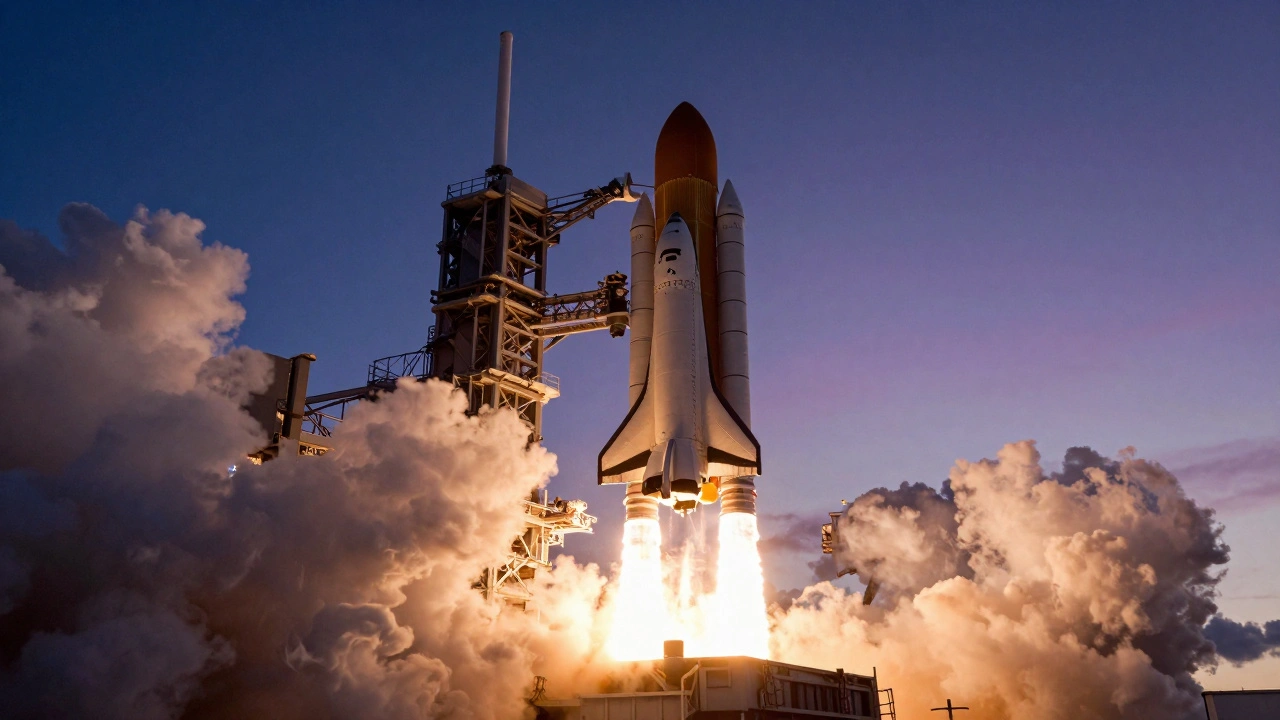
Falcon 9 is a reusable medium-lift launch vehicle designed and manufactured by SpaceX. This rocket proved the concept works on an orbital scale. By December 2015, SpaceX achieved the first successful landing of an orbital-class booster. Blue Origin beat them to the punch with New Shepard is a reusable suborbital launch vehicle developed by Blue Origin for space tourism and research in November 2015, but that was a suborbital hop, not a mission to orbit. The difference matters. Getting to orbit requires significantly more energy and heat shielding. As of November 2025, only these two companies have successfully vertically landed an orbital-class rocket booster, according to analysis from the Center for Strategic and International Studies (CSIS).
SpaceX's Operational Dominance
SpaceX has taken a high-volume approach to the market. They treat rockets like airplanes, aiming for frequent flights with quick turnarounds. The Falcon 9 has become the workhorse of the industry. By 2025, it had completed over 300 successful launches and landings. The reliability is so high that industry insiders often say launches have become routine. Some boosters have flown up to 20 times. This reuse rate is staggering. It drives the cost per kilogram to Low Earth Orbit (LEO) down to approximately $2,700/kg. Compare that to the traditional $20,000/kg, and you see why SpaceX captured 65% of the global commercial launch market in 2024.
However, SpaceX isn't resting on the Falcon 9. They are pushing harder with Starship is a fully reusable spacecraft and super heavy-lift launch vehicle under development by SpaceX. This system is designed for interplanetary travel, with a payload capacity ranging from 100,000 kg to 150,000 kg to LEO. The development has been rough. On January 16, 2025, a test flight experienced a Rapid Unscheduled Disassembly (RUD), though the Super Heavy booster was recovered. Through November 2025, they had conducted 14 test flights. The goal is full reusability of both the booster and the ship, which would further crush launch costs.
Blue Origin's Strategic Push
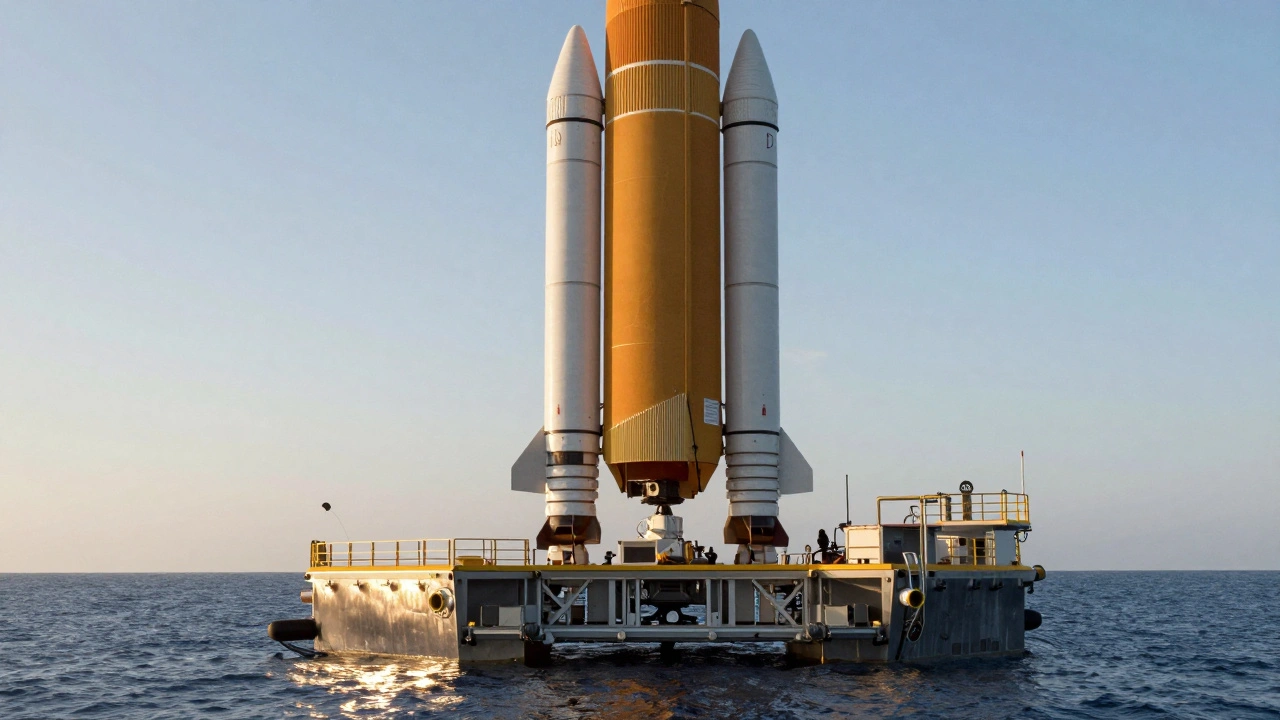
Blue Origin has taken a slower, more methodical path. Their orbital rocket, New Glenn is a heavy-lift orbital launch vehicle developed by Blue Origin capable of carrying 45,000 kg to low Earth orbit, stands 320 feet tall. It finally reached orbit on January 16, 2025, from Cape Canaveral. The first flight carried a 20-ton dummy payload called Blue Ring Pathfinder. The booster failed to land on the recovery ship that day, but the orbital deployment was a success. The second flight in November 2025 was a major milestone, successfully deploying payloads and landing the booster on a sea-based platform in the Atlantic Ocean.
Blue Origin's strategy relies heavily on their engine technology. The BE-4 Engine is a liquid oxygen and liquid methane rocket engine developed by Blue Origin for use on New Glenn and ULA's Vulcan rocket. This engine powers both their New Glenn and United Launch Alliance's (ULA) Vulcan rocket. It was first flown on Vulcan in January 2024. While the BE-4 is slightly less efficient than SpaceX's Raptor Engine is a full-flow staged combustion rocket engine developed by SpaceX for use on the Starship launch vehicle, it is a proven piece of hardware. Blue Origin's workforce grew to 4,500 employees by Q2 2025, showing they are scaling up to meet demand.
The Economics of Launch
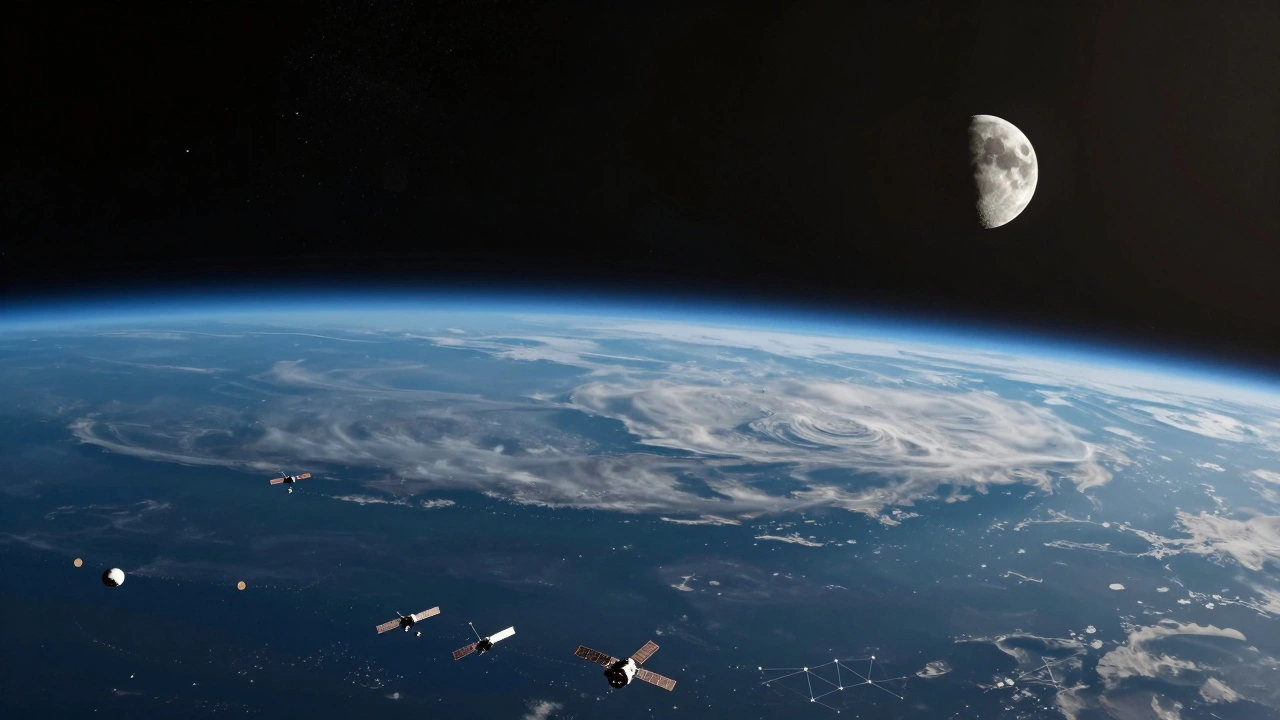
Money talks in the space industry. Morgan Stanley projected in their Q3 2025 space report that SpaceX's reusability achievements have reduced launch costs by 60-70% compared to traditional expendable rockets. This efficiency creates a massive market opportunity. Satellite constellations like Starlink is a satellite internet constellation being constructed by SpaceX to provide satellite internet access to most of Earth are the primary beneficiaries. By Q3 2025, Starlink had over 4 million subscribers. The cost savings allow SpaceX to charge customers over quadruple the marginal launch cost while still undercutting competitors.
| Feature | SpaceX Falcon 9 | Blue Origin New Glenn | SpaceX Starship |
|---|---|---|---|
| Payload to LEO | ~22,800 kg | ~45,000 kg | 100,000-150,000 kg |
| Reusability Rate (2025) | 90% (up to 20 flights) | Emerging (2nd flight success) | In Development |
| Propellant | Kerosene / Liquid Oxygen | Liquid Methane / Liquid Oxygen | Liquid Methane / Liquid Oxygen |
| Market Share (2024) | 65% | <1% | 0% (Test Phase) |
Blue Origin holds less than 1% of the market with zero orbital launches until January 2025. To remain competitive, CSIS recommends Blue Origin needs to achieve at least 12 New Glenn launches annually by 2027. They have a significant contract to launch 1,000 satellites for Amazon's Project Kuiper is a low Earth orbit satellite constellation project by Amazon to provide broadband internet. This project requires 3,236 satellites to be launched by 2029. If Blue Origin can't ramp up the pace, they risk losing this revenue stream. The Space Force recognized New Glenn's potential by awarding launch contracts in April 2025, seeking to diversify away from sole reliance on SpaceX.
Future Outlook and Challenges
The space launch industry is at a critical juncture. NASA's Artemis Program is a NASA-led program to return humans to the Moon and eventually send astronauts to Mars represents a massive opportunity. The agency needs multiple launch providers to meet its goal of returning astronauts to the Moon before China's planned 2030 landing. In April 2025, the acting NASA administrator expressed interest in reopening opportunities for alternatives to SpaceX's Starship Human Landing System. This opens the door for Blue Origin's Blue Moon lander.
However, the challenge is execution. Peter Beck, founder of Rocket Lab, stated in 2024 that developing rockets is "just really freaking hard to do and there is zero margin for error." Blue Origin's first New Glenn launch required 14 years of development from initial engine work to orbital flight. SpaceX's learning curve was steeper but faster, achieving the first Falcon 9 landing on the 20th launch attempt after just 5 years of development. As we move into 2026, the market will decide if there is room for two dominant players or if SpaceX's first-mover advantage in orbital reusability will cement a monopoly.
Which company has the most successful reusable rocket?
SpaceX holds the record with the Falcon 9, which has achieved over 300 successful launches and landings by 2025. Some boosters have flown up to 20 times, demonstrating a proven track record of reliability and cost efficiency.
Did Blue Origin beat SpaceX to the first landing?
Blue Origin landed their New Shepard suborbital rocket in November 2015, 10 days before SpaceX landed Falcon 9 in December 2015. However, SpaceX's achievement was with an orbital-class rocket, which is significantly more complex than suborbital flight.
How much does it cost to launch with SpaceX?
SpaceX reduces the cost per kilogram to Low Earth Orbit to approximately $2,700/kg compared to traditional launch costs exceeding $20,000/kg. They charge customers over quadruple the marginal launch cost while maintaining lower prices than competitors.
What is the payload capacity of New Glenn?
Blue Origin's New Glenn rocket has a payload capacity of approximately 45,000 kg to low Earth orbit (LEO). It is designed to be a heavy-lift orbital launch vehicle with a reusable first stage.
Can Blue Origin compete with SpaceX in the long term?
Industry experts suggest the space launch industry can support multiple providers due to growing demand. Blue Origin needs to achieve at least 12 New Glenn launches annually by 2027 to remain competitive, leveraging contracts like Project Kuiper and potential NASA Artemis roles.