Taiwan Trade Impact Calculator
Select Country
Key Economic Insights
Taiwan's semiconductor industry (producing over 60% of advanced chips) and TaiwanICDF development programs make it a valuable partner for Latin American countries seeking tech and governance expertise.
Trade Impact Analysis
Select a country and enter export value to see the analysis
When a Group of Lawmakers Flew to Taiwan, China Lost Its Cool
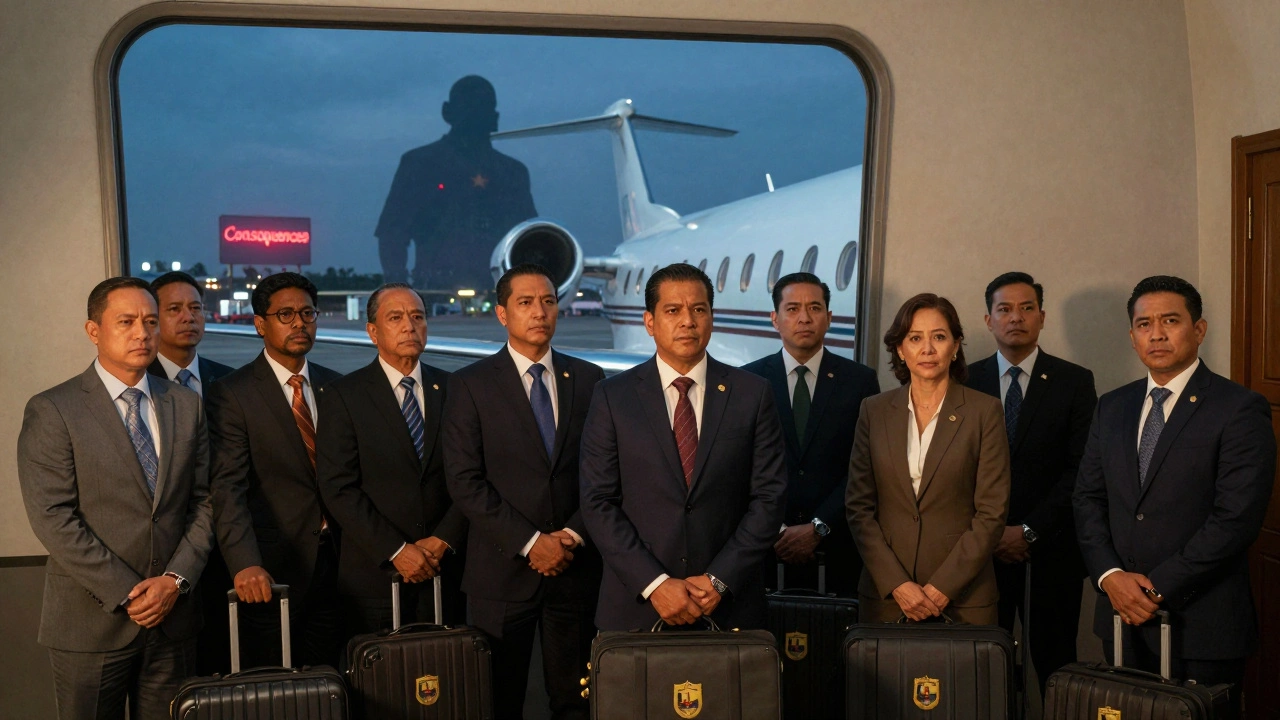
In November 2025, nine members of Panama’s National Assembly boarded a flight to Taipei. They weren’t diplomats. They didn’t carry official government letters. But their trip set off a chain reaction that shook regional politics. China responded with angry messages, public warnings, and behind-the-scenes pressure. Why? Because Taiwan, despite having no formal ties to Panama since 2017, was still winning friends - and China couldn’t stop it. This wasn’t the first time a country that recognized Beijing had lawmakers visit Taiwan. But this time, it happened twice - once in November 2025 and again in February 2026 - within just three months. And each time, China reacted harder. The message was clear: even informal contacts with Taiwan are seen as threats. But why did Panama’s lawmakers risk it?China’s Warning: "Cancel the Trip or Face Consequences"
Before the November 2025 delegation even left Panama, Chinese officials moved fast. According to reports from La Prensa, staff at the Chinese Embassy in Panama contacted at least ten lawmakers planning the trip. They asked them to cancel. One ambassador, Xu Xueyuan, reportedly sent WhatsApp messages warning of "a great negative impact" on Panama-China relations. The tone wasn’t subtle. It was a direct threat: cross Taiwan, and you cross China. But nine of the ten lawmakers went anyway. Why? Because they weren’t acting under Panama’s executive branch. They were legislators - independent, with their own agendas. And they had something China couldn’t control: the freedom to travel. The U.S. Embassy in Panama didn’t say a word publicly. But according to one source, the delegation received "assurances" from American officials. That mattered. With the U.S. openly pushing back against China’s influence in Latin America, Panamanian lawmakers knew they had diplomatic cover.Taiwan Isn’t Just a Neighbor - It’s a Market
China likes to pretend Taiwan is an isolated island with no real connections. But the numbers tell a different story. Panama exports bananas, coffee, shrimp, and seafood to Taiwan. In fact, Taiwan is Panama’s second-largest export market - right after the United States. That’s not a footnote. That’s a lifeline for Panamanian farmers and fishing communities. During the November visit, Manuel Cohen, one of the lawmakers, said at a banquet: "Panama views Taiwan as an example in the promotion of democracy, freedom and respect for human rights." He wasn’t just being polite. He was stating a fact. Taiwan’s government, though small, has a track record of transparency, rule of law, and open elections - things many Latin American nations are struggling to protect. The February 2026 delegation went further. They visited Hsinchu Science Park, home to Taiwan’s semiconductor giants. They met with officials from the National Health Insurance Administration. They toured Taiwan’s foreign aid agency, TaiwanICDF. They didn’t come for tourism. They came to learn. Taiwan’s Ministry of Foreign Affairs said it plainly: "We want to enhance closer bilateral exchanges in those fields." Translation: Taiwan is offering real partnerships - in tech, health, and development - not just empty diplomacy.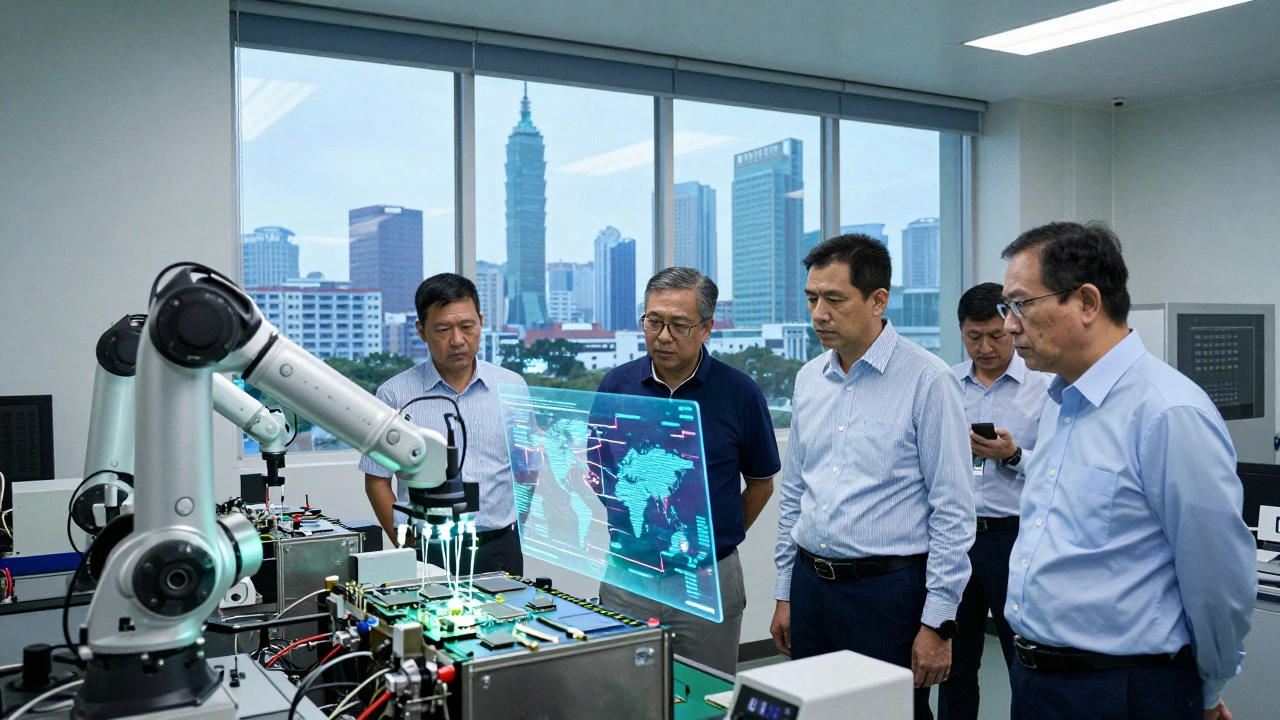
Panama’s Government Can’t Decide
Here’s where it gets messy. Panama’s president, Raúl Mulino, tweeted that he disapproved of the visit. But just weeks before, he had said he’d consider letting Taiwan open a commercial office in Panama. Why? Because back in 2017, when Panama switched recognition to China, he remembered how Taiwan had helped Panama - financially, politically, and even with infrastructure. "Taiwan got involved in Panama, bet on it, and gave us money and support," Mulino said. That’s not something you forget. Meanwhile, Panama’s Ministry of Foreign Affairs issued a statement: "The visit has no connection to Panama’s executive branch." That’s diplomatic code for: "We don’t control these guys. Don’t blame us." This contradiction isn’t a mistake. It’s strategy. Panama wants to keep its formal relationship with China - it’s too big to ignore. But it also doesn’t want to cut ties with Taiwan, which still gives it real economic value. So they split the difference: the executive branch stays quiet, while lawmakers act freely.Why China Can’t Let This Go
China’s "One-China Principle" isn’t just a policy. It’s a control mechanism. Beijing doesn’t just want countries to recognize it. It wants them to erase Taiwan from the map - politically, economically, and symbolically. Any contact between Taiwan and another nation, even if it’s just a few lawmakers shaking hands, is seen as a crack in that wall. And Taiwan knows it. That’s why it’s been doubling down on parliamentary diplomacy. Since 2025, delegations from Costa Rica, Colombia, and Panama have all visited Taiwan. Each trip is a quiet rebellion against Beijing’s isolation campaign. China’s response? More pressure. More threats. More calls to cancel. But it’s not working. The visits keep happening. What China doesn’t understand - or refuses to admit - is that Taiwan’s influence isn’t about military power or size. It’s about competence. Taiwan runs one of the most advanced semiconductor industries in the world. It has universal healthcare. It’s a democracy with high trust in institutions. Countries like Panama aren’t visiting Taiwan because they like it. They’re visiting because they need it.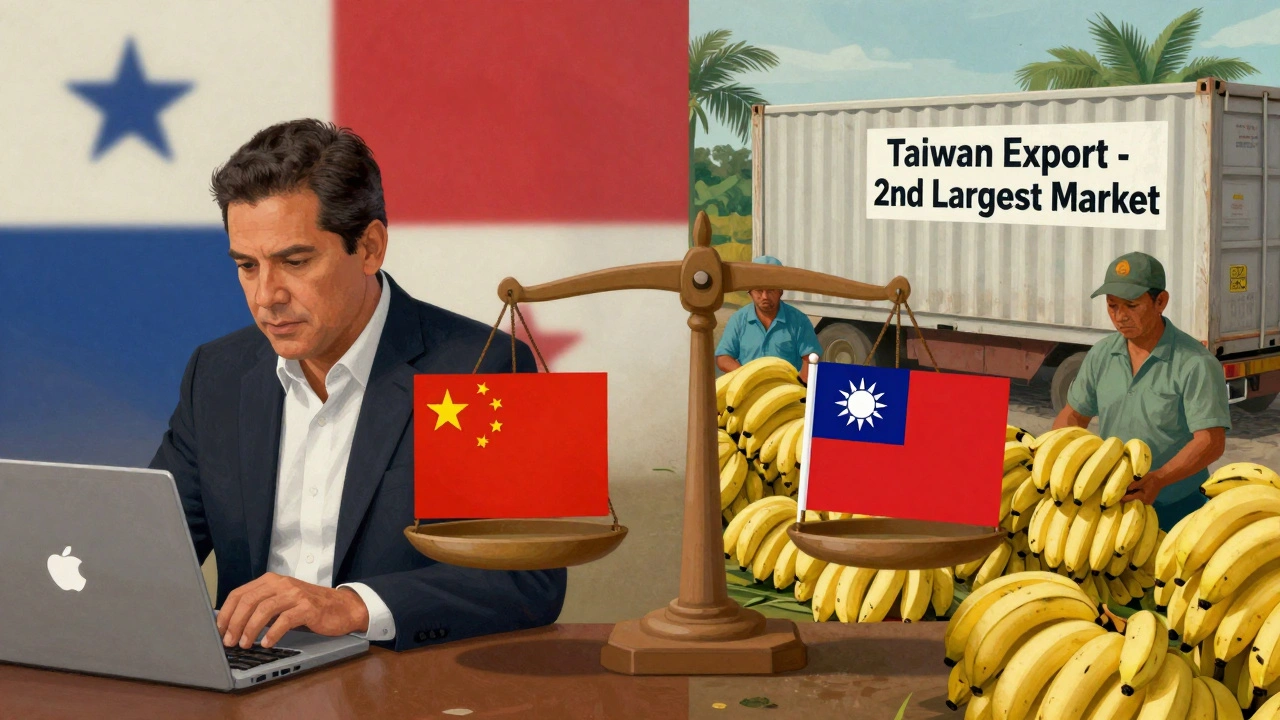
The Canal, the Ports, and the Bigger Game
This isn’t just about Taiwan and Panama. It’s about the Panama Canal. In 2025, two Chinese-owned ports at either end of the canal were sold to BlackRock, an American firm. China blocked the deal. Why? Because it didn’t want U.S. influence controlling access to one of the world’s most important shipping lanes. That’s the real tension. The U.S. is trying to push back against Chinese control in Latin America. Taiwan is quietly becoming a tool in that effort - not because it wants to fight China, but because it has something to offer. China sees Taiwan as a problem. But to Panama, Colombia, and Costa Rica, Taiwan is a solution. To them, Taiwan isn’t a disputed territory. It’s a partner.What Comes Next?
The pattern is clear: more visits. More Chinese pressure. More U.S. quiet support. And more countries in Latin America walking the tightrope between Beijing and Taipei. China can cut aid. It can threaten trade. It can bully diplomats. But it can’t stop lawmakers from flying to Taipei. And as long as Taiwan keeps offering real value - in tech, in health, in governance - those flights will keep happening. The real question isn’t whether China will react. It’s whether China can afford to keep reacting. Because every time it yells, it makes Taiwan look more legitimate - not less.Why This Matters for the Rest of the World
This isn’t just a Taiwan-China issue. It’s a test of how global power works today. In the past, big countries dictated who could talk to whom. Today, smaller players - like a group of Panamanian lawmakers - are rewriting the rules. They’re choosing partnerships based on what works, not what’s politically convenient. Taiwan, despite being denied a seat at the UN, is building influence through competence. China, despite its economic might, is losing ground because it relies on fear. And countries like Panama? They’re learning they don’t have to choose between superpowers. They can work with both - as long as one of them actually delivers. This isn’t about borders. It’s about results.Why did Panama switch diplomatic recognition from Taiwan to China in 2017?
Panama switched recognition in 2017 primarily due to economic incentives. China offered better trade deals, infrastructure investment, and access to its massive market. Taiwan, unable to match those offers, lost its formal diplomatic tie. But the relationship didn’t die - it just went underground. Trade continued, and informal ties grew stronger, especially in technology and agriculture.
Can Taiwan still trade with countries that recognize China?
Yes, absolutely. Taiwan is Panama’s second-largest export market, despite having no official ties. It also trades heavily with Colombia, Costa Rica, and other nations that recognize Beijing. Trade happens through unofficial channels - often through Taiwan’s Trade Offices, which function like embassies in all but name. China can’t stop this because it’s private business, not government policy.
Why do U.S. officials support these visits to Taiwan?
The U.S. sees Taiwan as a democratic ally and a key player in global tech supply chains. When China pressures countries like Panama to cut ties with Taiwan, the U.S. views it as an attempt to expand authoritarian influence. Supporting unofficial visits is a way to push back without provoking direct conflict. It’s also aligned with U.S. strategy to strengthen ties in Latin America as part of its broader Western Hemisphere focus.
What role does Taiwan’s semiconductor industry play in these diplomatic visits?
Taiwan produces over 60% of the world’s advanced semiconductors. Lawmakers from Panama and other Latin American countries visit Hsinchu Science Park to learn how Taiwan built its tech ecosystem. For countries trying to develop their own industries, Taiwan offers a model - not just technology, but education, innovation policy, and public-private collaboration. This makes Taiwan valuable beyond politics.
Is China’s pressure effective in stopping these visits?
No. China has used threats, embassy warnings, and even blocked commercial deals, yet the visits keep happening. In fact, the more China pressures, the more these trips gain attention. Lawmakers see it as a stand for sovereignty. Taiwan uses the visits to prove it’s not isolated. The pressure isn’t working - it’s backfiring.
Could Panama reopen formal ties with Taiwan?
It’s unlikely in the short term. Panama’s executive branch is too dependent on China for trade and investment. But the door isn’t closed. If China’s pressure grows too aggressive, or if Taiwan offers a deal that’s too good to refuse - like joint tech development or aid programs - Panama could quietly shift its stance. For now, it’s playing both sides.