Lifelong Neighborhood Auditor
1. Physical Infrastructure
2. Transportation Access
3. Shared Programming
Why does this matter?
Cities that design for life rather than ages create neighborhoods that stick around long-term.
- Safety: Clean air and safe streets benefit strollers AND walkers equally.
- Economy: Shared sites save budget by reducing duplicated utilities.
- Health: Intergenerational contact reduces isolation for seniors and strengthens community bonds.
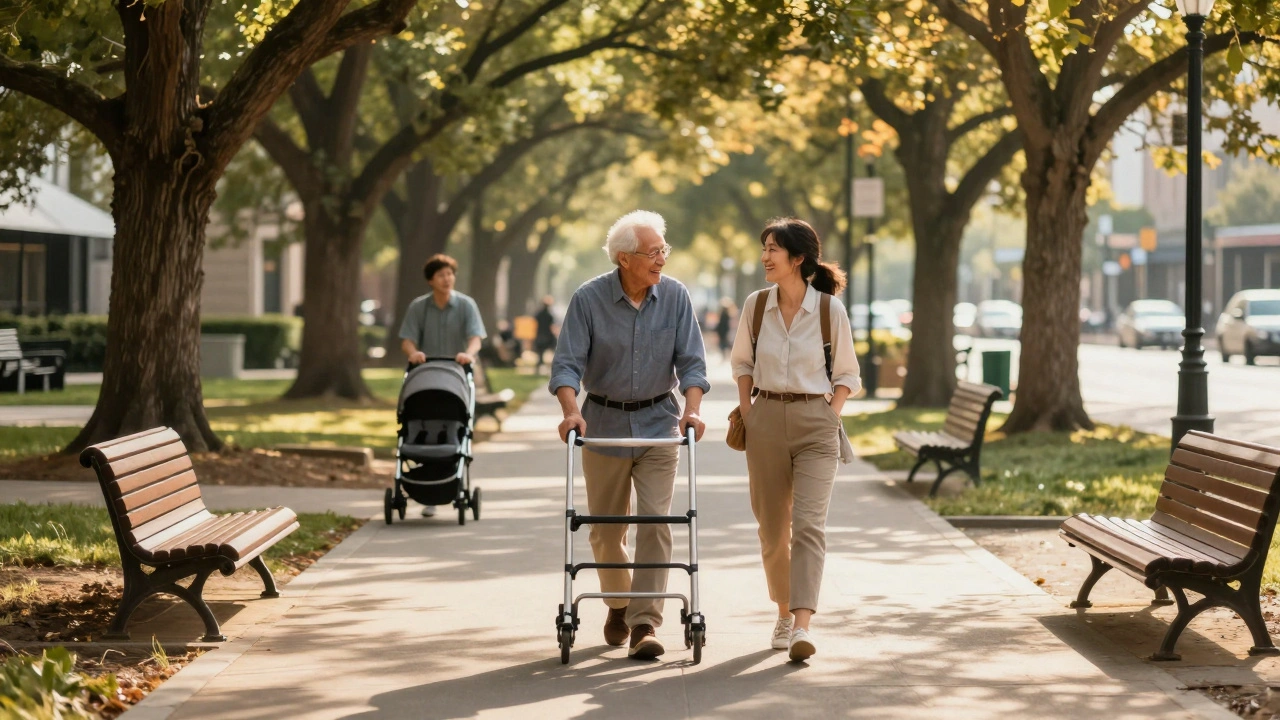
We walk past each other every day-the teenager scrolling on their phone, the grandparent adjusting their walker-but our cities usually treat us as strangers living in parallel worlds. By March 2026, the gap between these groups has widened into a canyon. We build playgrounds where the pavement is cracked for older feet, and we construct retirement communities that feel like lonely islands far from where grandchildren play. This segregation isn't just inefficient; it's actively harmful to social health. However, there is a better way.
Smart urban planning doesn't mean picking one demographic to serve. It means recognizing that seniorsare often allies for families share core needs. Both groups want safe streets, accessible transit, and places to connect. When cities stop designing for "ages" and start designing for "life," they create neighborhoods that actually stick around long-term.
The Myth of Separate Worlds
For decades, urban planning has treated age groups as silos. We assume kids need parks and seniors need clinics. But look at the data from recent studies, and you see overlapping interests. Safety on the street matters to a mother pushing a stroller just as much as it does to someone managing mobility issues. Clean air, quiet zones, and reliable transportation aren't niche demands-they are universal needs.
When we ignore this overlap, we waste resources. A park built only for youth often goes unused by everyone else due to poor accessibility. Conversely, senior centers often sit empty during the day because they don't offer anything relevant to families nearby. In 2026, city budgets are tighter than ever. We can't afford the luxury of single-use spaces that half the population ignores.
Intergenerational Shared Sites
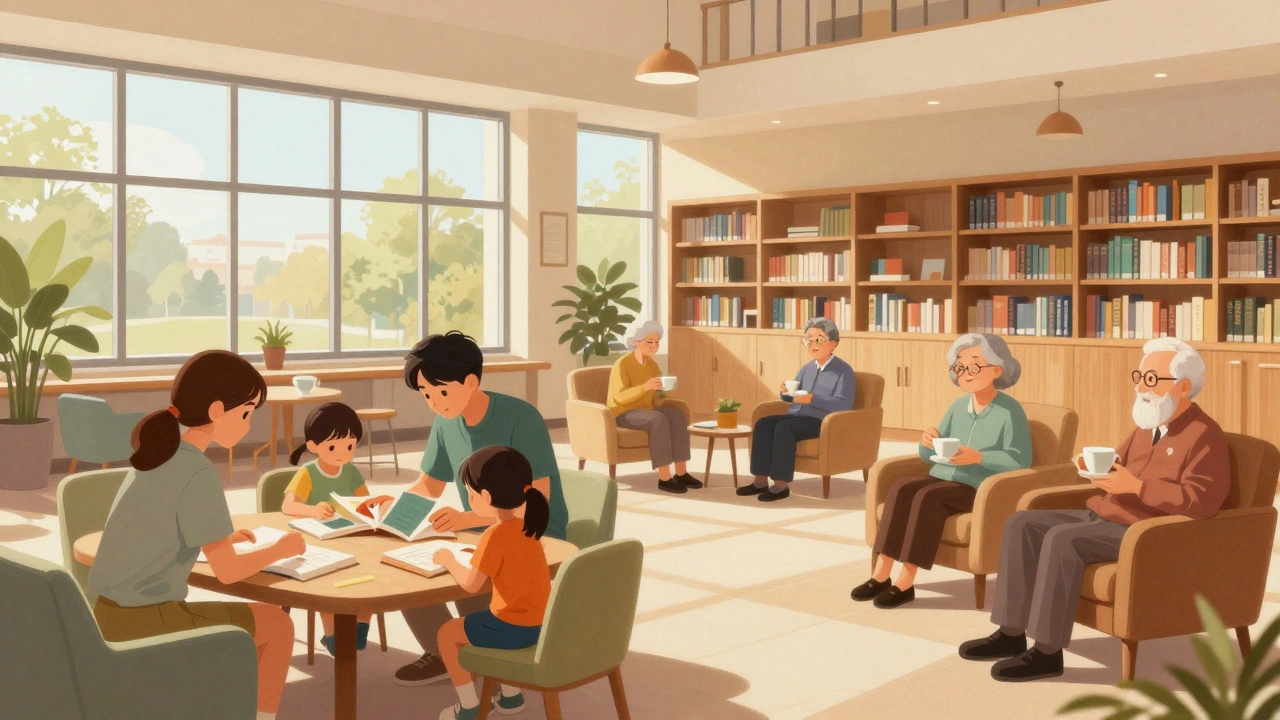
The solution is co-location. Imagine a facility where high school students tutor toddlers in a shared library, or where nursing home residents share meals with local kindergarteners. These aren't futuristic fantasies; they exist right now. Consider Swampscott, Massachusetts. City officials realized that teens and elders needed similar support structures-mental health, social connection, and physical activity.
They combined them into one building: the Swampscott High School and Senior Center. It opened in 2007 and set a precedent. Instead of maintaining two separate sets of administrative staff, heating bills, and maintenance crews, the town merged operations. The result? Older adults reported higher life satisfaction, and teenagers felt less isolated. This model creates what experts call intergenerational shared sites.
| Feature | Traditional Silo Model | Integrated Shared Site Model |
|---|---|---|
| Social Interaction | Age-segregated interactions | Daily cross-generational contact |
| Resource Efficiency | Duplicated utilities and staffing | Shared infrastructure reduces costs |
| Perceived Stigma | "Nursing homes" labeled as care facilities | Reframed as community hubs |
| Community Health | Fragmented social networks | Stronger local support webs |
This approach is spreading globally. Researchers in Northern Spain recently analyzed repurposing an old rural nursing home to host young families, fighting the out-migration trend. In Australia, consumer studies show people will pay for these integrated services because they value the family-like environment over sterile institutional settings. Even here in the United States, the concept behind Hope Meadows has inspired twelve replication sites across the country.
Housing Strategies That Support All Ages
If you cannot combine buildings, you can still combine neighborhoods. Two dominant models have proven effective in 2026: Villages and NORCs.
Villages are member-driven organizations. Think of them as private non-profits where seniors band together to hire vetted contractors, organize rides, and coordinate grocery deliveries. They don't own the land, but they own the service network. For younger families living nearby, this stabilizes the neighborhood. A Village ensures that elderly neighbors stay put rather than moving to distant assisted living, which keeps the block populated and socially vibrant.
Naturally Occurring Retirement Communities (NORCs) take this a step further. These are standard apartment complexes where a high percentage of residents happen to be older. Planners now layer supportive services into these buildings-health screenings, exercise classes, food markets-without forcing residents to leave their homes. It's aging in place done right.
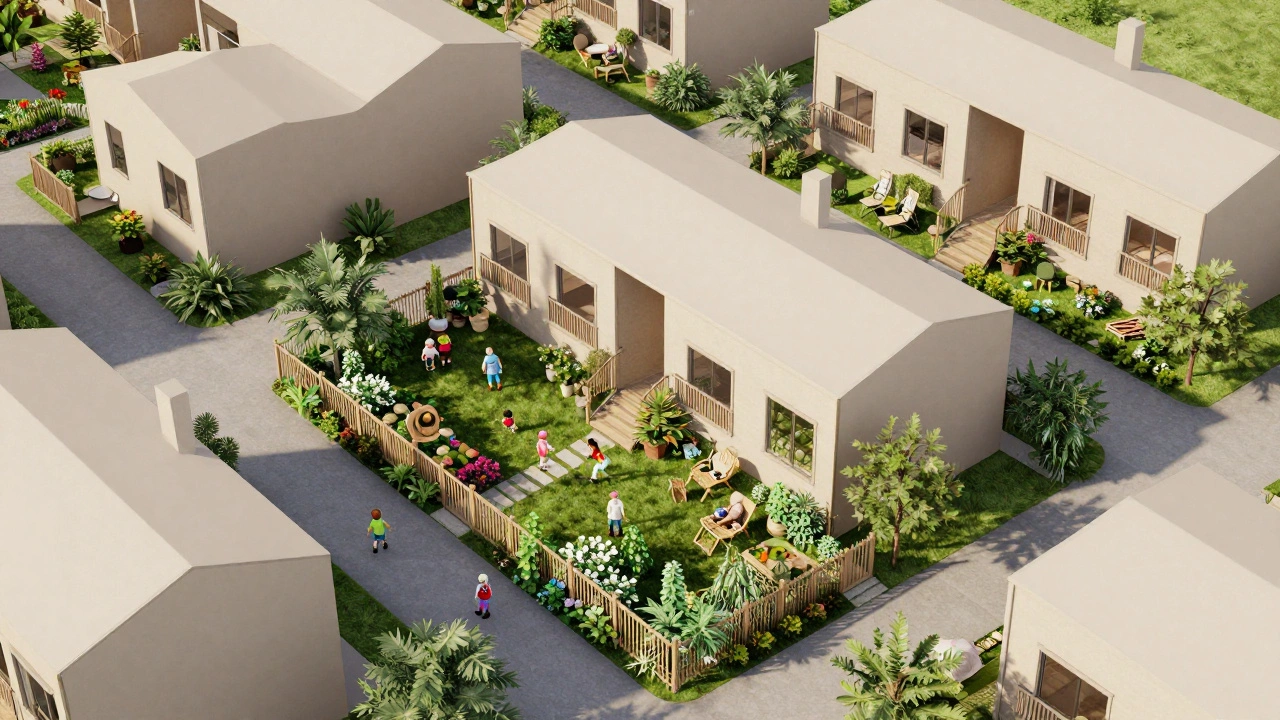
Then there is cohousing. This is intentional development where private homes back onto shared common houses. While popular among older adults who fear isolation, it attracts families too. Kids grow up knowing multiple "aunties" and "uncles" from different households. Privacy remains intact, but social safety nets are woven tight. As baby boomers enter retirement in 2026, demand for cohousing alternatives continues to rise because they reject the "alone but connected" paradox of modern suburbs.
Design Principles for Lifelong Neighborhoods
A beautiful building means nothing if the sidewalk hurts your knees. Universal design creates spaces usable by all ages, starting at the curb. Sidewalks should have gentle slopes, continuous shade trees for walkers, and frequent rest stops with benches.
Transportation is the other pillar. Many seniors stop driving in their late sixties, while teenagers want to get around before they can drive. Transit routes connecting schools, hospitals, and shopping districts must run frequently enough for both groups. If a bus leaves only once an hour, neither a working parent nor a retiree relies on it.
Consider Denver's Kiddo group. Working to improve downtown livability, they advocate for better pedestrian crossings and safe zones for kids. Their efforts inadvertently help seniors too, as slower-moving pedestrians need the same crossing times. Successful coalitions form when advocates realize these overlaps. We shouldn't fight for "elderly rights" separately from "family rights." The policy wins come faster when the coalition is broad.
Making It Happen: Policy and Leadership
Ideas fail without governance. City councils need to establish intergenerational task forces. These bodies scan the landscape for gaps. Are there childcare deserts near senior centers? Is there a lack of green space for active aging?
Policymakers should aim for specific targets. Set a goal to convert 20% of municipal assets into shared sites over five years. Funding follows action. Local governments must commit budget dollars not just to infrastructure, but to operational subsidies for programs that bridge generations. Without financial backing, these pilot projects die after the initial enthusiasm fades.
Zoning codes often forbid mixing uses. To fix this, we need reforms allowing mixed-income and mixed-age housing units within the same developments. Regulations that mandate minimum square footage per bedroom often price out smaller families or singles. Flexible zoning opens the door for diverse household sizes.
Your Role in Shaping the Future
You don't need to be mayor to push for change. Start locally. Identify one shared site proposal in your area-a school, a library, a community center-and ask the management team about programming for different ages. Join a planning commission meeting. Ask why certain paths are paved and others are gravel.
Be vocal about universal design. Point out curbs that block wheelchairs. Advocate for better street lighting for evening walks. Every time you mention "accessibility," emphasize that it benefits parents with strollers and grandparents with walkers alike. Consistent pressure works. Governments listen when citizens frame these issues as vital for community longevity, not just charity.