Gaza Stabilization Timeline Estimator
Progress Tracking Tool
Key Milestones
Funding Breakdown
Warning
Current progress shows potential delays. If targets aren't met, communities may lose aid for 30 days.
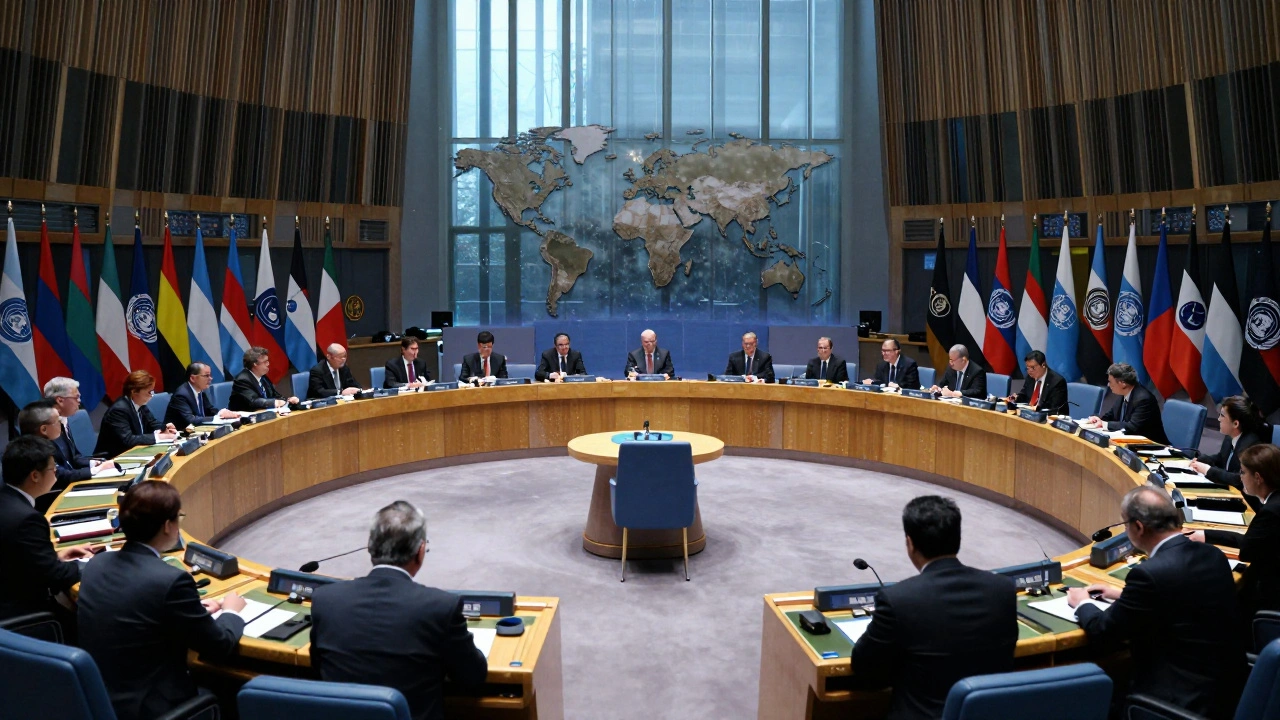
When the UN Security Council passed Resolution 2803(2025), it didn’t just approve a plan-it set a new standard for how the world responds to collapsed states. The Gaza stabilization proposal isn’t another peace talk. It’s a full-scale reset: governance, security, and humanitarian aid all locked together, with clear rules, deadlines, and consequences. This isn’t about hope. It’s about structure.
How Governance Is Being Rebuilt from the Ground Up
The plan doesn’t just remove Hamas. It replaces it. No elections. No militias. No shadow governments. Instead, a transitional technocratic government takes over-Palestinian engineers, doctors, teachers, and administrators with no ties to armed groups. These aren’t politicians. They’re problem-solvers. Their job: reopen schools, fix water pumps, restore power grids, and get food moving again. They answer to the Board of Peace, chaired by President Trump, which acts as an international oversight body with authority to hire, fire, and audit local officials.
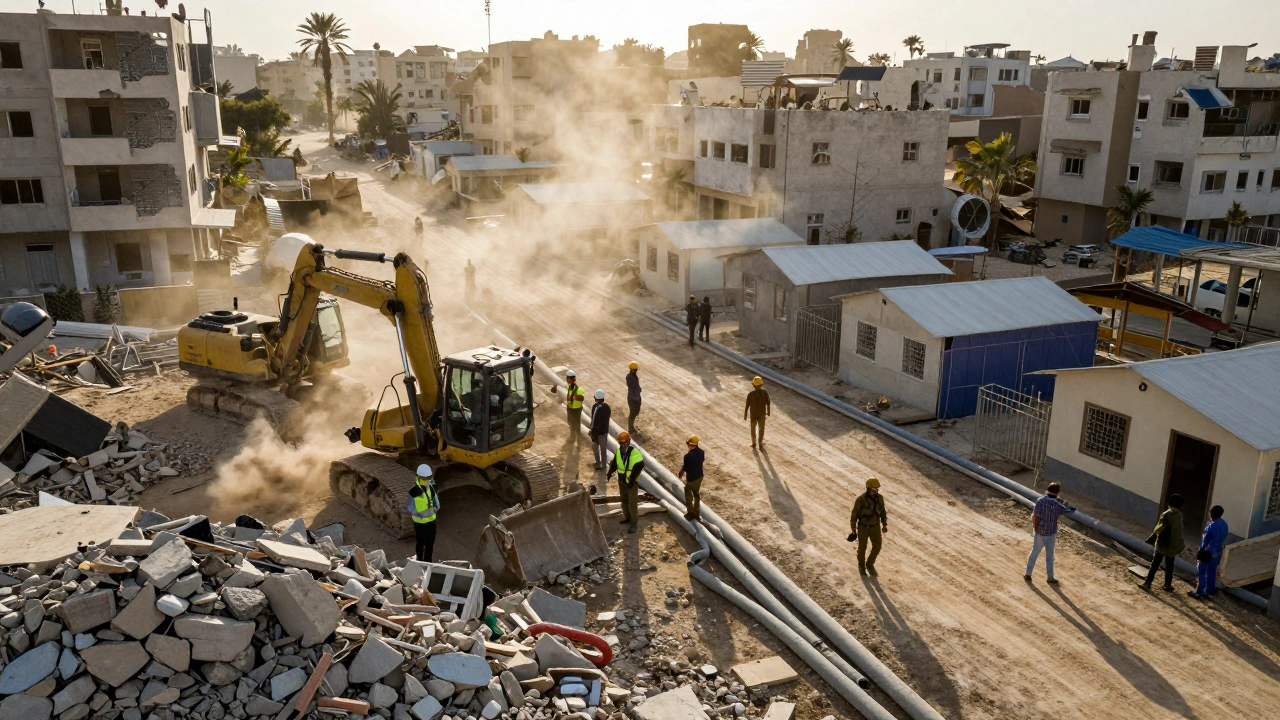
This isn’t foreign occupation. It’s foreign guidance. The Board doesn’t run Gaza. It makes sure Gaza runs. It sets benchmarks: 80% of hospitals must be fully functional by March 2026. 95% of roads must be cleared of rubble by June. If targets are missed, the Board can bring in external experts-no warning, no politics. The goal is simple: rebuild institutions so fast that people forget what life was like under Hamas.
The International Stabilization Force: Who’s Really in Charge?
For years, people asked: who can keep peace in Gaza? The answer isn’t Israel. It’s not the Palestinian Authority. It’s not the UN. It’s the International Stabilization Force (ISF). A 12,000-person force made up of U.S., Egyptian, Jordanian, Turkish, and European troops. They don’t fight. They patrol. They guard aid convoys. They escort engineers into damaged neighborhoods. They stand between civilians and rogue fighters.
The ISF doesn’t replace the IDF overnight. It replaces it gradually. As Hamas weapons are destroyed and tunnels collapsed, Israeli forces pull back. The ISF moves in. By August 2026, the IDF will be confined to a security perimeter only-no patrols, no checkpoints inside Gaza. The ISF becomes the permanent internal security force, trained and vetted by Jordan and Egypt, both of which have decades of experience managing border security and counterterrorism.
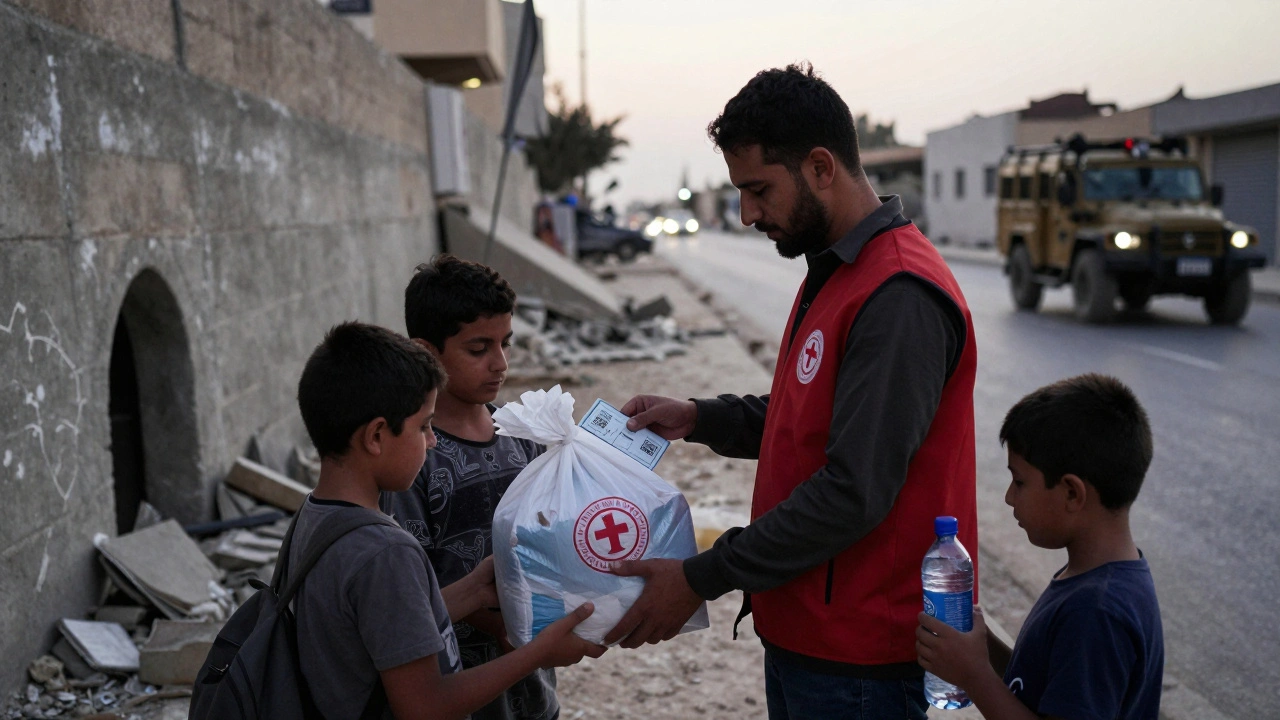
What makes this different? The ISF has a mandate to protect civilians, not just prevent attacks. If a family is trapped under rubble, the ISF clears the path. If a hospital runs out of insulin, the ISF escorts the delivery truck. If a child needs surgery, the ISF secures the route to the operating room. It’s not a military occupation. It’s a humanitarian shield.
Demilitarization: How Gaza Goes From War Zone to Peace Zone
Hamas didn’t just hide weapons. It built an entire underground war economy. Tunnels. Rocket factories. Ammo depots. The stabilization plan doesn’t just disarm-it erases. Every tunnel is flooded, collapsed, or sealed with concrete. Every weapon is either destroyed on-site or removed under international supervision. The Weapons Decommissioning Program offers cash incentives: $5,000 for a rocket launcher, $1,000 for a rifle, $500 for a grenade. The money goes directly to families, not militias.
Independent monitors from Norway and Sweden verify every step. Cameras. Drones. Ground sensors. No exceptions. If a weapon is found after the deadline, the entire community loses aid for 30 days. No warnings. No appeals. This isn’t punishment. It’s deterrence. The message is clear: if you rebuild a weapon, you lose your future.
And Hamas? The plan leaves no room for them. Not as a political party. Not as a social service provider. Not even as a former fighter who "just wants to go home." The resolution says it plainly: "Hamas and other factions agree to not have any role in the governance of Gaza, directly, indirectly, or in any form." Those who surrender are offered safe passage to third countries. Those who resist? They’re isolated, surrounded, and dismantled-by the ISF, not Israel.
Humanitarian Coordination: No More Chaos, No More Corruption
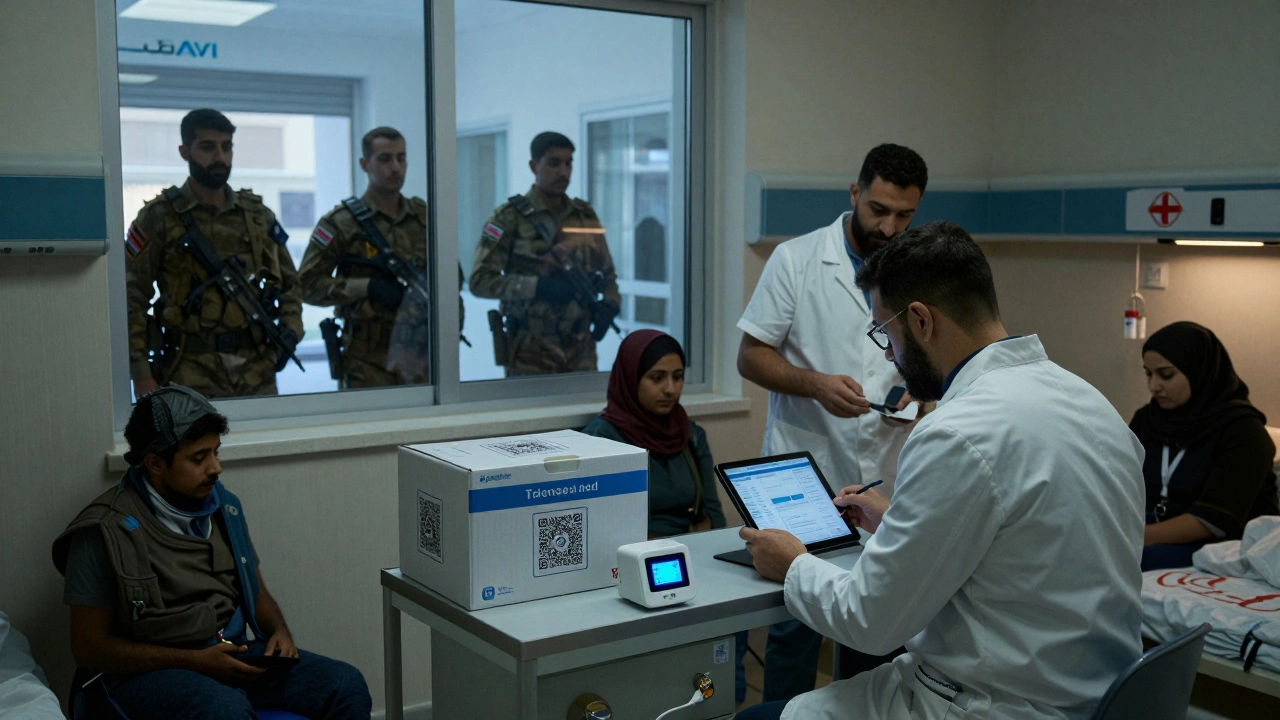
Before the ceasefire, aid was a battlefield. Trucks were looted. Supplies were diverted. Aid workers were threatened. The new system cuts all that out. The United Nations and Red Crescent now control all aid distribution. No local militias. No checkpoints. No "taxes" on food.
Every delivery is tracked digitally. A QR code on each box links to a public database showing where it came from, who approved it, and who received it. If a shipment goes missing, the system flags it. If a warehouse has too many sacks of flour, the Board investigates. If a hospital gets 10,000 doses of polio vaccine but only administers 2,000? The Board shuts it down until they explain why.
And here’s the twist: aid doesn’t stop if Hamas refuses to comply. The plan says aid flows anyway-into areas the IDF hands over to the ISF. Even if Gaza as a whole doesn’t cooperate, the parts that do get food, water, and medicine. This isn’t just humanitarian. It’s strategic. It gives people a reason to support the new system: your family lives if you cooperate. Your children die if you don’t.
Why This Plan Could Work-And Why It Might Fail
Three things make this different from past attempts:
- Clear deadlines. No "peace process." No "phases." Everything has a date. Ceasefire: October 10, 2025. Demilitarization complete: April 2026. ISF fully in charge: August 2026. No wiggle room.
- Real consequences. If you hide a weapon, your neighborhood loses aid. If you block aid, you lose your job. If you try to reorganize Hamas, you’re arrested by the ISF.
- Local ownership. Palestinians run the hospitals, schools, and roads. Foreigners just make sure they can.
But it’s fragile. If the U.S. pulls out its troops before the ISF is trusted. If Arab nations stop funding reconstruction. If the Palestinian Authority refuses to take over Gaza. If Israel decides to re-enter after a single rocket. One failure, and the whole thing collapses.
The biggest risk? Complacency. The world watched Gaza burn for 18 months. Now, it’s watching it rebuild. But rebuilding takes longer than bombing. And the world has short attention spans.
What Happens If Hamas Says No?
President Trump’s January 2026 ultimatum was blunt: "Disarm within weeks-or be blown away very quickly." That’s not rhetoric. It’s policy. The resolution gives the ISF and IDF the legal right to resume military operations if Hamas doesn’t comply. But it’s not a return to bombardment. It’s surgical. Targeted. Focused on weapons sites, command centers, and supply lines. The goal isn’t to punish Gaza. It’s to remove the obstacle.
And if Hamas breaks? The plan doesn’t collapse. It adapts. Aid still flows to liberated zones. The ISF expands its footprint. The Board of Peace starts working with local councils that reject Hamas. The world doesn’t wait for one group to say yes. It moves forward with those who will.
What Comes Next? The Long Game
The plan doesn’t promise statehood. It doesn’t promise elections. It doesn’t promise a Palestinian flag over Gaza. But it does promise something more basic: dignity. A functioning hospital. A working school. A safe street. A clean water tap. A job. A future.
By 2028, the goal is to hand control of Gaza to a reformed Palestinian Authority-clean, accountable, and unified with the West Bank. But that’s not the end. It’s the beginning. Because once Gaza is stable, the real work starts: economic revival. Job creation. Youth programs. Education reform. Infrastructure investment.
This isn’t a peace deal. It’s a reboot. And if it works, it could become the model for every failed state in the world.
What happens to Hamas fighters who surrender?
Those who surrender and agree to decommission weapons are offered amnesty and safe passage to third countries. They receive financial support for relocation and resettlement. No trials. No imprisonment. But they are permanently barred from returning to Gaza or holding any public office in any Palestinian territory.
Who pays for the International Stabilization Force?
The U.S. funds 40% of the ISF’s budget. Arab nations, including Saudi Arabia, UAE, and Qatar, cover 35%. European Union members contribute 20%. The remaining 5% comes from UN peacekeeping reserves. All contributions are locked into multi-year agreements to prevent sudden funding cuts.
Can the Palestinian Authority ever take control of Gaza again?
Yes-but only after meeting strict conditions: no ties to Hamas, transparent elections, full security coordination with Israel, and agreement to reunify with Gaza under a single, unified government. The Board of Peace will oversee this transition, which must be completed by 2028. If the PA fails to meet the standards, the international community may extend the transitional government.
How is aid distributed to avoid corruption?
All aid is tracked through a blockchain-based system managed by the UN and Red Crescent. Each item has a unique digital code. Recipients must scan it with a government-issued ID. Distribution centers are monitored by international inspectors. Any mismatch between delivery and receipt triggers an automatic audit. Repeat offenders lose their aid contracts.
What if Israel doesn’t fully withdraw?
The plan allows Israel to maintain a security perimeter only until the ISF proves it can independently prevent terror attacks. If Israel delays withdrawal without justification, the Board of Peace can request UN sanctions against Israeli military exports. The U.S. has pledged to enforce this clause. No military presence inside Gaza after August 2026, period.