Food Security Impact Calculator
Climate Impact
Low
High
Trade Conditions
Low
High
Food Reserve Levels
Interventions
Projected Food Insecurity
27.2%
With current conditions: 27.2% of population faces food insecurity.
With interventions applied: Reduces to 16.8% - saving 10.4 million people from acute hunger.
Recommended actions
- Implement regional trade agreements (saves 18% in prices)
- Upgrade cold-storage for local crops like cassava and millet
- Deploy climate-resilient farming techniques
By 2026, more than 270 million people worldwide are facing acute food insecurity - a 20% jump since 2020. This isn’t a temporary spike. It’s the result of overlapping crises: droughts that wipe out harvests, wars that block supply routes, inflation that makes bread unaffordable, and policies that ignore local farming realities. The old way of responding - shipping surplus grain from distant countries - isn’t working anymore. The world is shifting toward a smarter, more connected system built on three pillars: smarter trade, smarter food reserves, and farming that can survive the climate chaos we’re already living through.
Trade Isn’t Just About Shipping Goods - It’s About Trust and Speed
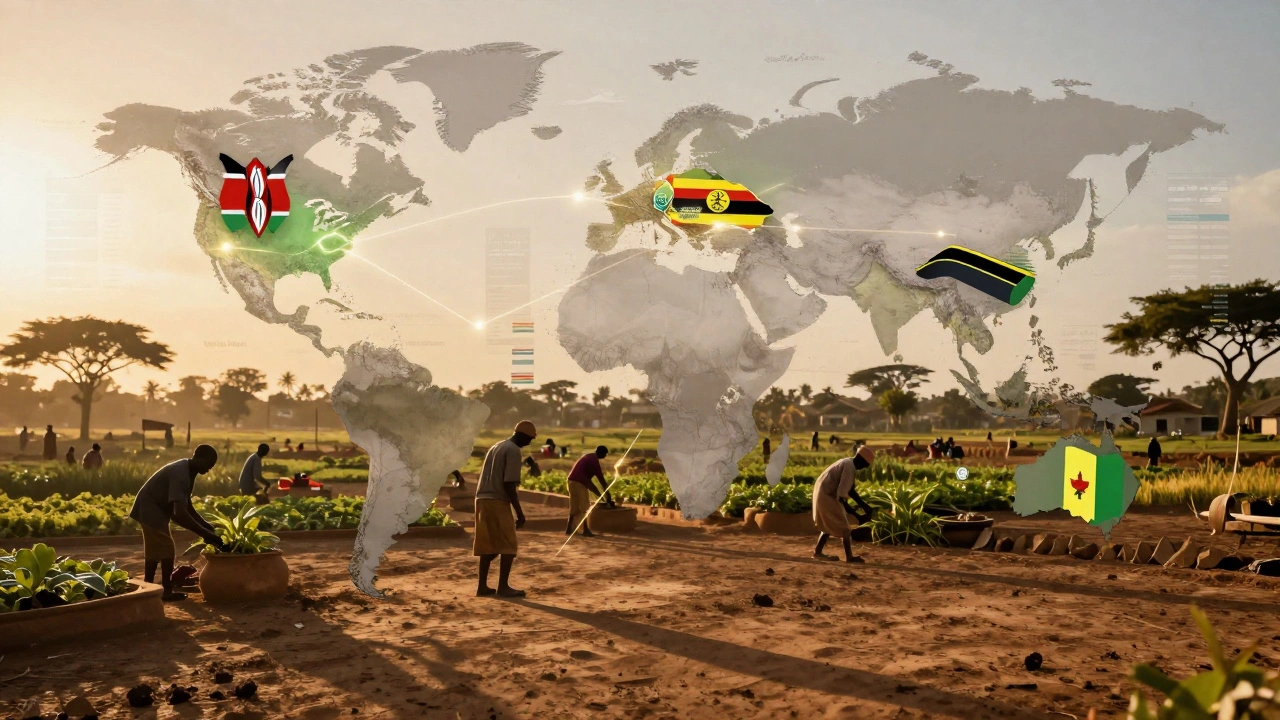
Think of global food trade like a highway system. When one region has a flood, another should be able to send food quickly. But right now, that highway is full of potholes. Tariffs, export bans, and inconsistent regulations slow things down. In 2023, over 30 countries imposed food export restrictions during crises, making things worse for net importers. The World Bank’s Global Food and Nutrition Security Dashboard now tracks these disruptions in real time, giving governments data to act before shortages hit. The big shift? Moving from emergency trade to systemic market resilience. Instead of waiting for famine, countries are now building long-term partnerships. For example, Kenya and Ethiopia now have direct trade agreements with smallholder cooperatives in Uganda and Tanzania, cutting out middlemen and lowering prices by up to 18%. The UN Food Systems Coordination Hub is helping countries formalize these networks, so when a drought hits one area, food can flow from another without political delays. Private companies are stepping in too. Companies like Olam and Cargill are now signing multi-year contracts with small farms in Mozambique and Zambia, guaranteeing prices and providing seeds upfront. This isn’t charity - it’s business. And it’s working. In regions where these partnerships exist, crop yields have increased by 30% over three years.Food Reserves Are No Longer Just Grain Silos
For decades, food reserves meant big warehouses full of wheat and rice, often rotting before they were used. Today, reserves are dynamic, flexible, and local. The World Food Programme’s Immediate Response Account (IRA) lets funds be released within 72 hours of a climate warning - not after a child starts showing signs of malnutrition. In 2025, the IRA helped farmers in northern Nigeria get seeds and tools before the rains failed. That meant 87% of households still had food six months later, instead of relying on emergency aid. The same model is now being used in Bangladesh, where cash transfers go directly to market vendors before cyclones hit, keeping food prices stable. Even more powerful is the shift from imported staples to regional food reserves. Instead of storing imported rice, countries like Senegal and Ghana are building cold-storage hubs for cassava, millet, and yams - crops that grow locally and can be stored for months. These hubs are connected to schools, clinics, and local markets. When a drought comes, food doesn’t come from abroad - it comes from the next town over.Climate-Resilient Agriculture Is the Only Long-Term Fix
You can’t ship your way out of a desert. You can’t store your way out of a flood. That’s why the real solution lies in changing how food is grown. Climate-resilient agriculture isn’t just about drought-tolerant seeds - it’s a whole system. In Ethiopia, farmers are using conservation agriculture: planting crops in raised beds, covering soil with crop residue, and rotating legumes with grains. This reduces water use by 40% and boosts yields even during dry spells. In Malawi, women-led cooperatives are growing nutrient-rich orange-fleshed sweet potatoes - not just for calories, but for vitamins that fight childhood stunting. Technology plays a role too. In Kenya, farmers get text messages with soil health tips based on satellite data. In Honduras, drones map which fields are most vulnerable to erosion, so aid goes where it’s needed most. But the real innovation? Training local extension workers - not foreign experts - to teach these methods. That’s why adoption rates are above 75% in places where this model is used. The key? It’s not about one miracle crop. It’s about combining agroecology with financial support. When farmers get access to credit, training, and markets together, their resilience multiplies.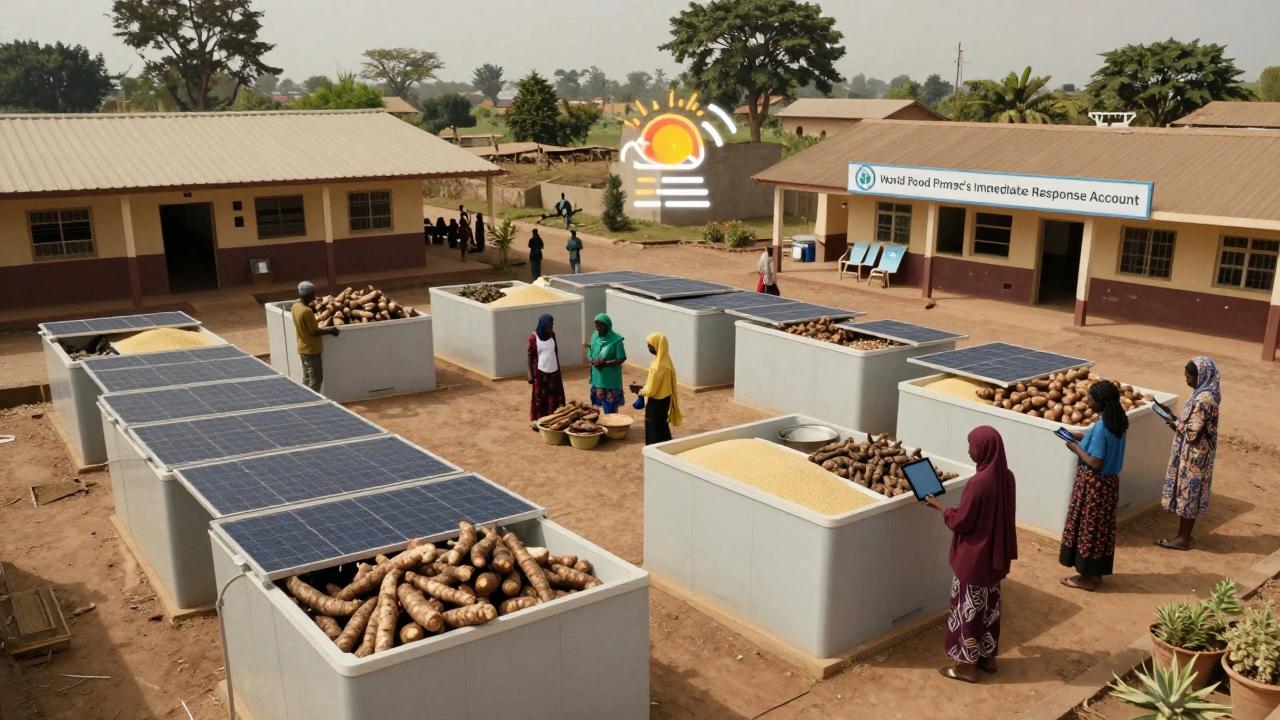
The New Coordination Model: From Silos to Systems
In the past, food aid came from one agency, trade policy from another, climate adaptation from a third. Now, everything is linked. The UN Food Systems Coordination Hub - launched after the 2021 summit - acts as the central nervous system. It doesn’t run programs. It connects them. In Indonesia, the Hub brought together FAO, WFP, the World Bank, and local ministries to create a single national food security roadmap. They aligned funding, removed duplicate reporting, and tied all projects to measurable outcomes: “X% reduction in post-harvest loss,” “Y% increase in women’s land ownership.” Within 18 months, food waste dropped by 22% and smallholder incomes rose by 34%. This is happening in 40 countries now. Each one has a National Convenor - a local official with real authority - who coordinates between ministries, NGOs, and private sector players. No more paperwork wars. No more competing agendas. Just one plan, one budget, one timeline.Why This Matters: Food Is No Longer Just a Humanitarian Issue
Food security used to be seen as a charity problem. Now it’s recognized as economic, political, and national security. When farmers can’t feed their families, they migrate. When markets collapse, governments fall. When children are malnourished, a whole generation loses its potential. The U.S. Global Food Security Strategy (2022-2026) now frames its work around three goals: economic growth through farming, resilience for vulnerable communities, and better nutrition for women and children. That’s not an aid program - it’s a development strategy. Countries like Rwanda and Vietnam are seeing this too. They’re investing in food systems like they invest in roads or schools. Because when a country can feed itself, it doesn’t need handouts. It becomes a partner - not a recipient.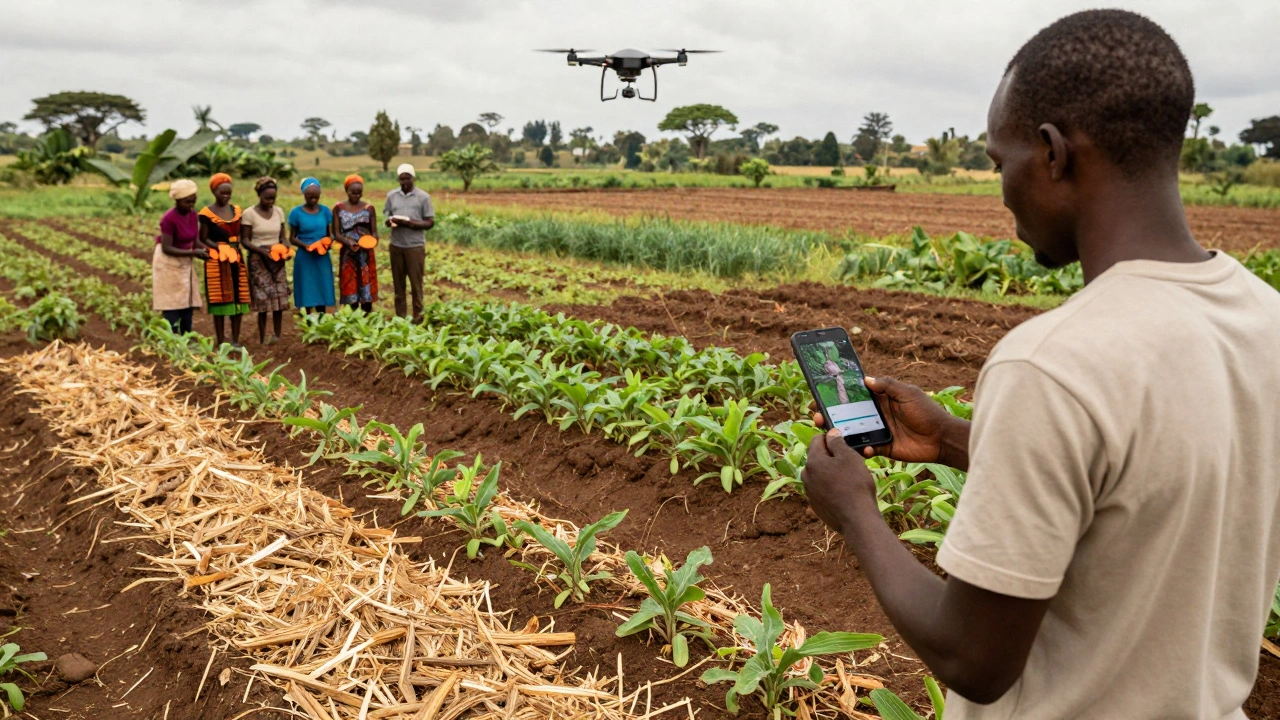
What’s Still Broken?
Progress is real - but fragile. Aid cuts in 2025 hit food programs hardest. Donor countries shifted focus to war zones, leaving climate-vulnerable regions behind. Funding for food systems coordination fell 15% last year. Also, the system still favors big players. Multinational agribusinesses get subsidies and loans. Small farmers get leftovers. The same governments that claim to support resilience often keep trade policies that favor imports over local production. And then there’s data. Many countries still don’t track food waste, soil health, or gender equity in farming. Without good data, you can’t fix what’s broken.The Path Forward
The future of food security isn’t about more aid. It’s about better systems. Here’s what works:- Build regional food networks - not global supply chains.
- Use predictive funding - release money before disasters, not after.
- Empower local farmers with credit, training, and market access - not just seeds.
- Link food policy to climate adaptation, gender equity, and economic planning - not treat them as separate.
- Hold governments accountable with public dashboards that show real results.