Regenerative Farm Calculator
For decades, farmers have been told that more chemicals, more machinery, and more monocrops mean more food. But the land is tired. Topsoil is vanishing. Droughts are longer. Floods are fiercer. And the cost of fertilizer keeps rising. What if the answer isn’t doing more-but doing differently?
Regenerative Agriculture Isn’t Just Organic 2.0
Regenerative agriculture isn’t about avoiding synthetic inputs. It’s about rebuilding ecosystems so they work for you, not against you. It’s not a checklist. It’s a mindset. Instead of asking, "How do I get the most corn out of this field?" you ask, "How do I make this land healthier than when I found it?"
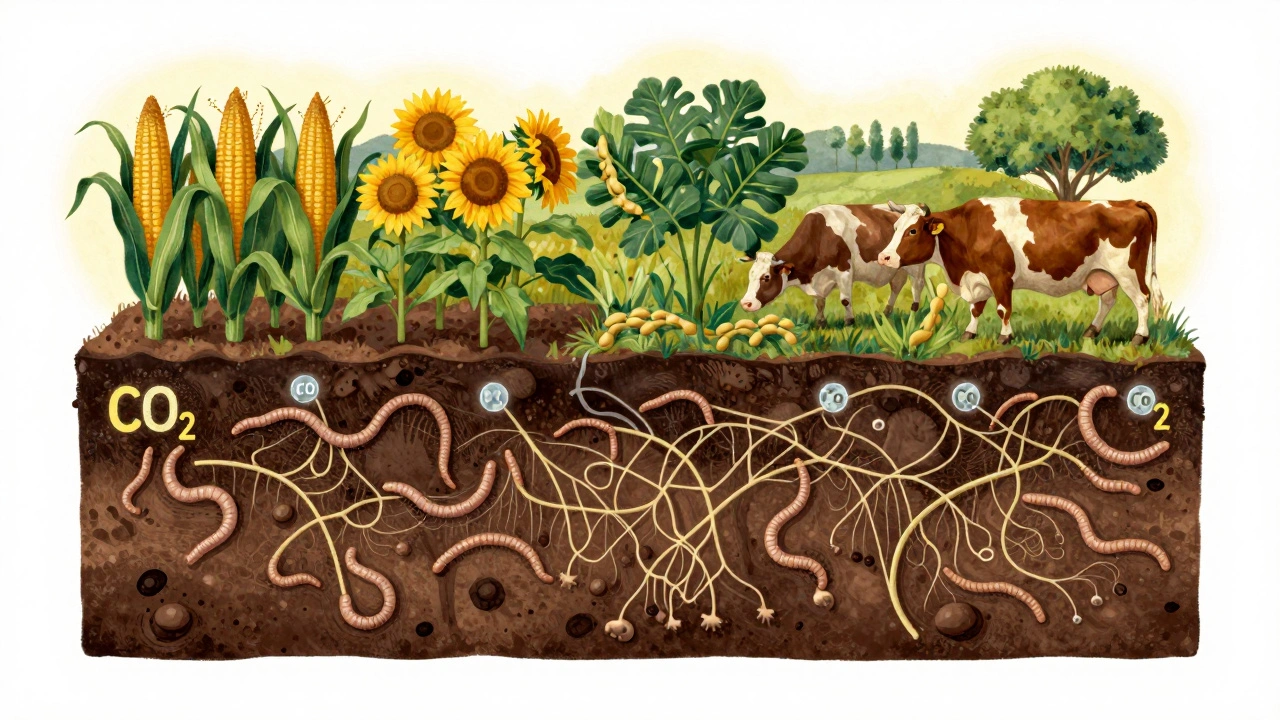
This approach draws from ancient Indigenous practices-rotational grazing, polycultures, natural composting-and combines them with modern science. The goal? To turn farms from carbon emitters into carbon sinks. According to the Rodale Institute, regenerative fields can pull in 1.5 to 2 tons of carbon per acre every year. That’s like taking 300 cars off the road for every 100 acres you manage.
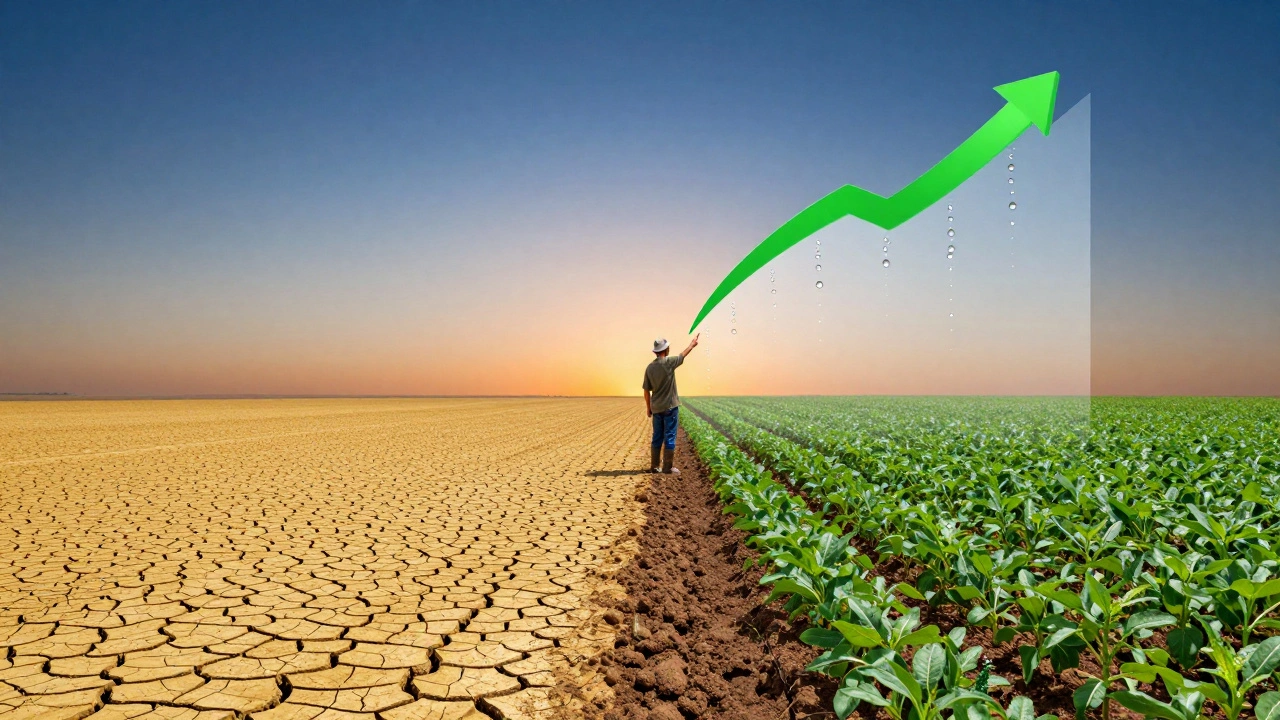
And it’s not just about carbon. Healthy soil holds water like a sponge. A 1% increase in soil organic matter means an extra 20,000 gallons of water per acre. In 2023, during the worst drought in the Midwest in 50 years, farms using regenerative methods saw yields stay flat-while conventional farms dropped 30%.
What Actually Happens on a Regenerative Farm?
Let’s break down the real practices that make the difference:
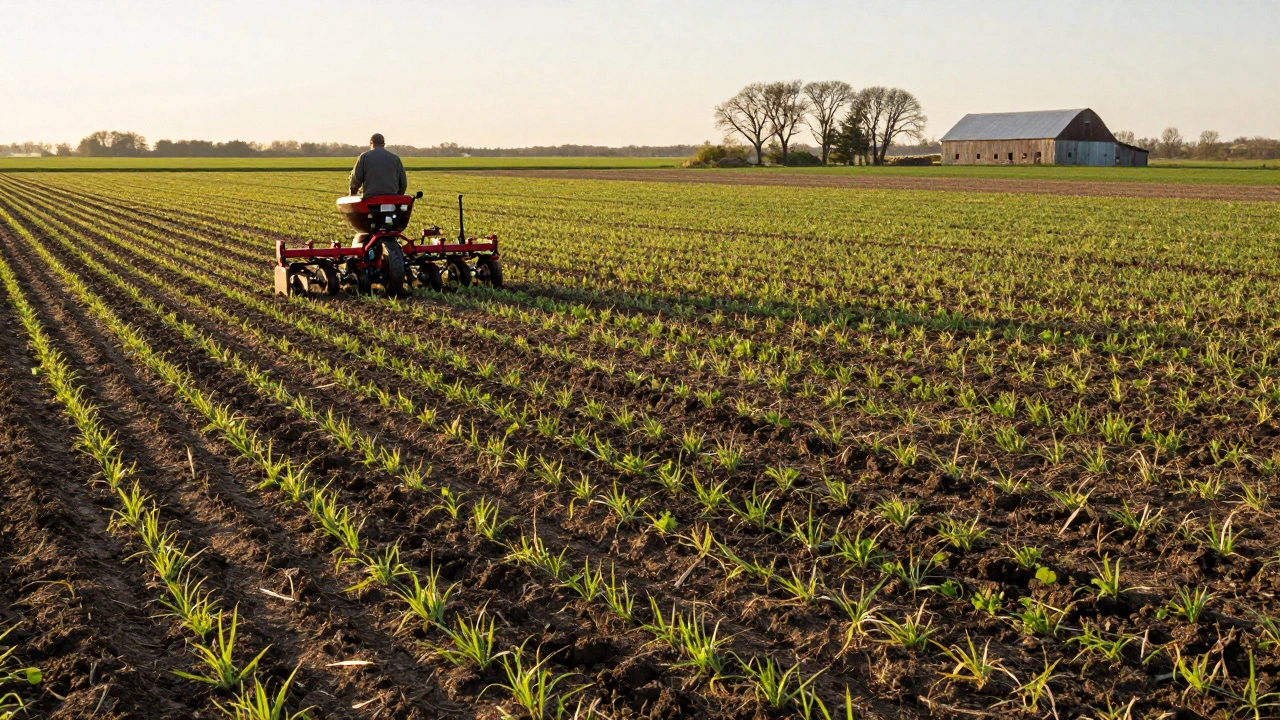
- No-till or reduced-till farming: Instead of flipping the soil every spring, you plant directly into last year’s crop residue. This cuts fuel use by 40-60% and keeps microbes alive. In Iowa, one farmer cut his tractor hours from 25 to 8 per season.
- Cover crops: After harvest, you don’t leave the ground bare. You plant rye, clover, or radishes. These protect the soil, feed microbes, and suppress weeds. In a 2022 trial in Nebraska, cover crops increased soil organic matter by 0.8% in just one year.
- Diverse crop rotations: Rotate corn, soybeans, oats, and even sunflowers-not just corn-soy-corn-soy. This breaks pest cycles and reduces the need for pesticides. One Kansas farmer cut his herbicide use by 70% after switching to a 5-crop rotation.
- Managed grazing: Move cattle often-like wild herds. This mimics nature. Grasses recover, roots grow deeper, and manure gets evenly spread. Soil carbon rose 0.4 tons per hectare in just two years on a Texas ranch using this method.
- Agroforestry: Plant trees among crops. In Ohio, walnut trees planted between soybeans boosted total land productivity by 25% while providing shade and habitat for birds and pollinators.
These aren’t niche experiments. They’re happening on real farms-from family operations in Pennsylvania to large cooperatives in Saskatchewan. And the results? Soil organic matter climbing from 1.5% to 3.5% in five years. Water infiltration rates doubling. Synthetic fertilizer use dropping by half.
Productivity Isn’t Just About Yield
Here’s the myth: regenerative farming means lower yields. Not true.
In the first 2-3 years of transition, yields might dip 10-15%. That’s real. But after year four, most farms catch up-and often surpass conventional yields, especially in dry years. Why? Because healthy soil doesn’t just grow plants. It protects them.
A 2022 study of 839 Midwestern farms found that regenerative fields had 20-40% higher resilience during extreme weather. When corn yields dropped across the region, regenerative farms held steady. In 2023, farmer John Kempf in Illinois reported a 28% yield increase in soybeans after seven years of regenerative practices.
And here’s the kicker: profitability. Even if you harvest 20% less corn, you’re spending 50% less on fertilizer and pesticides. Cornell University found regenerative farms earned 78% more profit per acre than conventional ones. Less input. Less debt. Less risk.
Food Security Isn’t About More Food-It’s About Reliable Food
Global food security isn’t broken because we don’t produce enough. It’s broken because our system is fragile.
One drought in Ukraine. One flood in Pakistan. One supply chain hiccup. And prices spike. Millions go hungry. Regenerative agriculture changes that.
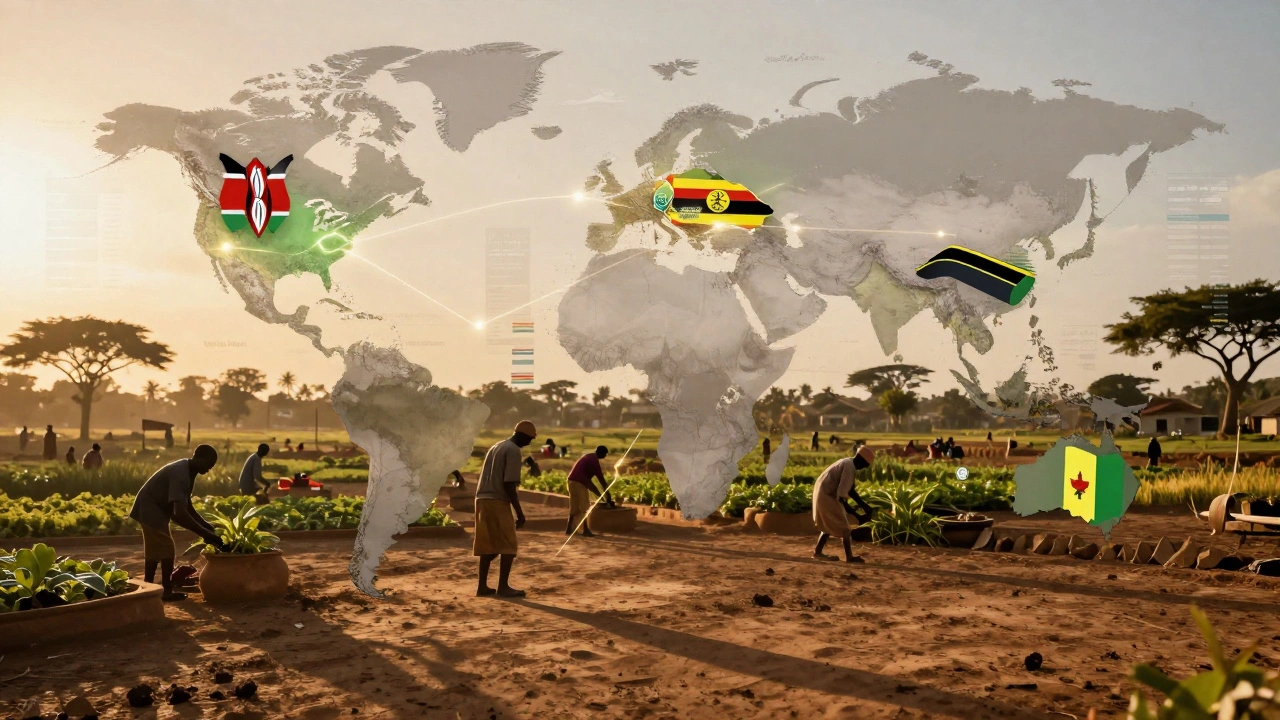
Why? Because it’s decentralized. It’s diverse. It’s resilient. A farm with 12 different crops and healthy soil doesn’t collapse when one crop fails. It adapts. Smallholder farmers in Kenya and India are already seeing this. After switching to regenerative techniques, their yields became more stable. Their income doubled. Their children stayed in school.
The International Panel of Experts on Sustainable Food Systems estimates that if regenerative practices spread to 30% of global farmland by 2050, they could reduce hunger for 200-300 million people. Not by producing more grain-but by making food systems last.
The Real Barriers: Money, Knowledge, and Markets
So why isn’t every farm doing this?
Three big reasons:
- Upfront costs: A no-till planter runs $15,000-$50,000. Not cheap for a farmer already stretched thin.
- Knowledge gap: 82% of farmers say they don’t know where to start. Soil testing? Biodiversity tracking? Water infiltration? It’s not taught in ag school.
- Market access: Who pays more for regeneratively grown wheat? Not the commodity traders. Only specialty buyers-co-ops, organic brands, direct-to-consumer models.
That’s why support matters. The USDA’s Conservation Reserve Program pays $100-$200 per acre for farmers who plant cover crops or restore wetlands. The Ecdysis Foundation offers free online courses to 12,000+ farmers since 2020. The Regenerative Agriculture Alliance connects new adopters with mentors.
And corporations? They’re watching. General Mills is working with 1 million acres by 2030. Cargill invested $30 million. Nestlé pledged $1.3 billion. But here’s the catch: only 35% of these commitments include verifiable metrics. Words aren’t enough. Soil tests are.
What’s Next? The Clock Is Ticking
The global regenerative agriculture market hit $12.4 billion in 2022. It’s projected to hit $31.8 billion by 2028. That’s real money. Real momentum.
But adoption is still tiny. Only 5-7% of farmland worldwide uses these practices. North America leads at 12%. Europe follows at 8%. In Africa and Asia, it’s under 3%-not because the land doesn’t need it, but because the support isn’t there.
The EU’s Farm to Fork Strategy is pushing for a 50% reduction in pesticides by 2030. The U.S. just launched a $3.1 billion climate-smart commodities program. These aren’t just policies-they’re lifelines for farmers ready to change.
The future isn’t about choosing between feeding the world and saving the planet. It’s about feeding the world by saving the planet. Regenerative agriculture proves that. Soil doesn’t lie. Water doesn’t lie. Yields don’t lie.
If you’re a farmer, start with one field. Test your soil. Plant a cover crop. Reduce tillage. Talk to a neighbor who’s done it. The first year is hard. The second is harder. But by year four? The land remembers how to heal. And so do you.
If you’re a consumer, ask where your food comes from. Support brands that track soil health-not just "sustainability" buzzwords. Demand transparency. Your fork is a vote.
If you’re a policymaker, fund soil health programs. Reward outcomes, not inputs. Pay for carbon stored, not acres planted.
This isn’t a trend. It’s a necessity.
Is regenerative agriculture the same as organic farming?
No. Organic farming avoids synthetic chemicals, but it doesn’t necessarily rebuild soil or increase biodiversity. A farm can be organic and still use heavy tillage, single crops, and no cover crops. Regenerative agriculture goes further-it actively restores ecosystems. Organic is a standard. Regenerative is a result.
Can regenerative practices work on large industrial farms?
Yes, but it’s harder. Large farms often rely on machinery built for monocultures and chemical inputs. Switching requires new equipment, training, and a shift in management philosophy. But it’s happening. Companies like Cargill and General Mills are working with large-scale growers to adopt no-till, cover crops, and crop rotation-even on thousands of acres. The key is phased transition and financial support.
How long does it take to see results from regenerative farming?
Soil health improvements start within months-microbes rebound quickly. But visible changes like increased water retention, reduced erosion, and higher yields usually take 3-5 years. Most farmers report profitability improvements after year four. The first two years are the hardest financially, but the payoff is long-term.
Are there any government programs to help farmers switch?
Yes. In the U.S., the USDA’s Conservation Reserve Program pays $100-$200 per acre for cover crops, buffer strips, and wetland restoration. The new Partnerships for Climate-Smart Commodities program offers $3.1 billion in grants for regenerative projects. In Europe, the Farm to Fork Strategy provides funding for reduced chemical use. Local NRCS offices can help farmers apply.
What’s the biggest mistake farmers make when starting?
Trying to do everything at once. You don’t need to switch to managed grazing, plant 10 cover crops, and install agroforestry on day one. Start with one practice-like no-till or cover cropping. Master it. Measure your soil health. Then add the next. Patience beats perfection. And peer networks matter-join a local regenerative group. You’re not alone.
Does regenerative agriculture really fight climate change?
Absolutely. Soil holds more carbon than all plants and the atmosphere combined. Regenerative practices can sequester 3-5 gigatons of CO2-equivalent annually-that’s 5-8% of global emissions. Plus, reducing synthetic fertilizer cuts nitrous oxide, a greenhouse gas 300 times worse than CO2. It’s one of the most scalable climate solutions we have.
How can I tell if a product is truly regenerative?
Look for third-party verification. The Regenerative Organic Certification (ROC) is the strictest-it requires soil health, animal welfare, and social fairness. Other labels like "carbon neutral" or "sustainable" often mean nothing. Ask: Do they share soil test results? Do they track biodiversity? Do they report reductions in chemical use? If not, it’s marketing, not regeneration.
Final Thought: The Land Remembers
Every year, the soil forgets less. Every cover crop, every no-till seed, every rotation of livestock-it adds up. The land doesn’t care about your yield targets or your quarterly earnings. It only cares if you treat it like a living thing.
And when you do? It gives back-not just food, but resilience. Not just profit, but peace of mind. Not just survival, but renewal.