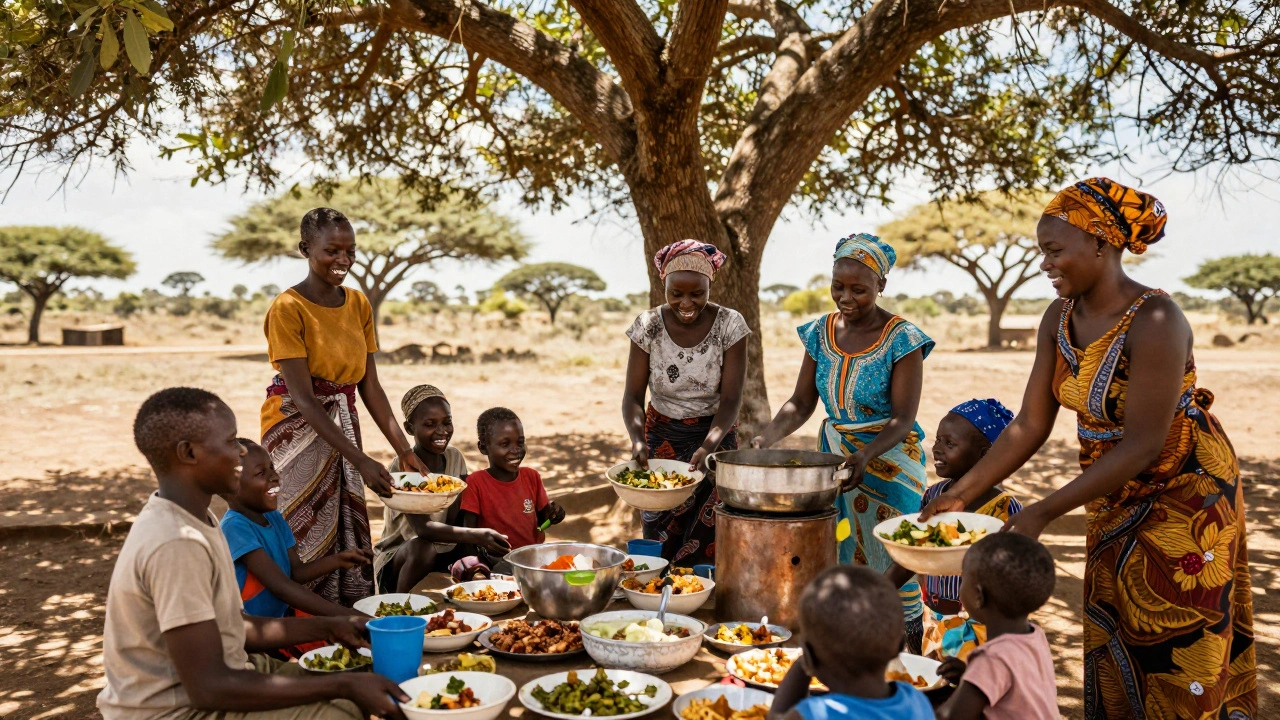
When people from different backgrounds live side by side, trust doesn’t grow on its own. In countries like Kenya, Nigeria, or Guatemala, where ethnic, religious, and cultural groups have historically been pitted against each other, social cohesion isn’t a slogan-it’s the difference between peace and violence. It’s not about forcing everyone to think the same. It’s about creating conditions where people, even with deep differences, can rely on each other and feel they belong.
Why Diversity Doesn’t Automatically Break Society
Many assume that the more diverse a society is, the more fractured it becomes. But research shows the opposite: diversity itself doesn’t cause division. The real problem is lack of contact and unequal power. When people from different groups interact regularly under fair conditions, fear drops. A study across seven post-conflict nations found that individuals who had regular, positive contact with people from other ethnic or religious backgrounds were significantly less likely to see them as threats. Empathy, not ignorance, is what breaks down prejudice.Think of it this way: if your neighbor is from a different culture, and you’ve never spoken to them, your brain fills in the blanks with fear. But if you’ve shared a meal, worked on a team, or coached a kid’s soccer game together, that fear fades. That’s not magic. It’s psychology. And it’s the foundation of any real social cohesion strategy.
Land, Power, and the Hidden Fault Lines
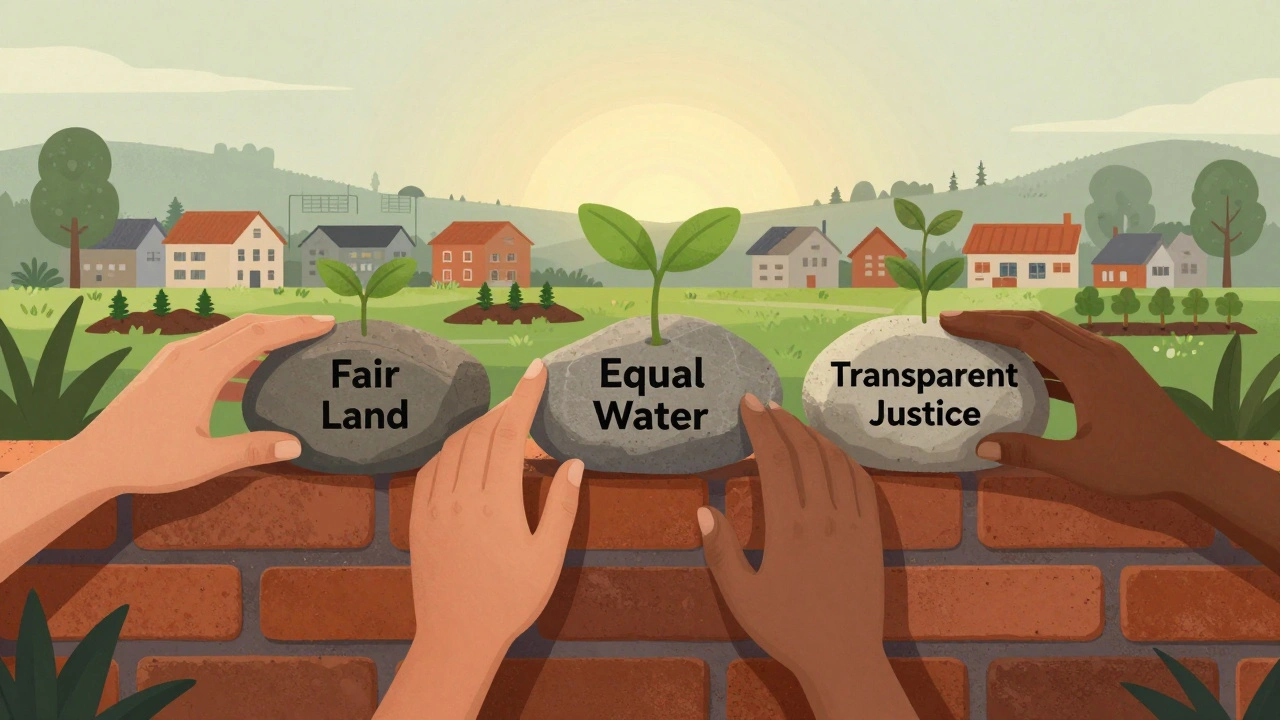
You can’t talk about belonging without talking about land. In Guatemala, Nepal, Kenya, and Sri Lanka, the biggest source of anger isn’t language or religion-it’s who owns the land and who gets clean water, schools, or police protection. When one group controls the best land and the government turns a blind eye to others being pushed out, resentment builds for generations. That’s not just unfair. It’s explosive.Take Kenya. After the 2007 election violence, donors poured millions into “community cohesion” programs. But if your village still can’t get a road built because you’re from the wrong tribe, no amount of workshops will fix that. Real change happens when policy fixes concrete injustices: fair land titles, equal access to water, unbiased policing, and multilingual public services. Abstract national unity messages? They fall flat without these basics.
Institutions That Work, Not Just Symbols
Governments often try to build unity by launching national campaigns-"One Nation," "Union Spirit," "We Are All Equal." But if the institutions behind those slogans are rigged, people see right through them. In Myanmar, the government pushed a narrative of national unity while systematically excluding the Rohingya and other minorities from citizenship, education, and jobs. The result? More division, not less.Strong institutions don’t just look good on paper. They make sure everyone interacts on equal footing. That means courts that don’t favor one group, schools that teach in multiple languages, public hiring that’s transparent, and police who respond to complaints from all neighborhoods. When people trust that the system works for them-not just for others-they start trusting each other too.
Civil Society: Where Real Bonds Are Made
The most effective glue in diverse societies isn’t the government or the media. It’s everyday people coming together outside of politics. Sports teams, neighborhood associations, women’s cooperatives, youth choirs, and local food markets-these are the places where identity fades and humanity takes over.In Tanzania, where no single ethnic group dominates, social cohesion is stronger not because of clever policies, but because cross-cutting organizations have thrived for decades. A farmer in the north might play football with someone from the coast. A teacher in the city might volunteer with a group from a different religion. These small, repeated interactions build habits of cooperation. They’re not flashy. But they’re the reason Tanzania hasn’t seen large-scale ethnic violence in decades.
What Doesn’t Work: Top-Down Unity
Many countries try to force cohesion from the top. They create national holidays, rewrite history books, or ban certain cultural practices to "promote unity." But these efforts backfire. When people feel their identity is being erased or ignored, they dig in harder. That’s why attempts to impose a single national narrative-whether in Sri Lanka, Lebanon, or Nigeria-often deepen divides.True cohesion doesn’t erase difference. It makes space for it. It doesn’t ask people to become the same. It asks institutions to treat everyone the same. That’s the shift: from pretending everyone is alike to ensuring everyone has the same rights, no matter who they are.
The Role of the State: Fairness Over Favoritism
The state isn’t just a referee. It’s the most important player. When the state allocates resources unfairly-giving roads, hospitals, or jobs mostly to one group-it tells everyone else: "You don’t belong." That’s why social cohesion fails in countries where power is concentrated in one ethnic or religious elite. Nigeria’s history shows this clearly: decades of resource allocation favoring certain regions led to rebellion, secessionist movements, and deep distrust.The fix isn’t revolution. It’s reform. Redirecting budgets to underserved areas. Creating transparent systems for land ownership. Training public servants to serve all citizens equally. Making sure local councils include members from all major groups. These aren’t radical ideas. They’re basic governance. And when done consistently, they build trust faster than any speech or parade ever could.
What Can Be Done Today?
You don’t need a national policy to start building cohesion. Here’s what actually works:- Support local cross-group projects-sports leagues, community gardens, language exchange programs. These create real relationships.
- Push for fair access to public services-if your town’s water system only serves one neighborhood, speak up. Equity isn’t charity. It’s justice.
- Hold leaders accountable-when officials use ethnic or religious fear to win votes, call it out. Silence enables division.
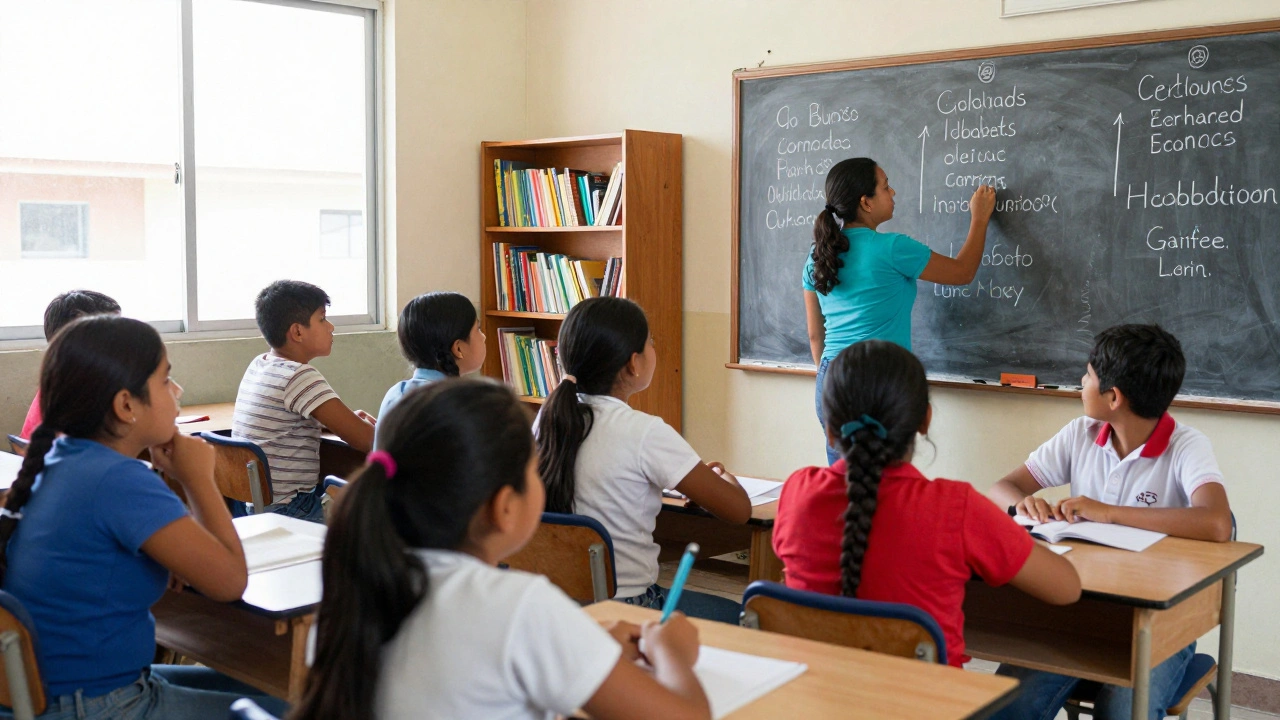
- Invest in inclusive education-schools that teach multiple histories and languages help kids grow up seeing diversity as normal, not dangerous.
- Amplify local voices-not national leaders. The people who live in mixed neighborhoods know what works better than any policy paper.
There’s no quick fix. Social cohesion takes years. But it starts with one simple idea: people don’t need to like each other. They just need to know they’re safe, respected, and treated fairly. That’s all it takes to build a society where identity doesn’t divide-but belongs.
Can diversity actually strengthen a democracy?
Yes-when institutions are fair. Research from the OECD and World Bank shows that diverse democracies with strong, inclusive institutions have higher levels of civic trust, more stable elections, and better public service delivery than homogenous societies with weak governance. Diversity doesn’t weaken democracy; poorly managed diversity does.
Why do some diverse countries stay peaceful while others fall apart?
It’s not about how many groups exist-it’s about who controls power and resources. Countries like Tanzania and Costa Rica stayed stable because no single group monopolized land, jobs, or state institutions. In contrast, Kenya and Sri Lanka saw violence because dominant groups used the state to exclude others. Peace comes from fairness, not homogeneity.
Do national symbols like flags or anthems help build unity?
Not on their own. Symbols can feel meaningful if they reflect real inclusion. But if people are denied basic rights-like land, justice, or education-no flag will make them feel part of the nation. Unity built on symbols without substance is hollow. Real belonging comes from daily fairness, not ceremonial gestures.
Can social cohesion be forced through laws?
Laws can set the stage, but they can’t create trust. Anti-discrimination laws are necessary, but not sufficient. If police still profile certain groups, or if courts delay justice for minorities, laws won’t change how people feel. Lasting cohesion comes from lived experience-not legislation alone.
What’s the biggest mistake governments make?
They focus on messaging instead of material change. Hosting multicultural festivals is nice, but if your child’s school lacks textbooks because you’re from a minority group, no festival will fix that. The biggest error is treating cohesion as a PR campaign instead of a policy challenge. Real change happens in land offices, school boards, and police stations-not on TV.