Community Resilience & Asset Mapper
How prepared is your community? Based on research into social capital rebuilding, this tool helps you map "bonding" assets (deep local ties) versus "bridging" needs (external connections). Identify gaps before a crisis strikes.
1. Map Your Community Assets
Select groups already present in your area2. Select Potential Challenge
What are you most concerned about?Assessment Report
Select assets and click "Analyze" to generate your report.
Key Takeaways
- Social capital relies on deep, permanent relationships rather than temporary aid structures.
- Faith-based institutions maintain critical presence long after external emergency teams leave.
- Volunteer engagement amplifies resource reach through existing professional and social networks.
- Government agencies often lack the local cultural context required for effective trauma recovery.
- Sustainable rebuilding requires bridging gaps between public agencies and community organizations.
When a disaster strikes, we often watch news footage of strangers dropping off supplies in damaged neighborhoods. Those well-meaning outsiders rarely stay past the first week. By contrast, the people who actually help communities rebuild for years are the ones already embedded in the daily rhythm of that place. This distinction lies at the heart of social capital rebuilding, which refers to the process of restoring trust, relationships, and networks within a community after a crisis. While government agencies focus on logistics, true recovery depends on human connection. In places like Albuquerque, where community bonds run deep, understanding these dynamics is vital for anyone interested in long-term stability.
We cannot talk about recovery without defining the invisible glue holding societies together. That glue is trust. When infrastructure fails, social infrastructure takes the load. If neighbors know each other, they share resources without needing a contract. If they trust local leaders, they follow guidance even when official communications break down. This is the essence of social assets that survive physical destruction. Without them, a rebuilt neighborhood remains a collection of houses rather than a functioning home.
Defining the Core Mechanisms of Recovery
To understand why some communities bounce back faster than others, we must look at the mechanics of their social fabric. Social Capital is the aggregate value of social networks, shared norms, and trust relationships that facilitate cooperation among individuals. It comes in different forms. Bonding social capital connects similar people, like a church congregation. Bridging social capital connects different groups, like a partnership between a nonprofit and a city council office. Both are necessary, but they function differently during a crisis.
Consider the specific attributes that allow a community to withstand shocks. First, there is density. In a tight-knit rural area, information travels fast through informal channels. Second, there is reciprocity. People who have helped one another before are more likely to help again during an emergency. Finally, there is leadership legitimacy. If a community leader speaks, the community listens. These elements combine to create a resilience framework that external agencies simply cannot replicate quickly enough.
The Strategic Advantage of Faith-Based Institutions
Among all potential partners in rebuilding, religious institutions hold a unique position. They are not merely places of worship; they are central hubs for community life. Faith-Based Organizations are community-centered groups that provide services grounded in religious values and possess established networks of trusted members. Unlike volunteer groups formed ad hoc for a single event, these organizations exist before the crisis hits and remain after the cameras leave. Their structural advantage is permanence.
This permanence matters because recovery is a slow process. Immediate relief involves food and water. Long-term healing involves fixing housing, processing grief, and reestablishing economic stability. External responders rotate in shifts. A Red Cross team might be deployed for six weeks. By the time they understand the neighborhood dynamics, they rotate out, and new volunteers arrive with no context. Faith leaders, however, know the families. They know which households have elderly residents needing mobility aids. They know which families face language barriers. This granular knowledge prevents duplication of efforts and ensures aid reaches the most vulnerable populations efficiently.
Beyond logistics, there is a psychological dimension. Community Resilience involves the capacity of a community to adapt and recover from adversity through collective coping mechanisms. Religious leaders address meaning-making. They help people process existential trauma that material aid cannot fix. Staff and volunteers within these organizations often share the same faith background as the recipients, creating a bridge of trust that secures cooperation even in deeply traumatized environments. This spiritual and psychological buffer is a distinct asset in post-disaster landscapes.
Leveraging Networks and Volunteer Engagement
Volunteering acts as the engine that amplifies the reach of institutional recovery efforts. A single organization can only do so much physically. However, when that organization taps into its network, the impact multiplies. We see this in how professional connections are mobilized. An architect who attends a local synagogue might offer pro-bono structural assessments when the institution calls for help. A construction manager in the fellowship group might organize debris removal.
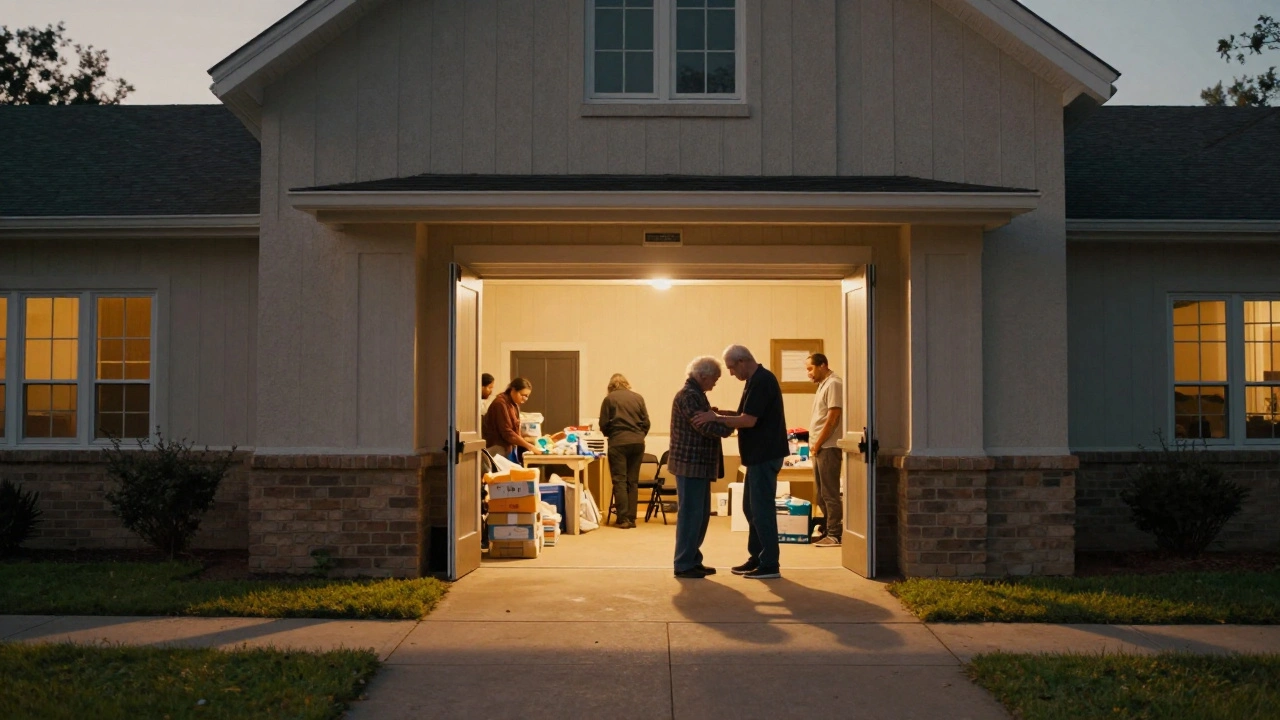
These arrangements often bypass formal bureaucratic hurdles. Partnerships are built on relationships rather than contracts. Several successful community cases show that inter-organizational collaboration relies heavily on personal networks. These networks grant access to restricted areas that might be closed to general traffic. They provide sharing of facilities, such as using a church basement as a distribution center because it is centrally located and secure. Most importantly, they unlock access to financial help and professional expertise that would otherwise take months to navigate through standard grant applications.
| Feature | External Agency | Faith-Based Institution |
|---|---|---|
| Presence Duration | Short-term / Rotating | Permanent / Pre-existing |
| Local Knowledge | Limited / Acquired slowly | Deep / Immediate access |
| Trust Level | Variable / Skepticism common | High / Established relationship |
| Service Scope | Material Aid / Logistics | Material + Spiritual + Psychological |
| Network Type | Hierarchical Formal Chains | Associational Informal Networks |