Community Resilience Assessment Tool
How strong is your community's resilience? Answer these questions to see how well your neighborhood builds trust and shared resources when institutions fail.
When the power grid goes down, the water shuts off, or a flood hits, who do you turn to? Not the state agency. Not the federal hotline. You turn to your neighbor. The person who knows your kid’s name. The one who brings soup when you’re sick. That’s where real resilience lives-not in policy papers, but in the quiet, daily connections between people who share a street, a block, a town.
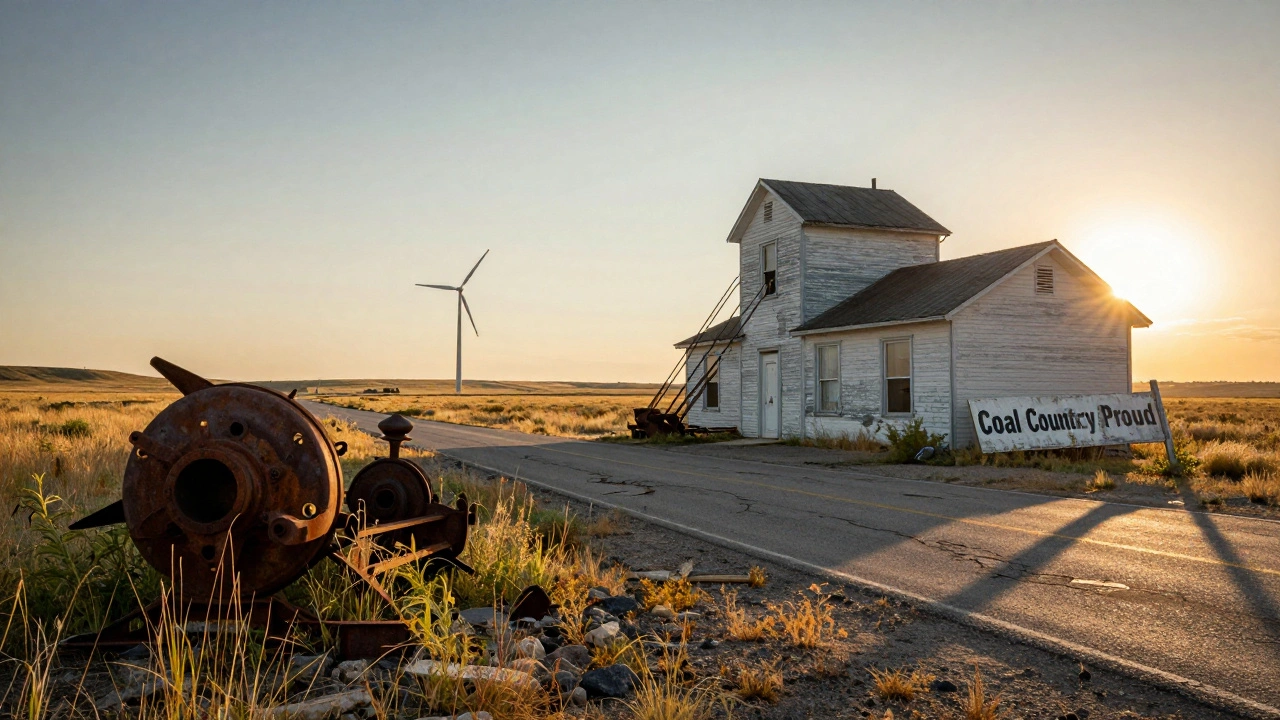
In 2026, trust in institutions is at a historic low. Surveys show fewer than 3 in 10 Americans believe their local government is working well. Federal agencies? Even less. But here’s the twist: communities that still function, that still recover, that still support each other during crises, aren’t waiting for permission or funding from above. They’re building their own systems-because they have to.
Trust Isn’t a Buzzword. It’s the Infrastructure.
Think of community resilience like a house. The roof? That’s emergency response. The walls? That’s healthcare and food access. But the foundation? That’s trust. Without it, nothing else holds. Research analyzing 80 studies on resilience found one thing consistently: the strongest communities had deep social ties. Not just friendships, but reciprocity. People knew they could ask for help-and that help would come back.
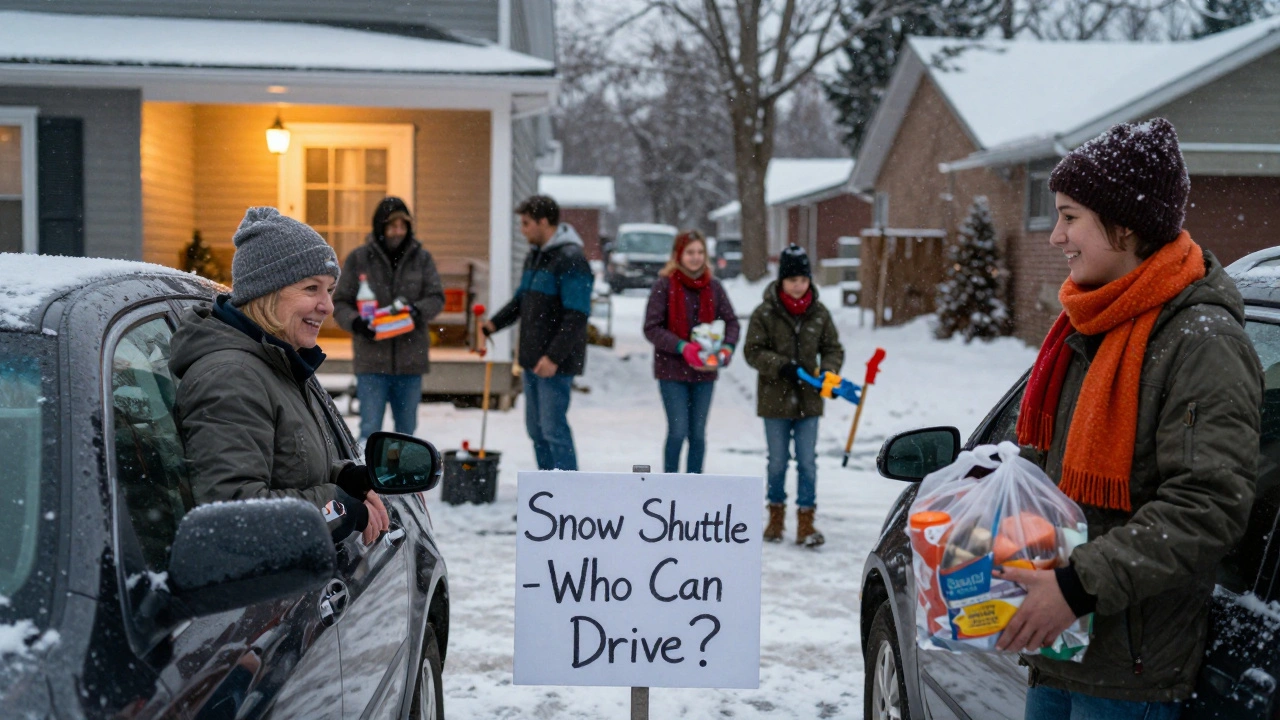
In Albuquerque, after a major snowstorm in 2024 paralyzed public transit, neighbors organized a rotating shuttle system using personal vehicles. No city app. No grant. Just a WhatsApp group and a list of who had snow tires and who could drive. That’s resilience. Not because someone told them to. Because they trusted each other to show up.
When people feel heard, they respond. A 2023 study in rural Oregon showed that communities where local health workers attended town halls and listened to concerns had 68% higher compliance with evacuation orders during wildfires than those where information was just posted online. It wasn’t the message. It was the messenger. Someone they knew. Someone who lived there.
The Failure of Top-Down Solutions
For decades, resilience was framed as a problem to be solved by outside experts. Federal grants. State planners. Consultants with PowerPoint decks. But when decisions are made remotely, they often miss the real needs. A housing project in Detroit built 200 units with modern amenities-but no community center, no public transit access, and no input from residents. Within two years, half the units sat empty. People didn’t move in because they didn’t trust the system that built it.
That’s institutional skepticism in action: people see the system as broken, indifferent, or even hostile. And they’re right to. When aid comes with strings attached, or when decisions are made without asking, trust erodes. Fast.
Compare that to a community land trust in Santa Fe. In 2022, a group of residents bought a 12-acre plot of land-not a developer, not a city official, but a nonprofit governed by a board of local homeowners, renters, and elders. They set rules: no unit could cost more than 30% of median income. No landlord could evict without a community vote. No outside investor could buy up properties. Today, 87 families live there, all in long-term affordable homes. The trust wasn’t given. It was built.
How Local Institutions Rebuild Trust
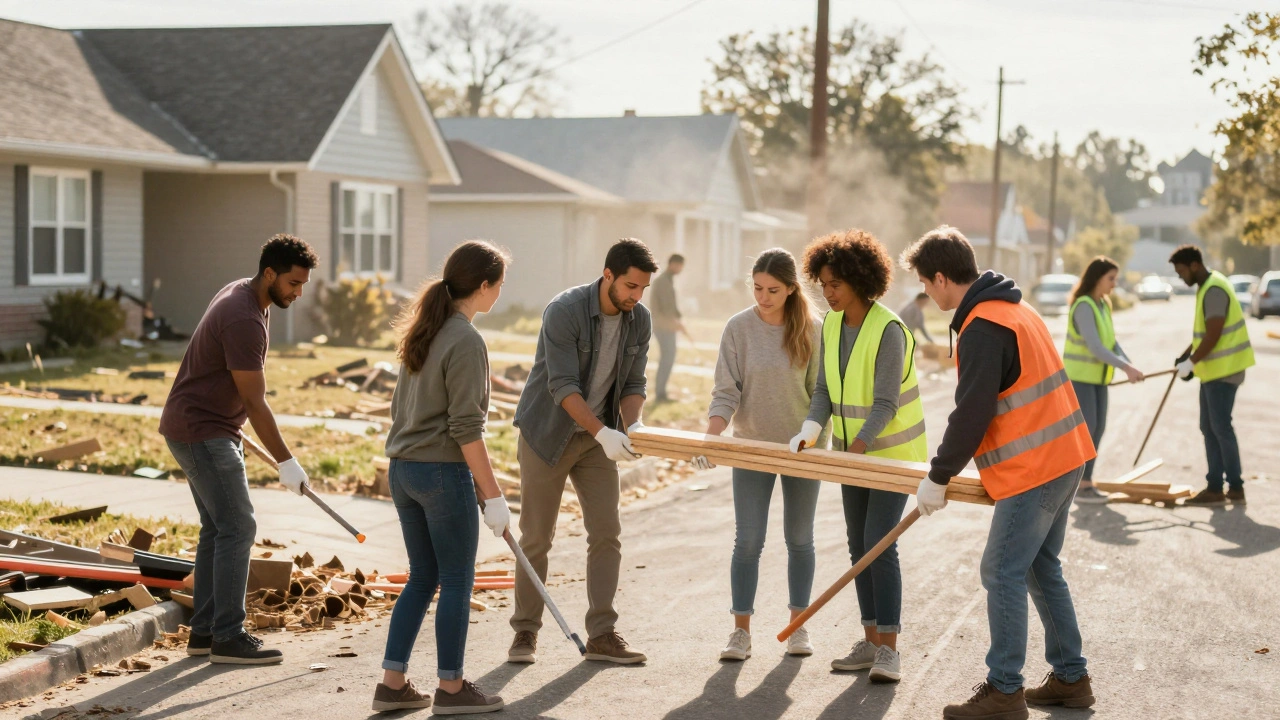
Real trust isn’t built by speeches. It’s built by doing. Here’s how it works in practice:
- Control stays local. When a community manages its own food bank, energy co-op, or childcare center, people see who’s in charge-and they can hold them accountable. No bureaucracy. No distant board.
- Decisions are made in public. Weekly meetings in libraries, church basements, or even parking lots. Minutes posted in plain language. No jargon. No hidden agendas.
- Resources go where people say they’re needed. In Las Vegas, a group of low-income families used a small city grant to install solar panels on their apartment complex-not because a consultant said it was "sustainable," but because they wanted lower electric bills and cleaner air. The project cut energy costs by 42% in six months.
- Leaders are neighbors. The person running the neighborhood emergency fund isn’t a nonprofit executive. They’re the librarian who knows who’s diabetic. The mechanic who fixes bikes for kids. The grandmother who cooks meals for veterans.
These aren’t fancy programs. They’re simple. But they work because they’re human.
It’s Not Just About Disasters
Most people think of resilience as surviving a hurricane or earthquake. But the biggest threats today are slow. Chronic. Invisible.
- Food insecurity that lasts for months
- Isolation among seniors
- Children without safe after-school spaces
- Workers who can’t afford to miss a day
Communities that build trust over time don’t just survive disasters-they prevent them. A neighborhood in Phoenix created a "buddy system" for seniors during summer heat waves. Volunteers checked in daily. They brought water. They called 911 if someone didn’t answer. In 2025, that neighborhood had zero heat-related deaths. The city’s average? 17.
Resilience isn’t about having more stuff. It’s about knowing who has what, and who you can count on.
What Happens When You Include Everyone
Trust doesn’t grow in echo chambers. It grows when the people most often left out are at the table.
In Chicago, a coalition of Black, Latino, and immigrant families worked with local universities to map where food deserts overlapped with areas lacking public transit. They didn’t ask for a new grocery store. They asked for mobile markets that ran on fixed routes-routes they designed. The city agreed. Now, 14 vans serve 32 neighborhoods. No grant application. No lobbyist. Just people who knew their own needs.
Same in rural West Virginia. A group of Appalachian families, tired of outside energy companies ignoring their concerns, started their own community solar project. They trained local electricians. They pooled funds. They installed panels on school roofs. Now, the school’s electricity bill is down 70%. And the community owns it.
These aren’t exceptions. They’re blueprints.
How to Start-Even If You Have Nothing
You don’t need money. You don’t need permission. You just need to begin.
- Find one person. Talk to someone you don’t usually talk to. Ask: "What’s one thing your neighborhood needs that no one’s fixing?"
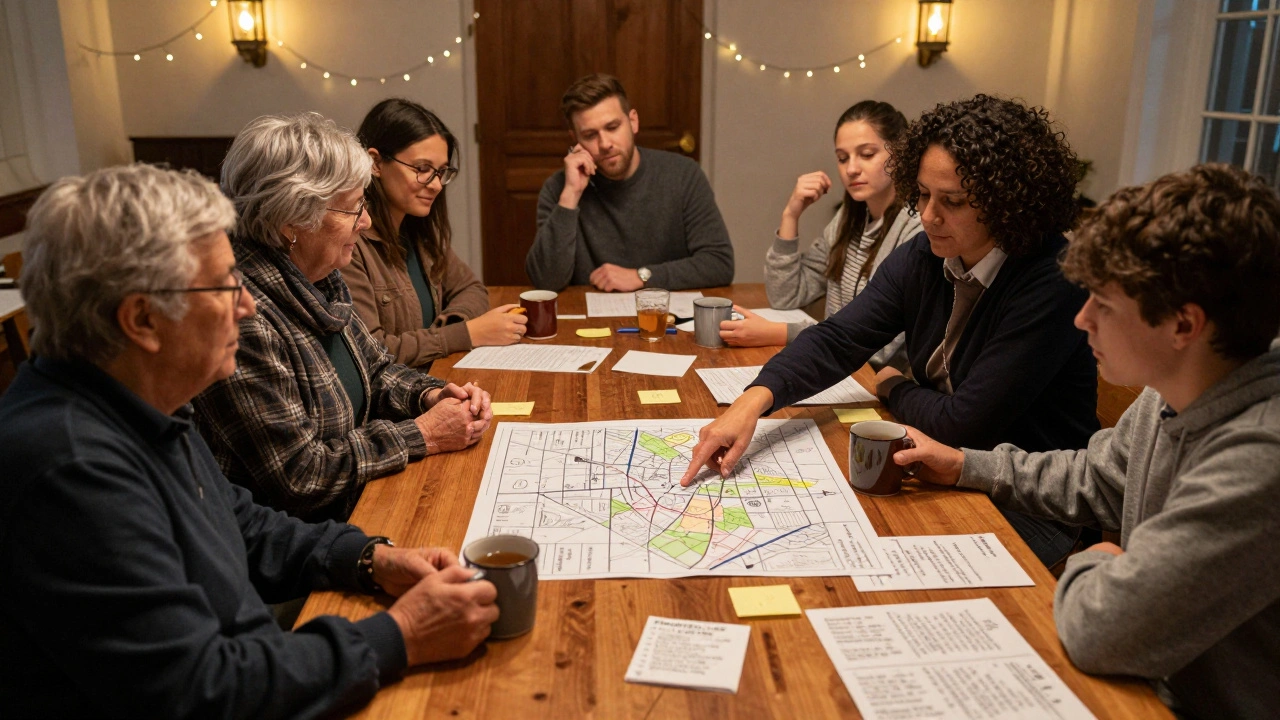
- Host a coffee. Invite five neighbors. No agenda. Just listen. Write down what you hear.
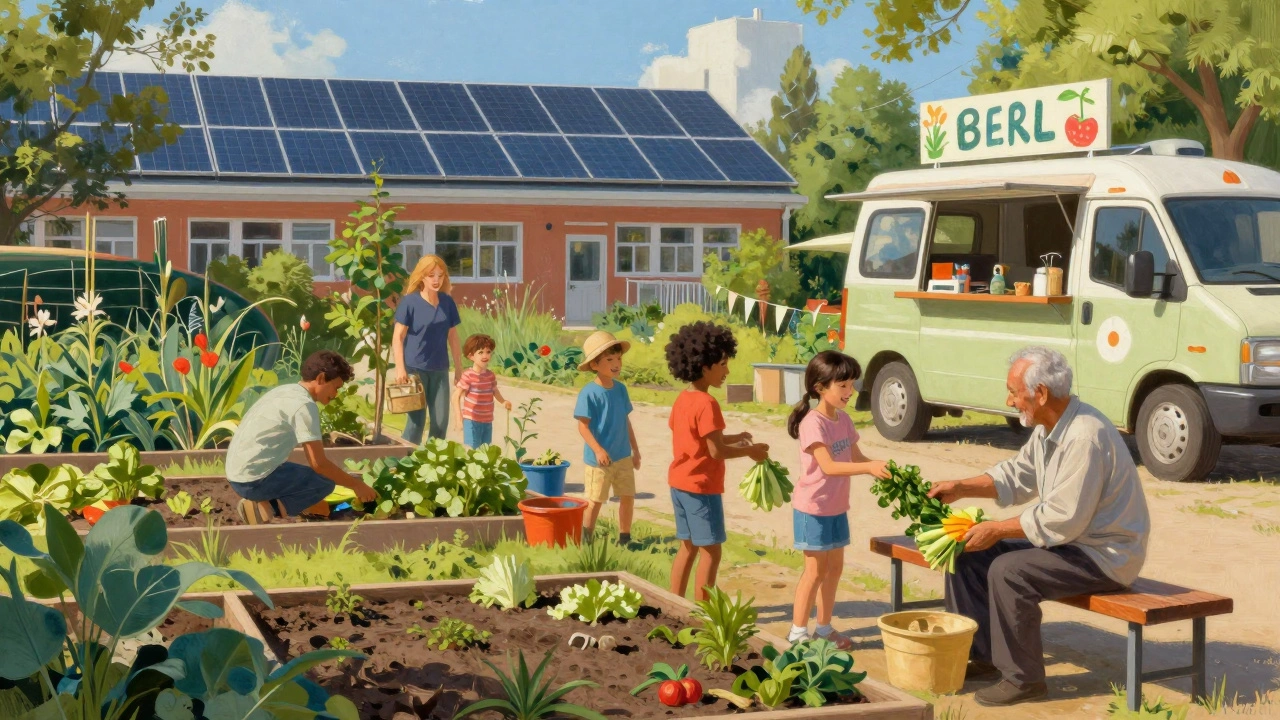
- Start small. A tool library. A free meal once a month. A shared garden. Something that costs nothing but builds connection.
- Make it public. Post a sign. Share a Google Doc. Put a whiteboard on the porch. Let people see it’s real.
- Let it grow. Don’t try to control it. Let others join. Let it change. That’s how trust becomes a system.
The goal isn’t to replace institutions. It’s to make them irrelevant when they fail. When the system breaks, you won’t need to wait for someone to fix it. You’ll already have a way.
Resilience Is a Practice, Not a Project
There’s no app for this. No federal program. No startup that can scale it. Resilience grows in the cracks between systems. In the quiet moments: when someone shares a ride, when a child is picked up after school, when a neighbor checks on an elderly person during a storm.
It’s not glamorous. But it’s powerful. And it’s working-right now, in towns and cities across the country.
The era of institutional skepticism isn’t a crisis. It’s a chance. A chance to build something better. Not from the top. Not from the outside. But from the ground up. Together.