Export Portfolio Resilience Calculator
Step 1: Current Export Composition
Define your productsStep 2: Geographic Strategy
Target DestinationsOverall Resilience Score
Loading...
| Diagnosis | Strategic Recommendation |
|---|---|
| Risk Profile: | Calculating... |
| Immediate Action: | Calculating... |
In April 2026, the global trade landscape looks different than it did five years ago. Traditional supply chains are breaking down under the pressure of geopolitical tensions and rising protectionism. For businesses and governments operating within emerging economies, relying on a single customer or product line is no longer just risky-it is dangerous. This is where Export Market Diversification becomes your primary shield against volatility. By spreading export activity across multiple regions, specifically targeting non-aligned nations that sit outside major Western or Eastern blocs, you build a defense system against sudden border closures.
Why One-Legged Stools Fail
The core problem many developing nations face isn't a lack of products, but an over-reliance on unstable demand sources. Research covering forty-four countries between 1988 and 2012 revealed a stark reality: portfolios heavy with manufactured goods outperform those dominated by raw materials. When an economy sells mostly fuel, ores, or minerals, its GDP swings wildly with commodity prices. If global oil prices drop by thirty percent in a single quarter, a nation relying solely on exports suffers immediate currency devaluation and budget deficits.
| Export Portfolio Type | Risk Factor | Resilience Score (Relative) |
|---|---|---|
| Commodity-Dependent (Fuel/Ores/Minerals) |
High Price Volatility | Low |
| Agri-Food Dominant (Food Items/Crops) |
Moderate Seasonality | Medium |
| Manufacturing Mix (Processed Goods/Tech) |
Demand Stability | High |
This data suggests that shifting from extracting raw ore to refining metals locally-or better yet, building electronic components-stabilizes revenue streams. However, moving past commodities requires more than wishful thinking. It demands a deliberate pivot toward high-complexity sectors that command higher margins and offer more sustainable employment opportunities.
The Myth of Pure Free Markets
There is a persistent belief among some economists that the best path to growth is simply opening borders completely and letting the market decide. History tells a different story. Look at the "Asian Tigers" of the 1990s or the rapid ascent of China and India. None of these success stories achieved dominance purely through laissez-faire policies. Successful integration required government intervention designed to fix market failures common in developing regions.
Effective policy mixes combine permissive rules (easy registration for exporters) with positive measures (subsidized training for technical skills). Governments must step in to build infrastructure that private investors cannot justify on their own. Without reliable electricity or port logistics, even the best factory cannot compete globally. Targeted trade policies, supported by multilateral frameworks, allow a country to nurture infant industries until they are robust enough to handle global competition.
Targeting Non-Aligned and Emerging Blocs
Geopolitical alignment in 2026 dictates who buys what. Many traditional export destinations in North America and Europe have tightened regulations or erected non-tariff barriers. This creates an opportunity to focus on Non-Aligned Nations. These are countries often grouped in regional economic communities like BRICS+, the African Union's continental trade zone, or the ASEAN bloc.
Bangladesh offers a practical lesson here. While it still sends most of its textiles to the EU and US, it has strategically expanded reach to nearly two hundred countries. Geographical spread acts as insurance. If tariffs rise in one region, sales can ramp up in another. Diversification isn't just about selling different products; it is about selling to different neighbors. This reduces dependency on any single superpower's economic cycle.

A Business Owner's Roadmap to Entry
For individual companies sitting inside these emerging economies, the national strategy provides the stage, but execution happens at the firm level. You cannot simply take a successful domestic model and expect it to work abroad. Cultural nuances, regulatory hurdles, and logistics differ significantly.
- Deep-Dive Market Research: Do not guess. Identify markets where your complexity meets their demand. A study of firms shows that export success correlates with how well companies adapt their home experience to foreign realities.
- Leverage Free Trade Agreements (FTAs): Treaties matter. Using regional pacts allows you to bypass tariffs that competitors without access pay. For example, leveraging a deal between two emerging economies often yields lower duties than trading through traditional channels.
- Build Local Partnerships: Entering a new market alone is slow. Form joint ventures with local distributors who understand the "unwritten rules" of doing business there. This minimizes legal friction and speeds up time-to-market.
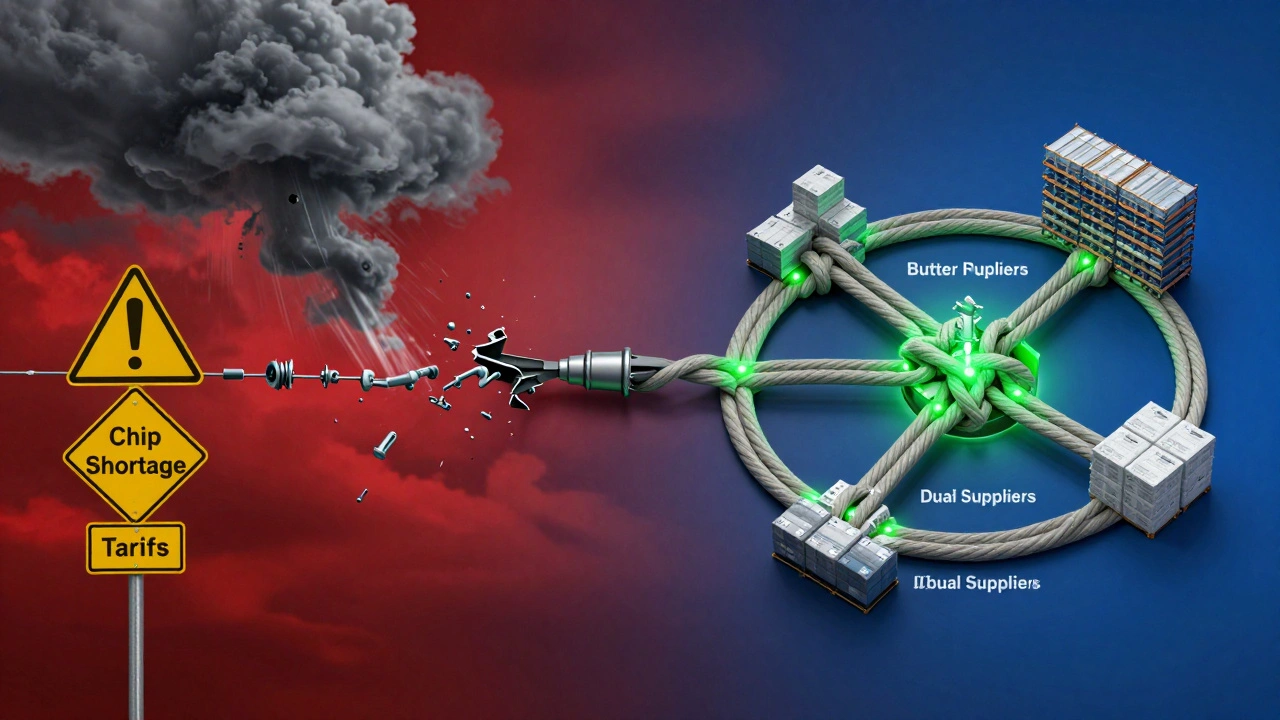
- Supply Chain Hardening: Relying on one supplier is as risky as relying on one customer. Source inputs from multiple regions to ensure you keep producing when disruptions hit a specific area.
Navigating Supply Chain Risks
In an era defined by Trade Fragmentation, supply chain visibility is everything. Companies in 2026 must manage relationships across borders more actively than before. Digital tools help, but human intelligence is irreplaceable. Understanding how customs officers process paperwork in specific ports can save weeks of delays. Diversifying suppliers helps here too-don't buy all your raw cotton from one province; spread procurement across three.
Furthermore, consider the impact of Foreign Direct Investment (FDI). Tariff hikes often push international investors to locate manufacturing closer to the end market, known as "Make in Market" strategies. If you are an exporter facing rising tariffs, relocating part of your assembly to the buyer's country might preserve market share even if it changes the legal origin of the goods.
Success Stories: Lessons from Costa Rica and Vietnam
Real-world application proves the theory. Costa Rica managed to move away from being purely agrarian by investing heavily in education and health sectors early on. This allowed them to attract high-value tech manufacturing and medical device services today. They didn't wait for the market to tell them what to do; they built the capacity first.
Vietnam took a different approach, utilizing vertical policy measures to integrate deeply into global value chains. By becoming the assembly hub for massive electronics brands, they added value to imports before re-exporting. Both nations show that specific, tailored combinations of policy and private sector effort drive industrial upgrading faster than broad generalizations ever could.
What Comes Next for Emerging Exporters?
By late 2026, the window for passive growth is closing. International cooperation remains a vital pillar. Knowledge transfer from developed partners helps, but ownership must remain local to ensure sustainability. Technical assistance improves compliance capabilities, but real resilience comes from internal capability building.
You need a diversified portfolio of customers, a mix of product complexities, and a flexible policy environment. Start small. Test one new market before committing resources. Validate your assumptions. Then scale.
What defines a Non-Aligned Economy in 2026?
A Non-Aligned Economy typically refers to a nation that does not formally adhere to major Western or Eastern trade blocs, often participating in groups like the Non-Aligned Movement or BRICS+. These economies prioritize sovereign decision-making in trade policy and seek multi-polar partnership networks rather than exclusive alliances.
How does trade fragmentation affect export diversification?
Trade fragmentation increases reliance risks as traditional routes become politically unstable. Diversification mitigates this by spreading risk across unrelated political zones, ensuring that protectionist measures in one region don't halt overall revenue growth.
Is government support necessary for export growth?
Yes. Historical data indicates that countries achieving high-level export integration used targeted interventions to correct market failures, such as building infrastructure or subsidizing skills training, rather than relying solely on free-market forces.
What are the signs of successful export portfolio diversification?
Signs include reduced volatility in GDP related to commodity prices, increased foreign exchange earnings from varied sectors (manufacturing, services, agriculture), and stable trade balances despite shocks in major partner markets.
How can small businesses participate in export diversification?
Small businesses should start by identifying Free Trade Agreement benefits for their industry. They can then form consortiums with larger exporters or use digital platforms to test smaller markets before scaling physical distribution logistics.