Manufacturing Footprint Optimizer
Optimize Your Manufacturing Network
Enter your production details to compare manufacturing locations based on cost, lead time, and risk. This tool helps you identify the most resilient and efficient footprint for your products.
Location Comparison
| Location | Cost | Lead Time | Risk Score | Cost Effectiveness |
|---|---|---|---|---|
| United States | $28.45 | 12 days | 4.2 | High |
| Mexico | $22.70 | 18 days | 6.8 | Medium |
| China | $18.90 | 35 days | 8.7 | Low |
| Vietnam | $20.50 | 28 days | 8.1 | Low |
Quick Win Recommendation
Based on your inputs, consider shifting your electronics product line to a U.S. facility as a quick win. This move could reduce lead time by 45% and lower risk scores by 32%, while maintaining competitive costs. Start with one product line to test the new network before full-scale implementation.
Companies aren’t just moving factories anymore. They’re rebuilding entire production networks from the ground up. Why? Because the old rules don’t work anymore. Relying on cheap labor in one country? That’s a relic of the 2000s. Today, the best manufacturers are asking: Where can we make things faster, safer, and smarter? This isn’t about cutting costs-it’s about surviving in a world where geopolitics, energy prices, and customer expectations are shifting faster than ever.
Why Your Current Manufacturing Network Is Outdated
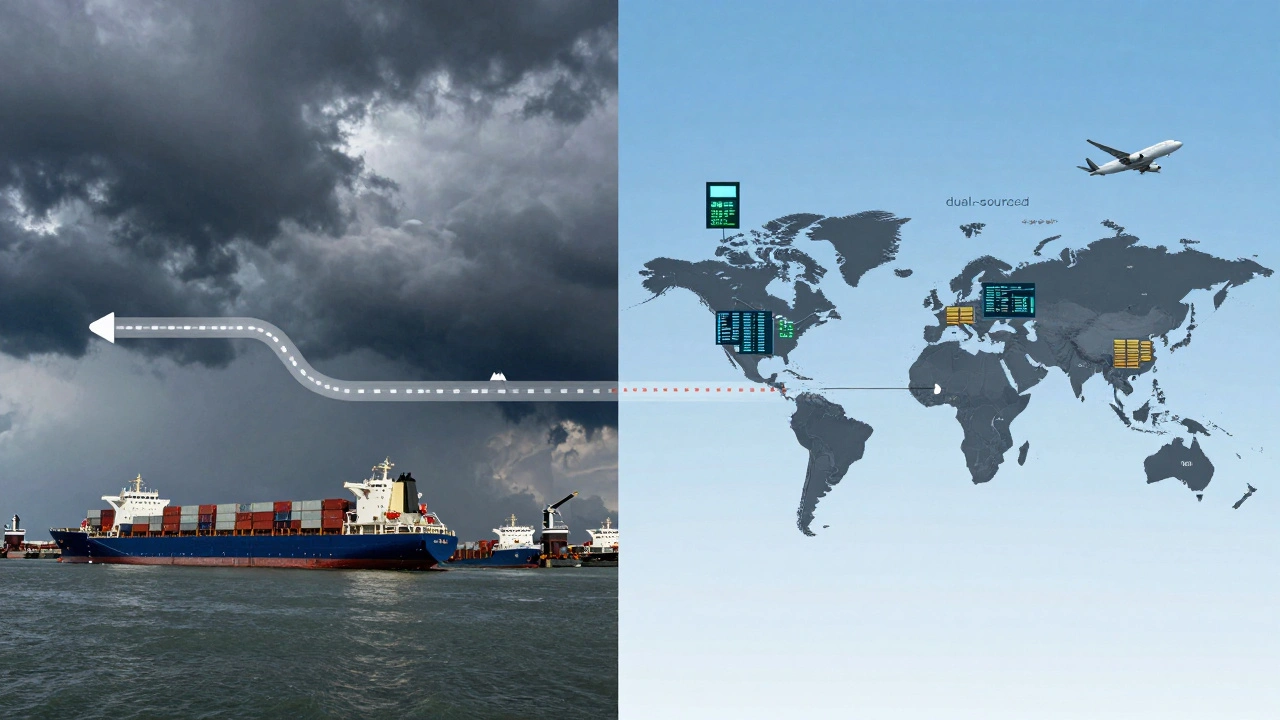
Think about your supply chain like a house built on shaky ground. Ten years ago, you put everything in one place because labor was cheap. Now, that same setup is a liability. A single factory shutdown from a political crisis, a port strike, or a power outage can stall your entire production line. And it’s not just about risk. Customers now expect products in days, not weeks. If you’re still shipping from halfway across the world, you’re already behind. Real data shows this isn’t theoretical. Companies with heavy reliance on single-source regions saw up to 35% of their revenue at risk during recent supply shocks. One specialty materials maker found out the hard way: their main plant in Eastern Europe got cut off during a regional conflict. Orders piled up. Customers left. They didn’t lose just revenue-they lost trust. The shift isn’t just reactive. Smart companies are now asking: "What would our network look like if we started fresh today?" That’s the mindset. No assumptions. No legacy constraints. Just pure optimization.The Five Forces Reshaping Manufacturing Locations
You can’t redesign your footprint without understanding what’s driving the change. Five forces are reshaping every decision:- Labor isn’t just about cost anymore. China’s workforce is aging. Skilled technicians are scarce everywhere. It’s not about paying less-it’s about finding people who can run automated systems, maintain robots, and adapt quickly.
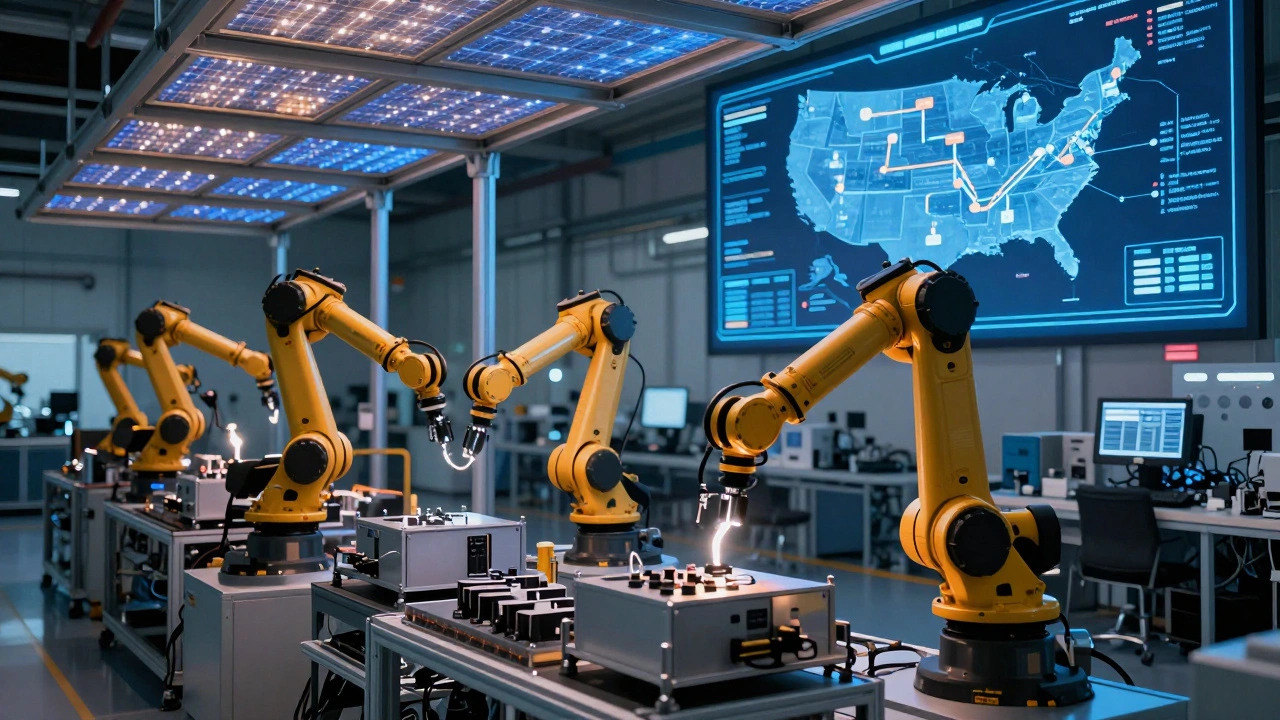
- Automation is cheaper than ever. Robot prices have dropped 85% in the last 20 years. Installing a robotic welding line in Ohio now costs less than paying overtime in Vietnam. The math flipped.
- Energy is a dealbreaker. Electricity in Europe is 250% more expensive than in the U.S. or China. Factories using high-energy processes-like metal smelting or plastic molding-are moving to regions with stable, low-cost power. Texas, Georgia, and even parts of Mexico are winning here.
- Raw materials are concentrated. Lithium for batteries? Mostly in Chile and Australia. Rare earths? Heavily tied to China. If your product needs these, you can’t ignore where they come from. Proximity to supply means fewer delays and less geopolitical risk.
- Geopolitics is no longer a backburner issue. Trade wars, sanctions, and regional instability are now core risk factors. Companies are actively avoiding regions with high political volatility. The goal? Build redundancy, not dependence.
The 3E Framework: How to Redesign Your Network
There’s no magic button. Redesigning a manufacturing network takes structure. The 3E Framework-Envision, Explore, Execute-is the most proven method used by top consulting firms.- Envision: Start with a clean slate. What does your ideal network look like in three years? Don’t talk about today’s plants. Talk about speed, resilience, and customer proximity. What service levels do you need? What risks can’t you tolerate?
- Explore: This is where data meets reality. Most companies think they know their capacity. They don’t. One firm discovered 40% of their "unique" production lines were actually identical across three countries. Meanwhile, a critical line they thought was easy to move? It needed 18 months of retooling. Walk the floor. Talk to the operators. Don’t trust spreadsheets. Numbers lie without context.
- Execute: Don’t try to move everything at once. Find quick wins. Consolidate two underused plants into one smarter facility. Shift a high-demand product closer to your main market. These moves can boost EBITDA in six months-before you even finish the long-term plan.
Speed-to-Market: How DTC Is Changing Everything
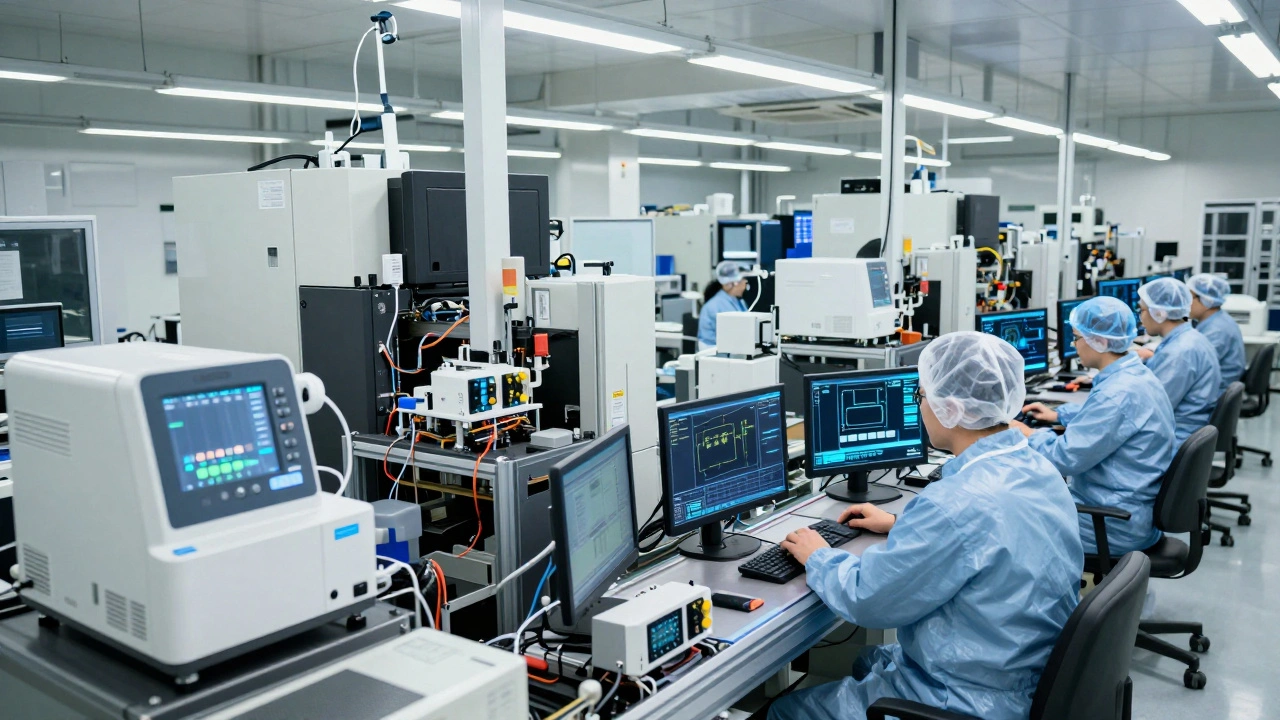
Direct-to-consumer brands didn’t just change how we buy things-they changed how we make them. If you’re selling online, you can’t wait 45 days for a shipment from Asia. Customers expect delivery in three. McKinsey found three ways top manufacturers are winning:- Late-stage customization: Ship products in bulk to regional hubs, then personalize them locally. Think custom engraving, color options, or packaging. This reduces inventory waste and speeds delivery.
- Local-for-local networks: If you sell mostly in the U.S., make most of your product in the U.S. Use backup suppliers elsewhere, but base your core volume close to customers.
- Multi-capability plants: Instead of one factory for one product, build plants that can switch between products. A facility that makes both medical devices and consumer electronics can pivot fast if demand shifts. It’s like an oil refinery that can blend different fuels on demand.
Technology Is Your New Co-Pilot
You can’t optimize a global network with Excel sheets and gut feelings. The best teams use analytics platforms that simulate thousands of scenarios:- What if tariffs go up 15% in Mexico?
- What if a key supplier in Taiwan gets hit by a typhoon?
- What if energy prices spike in Germany but drop in Tennessee?
Don’t Just Move Factories-Build Optionality
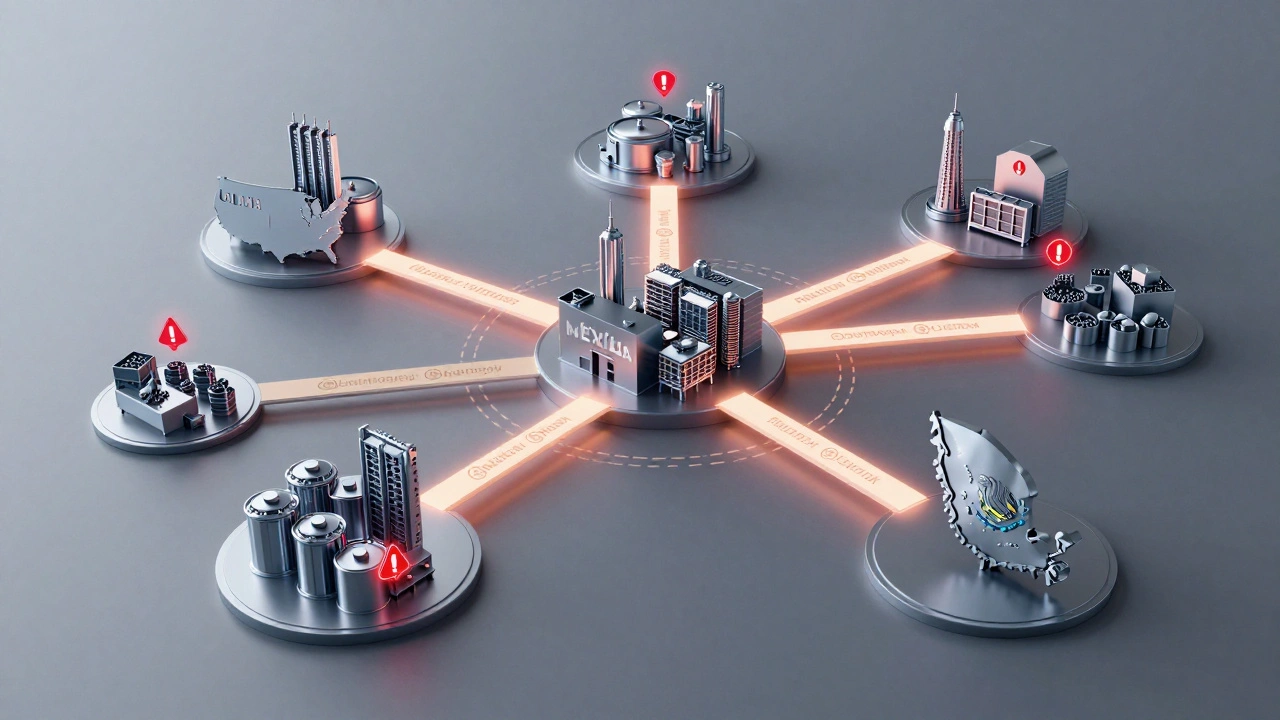
The biggest mistake companies make? Thinking redesign is a one-time project. It’s not. It’s a capability. Think of your network like a chessboard. You need multiple moves ready. If one path closes, you have two others. That’s optionality. That means:- Keeping at least two suppliers for critical components
- Designing plants that can switch between product lines
- Partnering with logistics providers who have backup routes
- Training teams to handle disruptions, not just run machines
What to Do Next
If you’re still operating on old assumptions, here’s how to start:- Map your current footprint. List every plant, warehouse, and key supplier. Don’t guess-get the real data.
- Identify your top three risks. What keeps you up at night? A single point of failure? A long lead time? A political flashpoint?
- Find one quick win. Pick one product line. Move it closer to your biggest market. Cut lead time by 30%. Measure the impact.
- Build a team. Get supply chain, finance, HR, and operations in the same room. Footprint redesign isn’t a logistics project. It’s a business strategy.
- Use data, not gut feeling. Invest in a network optimization tool-even a basic one. You’ll see things you never noticed.
Final Thought: It’s Not About Where You Make It-It’s About How Fast You Can Respond
The future belongs to manufacturers who can move quickly, adapt safely, and serve customers without delay. The days of betting everything on one low-cost region are over. The winners will be those who built networks that are lean, smart, and flexible. You don’t need to move every factory. You just need to stop pretending the old system still works.What’s the biggest mistake companies make when redesigning their manufacturing footprint?
The biggest mistake is assuming the old data is accurate. Most companies rely on outdated capacity reports, incomplete supplier lists, and flawed cost models. The real insight comes from walking the factory floor and talking to operators. Numbers on a spreadsheet often don’t match what’s happening in real time. One company discovered their "highly specialized" production line was identical to a line in another country-until they went onsite and saw the machines side by side.
Can small manufacturers benefit from footprint redesign?
Absolutely. You don’t need 50 plants to benefit. Even a single factory can be optimized. Moving one product line closer to your main market can cut lead times by weeks. Using local suppliers for packaging or components reduces shipping delays. Small manufacturers win by being agile, not by being big. Focus on one bottleneck-fix it. Then move to the next.
How long does a manufacturing footprint redesign take?
It’s not a single project-it’s a process. Quick wins can happen in 6 months: consolidating two underused plants, shifting a high-demand product to a closer facility. Full network redesign takes 2-3 years. But you don’t have to wait to see results. Start with one improvement. Measure the impact. Then build from there.
Is nearshoring always better than offshoring?
Not always. Nearshoring reduces lead time and risk, but it’s not always cheaper. The key is balance. A hybrid model often works best: make core products close to your main markets, and use offshore partners for low-margin, high-volume items. The goal isn’t to eliminate offshoring-it’s to reduce overdependence on it.
What role does sustainability play in footprint redesign?
Sustainability isn’t just about emissions-it’s about resilience. Factories using renewable energy are less vulnerable to price spikes and regulatory changes. Locations with stable power grids also have fewer production delays. Companies that choose sites with green energy access often see lower operating costs and better customer appeal. It’s not a side project-it’s part of the core optimization equation.