
AI Alert Fatigue Calculator
Understand Your Alert Fatigue Risk
Based on 2024 studies showing 45-60 alerts per shift leads to clinical trust erosion
AI is already changing how doctors make decisions - for better and worse
Imagine this: a patient walks into the ER with chest pain. The AI system flags a 92% chance of a hidden heart attack, even though the EKG looks normal. The doctor trusts the system, orders a CT scan, and catches a rare blockage just in time. That’s the promise of AI in healthcare.
But then there’s the other side: the same system sends 50 alerts per shift, 30% of them wrong. A nurse starts ignoring them. A patient with sepsis slips through. The AI didn’t fail - the system did.
Artificial intelligence in healthcare isn’t science fiction anymore. It’s in hospitals right now, quietly reshaping how diagnoses are made, how staff manage their time, and how often patients get hurt. And the stakes? Higher than in any other industry.
Clinical decision support: AI that sees what humans miss
Modern clinical decision support systems (CDSS) powered by AI don’t just remind doctors to check blood pressure. They analyze decades of patient records, real-time vitals, lab results, and even handwritten notes to spot patterns no human could catch in minutes.
At Mayo Clinic and Johns Hopkins, AI models predict which patients are likely to develop sepsis hours before symptoms appear. In emergency rooms, AI triage tools prioritize critical cases with 94% accuracy - better than human-only triage. At Massachusetts General, an AI blood-use calculator cut unnecessary transfusions by 30%.
These systems use deep learning to read X-rays and MRIs, natural language processing to understand doctor’s notes, and ensemble models that combine dozens of algorithms to reduce error. They’re trained on millions of real cases, not just textbooks.
But here’s the catch: AI isn’t perfect. In rare diseases, accuracy drops to 65-70%. A dermatology AI missed 8% of rare skin cancers in one study. And when the system says "probably cancer," but can’t explain why, doctors hesitate. Only 38% of clinicians trust AI recommendations if they can’t see the reasoning behind them.
Workflow automation: saving time, but adding stress
AI isn’t just helping with diagnosis - it’s taking over the paperwork. Automating prior authorizations, transcribing doctor-patient conversations, filling out insurance forms, and even scheduling follow-ups has cut administrative load by up to 40% in some clinics.
At Cleveland Clinic, an AI system now handles 70% of routine lab order approvals, freeing nurses to focus on patients. Epic’s DEXTER AI, built right into their EHR, auto-populates discharge summaries and flags potential drug interactions before they happen.
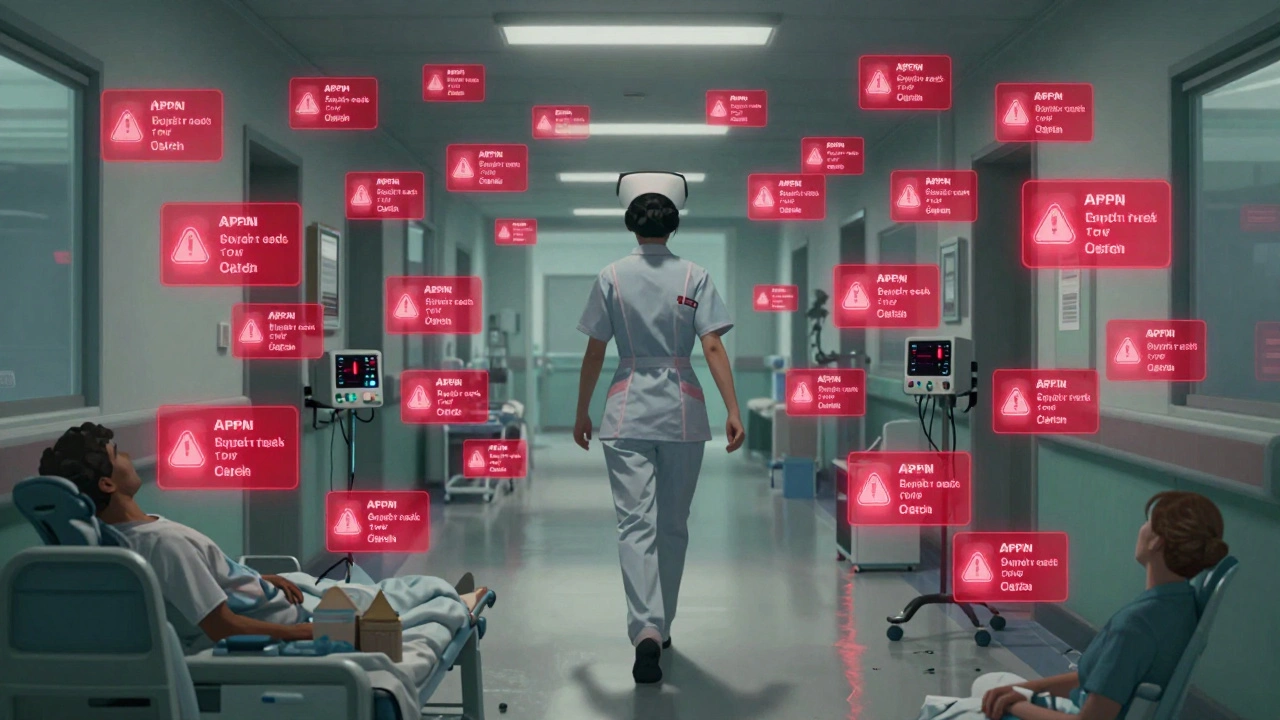
But automation has a dark side. Clinicians report getting 45 to 60 AI alerts per shift. Many are irrelevant - a warning about a drug interaction when the patient is allergic to the drug, or a reminder to check glucose levels when the patient is diabetic and already on insulin. That’s alert fatigue. And when you hear sirens all day, you stop responding to them.
A 2024 survey of 1,245 healthcare workers found that while 63% felt more confident with AI help, 57% worried they were losing their own diagnostic skills. One ER doctor on Reddit put it bluntly: "The AI cut our wait times by 22%. But now I spend 20 minutes a shift checking its false alarms. I’m more tired than before."
Patient safety risks: when the machine gets it wrong
AI systems don’t get tired. But they do get biased.
Studies show 72% of AI models used in U.S. hospitals perform worse for Black, Hispanic, and Indigenous patients. Why? Because the training data came mostly from white, middle-class populations. An AI predicting kidney disease might miss early signs in Black patients because their lab values were historically labeled "normal" in the data - even when they weren’t.
Then there’s the black box problem. Most AI models used today can’t explain how they reached a conclusion. If a system recommends a risky surgery, can the doctor justify it to the patient? To a lawyer? To a regulator? Without a clear trail of reasoning, the answer is no.
In 2023, 127 adverse events were reported to the FDA that involved AI decision support. Most weren’t proven to be caused by the AI - but they were close enough to raise alarms. One case involved an AI recommending a higher dose of insulin based on a misread glucose reading. The patient went into hypoglycemia. The system didn’t flag the inconsistency.
And who’s responsible when it happens? The doctor? The hospital? The vendor? The coder who trained the model? Right now, there’s no clear answer. That’s a legal and ethical time bomb.
What works - and what doesn’t
Not all AI tools are created equal. Some deliver real value. Others are expensive distractions.
AI systems that integrate directly into Epic or Cerner EHRs - like UpToDate AI or DEXTER - have adoption rates over 80%. Why? Because they don’t force doctors to switch screens. They show up in the workflow, in real time, with clear explanations.
Standalone AI tools? They struggle. Clinicians hate logging into separate apps. They don’t trust systems that can’t talk to their records. One study found 40% higher satisfaction with EHR-integrated AI compared to third-party tools.
Also, simple rule-based systems still beat AI in straightforward cases. For checking if a patient is allergic to penicillin? A rule-based alert still hits 98% accuracy. AI? Only 92%. So why use AI there? Don’t. Save AI for the hard problems: spotting early signs of heart failure in a diabetic with kidney disease, or predicting which cancer patient will respond to immunotherapy.

The road ahead: transparency, training, and trust
AI isn’t going away. By 2027, 60% of U.S. hospitals will use some form of AI-driven clinical decision support, up from 35% today. But adoption won’t grow unless three things change.
First, explainability. The FDA and major medical groups now agree: AI recommendations must include a "reasoning trail." By 2026, every system should show why it made a suggestion - not just the result. That means showing which lab values, images, or patient history points mattered most.
Second, better training data. Hospitals need to stop hoarding data in silos. If AI models are trained only on data from academic centers, they won’t work in rural clinics. Shared, anonymized datasets across institutions are the only way to fix bias and improve accuracy.
Third, clinician involvement. AI shouldn’t be built by engineers in a lab. It needs doctors, nurses, and medical coders at every step - from design to testing to rollout. One hospital that did this saw clinician buy-in jump from 30% to 85% in six months.
And finally, oversight. The FDA’s new AI/ML Software as a Medical Device plan is a start. But hospitals need their own internal review boards to monitor AI performance - not just at launch, but every month after.
What you can do today
If you’re a clinician: Don’t blindly trust AI. Ask: "What data did this use? Why this recommendation?" If you’re a hospital administrator: Start small. Pilot one AI tool - like drug interaction alerts - before rolling out complex diagnostic systems. Measure alert rates, false positives, and clinician satisfaction. Don’t buy flashy tech. Buy tools that plug into your EHR.
If you’re a patient: Ask your doctor if AI is being used in your care. If they say yes, ask how it helps and how they verify its accuracy. Your safety depends on it.
AI in healthcare isn’t about replacing humans. It’s about giving them better tools. But only if we build them right.
Can AI replace doctors in making diagnoses?
No. AI can help spot patterns faster, but it can’t understand context, emotion, or ethics the way a human can. A 2024 study showed human clinicians still outperform AI in 15-20% of complex cases - especially those involving rare conditions, mixed symptoms, or patient values. AI is a tool, not a replacement.
Are AI healthcare tools safe to use?
They can be - but only if properly monitored. AI systems have caused real harm when trained on biased data or when alerts overwhelm staff. The FDA has reported over 120 adverse events linked to AI decision support since 2023. Safety depends on transparency, regular audits, and human oversight. Never rely on AI alone.
Why do some doctors distrust AI systems?
Because many AI tools are black boxes - they give answers without explaining how they got there. A 2025 review found that trust levels in AI directly correlate with explainability. If a doctor can’t understand why the AI recommended a treatment, they won’t use it. Also, too many false alerts make clinicians ignore all warnings.
Is AI making healthcare more expensive?
Initially, yes. Implementing AI requires major investments in data infrastructure, staff training, and integration. But long-term, it saves money. One hospital reduced unnecessary tests by 25% and readmissions by 18% after using AI for risk prediction. The cost comes from poor implementation - not the tech itself.
What’s the biggest risk of using AI in hospitals?
The biggest risk isn’t the AI failing - it’s humans trusting it too much. When staff rely on AI without questioning it, errors go unnoticed. The most dangerous AI system isn’t the one that makes mistakes - it’s the one that makes mistakes and looks perfect doing it.
How long does it take to implement AI in a hospital?
Six to 18 months. Radiologists adapt in weeks because they’re used to image analysis. Primary care doctors take 8-12 weeks to adjust because AI changes how they think during patient visits. Success depends on phased rollouts, clinician training, and feedback loops - not just installing software.