Antimicrobial Stewardship Impact Calculator
Calculate Impact of Stewardship Programs
Estimate how effective stewardship programs can reduce antimicrobial resistance, save lives, and lower healthcare costs based on the latest WHO and CDC data.
Estimated Impact
Reduced Infections
Lives Saved
Cost Savings
Based on CDC data: Average of 6.4 extra hospital days per resistant case at $19,000 cost
83% higher mortality rate for resistant infections compared to treatable infections
Every year, more people die from drug-resistant infections than from HIV/AIDS and malaria combined. In 2021, nearly 4.7 million deaths were linked to antimicrobial resistance (AMR), with over 1.1 million of those deaths directly caused by bacteria that no longer responded to antibiotics. This isn’t a future threat. It’s happening now. And it’s silent-no headlines, no emergency alerts, just a slow creep of infections we can no longer treat.
What Is Antimicrobial Resistance, Really?
Antimicrobial resistance happens when bacteria, fungi, viruses, or parasites evolve to survive the drugs meant to kill them. It’s not magic. It’s biology. When antibiotics are used too often, too carelessly, or too weakly, the bugs that survive pass on their resistance genes. Soon, the medicine doesn’t work anymore.The World Health Organization’s 2025 GLASS report shows that one in six common bacterial infections worldwide was resistant to antibiotics in 2023. For some critical infections-like bloodstream infections caused by Klebsiella pneumoniae a Gram-negative bacterium that causes pneumonia and sepsis-that number jumped to one in three. In parts of Africa, over 70% of these infections were resistant to third-generation cephalosporins, one of the most common first-line treatments.
Resistance isn’t random. It follows patterns. Acinetobacter baumannii a hardy hospital-acquired pathogen has 54.3% resistance to carbapenems, often the last line of defense. Escherichia coli a common gut bacterium that can cause deadly urinary tract infections shows 40.2% resistance to the same class. These aren’t lab curiosities. They’re real infections killing people in ICU beds and rural clinics alike.
The Human Cost: More Than Numbers
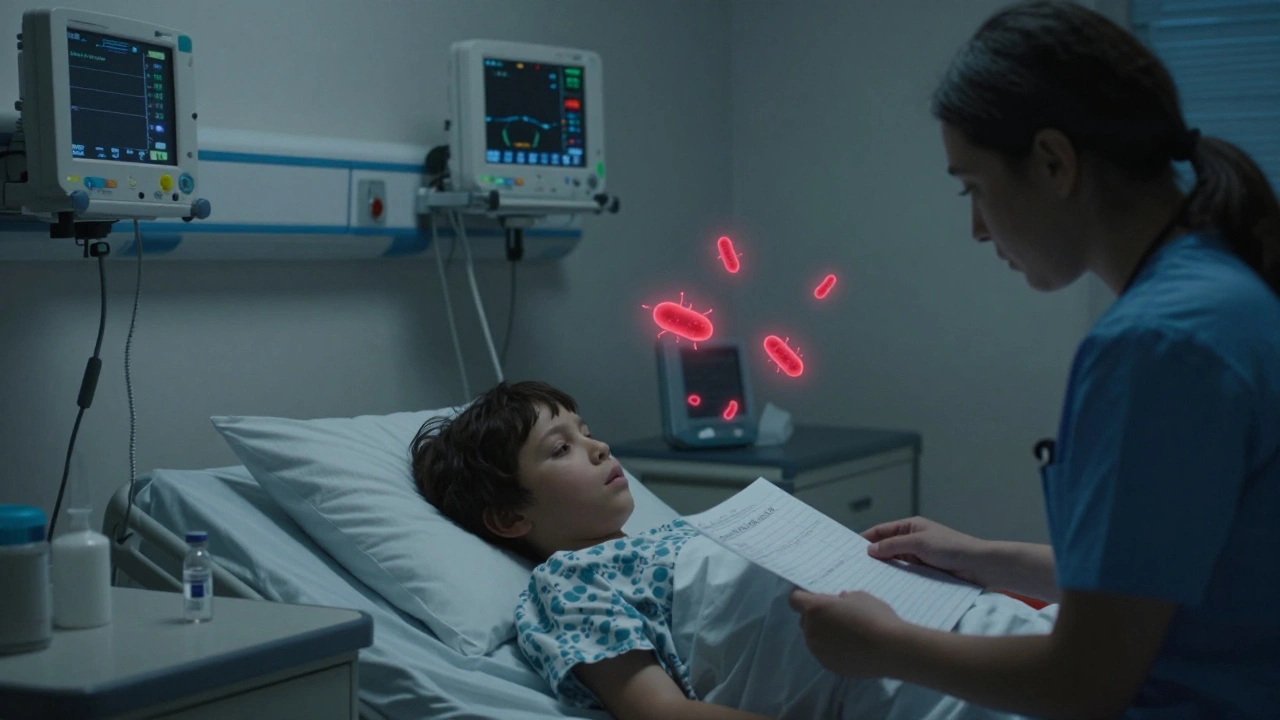
Behind every statistic is a person. In Tonga, a child with a simple ear infection couldn’t be treated because the bacteria had become resistant. That’s not an exception-it’s becoming the norm. Over 839,000 children under five died in 2021 from drug-resistant infections, more than half of them in sub-Saharan Africa.Hospital staff in low-resource settings now face impossible choices. A 2026 Frontiers report found clinicians are routinely switching to last-resort antibiotics like colistin-drugs that are toxic, expensive, and often unavailable. Patients with resistant infections stay in the hospital an average of 6.4 extra days. Their bills jump by nearly $19,000 per case. And their odds of dying? 83% higher than if the infection were still treatable.
In the U.S., the CDC reported 2.8 million resistant infections and 35,000 deaths annually before the pandemic. During 2020-2022, six hospital-acquired resistant infections rose by 20%. MRSA, once the biggest concern, was outpaced by rising cases of Pseudomonas aeruginosa a tough, multi-drug resistant pathogen common in ventilated patients, which jumped 46%.
Why This Isn’t Just a Medical Problem
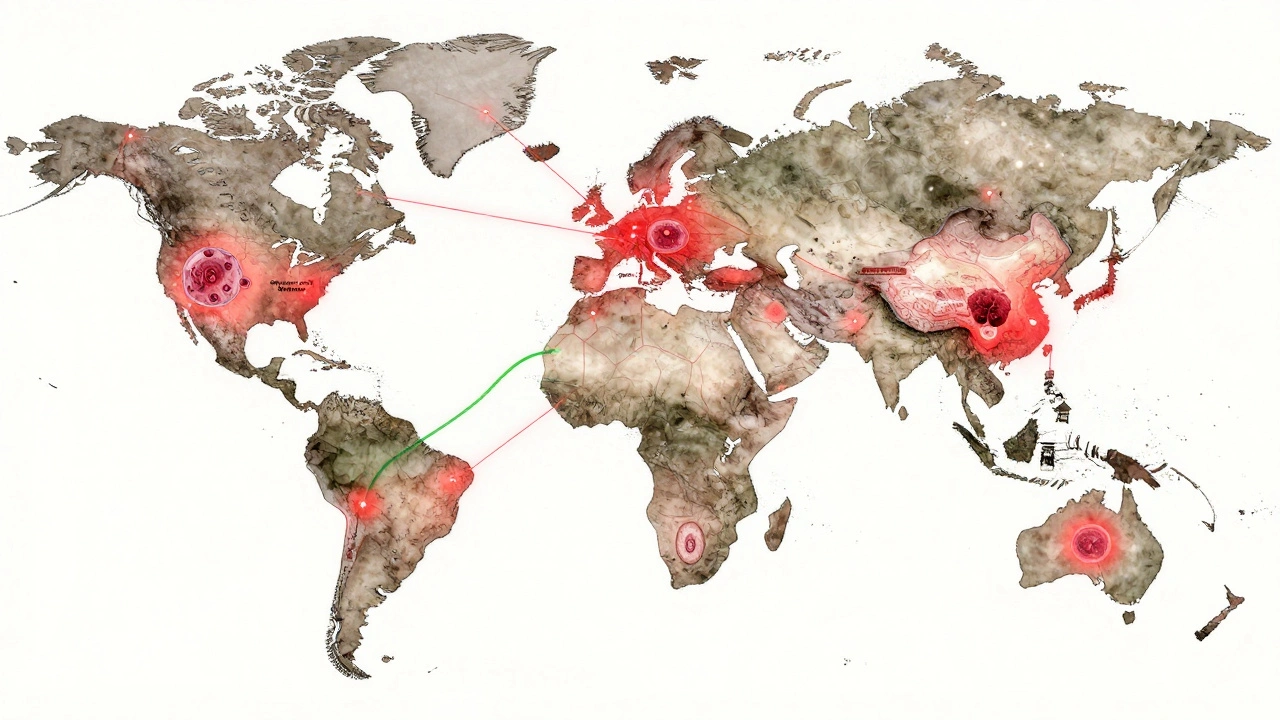
You might think this is a hospital issue. It’s not. AMR touches everything. Agriculture. Food. Water. Travel. Antibiotics are used in livestock to prevent disease and speed growth. In some countries, more than 70% of antibiotics are given to animals-not people. That’s a major driver of resistance.When manure from these animals gets into rivers or soil, resistant genes spread. They show up in vegetables, drinking water, even seafood. A person in New Mexico can get an infection from bacteria that evolved in a farm in Vietnam. The world is connected, and so are these bugs.
The economic toll is staggering. The Access to Medicine Foundation estimates that without action, AMR could cost the global economy $1.7 trillion per year by 2030. That’s more than the entire GDP of Australia. And the cost isn’t just in healthcare. It’s in lost work, lost productivity, lost lives.
Global Stewardship: What’s Working and What’s Not
The WHO’s AWaRe system divides antibiotics into three groups: Access (first-line, low-cost), Watch (higher risk, need monitoring), and Reserve (last-resort, for emergencies). Countries that use this system see 12-15% fewer inappropriate prescriptions.Some places are getting it right. Sweden’s Strama program, started in the 1990s, cut outpatient antibiotic use by 22% through public education and doctor guidelines. Thailand reduced inappropriate antibiotic use for colds and sore throats from 68% to 27% between 2017 and 2022 by training pharmacists and banning over-the-counter sales.
In the U.S., 85% of hospitals now follow the CDC’s Core Elements of Antibiotic Stewardship. That’s led to a 30% drop in inappropriate antibiotic use in those facilities. But only 56 of the 104 countries reporting to GLASS have functional national AMR action plans. In many low-income regions, there’s no lab to test infections, no data to track resistance, and no policy to guide use.
And the pipeline is dry. Between 2020 and 2025, only two new antibiotics were approved by the FDA. Pharmaceutical companies don’t invest in antibiotics because they’re not profitable. Patients take them for days, not years. New drugs are held in reserve, so they don’t make money. That’s why the UK’s subscription model is groundbreaking: they pay drugmakers £20-30 million per year for a new antibiotic, no matter how much is used. It’s like Netflix for lifesaving drugs.
The Road Ahead: What Needs to Change
We can’t fix this with better hospitals alone. We need a global reset.- Surveillance must expand. Only 70% of the world’s population is covered by GLASS data. Africa and Southeast Asia-where resistance is highest-still have huge blind spots.
- Access to diagnostics. If you can’t test for resistance, you can’t treat properly. Point-of-care tests that cost under $5 could change everything in rural clinics.
- Regulate agriculture. Banning non-therapeutic antibiotic use in farming isn’t optional anymore. The EU did it. The U.S. needs to follow.
- Invest in new tools. The $1 billion AMR Action Fund aims to bring 2-4 new antibiotics to market by 2030. That’s a start, but we need more-faster.
- Global equity. A child in Malawi shouldn’t die because a drug that works in Boston is too expensive or unavailable. Patent pools, bulk purchasing, and technology transfer are essential.
The WHO warns that without urgent action, AMR could kill 10 million people a year by 2050-more than cancer. That’s not a prediction. It’s a choice. We’ve known about this for decades. We’ve had the science. We’ve had the data. What we’ve lacked is the political will.
Why This Matters to You
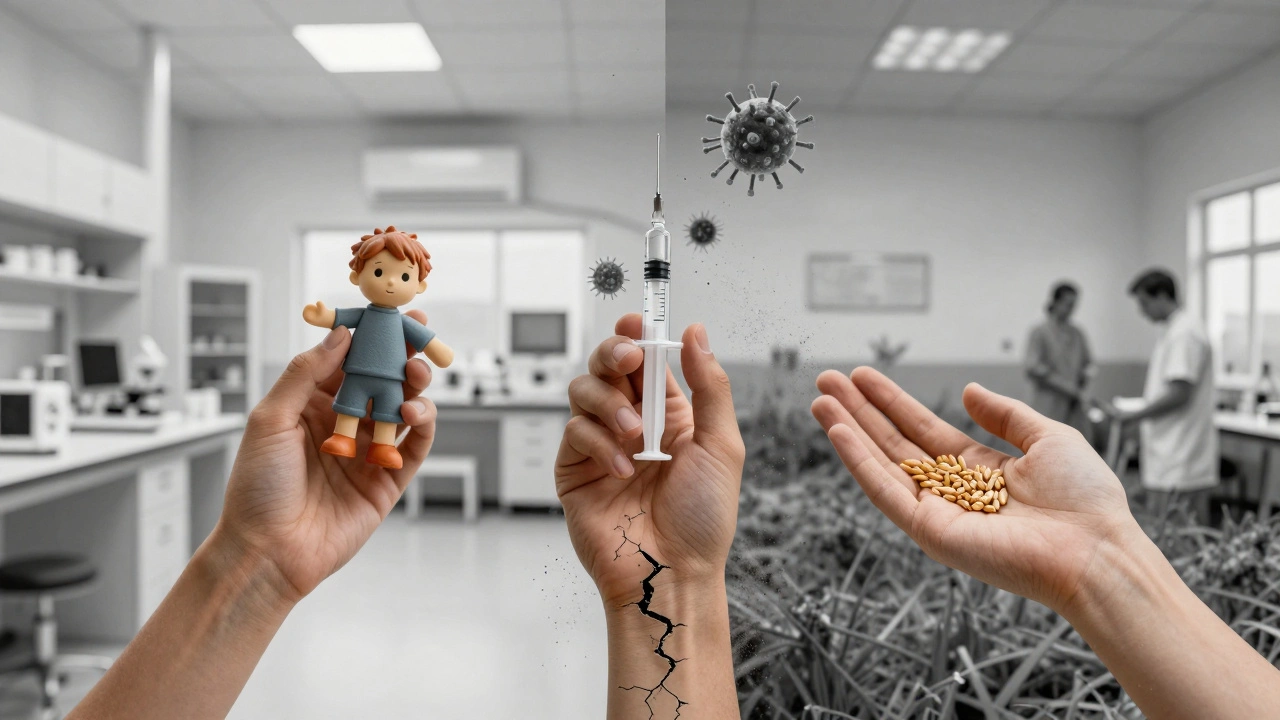
You might think, "I don’t take antibiotics often. This doesn’t affect me." But it does. Every time you get surgery, chemotherapy, or even a simple cut that gets infected, you rely on antibiotics working. If they don’t, your risk goes up. So does your family’s. So does your community’s.Antimicrobial resistance isn’t a distant threat. It’s the quiet collapse of modern medicine. And we’re running out of time to stop it.
What is the main cause of antimicrobial resistance?
The main cause is the overuse and misuse of antimicrobial drugs in humans, animals, and agriculture. When antibiotics are used too often, not taken as prescribed, or given to healthy animals to promote growth, resistant strains survive and spread. Poor infection control in hospitals and lack of access to diagnostics also fuel the problem.
Which pathogens are the most dangerous in terms of resistance?
The WHO lists priority pathogens including Acinetobacter baumannii, Klebsiella pneumoniae, and Escherichia coli-especially when they resist carbapenems or third-generation cephalosporins. These Gram-negative bacteria cause bloodstream, lung, and urinary tract infections with mortality rates as high as 50%. Candida auris, a drug-resistant fungus, is also emerging as a major threat in hospitals.
Why aren’t there more new antibiotics being developed?
Antibiotics are hard to develop, expensive to test, and not profitable. Unlike drugs for chronic diseases, antibiotics are used for short periods and are often held as backups. Companies see little return on investment. Only two new antibiotics were approved in the U.S. between 2020 and 2025. New economic models, like the UK’s subscription system, are being tested to fix this.
How does antimicrobial resistance affect children?
Children under five account for over 839,000 deaths linked to drug-resistant infections in 2021, with more than half occurring in sub-Saharan Africa. Routine infections-ear infections, pneumonia, sepsis-become untreatable. Lack of access to diagnostics, clean water, and appropriate medicines makes children especially vulnerable. In places like Tonga and Malawi, even simple cuts can turn deadly.
Can antimicrobial resistance be reversed?
Resistance can’t be fully reversed, but it can be slowed-and sometimes reduced-through strict stewardship. Countries like Sweden and Thailand have cut antibiotic use and lowered resistance rates by enforcing prescribing guidelines, banning over-the-counter sales, and educating the public. But without global coordination, progress in one region will be undone by misuse in another.
What can individuals do to help?
Don’t demand antibiotics for viral infections like colds or flu. Always finish the full course if prescribed. Don’t share or use leftover antibiotics. Support policies that limit antibiotic use in agriculture. Wash hands, get vaccinated, and advocate for better global health funding. Your choices matter more than you think.
What Comes Next?
The CDC plans to release updated estimates for 19 antimicrobial threats in 2026. The WHO is expanding GLASS to include antifungal and antiparasitic resistance by 2027. That’s progress. But data alone won’t save lives. We need action-fast.The next decade will decide whether we live in a world where antibiotics still work-or one where a scraped knee becomes a death sentence. There’s no vaccine for this crisis. No single fix. Just collective will. And right now, we’re running out of time to build it.