Nuclear Treaty Impact Simulator
Current Nuclear Arsenal Data
Projected Outcomes
U.S. Projected Warheads
N/A
Russia Projected Warheads
N/A
Verification Risk Level
With no inspection regime, uncertainty increases with each year. Higher growth rates increase the risk of miscalculation and accidental escalation.
On February 5, 2026, the last binding agreement limiting the world’s two largest nuclear arsenals officially ended. New START, the treaty that capped U.S. and Russian deployed strategic nuclear warheads at 1,550 each, expired without a replacement. For the first time in over 50 years, there are no legal limits, no data exchanges, and no on-site inspections governing the nuclear weapons that make up nearly 90% of the world’s total. This isn’t just a policy gap-it’s a structural collapse in global security architecture.
What New START Actually Did
New START wasn’t perfect, but it worked. Signed in 2010 and extended in 2021, it didn’t eliminate nuclear weapons. It didn’t even touch tactical nukes. But it did something critical: it made the unimaginable visible. Every year, inspectors from both countries showed up at each other’s military bases-sometimes with just hours’ notice-and counted warheads on missiles, verified the number of launchers, and confirmed that neither side was secretly building beyond the limit. The treaty required biannual data exchanges, real-time notifications of missile launches, and 18 annual inspections. These weren’t symbolic gestures. They were technical safeguards that reduced panic during crises. By 2026, both the U.S. and Russia had stayed within the treaty’s limits-even after Russia suspended participation in 2023. That’s telling. It suggests that both sides still saw value in the framework, even when they refused to honor its mechanisms. The numbers didn’t lie: the U.S. held 5,177 nuclear warheads total, Russia 5,459. But only about 1,500 of each were deployed and counted under New START. The rest sat in storage, mothballed, or in reserve. The treaty didn’t reduce the total arsenal, but it did cap the weapons ready to launch at a moment’s notice.The Collapse of Verification
When inspections stopped, so did trust. Without inspectors walking the halls of Russian ICBM silos or American submarine bases, there’s no way to know if either side has started loading extra warheads onto missiles. The U.S. military can estimate Russia’s capabilities based on satellite imagery and signals intelligence, but those are guesses. Russia’s intelligence agencies do the same. Neither side can be sure. And in nuclear strategy, uncertainty is dangerous. It turns cautious planning into worst-case assumptions. Under New START, each side could conduct up to 10 Type One inspections per year-where inspectors entered a facility and physically counted the re-entry vehicles on an ICBM or SLBM. They could also do eight Type Two inspections at non-deployed launch sites. These weren’t about spying. They were about proving compliance. Now, those doors are locked. The U.S. can’t verify if Russia has added 200 more warheads to its existing missiles. Russia can’t confirm whether the U.S. has begun reactivating retired bombers. That ambiguity is the new normal.Why the Treaty Failed to Be Replaced
The expiration of New START wasn’t an accident. It was the result of years of diplomatic erosion. Russia suspended the treaty in 2023, citing U.S. support for Ukraine. The U.S. responded by halting inspections. Both sides kept their warhead counts stable-but the system of mutual oversight vanished. The real problem wasn’t the numbers. It was the breakdown in communication. The Trump administration pushed for a new treaty that would include China, calling it a "better" deal. But Beijing has consistently refused to join arms control talks, arguing that its arsenal-estimated at 600 warheads-is too small to warrant equal limits with the U.S. and Russia, which each hold over 5,000. Demanding China’s participation as a precondition for any new agreement is like asking a small business to sign a contract written for Walmart. It’s not fair, and it’s not practical. Russia, meanwhile, demanded that the UK and France be brought into any future talks. That sounds reasonable-until you realize the UK has 225 warheads and France has 290. Neither has the capacity to match the scale of U.S. or Russian arsenals. Adding them doesn’t solve the problem-it turns a bilateral negotiation into a five-way puzzle with mismatched pieces.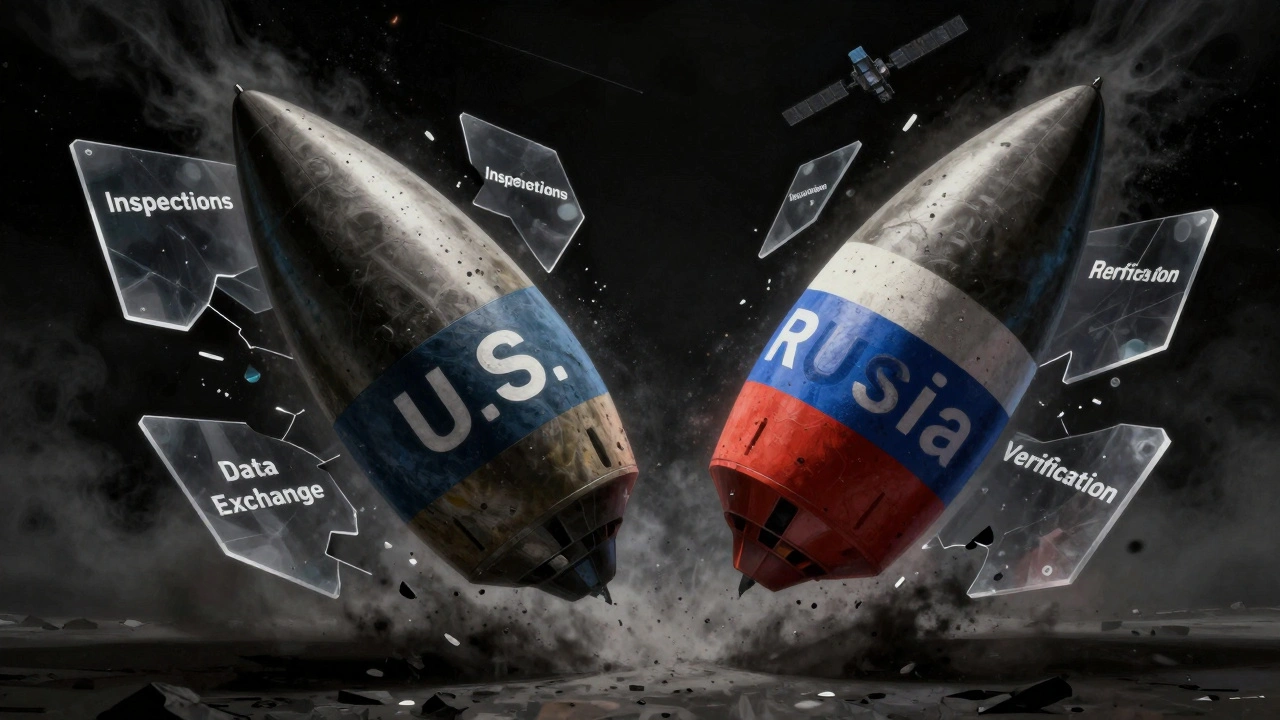
Tactical Nukes: The Blind Spot
One of the biggest gaps in New START was its silence on tactical nuclear weapons. These are smaller, battlefield-range nukes designed for regional conflicts. Russia has about 1,477 of them. The U.S. has roughly 200, mostly stored in Europe. New START didn’t cover them. And now, with no treaty at all, there’s no transparency on how many Russia has moved closer to Ukraine’s border or how many U.S. weapons are stationed in Poland or Romania. This matters because tactical nukes lower the threshold for use. They’re seen as "more usable" in a conventional war. Without limits or monitoring, either side could deploy them without warning. And once they’re used-even once-the nuclear taboo breaks. There’s no going back.What Comes Next? The Realistic Options
There are three paths forward, and none are ideal. First, both sides could return to unilateral restraint. In September 2025, President Putin said Russia would continue to follow New START’s limits even after expiration-if the U.S. did the same. That’s a glimmer of hope. But without inspections or data sharing, it’s just a promise. And promises don’t stop missiles. Second, they could negotiate a new treaty. But that would require both sides to agree on what to include. Should it cover tactical nukes? Should it include China? Should it limit missile modernization programs? Each demand kills the others. The U.S. wants deeper cuts. Russia wants more partners. China won’t join. The UK and France aren’t interested in being dragged into a bilateral standoff. Third, the world could accept the new reality: no limits, no inspections, no transparency. That’s what’s happening now. And it’s the most dangerous option. Without any structure, each side will build more weapons, upgrade delivery systems, and assume the worst about the other. The risk of miscalculation rises. A single misread satellite image, a false radar alert, or a misunderstood military exercise could spiral into something catastrophic.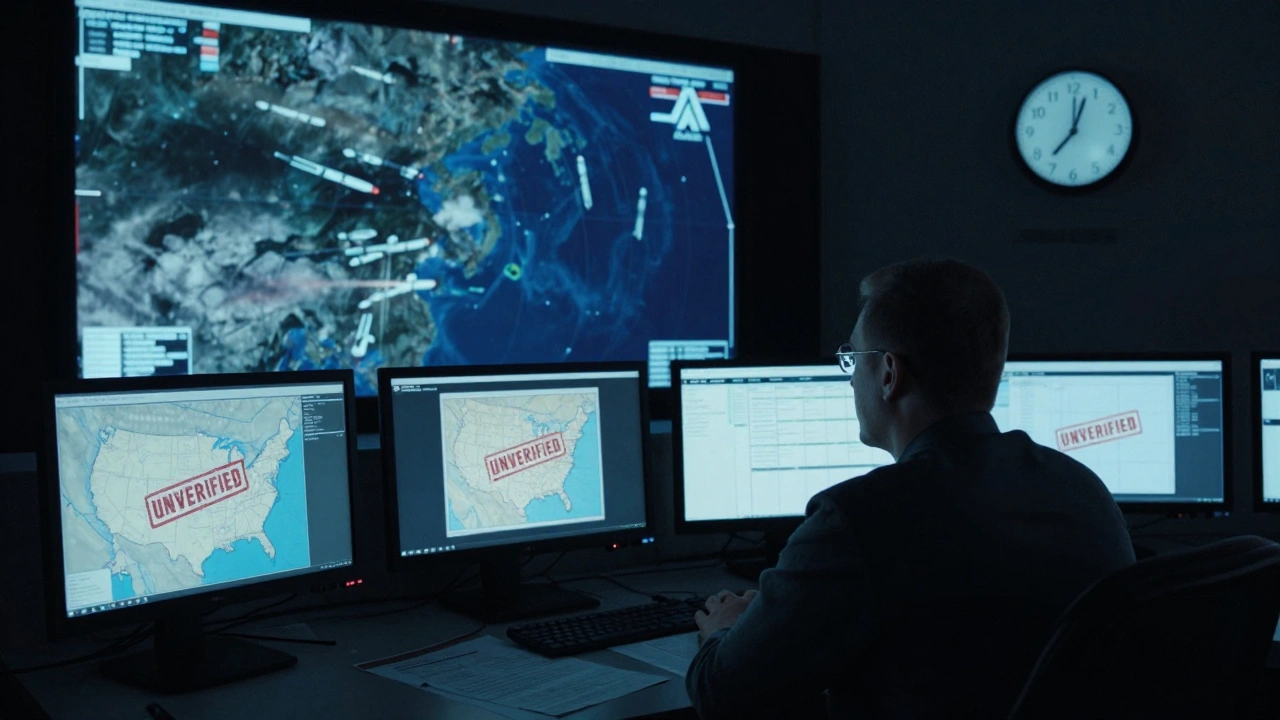
The Bigger Picture: The NPT at Risk
The collapse of New START doesn’t just affect the U.S. and Russia. It undermines the entire nuclear non-proliferation regime. The Nuclear Non-Proliferation Treaty (NPT) is built on a promise: nuclear states will work toward disarmament. In return, non-nuclear states agree not to build bombs. New START was the last visible proof that the nuclear powers were keeping that promise. Now, with no treaty in place, non-nuclear states have a reason to ask: Why should we trust you? If the two biggest arsenals can’t even agree on limits, why should Iran, North Korea, or others believe disarmament is real? The 2026 NPT Review Conference will be a disaster. Countries like India, Brazil, and South Africa will demand accountability. The credibility of the entire system is on the line.Can Arms Control Be Revived?
Yes-but only if both sides stop demanding perfection and start accepting progress. A new treaty doesn’t need to include China. It doesn’t need to cover every warhead. It just needs to restore the basics: limits, data sharing, and inspections. Even a stripped-down version of New START would be better than nothing. The tools still exist. The verification technology hasn’t disappeared. The inspectors still know how to count warheads. The political will is the only thing missing. And that’s the hardest part to rebuild. History shows that even during the height of the Cold War, the U.S. and USSR negotiated arms deals. Reagan and Gorbachev didn’t trust each other. But they knew that without limits, both nations would be less safe. That’s the lesson we’ve forgotten. Arms control isn’t about friendship. It’s about survival. And right now, the world is operating without a safety net.What happened to the New START treaty?
The New START treaty expired on February 5, 2026, after its 15-year term ended. It was originally signed in 2010 and extended in 2021 to last until 2026. Russia suspended its participation in 2023, halting inspections and data exchanges, but both sides continued to observe the warhead limits until the treaty formally expired. No successor agreement has been signed.
Why can't the U.S. and Russia just renew New START?
They could-but neither side wants to. The U.S. wants a new treaty that includes China and covers tactical nuclear weapons. Russia insists the UK and France must join too. China refuses to negotiate because its arsenal is much smaller. These demands are incompatible. Renewing the old treaty would require both sides to drop their new conditions, which neither is willing to do.
Does the expiration of New START mean a new nuclear arms race is inevitable?
Not inevitable, but highly likely. Without limits, both countries have the freedom to increase their deployed warheads, modernize delivery systems, and build more missiles. The absence of inspections means no one can verify what the other is doing. That uncertainty pushes military planners to assume the worst, leading to more weapons, more readiness, and higher risk of accidental escalation.
Why doesn't China join nuclear arms control talks?
China has about 600 nuclear warheads, while the U.S. and Russia each have over 5,000. Beijing argues that it’s unfair to ask it to limit its arsenal when it’s far smaller than the two largest nuclear powers. China says it will only join if the U.S. and Russia first cut their arsenals to levels closer to China’s. Until then, it refuses to enter formal negotiations.
What are tactical nuclear weapons, and why do they matter now?
Tactical nuclear weapons are smaller, shorter-range nukes meant for use in battlefield scenarios-like stopping a tank column or sinking a naval fleet. Russia has about 1,477 of them; the U.S. has around 200. New START didn’t cover them. Now, with no treaty, Russia can move them closer to NATO borders without anyone knowing. This raises the risk they might be used in a regional conflict, which could trigger a full-scale nuclear exchange.