Climate Vulnerability Calculator
How climate change impacts differ by community
Climate change doesn't affect everyone the same way. This tool helps you understand your relative vulnerability to climate impacts based on factors like race, income, location, and health. Your score is compared to the U.S. average.
Understanding vulnerability: Higher scores indicate greater risk from heat, air pollution, and extreme weather due to historical and systemic inequities.
Assess Your Vulnerability
Your Climate Vulnerability Assessment
How your score compares:
Climate change doesn’t affect everyone the same way
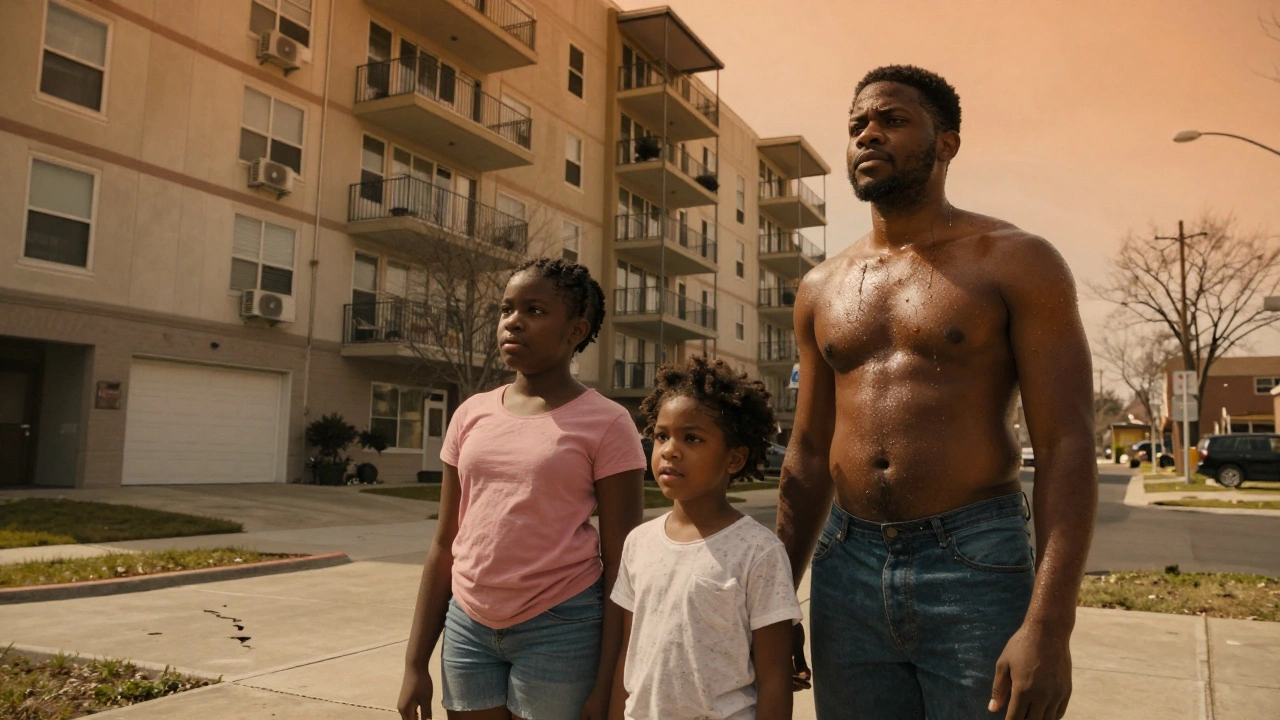
When the temperature spikes in July, some people can turn on their air conditioning, crack open a window, or head to a cooling center. Others? They’re stuck in a basement apartment with no AC, working outside in 100-degree heat because their job doesn’t stop for the weather. This isn’t just bad luck-it’s the reality of climate equity. The people least responsible for global warming are the ones suffering the most from it. And it’s not just about heat. It’s about asthma, floods, lost crops, displacement, and dying rivers.
Who’s hit hardest? The data doesn’t lie
The U.S. Environmental Protection Agency’s 2021 report on climate and social vulnerability breaks it down clearly: Black and African American communities face higher risks across every major climate impact category. At 2°C of global warming, they’re 34% more likely to live in areas where childhood asthma diagnoses will spike. At 4°C? That jumps to 41%. Meanwhile, Black Americans are 40% more likely to live in neighborhoods projected to see the most deaths from extreme heat.
It’s not just race. Income matters. Age matters. Disability matters. Indigenous communities, migrant workers, elderly people living alone, single mothers, and people with chronic illnesses all face higher exposure and fewer ways to protect themselves. In Hong Kong, people living in "cage homes"-tiny, overcrowded rooms in old buildings-experience indoor temperatures up to 9°F hotter than normal homes during heat waves. In the U.S., 87% of farmworkers are Latino, and they’re 3.2 times more likely to suffer heat-related illness than the general population.
It’s not just the U.S.-it’s global
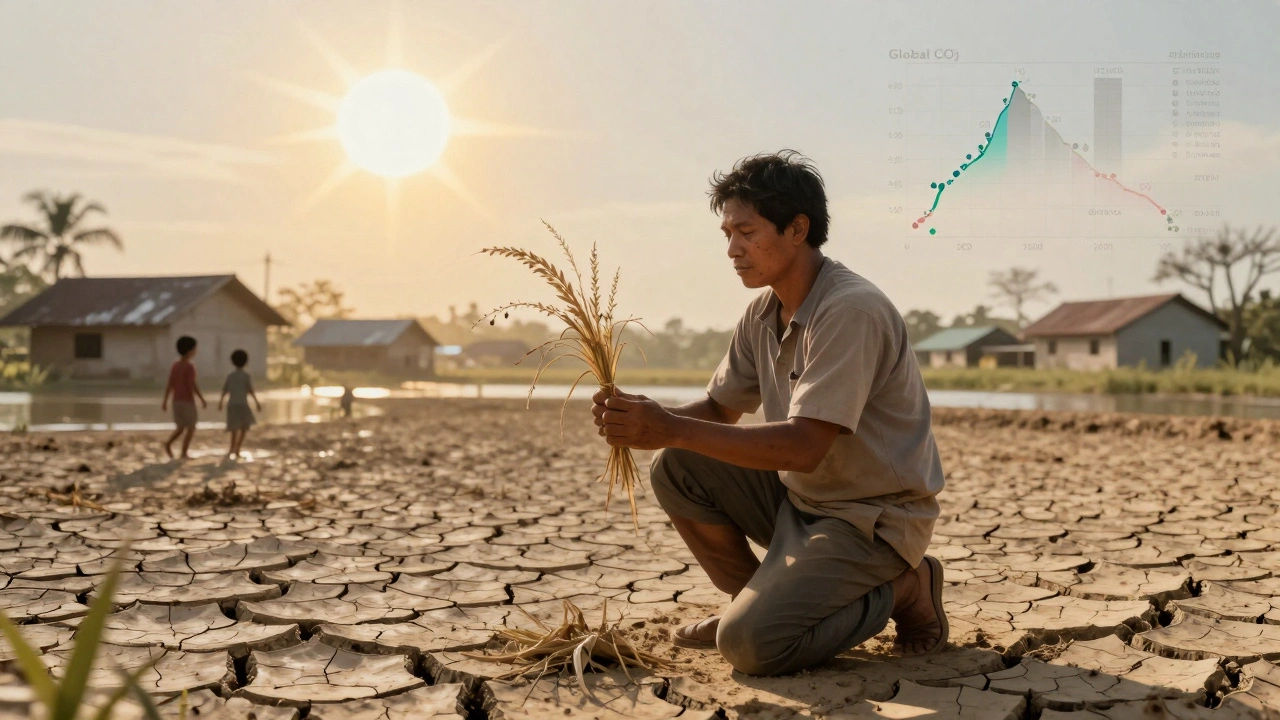
Look at the Philippines. The country produces less than 0.4% of the world’s greenhouse gas emissions. Yet, by 2050, climate damage could cost them 6.3% of their entire GDP every year. That’s not a number-it’s families losing homes, children missing school, farmers going broke. In Central America’s Dry Corridor, droughts have slashed crop yields by 60-80% since 2018. People aren’t leaving because they want to. They’re leaving because their land can’t feed them anymore.
In the Pacific Northwest, salmon runs have collapsed. River temperatures have climbed past 68°F-the point where salmon eggs can’t survive. Tribal communities that have fished these waters for thousands of years now see their catches drop by 45-65%. That’s not just a loss of food. It’s a loss of culture, identity, and economic survival.
Disaster doesn’t wait for paperwork
After the Maui wildfires in August 2023, 78% of displaced Native Hawaiians couldn’t return home within six months. Why? Because the housing market was taken over by tourism developers. Their homes were gone, and the rent was too high to come back.
Undocumented immigrants face another kind of barrier. After floods or fires, they’re 3.8 times less likely to get disaster aid-not because they don’t qualify, but because they’re afraid of being reported to immigration authorities. A 2022 study of 1,247 people across 12 states confirmed this fear is real and widespread. When the system doesn’t see you as a citizen, it doesn’t see you as someone who deserves help.
What’s being done? Real solutions on the ground
There are answers-and they’re not just policy papers. They’re people organizing, planting trees, building shade, and demanding change.
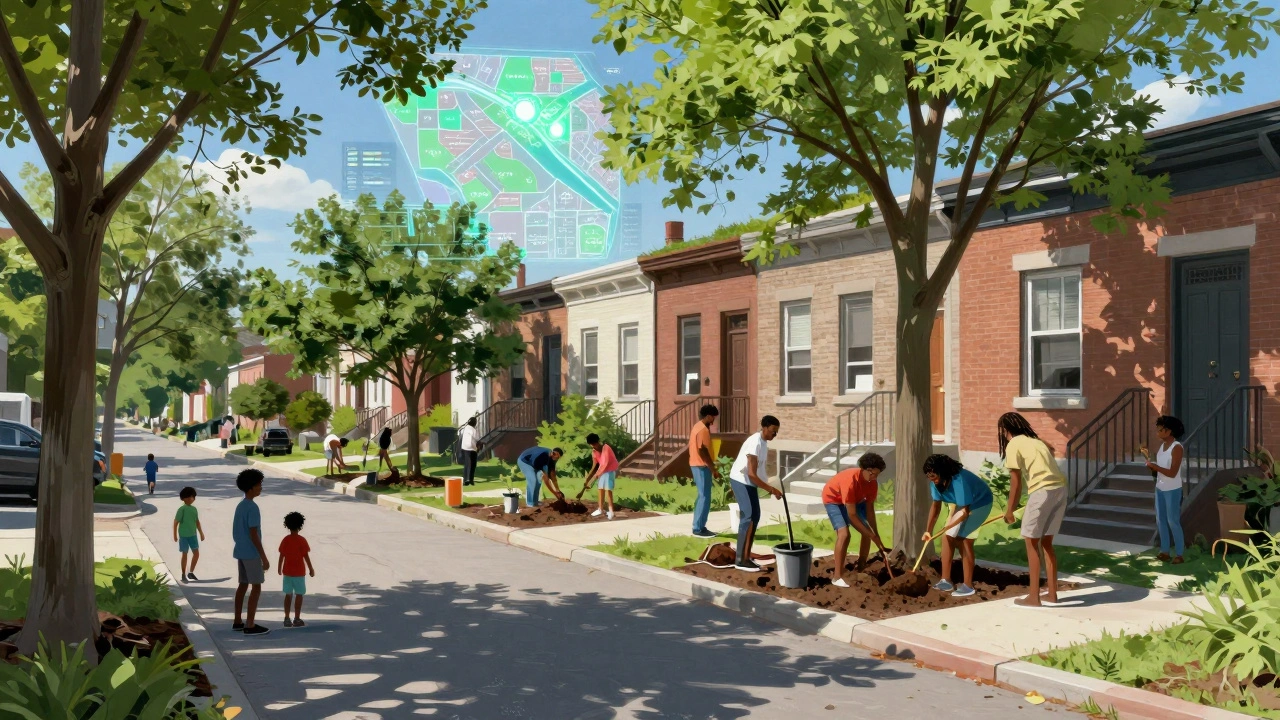
In Detroit’s 48217 zip code, where 95% of residents are Black, community groups installed 350 green roofs and 42 urban gardens between 2020 and 2023. The result? The neighborhood cooled by 5°F. That’s not magic. That’s shade, soil, and sweat.
In Vermont, the state now requires that at least 40% of all climate funding go to historically marginalized communities. That means mobile health units rolling into homeless encampments during heat waves, multilingual outreach in 12 languages, and training for local leaders who know their neighborhoods best.
California’s CalEnviroScreen 4.0 tool pulls data from 37 state agencies to map where pollution and poverty overlap. It’s helped direct $1.5 billion in climate investments to the communities that need it most. And here’s the key: 70% of those projects were proposed by the communities themselves-not top-down bureaucrats.
The tools are here. The will is the question
The U.S. government launched the Climate and Economic Justice Screening Tool (CEJST) in 2022. It uses 122 data points-income, education, race, age, pollution levels, flood risk-to identify the most vulnerable neighborhoods. Since then, 46 states have adopted similar metrics. The White House’s $2.3 billion Climate Pollution Reduction Grants program now requires 40% of funds to go to these areas.
The EPA also tightened air quality rules in late 2023, lowering the safe limit for PM2.5 pollution from 12.0 to 9.0 µg/m³. Why? Because Black Americans are exposed to 54% more of this deadly fine particulate matter than white Americans. This isn’t just about numbers-it’s about saving lives.
What happens if we do nothing?
The World Bank warns that without action, 132 million more people could be pushed into poverty by 2030 because of climate change. Eighty-six percent of them will be in Sub-Saharan Africa and South Asia-places with the least money, the weakest infrastructure, and the fewest options.
But here’s the hopeful part: targeted investments could cut that number by 78%. All it takes is $127 billion a year-less than 0.2% of global GDP. Harvard researchers estimate that fully implementing current climate equity frameworks could prevent 2.1 million premature deaths annually by 2040. Most of those lives are in communities that contributed almost nothing to the problem.
It’s not about charity. It’s about justice
Climate change is the greatest inequality crisis of our time. The people who burn the least fuel are the ones breathing the most pollution. The ones with the least power are the ones losing the most land. The ones who work the hardest are the ones most likely to collapse in the heat.
Solving this isn’t about giving handouts. It’s about fixing broken systems. It’s about letting communities lead. It’s about funding what works-not what looks good on paper. It’s about recognizing that clean air, safe water, cool streets, and healthy food aren’t privileges. They’re rights.
If we act now-with urgency, with fairness, and with real accountability-we can stop turning climate change into a punishment for the poor. And that’s not just smart policy. It’s the only thing that makes moral sense.
What does "climate equity" actually mean?
Climate equity means recognizing that climate change hits different groups unequally-and fixing that. It’s not just about reducing emissions. It’s about making sure the people who’ve done the least to cause the problem aren’t the ones who suffer the most. This includes directing resources, funding, and protection to communities that are Black, Indigenous, low-income, elderly, disabled, or immigrant.
Why do Black communities face higher climate risks in the U.S.?
Historical redlining and discriminatory housing policies forced Black families into neighborhoods near highways, factories, and flood zones. These areas have fewer trees, more pavement, and worse air quality. Today, those same neighborhoods are hotter, more polluted, and more vulnerable to storms. The EPA’s data shows this isn’t coincidence-it’s the legacy of systemic racism baked into urban planning.
How do climate impacts affect children differently?
Children breathe more air, drink more water, and eat more food per pound of body weight than adults. That means they absorb more pollutants, toxins, and heat. Their developing bodies are more sensitive to air pollution, which worsens asthma. Extreme heat can cause dehydration and heatstroke faster in kids. And when schools close due to wildfires or floods, their education and mental health suffer too.
What’s the Climate and Economic Justice Screening Tool (CEJST)?
CEJST is a free online tool launched by the U.S. EPA in 2022. It uses 122 indicators-like income, education, race, health, and environmental hazards-to map which neighborhoods are most vulnerable to climate change. Federal agencies use it to decide where to spend billions in climate funding. It’s not perfect, but it’s the most detailed, data-driven map of environmental injustice in the U.S.
Can community-led projects really make a difference?
Absolutely. In Detroit, local residents planted gardens and built green roofs-and lowered neighborhood temperatures by 5°F. In California, community panels decide which projects get funding. These aren’t token efforts. They’re proven strategies that work because the people who live there know their needs best. Top-down solutions often miss the mark. Bottom-up ones save lives.
Why should wealthy countries pay more for climate solutions?
The richest 10% of the world’s population produces nearly half of all carbon emissions. The poorest 50% produce just 10%. It’s not fair to ask people who can barely afford food to pay for climate fixes they didn’t cause. Wealthy nations have the money, technology, and historical responsibility. Climate justice means they lead the funding and the action.
Is climate equity just a U.S. issue?
No. It’s global. The Philippines, Bangladesh, and Haiti face climate disasters they didn’t create. Indigenous groups in the Amazon, Pacific Islanders losing their islands, and farmers in the Sahel are all on the front lines. The World Bank, WHO, and UN all agree: climate equity is a worldwide moral and policy imperative. Solutions must be global, but they must also be local-led by those most affected.