The World Trade Organization was built on one simple promise: if countries break the trade rules, there’s a fair, binding way to fix it. For 25 years, that promise held. But today, the heart of that system - the Appellate Body - is dead. And no one knows how to bring it back.
It’s not a matter of bad luck. It’s a deliberate kill. Starting in 2017, the United States stopped approving new judges for the Appellate Body. Not because the system was broken beyond repair. Not because there was a consensus on what was wrong. But because one country decided it didn’t like how the judges were interpreting the rules - especially when those interpretations limited U.S. policy freedom.
By December 10, 2024, the last two remaining judges finished their terms. No replacements were appointed. The Appellate Body lost its minimum quorum of three members. And suddenly, every appeal pending at the WTO - dozens of them - froze in place. No one could get a final ruling. Not China. Not the EU. Not India. Not even the United States.
Here’s the twist: the U.S. still files appeals.
In February 2026, the United States appealed a panel ruling that found China’s tax credits under the Inflation Reduction Act didn’t violate WTO rules. China won the case. The panel said the U.S. overreached. But instead of accepting the decision, the U.S. appealed - to a body that doesn’t exist. Meanwhile, it blocked every single proposal from 130 other countries trying to fix the system. It’s like a referee who refuses to hire new umpires, then keeps yelling for calls to be reviewed.
China called it hypocrisy. The EU called it a crisis. And the WTO? It’s now a courtroom with no judge.
What Happened to the Appellate Body?
The Appellate Body wasn’t just another committee. It was the final word. When a country lost a trade dispute at the first level - the panel - it could appeal. The Appellate Body reviewed the legal reasoning. It didn’t re-try facts. It didn’t make new rules. It checked if the panel followed the rules.
That’s what made it powerful. Countries trusted it because it was predictable. Even the U.S. used it for decades. When Canada or the EU imposed tariffs on U.S. goods, the U.S. appealed - and won. It worked because everyone played by the same rules.
But around 2019, the U.S. started complaining. Judges were “legislating from the bench.” They were interpreting rules too broadly. They were infringing on U.S. sovereignty. The U.S. claimed the Appellate Body had overstepped by ruling that domestic subsidies - like tax breaks for clean energy - were illegal if they gave U.S. companies an advantage.
That’s the real issue. The U.S. didn’t want the WTO telling it how to design its climate policy. And instead of negotiating changes to the rules, it chose to shut down the whole system.
It’s not about fairness anymore. It’s about control.
The Domino Effect: Cases That Can’t Be Resolved
Every month, new disputes pile up. And every month, they get stuck.
Take the case between India and China. China filed a complaint because India imposed tariffs on solar panels and electric vehicles. India says it’s protecting its own industry. China says it’s unfair. A panel ruled in China’s favor. But India appealed - and now it’s stuck. No one can hear the appeal. So India can’t enforce its rights. China can’t collect on its win.
Then there’s Indonesia and the EU. Indonesia challenged EU duties on stainless steel. The panel said the EU’s tariffs were illegal. Both sides appealed. But again - no Appellate Body. So the ruling hangs. Indonesia can’t remove the duties. The EU can’t collect them. Businesses are caught in the middle.
And then there’s the U.S.-China fight over the Inflation Reduction Act. The U.S. says China’s clean energy subsidies are unfair. China says the U.S. is using taxpayer money to favor its own companies. The panel said China’s policy didn’t break any rules. The U.S. appealed. But the Appellate Body can’t hear it. So now, both countries are stuck in legal limbo - with billions in clean energy investment on the line.
These aren’t abstract legal debates. They’re real trade wars - with no referee.
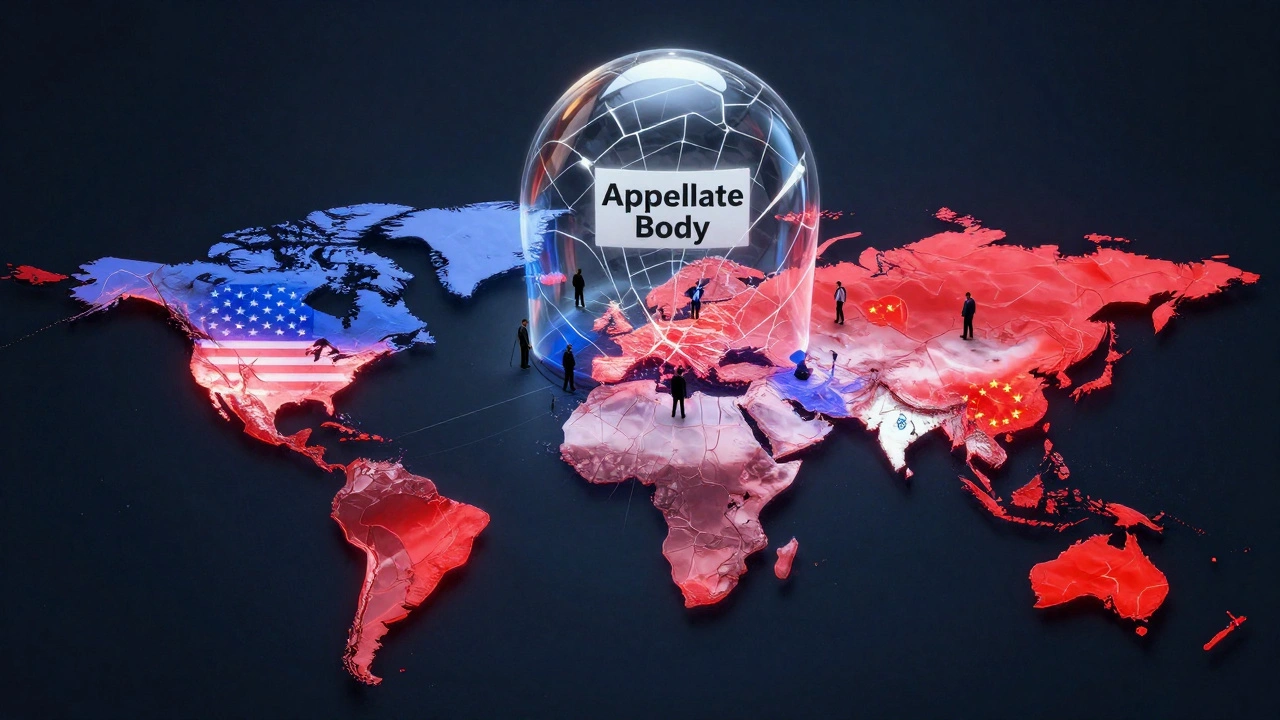
The MPIA: A Workaround That Isn’t Working
When the Appellate Body died, the EU didn’t wait. It created the Multi-Party Interim Appeal Arbitration Arrangement - or MPIA. Think of it as a private arbitration club. Countries that join agree to use a temporary appeal system instead of the dead WTO body.
It’s smart. It’s legal. And it’s barely used.
Twenty countries signed on. The EU, Canada, Brazil, Australia, Norway - all of them. They’ve started using MPIA for new disputes. But here’s the catch: it’s voluntary. And the biggest players - the U.S. and China - won’t join.
Why? Because MPIA doesn’t have the same weight. It’s not part of the WTO. It’s not binding in the same way. And if you don’t join, you’re left with one option: appeal to a dead body. Which is exactly what Indonesia did. In its steel dispute with the EU, Indonesia chose to appeal to the Appellate Body - even though it’s empty. That means the case is dead. No resolution. No final ruling.
So now we have a fragmented system. Some countries use MPIA. Others appeal to nothing. And the U.S. and China? They play both sides - using the system when it helps them, blocking it when it doesn’t.
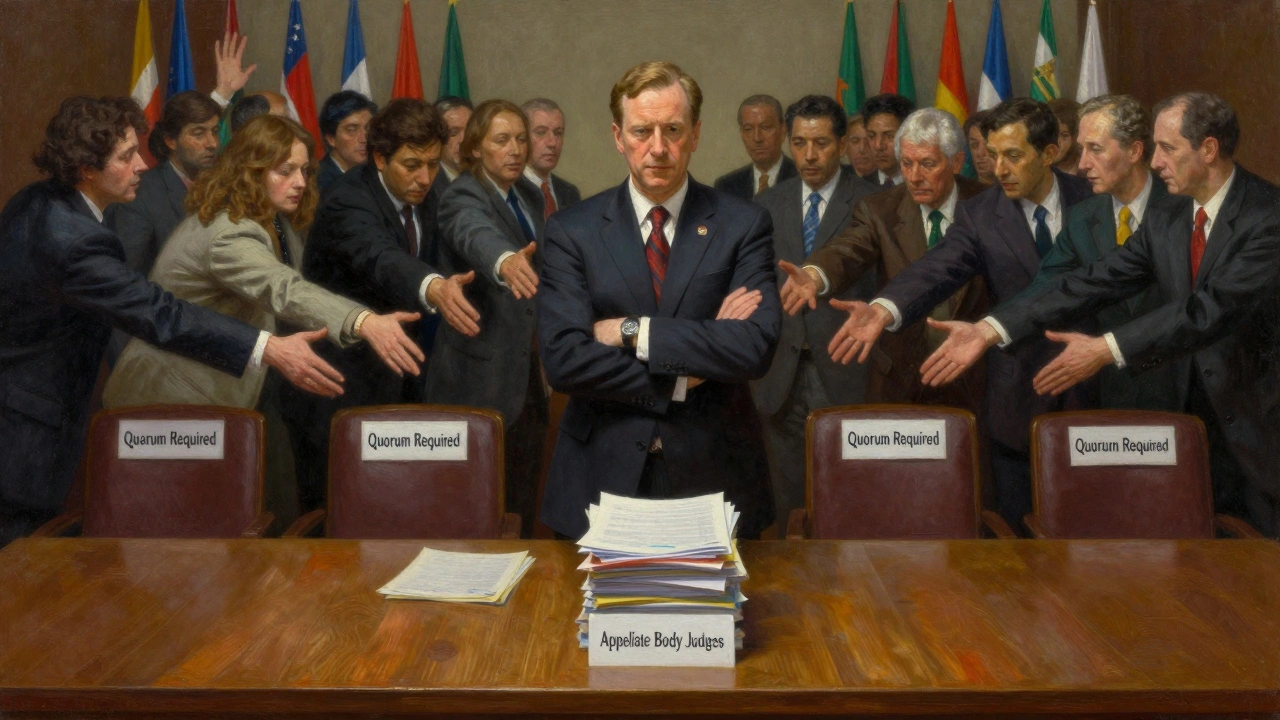
The Bigger Picture: A System Built on Trust Is Now Built on Fear
The WTO was never perfect. But it was the only global system we had. It kept trade wars from turning into real wars. It gave small countries a chance to stand up to giants. It forced big powers to justify their actions under rules everyone agreed to.
Now, that trust is gone.
When the U.S. blocks appointments while still appealing rulings, it sends a message: rules only matter if they serve your interest. When China appeals to a dead body, it’s not trying to win - it’s trying to pressure. When Indonesia refuses MPIA, it’s not being stubborn - it’s betting that one day, the Appellate Body will come back.
The result? Countries are starting to act like they’re in a state of nature. No rules. No referee. Just power.
Some are building bilateral deals. Others are using tariffs as leverage. A few are even talking about new trade courts outside the WTO.
But none of these are replacements. They’re patches. And patches don’t fix a broken foundation.
What’s Next? The Road Ahead
As of March 1, 2026, the situation is stuck. The U.S. says it won’t restore the Appellate Body unless there’s a “fundamental reform.” But it won’t say what that reform is. The EU and 130 other countries say restore it now. Nothing else matters.
There’s no vote. No deadline. No enforcement.
The only thing moving is time - and with it, more disputes pile up. More businesses get caught. More governments lose faith.
The real question isn’t whether the Appellate Body can be fixed. It’s whether the world still wants a rules-based trade system - or if we’re okay with a world where the biggest economies just do whatever they want.
If the answer is the former, then we need a new structure. Not a tweak. Not a workaround. A new system. One that doesn’t depend on the goodwill of one country.
If the answer is the latter… then we’ve already lost.
Why can’t the WTO just replace the Appellate Body judges?
The WTO requires consensus to appoint judges. That means every member - including the United States - must agree. Since 2017, the U.S. has blocked every single nomination. Even when 130 countries proposed a joint list in February 2026, the U.S. refused. Without U.S. consent, no new judges can be appointed - no matter how many others support it.
Is the MPIA a permanent solution?
No. The MPIA is an interim fix. It was designed as a temporary workaround while the Appellate Body remains dead. It’s not part of the WTO’s official rules. It doesn’t have the same legal authority. And it only works if all parties in a dispute agree to use it - which the U.S. and China refuse to do. It’s a Band-Aid, not a cure.
Can countries still win trade disputes without the Appellate Body?
Yes - but only partially. Panels can still issue rulings. If a country loses and doesn’t appeal, the ruling stands. But if the loser appeals - which most do - the case stalls. Without a functioning Appellate Body, there’s no final decision. That means winning a panel ruling doesn’t guarantee enforcement. The system only works if both sides accept the final outcome - and right now, they can’t.
What happens if a country ignores a panel ruling?
In theory, the WTO can authorize retaliation - like tariffs - if a country refuses to comply. But that requires a final ruling. Since appeals can’t be heard, most rulings aren’t final. Without finality, the WTO can’t authorize retaliation. So countries that lose can simply ignore the ruling - and there’s nothing the WTO can do.
Could the WTO be replaced by another organization?
There’s no credible replacement. Regional trade blocs like the USMCA or RCEP handle disputes internally, but they don’t cover global trade. Some experts suggest a new multilateral court, but no country has proposed one, and getting 164 members to agree on a new system is nearly impossible. The WTO is still the only global trade forum - even if it’s broken.