Industrial Decarbonization Pathways Calculator
Select Industry Type
(Electric arc furnaces, blast furnaces)
(Limestone calcination, kiln operations)
(Ethylene crackers, chemical synthesis)
Key Requirements
Temperature Needed: 1,500°C
CO2 Reduction Target: 70-80%
Current Emissions Source: Fossil fuel combustion
Decarbonization Options
Electrification of Heat
Using renewable electricity for heating processes
Steel (electric arc furnaces)
Steel Application: Electric arc furnaces now make 30% of steel in US (could reach 60% by 2040)
Hydrogen
Replacing fossil fuels with green hydrogen
Steel, cement, chemical processes
Key Insight: Green hydrogen costs $4-6/kg but expected to reach $2/kg by 2030 with IRA incentives
CCUS
Carbon capture, utilization, and storage
Cement, chemical plants
Key Insight: CCUS could deliver 35% of chemical emissions cuts by 2030
Recommended Strategy
Select an industry above to see the optimal decarbonization strategy
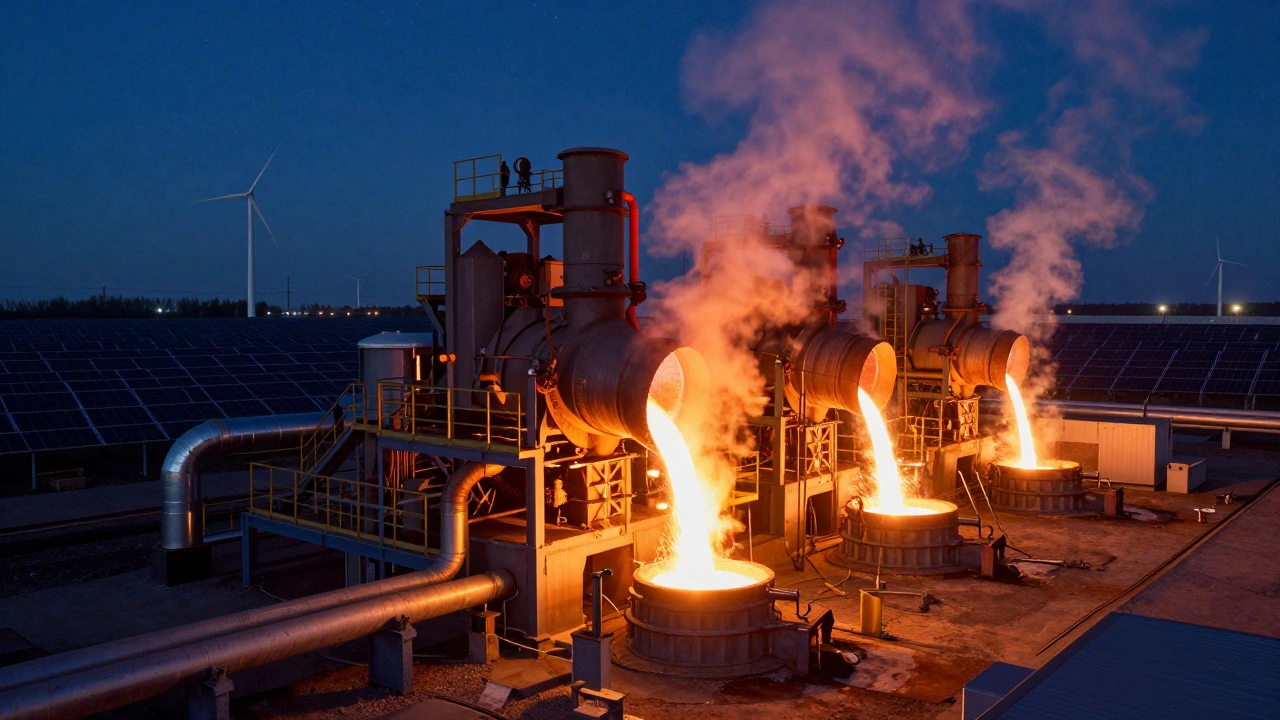
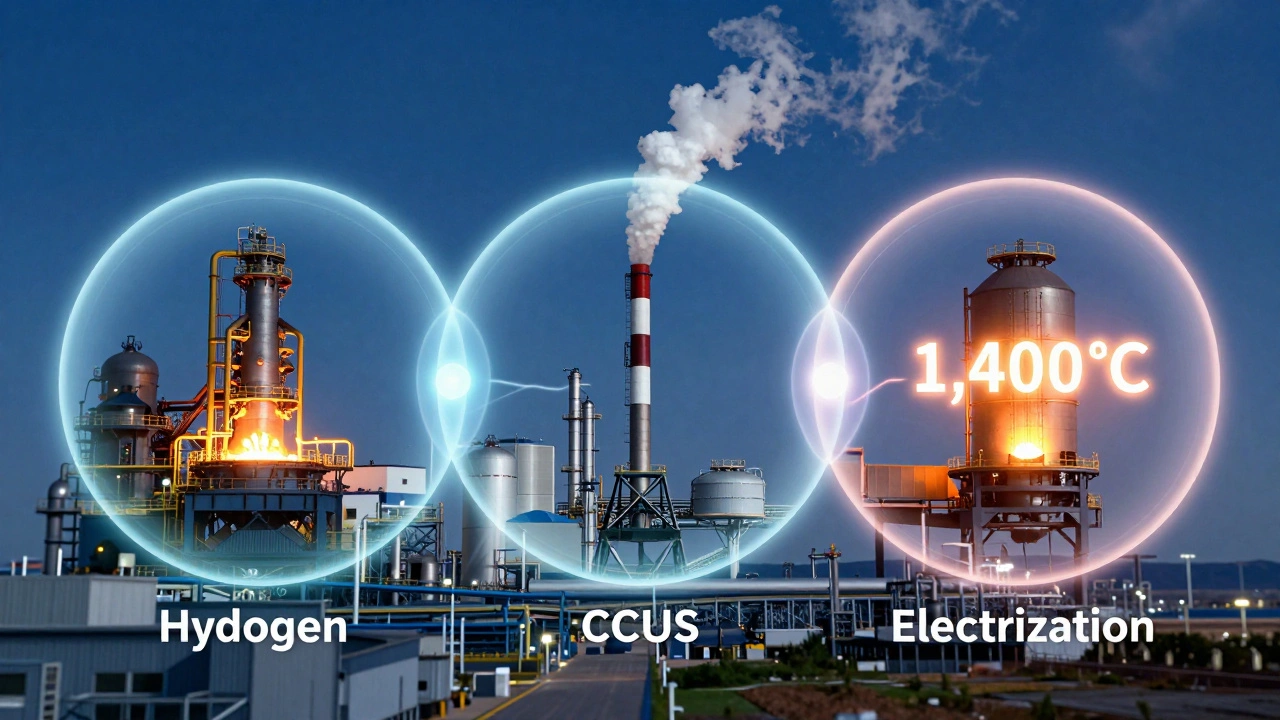
Heavy industry doesn’t get enough attention in climate talks, but it’s responsible for nearly one-third of global CO2 emissions. Factories making steel, cement, chemicals, and glass burn coal, oil, and natural gas to heat furnaces, crack feedstocks, and power chemical reactions. These aren’t cars or power plants - they’re the hidden engines of modern life. And they’re not going away. So how do you decarbonize something that needs 1,500°C heat and chemical reactions only fossil fuels can trigger? The answer isn’t one solution. It’s three: hydrogen, CCUS, and electrification of heat.
Why Electrification of Heat Isn’t as Simple as It Sounds
Electricity powers everything from your phone to your coffee maker. So why not just plug in the furnace? Because industrial heat isn’t your kitchen oven. It’s not 200°C. It’s 1,500°C - hotter than lava. Most electric heaters can’t reach that. And even if they could, the grid isn’t ready. Right now, only 27% of industrial energy comes from electricity. The rest? Direct combustion of fossil fuels.
Some sectors are already there. Electric arc furnaces in steelmaking use scrap metal and electricity to melt steel. They’re clean, efficient, and growing fast. In the U.S., electric furnaces now make about 30% of steel. That number could hit 60% by 2040. But for cement? Glass? Chemical plants? Electric resistance heating or induction just won’t cut it. That’s where heat pumps, microwave systems, and concentrated solar thermal come in. These aren’t sci-fi. They’re in pilot plants right now. A cement plant in Sweden is testing a 1,400°C electric kiln. A chemical plant in Texas uses microwave heating to crack hydrocarbons without burning gas.
But here’s the catch: even if you electrify, you need clean power. If your electricity comes from coal, you’ve just moved the pollution to the power plant. That’s why industrial decarbonization isn’t just about switching fuel - it’s about building a whole new energy system. That means more wind, more solar, and smarter grids. The Department of Energy says electrification alone could cut 20% of industrial emissions by 2030 - if paired with grid decarbonization.
Hydrogen: The Fuel That Doesn’t Burn Clean Unless It’s Made Right
Hydrogen sounds perfect. Burn it, and all you get is water. But most hydrogen today is made from natural gas. It’s called gray hydrogen. And it leaks more CO2 than the entire airline industry. Green hydrogen - made by splitting water with renewable electricity - is the real deal. But it’s expensive. And slow to scale.
Right now, electrolyzers - the machines that make green hydrogen - come in three types: alkaline (cheap but slow), PEM (faster but pricey), and solid oxide (efficient but still in labs). A single green hydrogen plant can cost over $1 billion. That’s why steelmakers are starting small. ArcelorMittal is testing hydrogen in its blast furnaces in Germany. ThyssenKrupp is building a full hydrogen-based steel plant in Duisburg. The goal? Replace coal with hydrogen to reduce emissions from 1,800 kg of CO2 per ton of steel to under 600 kg by 2050.
It’s not just steel. Cement plants in Norway are mixing hydrogen with natural gas to cut emissions by 40%. Chemical plants in Louisiana are using hydrogen to replace methane in ethylene crackers. The problem? Supply. There aren’t enough electrolyzers. There aren’t enough renewables to power them. And there’s no pipeline network to move hydrogen across continents. That’s why the Inflation Reduction Act is funding regional hydrogen hubs - from Texas to the Gulf Coast - to cluster production, storage, and use. Without this infrastructure, hydrogen stays a niche experiment.
CCUS: The Bridge for Industries That Can’t Quit Fossil Fuels
Some industries just can’t switch. Cement, for example. 60% of its emissions come from the chemical reaction of limestone. You can’t electrify that. You can’t use hydrogen. So what do you do? Capture the CO2 before it escapes.
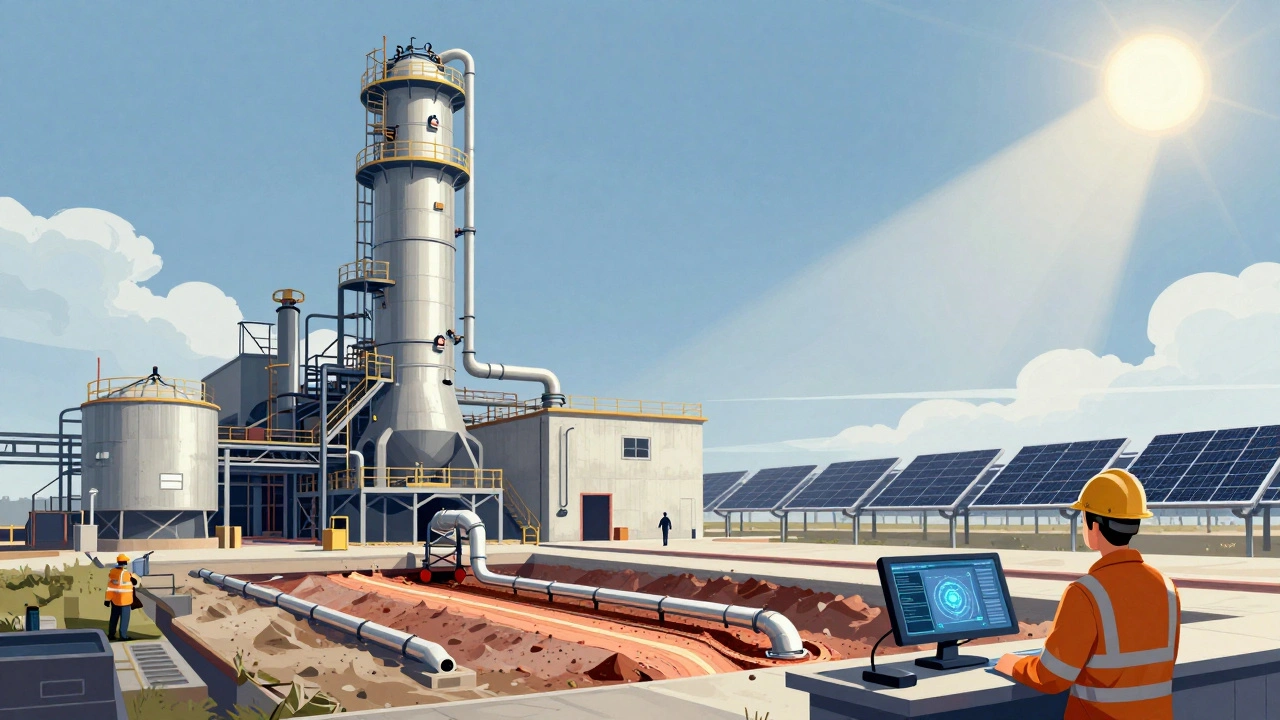
That’s where CCUS comes in - carbon capture, utilization, and storage. There are three ways to do it. Pre-combustion: gasify coal or natural gas first, then pull out CO2. Post-combustion: scrub it from flue gases like a giant air filter. Oxy-combustion: burn fuel with pure oxygen so the exhaust is mostly CO2 and water - easy to trap.
One cement plant in Texas captures 1.2 million tons of CO2 a year. That’s like taking 250,000 cars off the road. The CO2 is piped underground into porous rock layers, locked away for thousands of years. Some of it gets turned into concrete, or synthetic fuels. But most? Just stored. And it works. The Global CCS Institute says CCUS could deliver 35% of the emissions cuts needed in chemicals by 2030.
But here’s the problem: retrofitting old plants is expensive. Permitting takes years. And public fear of underground storage lingers. A 2025 study in Louisiana found that 68% of residents near proposed CCUS sites were skeptical - even when told the science was solid. That’s why policy matters. The IRA gives tax credits of up to $85 per ton of CO2 captured. That’s making projects financially viable for the first time. Without that, CCUS stays a luxury for big companies. With it? It becomes a standard tool.
Raw Material Shifts and Efficiency: The Quiet Heroes
Decarbonization isn’t just about fuel. It’s also about what you make things from. Cement uses clinker, made from limestone. But clinker is the main source of emissions. What if you replace 30% of it with fly ash from coal plants or slag from steelmaking? That’s what companies in Canada and Germany are doing. The result? Same strength, 25% less CO2.
Same with steel. Recycling scrap instead of mining iron ore cuts emissions by 75%. Aluminum? Recycling uses 95% less energy than making it from bauxite. Glass? Using recycled glass cuts melting temperatures and energy use by 30%.
And then there’s efficiency. Not the kind where you swap out a leaky valve. The kind where you redesign the whole factory. Heat recovery systems capture waste heat from one process and use it in another. Oxygen-enriched combustion burns fuel cleaner, leaving behind purer CO2 streams - perfect for capture. One chemical plant in Louisiana cut its energy use by 60% by integrating heat networks across its units. That’s not a tech upgrade. That’s a systems rethink.
The Real Barrier Isn’t Technology - It’s Speed
We have the tools. Hydrogen electrolyzers. CCUS rigs. Electric kilns. The problem? Deployment. No single technology will save industry. It’s the combo. Steel needs hydrogen + CCUS + scrap recycling. Cement needs clinker substitution + heat recovery + CCUS. Chemicals need feedstock switching + electrification + hydrogen.
And none of this moves fast enough. Permitting for CCUS pipelines takes 5-7 years. Building hydrogen hubs takes a decade. Investors want returns. Communities want safety. Workers need retraining. The Department of Energy found that 40% of industrial emissions could be cut by 2030 at zero or negative cost - if we acted now. But right now, only 12% of the needed projects are under construction.
That’s why the next five years matter most. The U.S. is investing $100 billion in industrial decarbonization through the IRA. Europe is pushing carbon border taxes. China is building hydrogen cities. The question isn’t whether we can do this. It’s whether we’ll do it before it’s too late.
What’s Next? The Path Forward
Industrial decarbonization isn’t a switch you flip. It’s a rebuild. Every factory will need a different mix of tools. A steel mill in Pittsburgh might go all-electric. A cement plant in Texas might pair CCUS with biomass. A chemical plant in Louisiana might use hydrogen and recycled feedstocks.
The key is starting now. Pilot projects aren’t enough. We need full-scale deployment. We need policy that rewards innovation, not just carbon offsets. We need workforce training for engineers who’ve never seen a hydrogen electrolyzer. We need community trust built through transparency, not PR.
There’s no silver bullet. But there are three silver buckshots: hydrogen, CCUS, and electrification. Together, they can turn heavy industry from the problem into the solution.
Can electrification alone decarbonize all heavy industry?
No. Electrification works well for processes below 1,000°C, like steelmaking with electric arc furnaces. But for cement kilns, glass melters, or chemical crackers that need 1,200°C-1,500°C, electric heating is either too expensive or not yet feasible. That’s why hydrogen and CCUS are needed as complements.
Is green hydrogen more expensive than natural gas?
Yes, right now. Green hydrogen costs $4-$6 per kilogram. Natural gas costs $1-$2. But with tax credits from the Inflation Reduction Act, and as renewable electricity gets cheaper, green hydrogen is expected to hit $2 per kg by 2030 - making it competitive in many industrial uses.
Does CCUS just enable more fossil fuel use?
Not if it’s used correctly. CCUS isn’t meant to extend the life of coal plants. It’s meant to enable industries like cement and steel - which can’t easily switch fuels - to keep operating while cutting emissions. When paired with efficiency upgrades and renewable power, CCUS is a bridge, not a crutch.
How much CO2 does cement production really emit?
Every kilogram of ordinary Portland cement releases about 0.86 kg of CO2. That’s because of two sources: 60% from heating limestone (calcination), and 40% from burning fuel. Globally, cement accounts for 8-9% of total CO2 emissions - more than aviation.
Why are hydrogen hubs important?
Hydrogen is hard to transport. Building pipelines and storage near factories reduces cost and risk. Hubs cluster production (using nearby wind or solar), storage (salt caverns or tanks), and use (steel, chemicals, refining) in one region. This cuts infrastructure costs by 40% and makes projects financially viable.
