Science Trust Assessment
How Do You Engage With Science?
Answer 5 questions to understand how you perceive scientific authority. Your responses will generate personalized insights based on the article's findings about trust in expertise.
Your Trust Profile
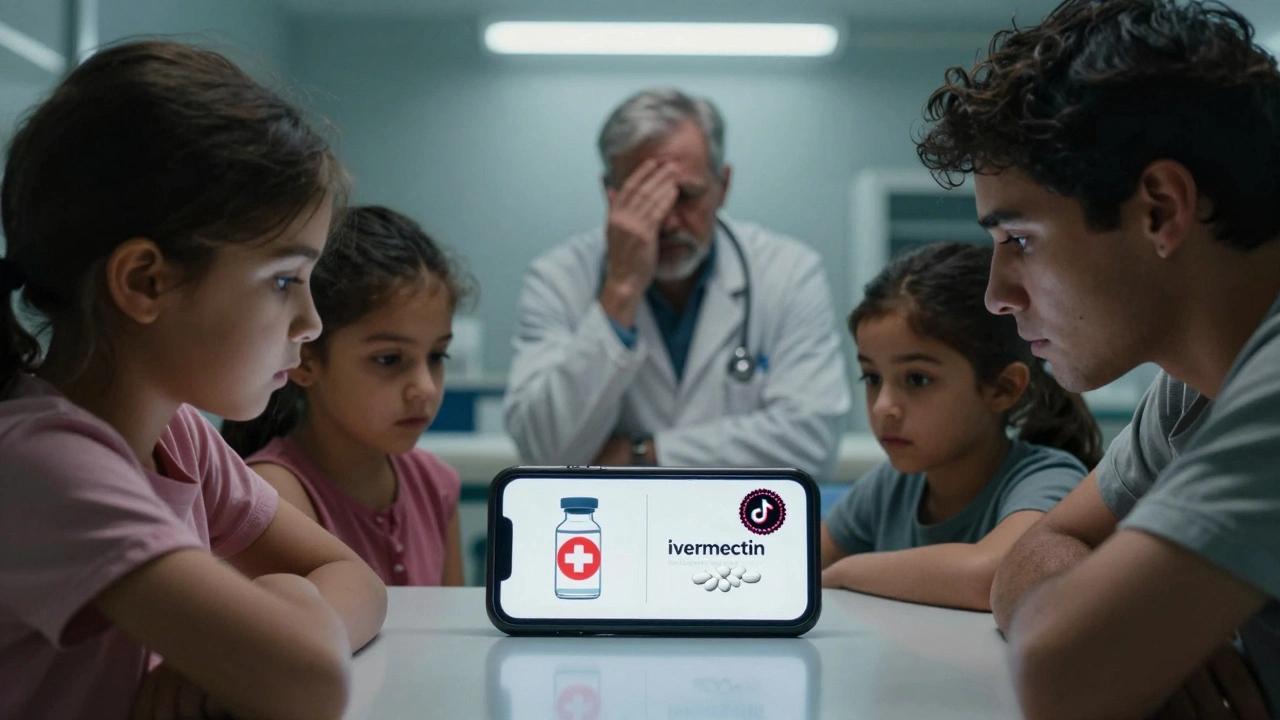
It’s 2026, and you’re scrolling through your phone. A friend shared a post claiming vaccines cause infertility. Your cousin swears that ivermectin cured her COVID. Your neighbor refuses to wear a mask because, "the science changed." Meanwhile, your doctor, who spent 12 years in school and trains new doctors every year, sits quietly in a clinic that’s understaffed and underfunded. What happened? Why does science - the very thing that gave us antibiotics, smartphones, and climate models - now feel like just another opinion?
The answer isn’t that people suddenly became stupid. It’s that the system meant to carry scientific knowledge into public life broke down. And it broke down in ways we didn’t see coming.
Trust Isn’t Gone - It’s Been Hijacked
A global survey of over 71,000 people in 68 countries found that 78% still think scientists are competent. 57% believe they’re honest. 56% think they care about people. That’s not a collapse. That’s a foundation. But here’s the twist: those same people are more likely to ignore vaccine advice, climate warnings, or nutritional science when those facts clash with their identity, politics, or daily experience.
It’s not science they distrust. It’s how science gets used. When public health officials change guidelines during a pandemic - because new data came in - people don’t hear "science is self-correcting." They hear "they didn’t know what they were doing." When a researcher publishes a study on gender and cognition that gets picked up by a conservative news outlet, people on the left hear "science is biased." When a pharmaceutical company funds a study on a new drug, everyone hears "profit motive."
Science didn’t lose its credibility. Its credibility got tangled up in politics, media, and corporate interests. And now, people are confused.
When "All Opinions Are Equal" Kills Truth
Journalists used to say, "We report both sides." That made sense when covering a political debate. But when one side says "the Earth is warming" and the other says "it’s a hoax," and both get equal airtime? That’s not balance. That’s distortion.
The media didn’t set out to mislead. But in the race for clicks, the loudest, most emotional, most shocking claims win. A TikTok video of someone drinking bleach to "cure COVID" gets millions of views. A 10-minute explainer on how mRNA vaccines work? Maybe 10,000. The algorithm doesn’t care about truth. It cares about attention.
And then there’s the "reproducibility crisis." Some scientific studies can’t be repeated. That’s not a scandal - it’s how science works. Most findings are tentative. Most papers get corrected. But when a headline screams "Study Says Coffee Causes Cancer," and six months later it says "Actually, No," people remember the first version. They don’t remember the correction. They remember being fooled.
So they stop trusting the whole system.
Experts Aren’t the Problem - The System Is
Scientists aren’t trying to hide things. Most of them want to be heard. But the system doesn’t make that easy.
Academics are trained to write papers, not explain things to moms on Facebook. They use jargon. They hedge. They say "correlation does not equal causation." That’s accurate. It’s also boring. Meanwhile, influencers say "This one supplement will fix everything" - simple, bold, and emotionally satisfying.
And when scientists do speak up? They get attacked. A climate scientist gets doxxed. A public health expert is called a "globalist." A nutritionist is accused of being paid by Big Pharma. The message is clear: if you speak up, you’ll be targeted.
Meanwhile, policymakers treat science like a switch - flip it on for lockdowns, flip it off for reopening. No room for nuance. No room for "we’re still learning." That rigidity breeds distrust. People don’t mind uncertainty. They mind being lied to.
Where Trust Still Lives - And How to Build on It
Look at countries that handled the pandemic well: New Zealand, Germany, South Korea. What did they have in common? High trust in public institutions. But more than that - they had consistent, clear, humble communication.
Germany didn’t say, "Trust us." They said, "Here’s what we know. Here’s what we don’t. Here’s how we’re changing our plan as we learn more." They showed data. They named the scientists. They admitted mistakes. And people followed.
It’s not about having perfect experts. It’s about having honest ones.
And trust isn’t just about facts. It’s about relevance. The same global survey found people trust science most when it solves problems they care about: clean water, affordable medicine, food safety, climate resilience. If science feels distant - like it’s only for labs and universities - people tune out.
But when a local health department uses data to fix a contaminated well? When a university partner helps farmers grow drought-resistant crops? That’s when science becomes real.
How to Fix This - Step by Step
Restoring trust doesn’t mean shouting louder. It means changing how science talks, how media reports, and how policy works.
- Scientists need to talk - and be trained to do it well. Universities should require communication training. Not just for PR. For connection. A researcher who can explain a study in plain language, with humility, builds more trust than ten press releases.
- Media must stop treating science like a political debate. If 97% of climate scientists agree, don’t give 50% airtime to the 3%. Report the consensus first. Then explain the dissent - not as equal, but as outlier.
- Policy must allow for uncertainty. Rules that say "do X, always" fail when science evolves. Instead, build flexible systems. Say: "We’re following the best evidence today. If new data comes in, we’ll update." People respect honesty more than certainty.
- Fix the misinformation pipeline. Social platforms need to stop rewarding false claims. Not by censorship - by demoting them. Show the consensus first. Link to verified sources. Make it harder to share lies.
- Connect science to daily life. Don’t talk about "global warming." Talk about how your city’s heatwaves are getting worse. Don’t talk about "vaccines." Talk about why your child’s school hasn’t had a flu outbreak in three years.
The Real Enemy Isn’t Skepticism - It’s Disengagement
People aren’t against science. They’re against being talked down to. Against being ignored. Against being told what to do while the people in charge never show their work.
The crisis of expertise isn’t about facts. It’s about power. Who gets to decide what we believe? Who gets to speak for truth? If experts hide behind jargon and institutions hide behind silence, then people will turn to whoever speaks clearly - even if they’re wrong.
The fix isn’t more studies. It’s more stories. More transparency. More humility.
Science didn’t fail. The way we told its story did.
What Comes Next
It’s not too late. In cities like Albuquerque, local health workers are teaming up with community leaders - barbers, church groups, farmers’ markets - to bring science into everyday spaces. They’re not giving lectures. They’re having conversations. And trust is creeping back.
The same thing is happening in rural Iowa, in coastal Bangladesh, in urban Brazil. People don’t need to be convinced they’re wrong. They need to be invited into the conversation.
Science is still the best tool we have to solve the biggest problems we face. But tools don’t work if no one believes they’re real.
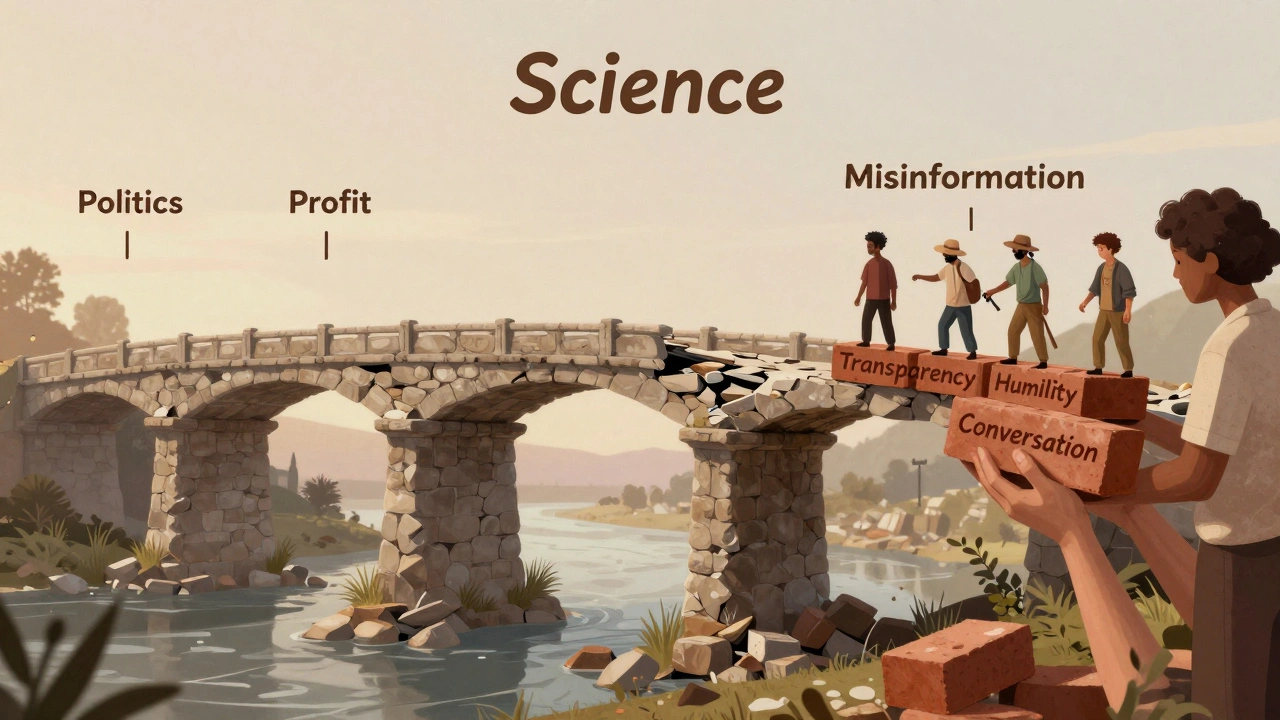
It’s time to rebuild the bridge - one honest conversation at a time.