Military Recruitment Impact Calculator
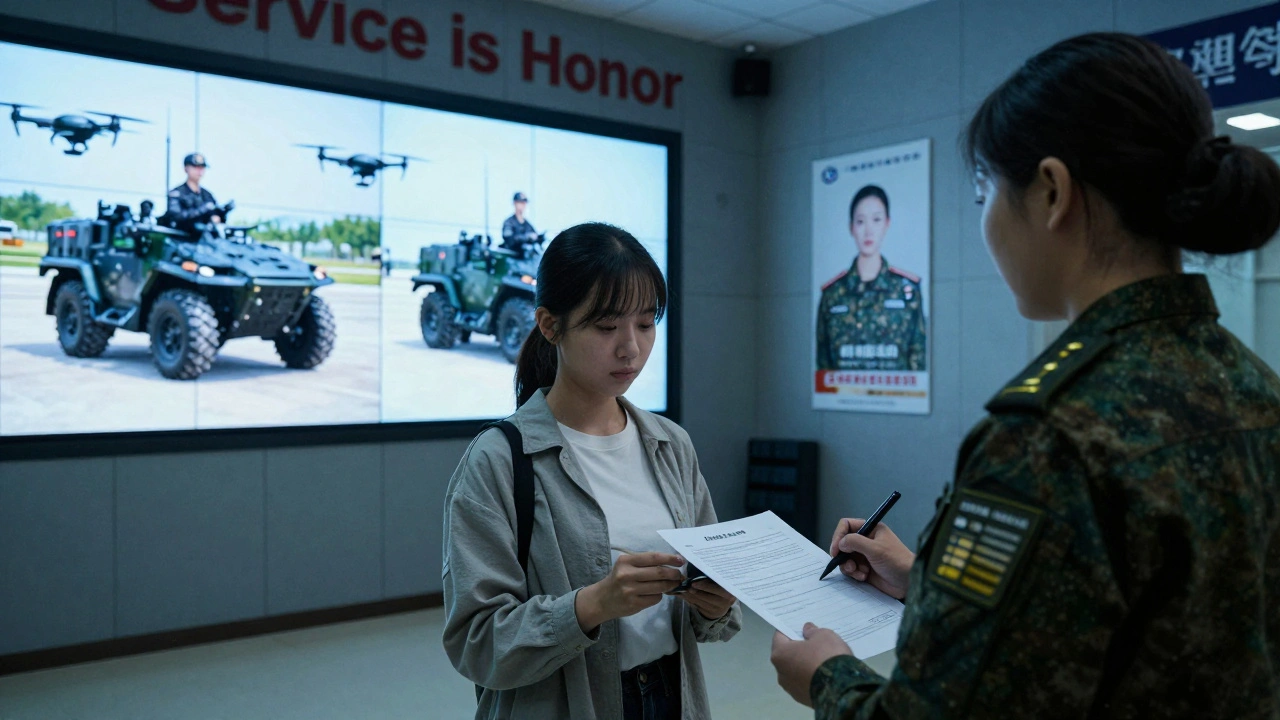
This tool calculates how declining birth rates affect military recruitment requirements. Input your country's current fertility rate and active military size to see projected recruitment shortfalls.
Projected Impact
Key Insights from the Article
By 2026, the world’s most powerful militaries are facing a quiet but devastating crisis - not from enemy missiles or cyberattacks, but from too few babies being born. Countries that once relied on large pools of young men and women to fill their ranks are now scrambling to keep their armed forces alive. In South Korea, Japan, and even China, the number of eligible recruits is shrinking faster than any defense budget can compensate for. And the U.S. military isn’t immune - its own crisis looks different, but it’s just as real.
South Korea’s Military Is Running Out of People
South Korea has the lowest fertility rate on Earth: 0.72 children per woman in 2023. That’s less than half the rate needed to replace the population. For a country that still requires every able-bodied man to serve in the military, this isn’t just a social problem - it’s an existential threat.With 51 million people today, projections show South Korea’s population could halve by 2100. That means fewer 18-year-olds to draft. Right now, the military is short by tens of thousands of troops - not because they can’t afford to pay them, but because there simply aren’t enough young men to enlist. The government has tried raising pay, improving conditions, and even launching ad campaigns that show soldiers as heroes. But none of it works if the next generation isn’t there to join.
One major shift? Women. For decades, military service was mandatory only for men. Now, South Korea is actively recruiting female volunteers. It’s a cultural earthquake. Women are being trained for frontline combat roles, not just medical or support positions. While full female conscription - like Israel’s - isn’t likely soon, the door is open. The military is learning from Ukraine’s use of drones and AI to reduce manpower needs. If they can automate more systems, they might survive the demographic collapse.
Japan’s Military Is Changing Its Rules - Because It Has No Choice
Japan’s fertility rate sits at 1.2. Its military doesn’t even have conscription - it’s all volunteers. And volunteers are harder to find when there are fewer people to choose from.In 2022, Japan’s Self-Defense Forces recruited fewer than 4,000 people. Their target? Over 10,000. That’s a 60% shortfall. So they changed the rules. Tattoo bans? Lifted. Hair length restrictions? Gone. The maximum age to enlist? Raised from 26 to 32. They’re even recruiting people with chronic health conditions who would’ve been rejected a decade ago.
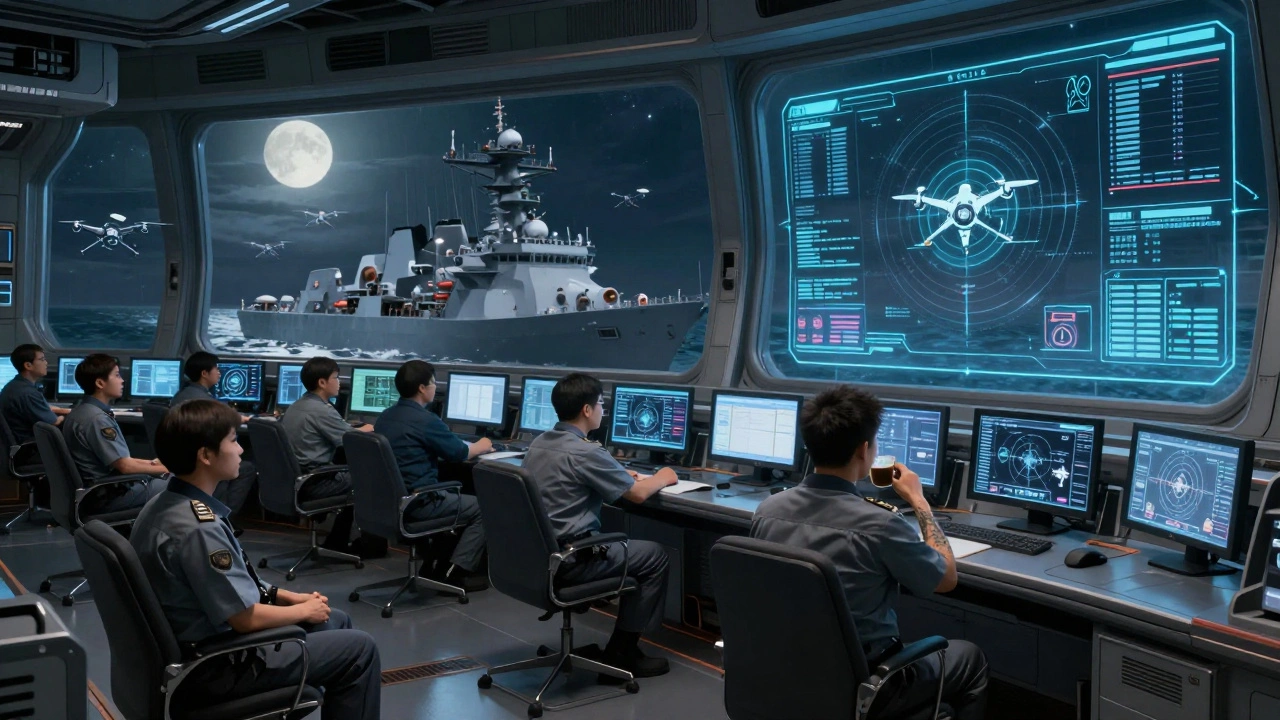
But the real game-changer? Automation. Japanese destroyers now operate with half the crew they used to. AI handles radar, targeting, and even some navigation. The goal isn’t just to save money - it’s to survive. If you can’t find enough people to man a ship, you build one that needs fewer people. The same goes for drones, surveillance systems, and command centers. Japan is betting its future on machines, not men.
China’s Massive Army Is Starting to Crack
China still has over two million active troops - the largest army in the world. But even here, the cracks are showing. Birth rates have been falling for over a decade. The People’s Liberation Army responded by raising the maximum enlistment age from 24 to 26. They’ve also started making war movies - big-budget, patriotic blockbusters designed to inspire young men to sign up.It’s not just about numbers. It’s about quality. With fewer births, the pool of physically fit, mentally sharp recruits is shrinking. The military is seeing more applicants fail fitness tests. More are disqualified for mental health or chronic conditions. China’s strategy? Push harder on tech. Drones. Cyber units. AI-driven logistics. They’re trying to do more with less. But if birth rates keep dropping, even China’s massive population won’t save them forever.
The U.S. Has a Different Kind of Crisis
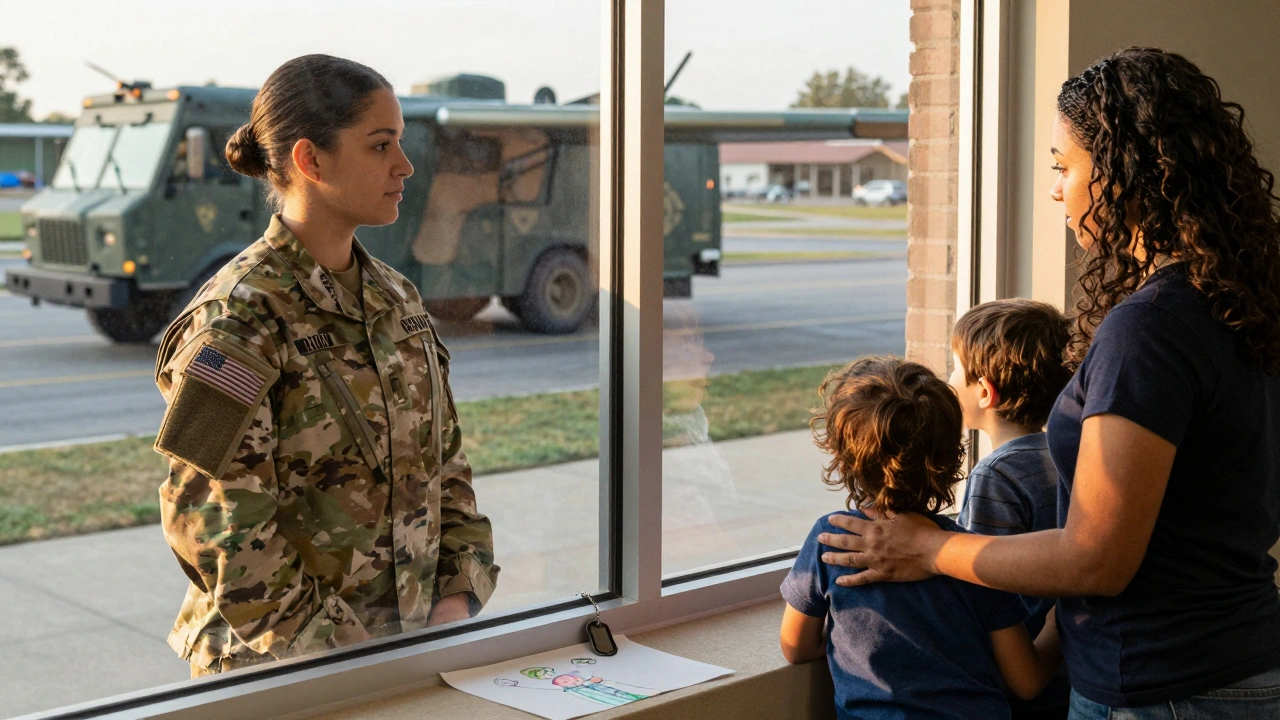
The U.S. doesn’t have a declining birth rate - at least not yet. But it has something worse: unplanned pregnancies among service women.In 2019 alone, over 12,500 active-duty women gave birth. That’s 5.4% of all female service members. Researchers estimate those unplanned pregnancies cost the military over 4.6 million readiness days. That’s more than 12,600 years of lost training, deployment, and operational capacity. For every woman who gets pregnant unexpectedly, she’s out of commission for months - sometimes a year - while she recovers, meets fitness standards, and adjusts to parenting.
And it’s not just about time off. Women who experience unplanned pregnancies are 30% more likely to leave the military entirely. Why? Childcare is expensive. Deployment schedules are brutal. Support systems are weak. Many young enlisted women - especially in the Army - end up choosing between their careers and their children.
Even more troubling? Military service itself may hurt fertility. Studies show service members have nearly double the rate of infertility compared to civilians. Stress, deployments, exposure to toxins, irregular sleep - all of it takes a toll. The more women serve, the harder it becomes for them to have children. And the fewer children they have, the smaller the future pool of recruits becomes. It’s a vicious cycle.
Nuclear Weapons? A New Justification
As manpower shrinks, some defense strategists are making a dangerous argument: we need nuclear weapons because we don’t have enough people to defend ourselves.In South Korea and Japan, where North Korea and China loom as threats, the idea of nuclear deterrence is gaining traction. If you can’t field enough soldiers to stop a tank invasion, maybe a single nuclear warhead is the only thing that can stop it. This isn’t about ambition - it’s about desperation.
Japan has long refused to go nuclear. But with its population aging and its recruitment numbers collapsing, some top officials are quietly reconsidering. South Korea, which gave up its own nuclear program in the 1970s, is now seeing renewed calls for nuclear weapons. The argument is simple: if you can’t defend your country with people, you defend it with bombs.
What Happens Next?
The military of the future won’t look like the military of the past. No more massive conscription armies. No more 20-year career soldiers. Instead, we’ll see:- Smaller, smarter forces built around AI and drones
- More women in combat roles - not because of equality, but because there’s no one else
- Older recruits - men and women in their 30s, even 40s
- Higher pay, better housing, and expanded childcare just to keep people in
- More countries quietly pursuing nuclear options
The countries that adapt fastest - by embracing tech, rethinking gender roles, and accepting that military service must be a career, not a duty - will survive. The ones that cling to old models will find themselves outmatched, outmanned, and out of time.
There’s no easy fix. You can’t print more babies. You can’t force people to have children. But you can change how you fight - or you can stop fighting at all.
Why are birth rates falling in countries like South Korea and Japan?
Birth rates are falling due to a mix of economic pressure, long work hours, high cost of living, and shifting cultural values. In South Korea, young people often delay marriage and parenthood because of intense job competition and housing costs. In Japan, many young adults avoid relationships altogether due to social isolation and lack of support systems. The result? Fewer children, and fewer future soldiers.
Can automation fully replace human soldiers?
Not entirely - but it can reduce the number needed. Drones can patrol borders, AI can analyze intel, and automated ships can sail with smaller crews. But humans still make critical decisions in combat, manage logistics, and maintain equipment. Automation helps bridge the gap, but it doesn’t eliminate the need for trained personnel.
Why is the U.S. military struggling with unplanned pregnancies?
The U.S. has one of the highest unplanned pregnancy rates among high-income nations. In the military, young women - especially in junior ranks - face high stress, irregular schedules, and limited access to contraception or childcare. Many don’t plan to become mothers while serving, and when they do, they often leave the service because the system doesn’t support them.
Are countries like South Korea considering female conscription?
Not yet. While South Korea is actively recruiting female volunteers and expanding their roles, full conscription for women - like in Israel - is still politically and culturally unlikely. The military is moving slowly, testing the waters with voluntary programs first. But if recruitment continues to collapse, conscription could become unavoidable.
How does military service affect fertility?
Military service can reduce fertility due to physical stress, exposure to toxins, irregular sleep, frequent deployments, and separation from partners. Studies show service members have higher rates of infertility and low birthweight babies. For women, the combination of combat stress and deployment cycles makes it harder to conceive and carry pregnancies to term.
Could declining birth rates lead to global instability?
Yes. Countries with shrinking militaries may feel more vulnerable, leading them to pursue nuclear weapons or more aggressive foreign policies. At the same time, aging populations reduce economic growth and tax revenue, weakening national resilience. This creates a feedback loop: weaker economies → fewer recruits → weaker defense → greater insecurity → more conflict.