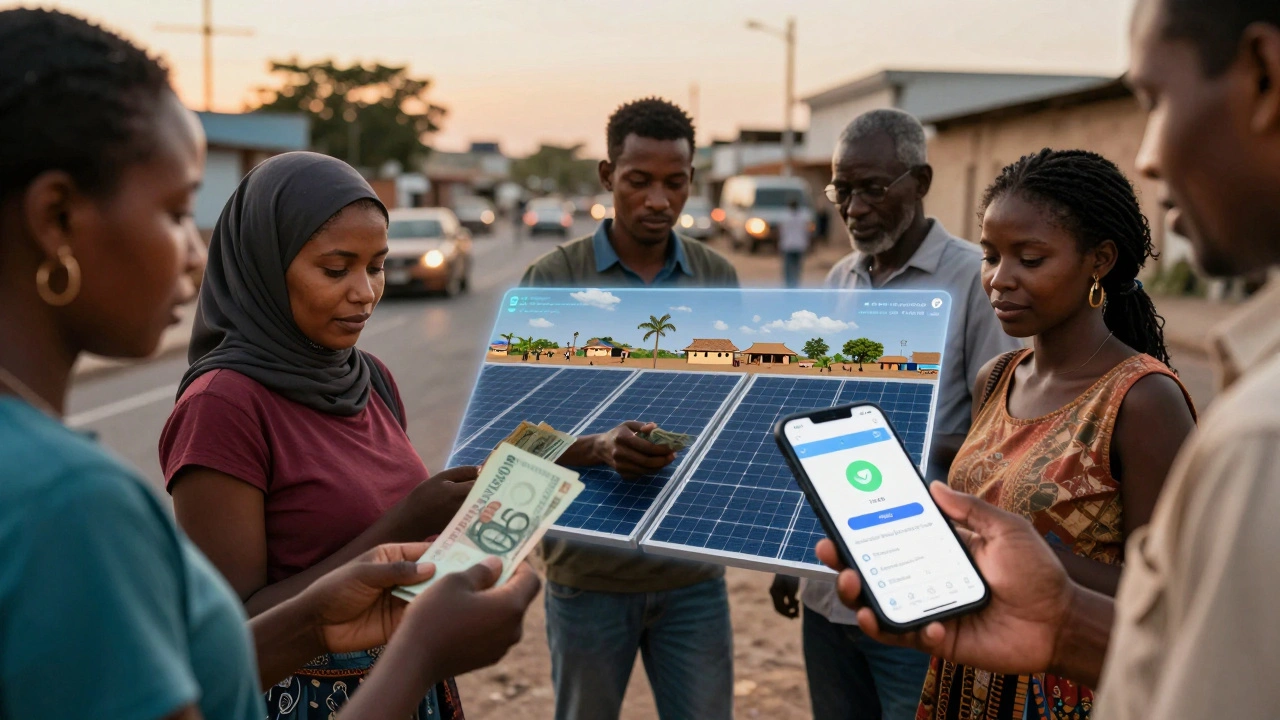
Remittance Investment Potential Calculator
Calculate Investment Potential
How much more could be invested in development projects if remittances shifted from consumption to investment?
Results
With current investment rates, only $0 of remittances is invested in productive projects.
If investment rates increase to $0, an additional $0 could be invested.
Every year, over $700 billion moves across borders-not as foreign aid, not as corporate investment, but as money sent home by people who left their countries to find work. These are remittances, and they’re not just lifelines for families. They’re one of the most powerful, underused tools for development in the world today. In 2023, migrants sent $90.2 billion to Africa alone. By 2024, that number crossed $100 billion. In countries like Tonga and Nepal, remittances make up more than 40% of the entire national economy. Yet most of that money still ends up on grocery shelves, school fees, or roof repairs. What if it could build factories, power grids, or tech startups instead?
Remittances Are Bigger Than You Think
People often think of remittances as small, irregular gifts from cousins or uncles abroad. But the scale is massive. In 2023, global remittances totaled over $870 billion. That’s more than triple the amount of official development aid. It’s also larger than foreign direct investment (FDI) to many low- and middle-income countries. The World Bank’s KNOMAD data shows remittances to Africa grew 12% year-over-year, while FDI in the same region dipped. In the Philippines, remittances from overseas workers support nearly 11 million people-almost a quarter of the population. In Mexico, they fund 3% of GDP. In Nepal, it’s 25%.What makes remittances unique is how they behave during crises. When the pandemic hit in 2020, global remittances dropped just 4%. Then they bounced back with 9% growth in 2021. That’s not luck. It’s because migrants send money even when they’re out of work. They’re not chasing returns. They’re keeping their families alive. This countercyclical nature means remittances are the most reliable financial inflow for fragile economies.
Why Most Remittances Stay in Consumption
The reason most remittances don’t become investments isn’t because people don’t want to. It’s because the system doesn’t let them. Most recipients live in rural areas without banks. They don’t have savings accounts, business loans, or access to credit. If you get $200, you don’t think, “How do I start a solar company?” You think, “My daughter needs medicine. My roof is leaking. My son’s school fees are due.”Studies from the UNDP show that over 70% of remittance use goes to basic needs: food, health, housing, and education. Only 15-20% goes into small business investments, and even less into infrastructure or productive enterprises. That’s not a failure of character-it’s a failure of access. Without formal financial tools, people use cash, informal lenders, or barter. These systems don’t scale. They don’t compound. They don’t build wealth.
The Shift from Welfare to Investment
The real opportunity lies in changing the narrative. Remittances aren’t charity. They’re capital. And like any capital, they need the right conditions to grow. Countries that have moved beyond just receiving remittances to channeling them into productive use have seen dramatic results.India’s diaspora bond program, launched in the early 2000s, is one of the clearest examples. The government issued bonds specifically targeted at Indians living abroad. These weren’t speculative instruments. They funded national infrastructure-power plants, highways, and rural electrification. Over $10 billion was raised over a decade. Why did it work? Because the diaspora trusted the government. They saw clear outcomes. They got tax benefits. And they felt a connection to national progress.
In contrast, many African countries have struggled. Why? Lack of transparency. Fear of corruption. Migrants don’t want their money going into projects that vanish or get siphoned off. The African Diaspora Network has proposed a new tool called Diversified Payment Rights (DPRs). These are structured financial instruments that turn pooled remittances into AAA-rated bonds backed by future remittance flows. Imagine a fund where every dollar sent home from New York to Accra becomes part of a bond that finances a clean water plant in rural Ghana. Investors get steady returns. Communities get lasting infrastructure. And the diaspora gets a direct stake in their homeland’s future.

Technology Is Lowering the Barriers
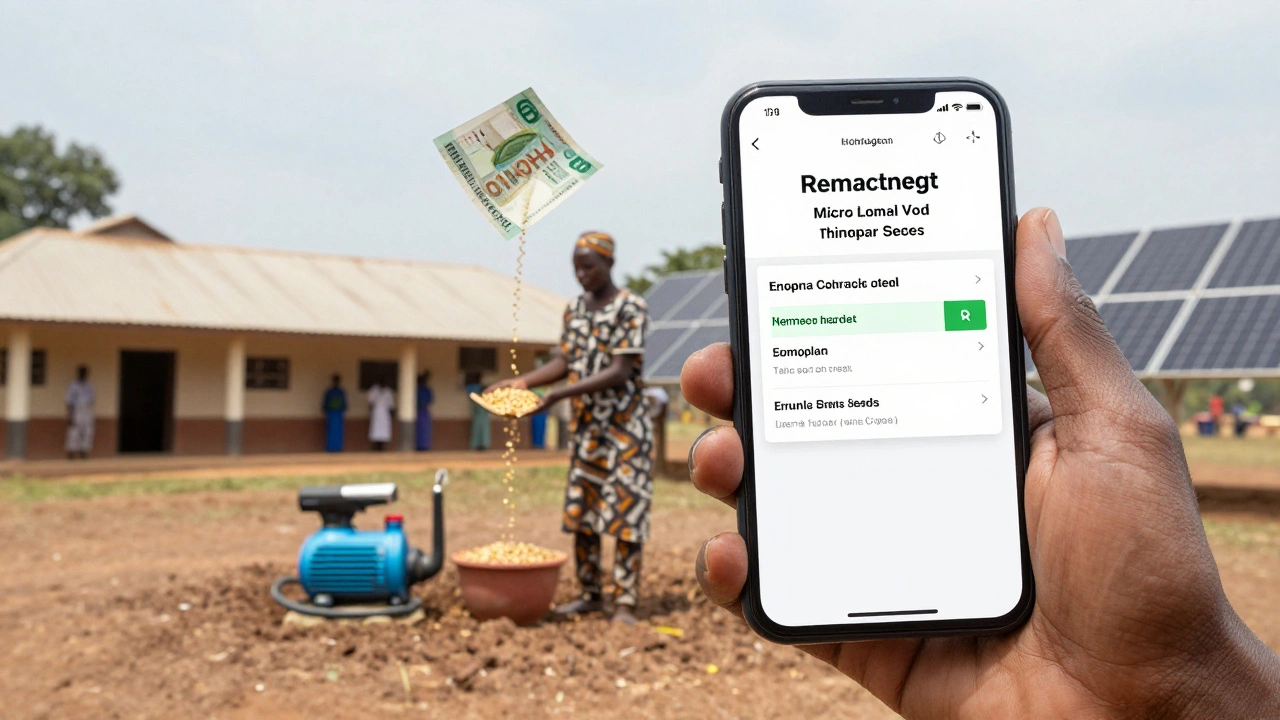
The cost of sending money has dropped from 9% in 2008 to 6.3% globally in 2023. But in some corridors-like the U.S. to Nigeria-it’s still over 8%. That’s $8 lost for every $100 sent. Blockchain and digital wallets are changing that. Platforms like BitPesa and WorldRemit now offer transfers with fees under 3%. Some apps even let users split a remittance: 70% to family, 30% automatically deposited into a local micro-savings account.Mobile money is also a game-changer. In Kenya, over 90% of adults use M-Pesa. When remittances arrive via mobile wallet, they can be instantly converted into savings, insurance, or business credit. In Ethiopia, pilot programs are linking remittance inflows to agricultural input loans. A farmer in Addis Ababa gets $150 from her brother in London. Instead of spending it all on rice, she uses the same app to buy seeds, fertilizer, and a small irrigation pump-all financed through a microloan tied to the incoming transfer.
Cryptocurrency remains controversial. While it can slash fees and bypass banks, it also carries huge risks. In Nigeria, some migrants lost savings to unregulated crypto platforms during the 2022 market crash. The key isn’t to ban crypto-it’s to regulate it. Governments need to create legal frameworks that protect users while allowing innovation.
Diaspora Networks Are Already Doing It Themselves
You don’t always need governments to make this happen. Migrant associations are stepping in.In the U.S., Guatemalan workers in Los Angeles pool their remittances to fund a community center in Huehuetenango. Senegalese immigrants in Paris launched a cooperative that buys tractors for farmers back home and sells them at cost. In Canada, a group of Somali engineers formed a nonprofit that trains local technicians to install solar panels using funds from remittance transfers.
These aren’t charity projects. They’re businesses. The migrant association in Los Angeles now runs a small grocery store that hires locals and reinvests profits into education scholarships. The Senegalese cooperative has expanded to five villages and is negotiating with a regional bank to offer loans to other cooperatives.
The lesson? When diaspora communities organize, they don’t just send money-they build systems. And those systems outlast government programs.
Barriers to Change
Not everyone agrees that remittances should be turned into investments. Critics warn that financializing remittances could deepen inequality. If banks start seeing migrants as “customers,” they might charge higher fees or push risky products. Some governments use diaspora bonds to avoid taxing their own elites. Others use them to mask corruption-promising roads and schools while building luxury condos for officials.There’s also a risk of dependency. If remittances become the main source of development funding, governments might stop investing in public services. Why build schools if the diaspora is already paying for them? That’s a real danger. The goal isn’t to replace state responsibility. It’s to complement it.
The biggest barrier, though, is trust. In countries with weak institutions, migrants won’t invest. They’ll send cash. And that’s fine-for now. But without systems to protect and scale those investments, the potential stays locked.
What Needs to Change
Three things are critical:- Lower transaction costs. Governments and banks must compete to bring fees below 3%. This isn’t charity-it’s a market opportunity. Every dollar saved is a dollar that can be invested.
- Link remittances to financial services. Every remittance app should offer a savings account, microloan, or insurance product. No more cash-only transfers.
- Build trust through transparency. If a diaspora bond is issued, show exactly where the money goes. Publish project reports. Let investors track progress in real time. Use blockchain ledgers if needed.
Development agencies and private sector players must work together. Fintechs can build the tools. NGOs can train communities. Governments can create the legal frameworks. But the diaspora? They’re the engine. They’re the ones who know what their home countries need.
The Future Is Already Here
In 2026, the shift is happening. In Rwanda, a mobile app lets diaspora members choose which village gets a solar microgrid. In Ghana, a bank offers 5% interest on savings accounts funded by remittances. In Colombia, returning migrants get tax breaks if they invest in agribusiness. These aren’t experiments anymore. They’re models.The data is clear: remittances are not just money. They’re human capital. They’re knowledge. They’re networks. They’re trust. When you channel them into productive investment, you don’t just build infrastructure. You build resilience. You build futures. And you turn migration from a story of loss into a story of growth.
Why are remittances more reliable than foreign aid or FDI?
Remittances are sent by individuals to support their families, not governments or corporations seeking returns. This makes them countercyclical-they rise during economic crises, natural disasters, or job losses. While FDI drops when markets get risky and foreign aid is often delayed by bureaucracy, remittances keep flowing. In 2020, when global FDI fell by 35%, remittances only dropped 4%. They’re the most consistent financial lifeline for developing economies.
Can remittances really fund large infrastructure projects?
Yes-when pooled and structured properly. India’s diaspora bonds raised over $10 billion for national infrastructure. The African Diaspora Network’s Diversified Payment Rights (DPRs) model shows how remittance flows can back AAA-rated bonds for roads, water systems, and energy grids. The key is trust, transparency, and long-term commitment. It’s not about one person sending $50. It’s about millions sending $50 consistently-and having a system to turn that into a $1 billion project.
Why don’t more migrants invest their money instead of sending it for consumption?
Most migrants don’t have access to safe, simple ways to invest. If you’re sending money to a rural village with no bank branches, you can’t open a business loan or buy a bond. You send cash because it’s the only option. The problem isn’t lack of desire-it’s lack of infrastructure. When mobile wallets, savings accounts, and transparent investment platforms are available, people do invest. Pilot programs in Kenya and Ethiopia show that over 60% of recipients will choose savings or business loans if the tools are easy and trustworthy.
What role do digital wallets and blockchain play in improving remittance efficiency?
Digital wallets cut fees from 8% to under 3% and cut transfer time from days to minutes. Blockchain adds transparency-every transaction is recorded and can’t be altered. This reduces fraud and builds trust. In Mexico, a pilot project using blockchain allowed migrants to track exactly how their money was spent on a community school project. The result? A 40% increase in repeat transfers. But blockchain alone isn’t enough. It needs regulation to protect vulnerable users from scams and volatility.
How can governments encourage diaspora investment without taking control?
Governments should act as facilitators, not owners. That means creating legal frameworks for diaspora bonds, lowering transfer fees, and ensuring transparency. They should not manage the funds. Instead, independent boards with diaspora representation should oversee projects. Examples like Rwanda’s community-led solar fund show that when locals and diaspora co-design solutions, outcomes are more sustainable and trusted. The goal is to empower, not replace, community-led action.