
Future Jobs Risk Assessment Calculator
This tool helps you assess how vulnerable your current job might be to automation and displacement based on key factors from the Future of Jobs Report 2025. Results are based on data from over 14 million workers and 1,027 companies across 55 economies.
Assess Your Job Security
By 2030, 78 million new jobs will be created - but not for everyone
The world isn’t losing jobs to automation. It’s reshuffling them. The Future of Jobs Report 2025 is a detailed snapshot of how work is changing across 55 economies, based on data from over 14 million workers and 1,027 companies. The big headline? By 2030, 170 million new jobs will emerge, while 92 million will vanish - leaving a net gain of 78 million positions globally. That’s not a crisis. It’s a transition. And who gets left behind depends on what skills they have - or are willing to learn.
Where the jobs are growing - and where they’re disappearing
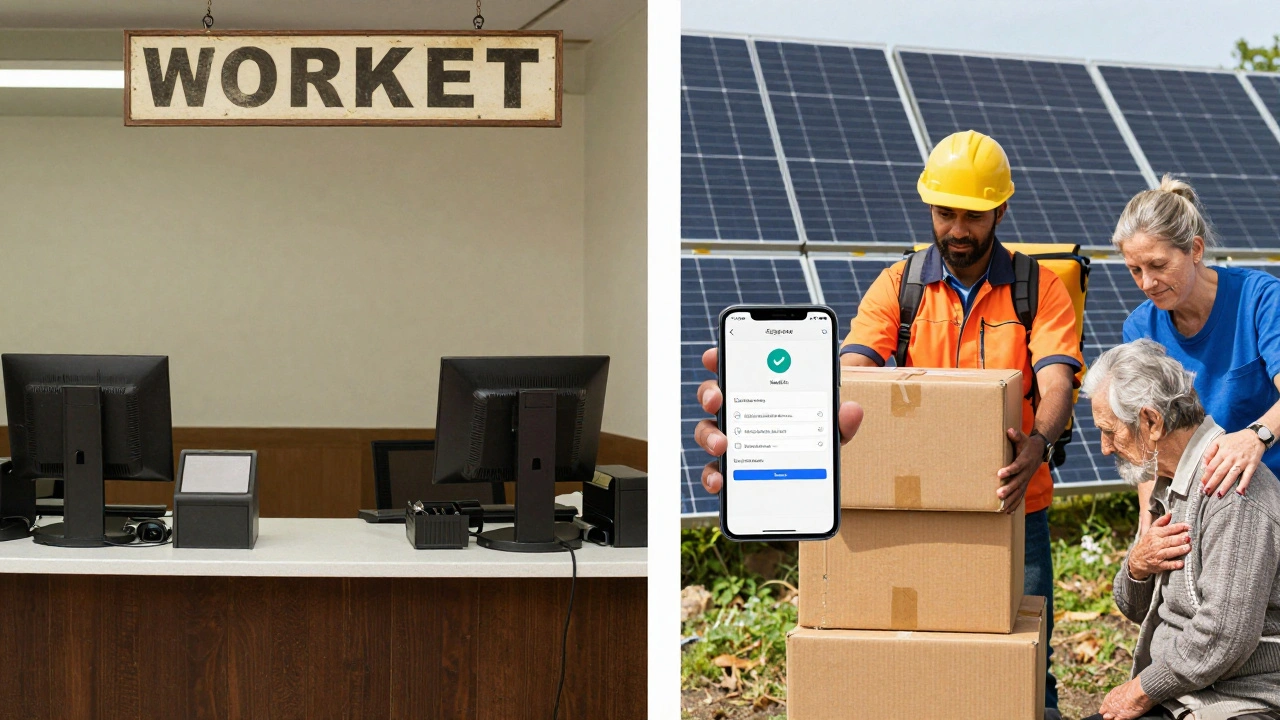
Some roles are fading fast. Postal clerks, bank tellers, cashiers, and administrative assistants are on the decline. These aren’t just low-wage jobs - they’re repetitive, rule-based tasks that AI and automation can handle faster and cheaper. In fact, 22% of all current jobs will change so much by 2030 that they’ll be unrecognizable from today.
Meanwhile, new roles are exploding. Big Data specialists, FinTech engineers, and software developers lead the pack. But the biggest growth isn’t just in tech offices. Frontline roles are expanding too: delivery drivers, farmworkers, construction workers, salespeople, and food processing staff will see the largest absolute increases in hiring. Why? Because even with robots and apps, people still need to move goods, care for children and elders, fix roofs, and serve customers face-to-face.
Healthcare and education are also booming. Nursing professionals, personal care aides, social workers, and teachers - especially in secondary and tertiary education - are in high demand. These aren’t glamorous titles, but they’re essential. And they’re not going away.
The skills employers are scrambling to find
It’s not enough to have a degree anymore. Employers are hunting for specific, measurable skills - and they’re not finding them. Sixty-three percent say skills gaps are their biggest barrier to growth. Seventy-five percent admit they’re already losing momentum because their teams can’t keep up.
The top three skills rising fastest? AI, big data, and cybersecurity. Ninety percent of companies expect demand for these to climb over the next five years. Even industries like agriculture and hospitality - often seen as tech-resistant - now need workers who can use digital tools to track crop yields or manage reservations.
But it’s not just technical skills. Employers also want people who can think creatively, adapt quickly, and stay resilient. Inflation, supply chain shocks, and AI-driven changes mean today’s solution might be obsolete tomorrow. Workers who can pivot, learn fast, and solve problems in messy situations will be the most valuable.
AI isn’t replacing people - it’s changing what people do
Here’s the myth: AI will replace your job. The truth? AI will change your job - and most companies know it.
Only 40% of employers plan to cut staff because of AI. Eighty percent plan to train their teams in AI tools. Two-thirds plan to hire people who already know how to use them. This isn’t about automation replacing humans. It’s about humans using AI to do more - and do it better.
Take a marketing manager. Five years ago, they spent hours designing ads and analyzing spreadsheets. Now, they use AI to generate 20 variations of a campaign in minutes. Their job isn’t gone - it’s upgraded. They’re now strategists, not data entry clerks.
Same with nurses. AI helps triage patient data, flag risks, and schedule appointments. That means nurses spend less time on paperwork and more time with patients. The human element didn’t disappear - it got amplified.
Who’s getting left behind - and why
The biggest risk isn’t losing your job. It’s being stuck in a role that’s changing faster than you can learn.
Workers in agriculture, forestry, and fishing face the highest disruption rates - 70% will need to retrain by 2030. Why? Because those industries are finally adopting digital tools like drone-based crop monitoring and automated harvesters. If you’ve been doing the same job for 20 years and never touched a tablet, you’re at risk.
Same goes for clerical and administrative roles. These jobs were once stable. Now, AI handles scheduling, invoicing, data entry, and even basic customer service. Workers in these roles aren’t being fired - they’re being outpaced.
And here’s the hard truth: older workers and those in lower-income economies are less likely to have access to training. While high-income countries invest heavily in reskilling, many workers in emerging economies don’t have internet access, time off, or money for courses. That gap could widen inequality - unless companies and governments act.
What employers are actually doing about it
Most companies aren’t waiting for the government to fix this. They’re acting.
- 85% plan to upskill their current employees
- 73% will automate more processes
- 70% will hire new talent with in-demand skills
- 50% will move existing staff into growing roles
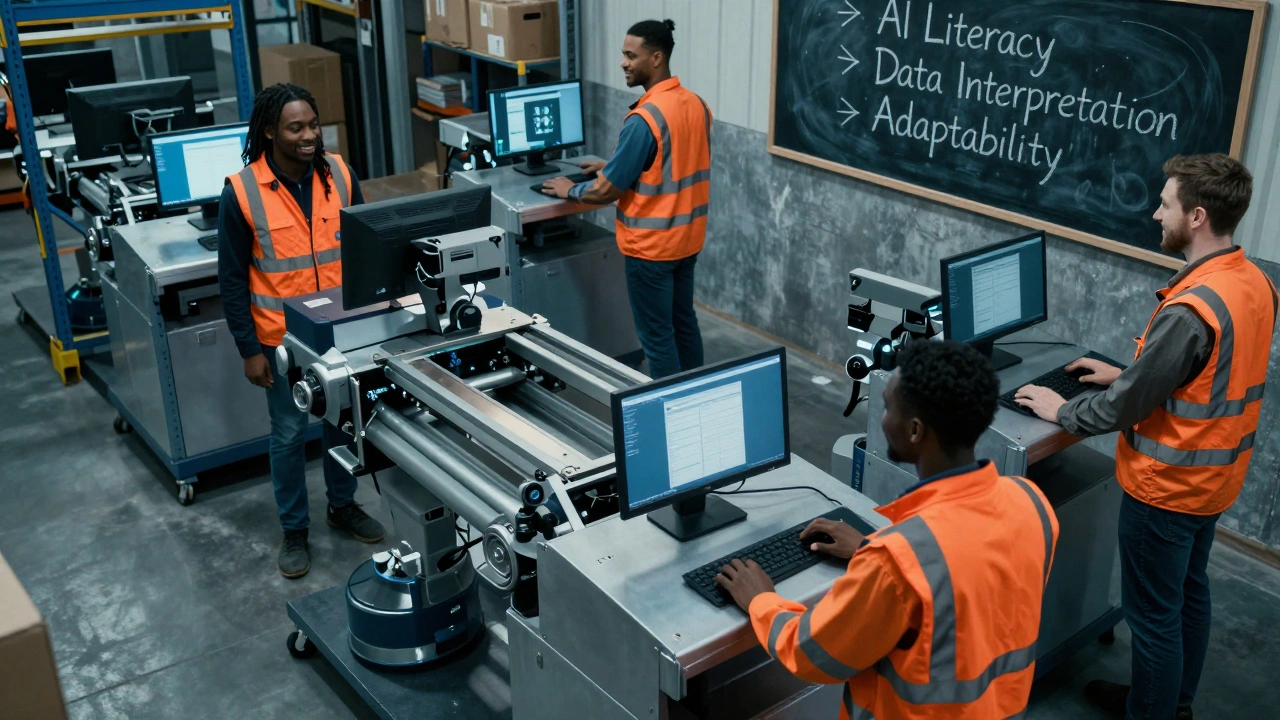
One company in Ohio shifted 200 warehouse workers from packing boxes to operating robotic sorting systems. They didn’t lay anyone off. They paid for six weeks of training. Now, those workers earn 25% more and have fewer injuries.
Online learning platforms like Coursera are seeing enterprise demand for generative AI courses jump 400% in a year. That’s not a trend - it’s a race. Companies are paying for training because they can’t find the skills elsewhere.
And it’s working. Industries that adopt AI see three times higher revenue per employee, according to PwC. But only if they invest in people, not just machines.
Your next move - whether you’re employed, unemployed, or thinking about a change
If you’re working right now, ask yourself: What parts of my job could be automated? What skills would make me irreplaceable? Start small. Take a free AI literacy course. Learn how to use ChatGPT for your daily tasks. Don’t wait for your boss to offer training - go get it.
If you’re unemployed or looking to switch careers, focus on frontline or care roles. Delivery drivers, home health aides, solar panel installers, and early childhood educators aren’t going anywhere. And they don’t always require a four-year degree. Certifications, apprenticeships, and short-term training programs can get you hired in months.
If you’re a manager or business owner, stop talking about AI as a cost-cutting tool. Start treating it as a productivity multiplier - and invest in your people. The companies that win will be the ones who train their teams, not replace them.
It’s not about surviving change - it’s about leading it
The future of work isn’t about robots stealing jobs. It’s about humans upgrading their value. The net gain of 78 million jobs is real. But those jobs won’t go to the people who stayed still. They’ll go to the people who learned, adapted, and kept growing.
The skills you need aren’t locked in a university syllabus. They’re online, on YouTube, in community colleges, and through employer-led programs. The question isn’t whether you can learn them. It’s whether you’re willing to start today.
Will AI take my job?
AI won’t take your job - but someone using AI might. The goal isn’t to fight automation. It’s to use it. Jobs that involve routine tasks - data entry, scheduling, basic customer service - are most at risk. But roles that require empathy, creativity, physical presence, or complex decision-making are growing. Your job isn’t disappearing. It’s evolving. The key is to evolve with it.
What are the fastest-growing skills in 2025?
The top three are AI, big data, and cybersecurity. But beyond tech, employers are also looking for creative thinking, resilience, and adaptability. These soft skills matter more than ever because work is changing faster than ever. Even in non-tech jobs - like farming or retail - workers who can learn new digital tools quickly are getting hired and promoted.
Do I need a college degree to get a future-proof job?
No. Many of the fastest-growing roles - like delivery drivers, home health aides, solar technicians, and industrial maintenance workers - only require certifications or short-term training. A four-year degree isn’t the only path. Community colleges, online platforms like Coursera, and employer-sponsored programs offer faster, cheaper ways to build skills that employers actually need right now.
Why are care economy jobs growing so fast?
Because populations are aging, and technology can’t replace human care. Robots can remind someone to take medicine, but they can’t hold a hand during a difficult moment. Nursing, social work, and personal care aides are in high demand because these roles rely on emotional intelligence, physical presence, and trust - things machines can’t replicate. This isn’t a temporary trend. It’s a demographic shift that will last decades.
How can I start learning new skills if I’m busy or broke?
Start with free resources. Google and Microsoft offer free AI and data literacy courses. Coursera and edX have free audit options for many classes. Local libraries and community centers often host free tech workshops. Even 30 minutes a week can make a difference. The goal isn’t to become an expert overnight - it’s to build momentum. One small skill learned today can open a door you didn’t know existed tomorrow.
What if my company won’t pay for training?
Then take charge yourself. Companies that don’t invest in training are the ones most likely to fall behind - and lay people off. If your employer isn’t helping you grow, you’re not stuck. Use your free time to build skills that make you valuable elsewhere. The job market is shifting. Your next opportunity might be just one new skill away.
What comes next?
The next five years will be defined by who adapts fastest. The workers who treat learning like a daily habit - not a once-a-year HR requirement - will thrive. The companies that treat their people as their biggest asset - not a line item on a balance sheet - will lead. And the countries that make training accessible to everyone, not just the privileged, will build stronger economies.
This isn’t a prediction. It’s a choice. And you’re already making it - every day you spend learning, every hour you spend practicing, every time you say yes to something new.