Gig Worker Hourly Wage Calculator
Calculate Your True Hourly Rate
Understand how much you're really earning after expenses. Many gig workers earn far less than they expect.
Estimated Expenses
Did you know? MIT research shows 83% of gig workers overestimate their earnings by not accounting for expenses.
A 2025 JPMorgan Chase Institute study found 78% of gig workers earn less than $15/hour after expenses.
Who really benefits from the gig economy?
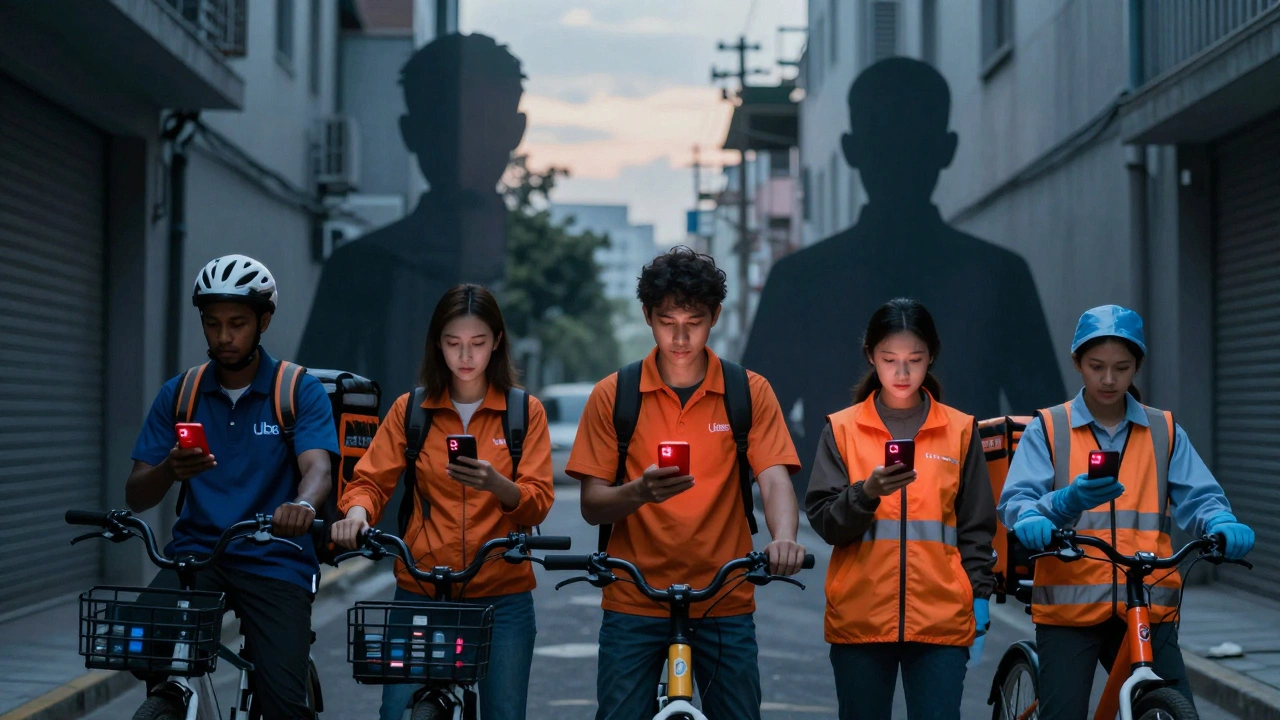
On paper, gig work sounds perfect: set your own hours, pick your jobs, be your own boss. But for millions of people driving, delivering, or cleaning through apps, the reality is far messier. You might make $18 an hour on paper, but after gas, car maintenance, phone data, and insurance, you’re lucky to clear $12. And if your account gets deactivated for a vague "safety concern," you have no appeal process, no severance, and no unemployment benefits. The gig economy isn’t just a new way to work-it’s a legal gray zone where companies save money by calling workers independent contractors, while workers pay the price in instability, lack of safety nets, and no real power to push back.
The rules are changing-again
In 2024, the U.S. Department of Labor rolled out a strict test to determine if gig workers should be classified as employees. It looked at things like how much control the company has, whether the work is central to the business, and if the worker invests in their own tools. Under this rule, Uber drivers and DoorDash couriers would’ve been reclassified as employees, meaning they’d get minimum wage, overtime, health insurance, and protection from being fired without cause.
Then, on May 1, 2025, the DOL changed course. They stopped enforcing the rule. Not because it was wrong. Not because it was too complex. Just because they decided not to use it. That doesn’t mean the rule disappeared-it still applies in lawsuits brought by workers. But without federal enforcement, companies have little incentive to change. And that leaves workers stuck in the middle: legally classified as independent contractors, but treated like employees when it’s convenient for the app.
State vs. federal: A patchwork of confusion
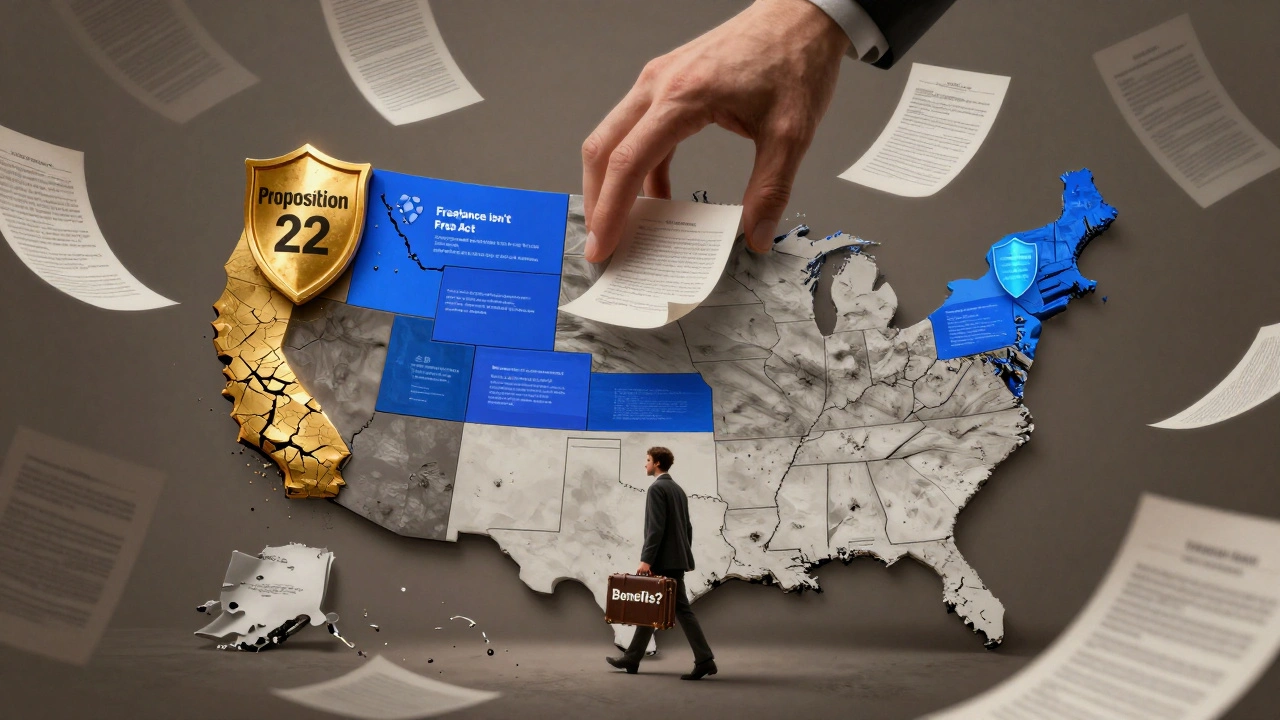
While Washington dithers, states are stepping in-with wildly different results. California passed Proposition 22 in 2020, letting ride-hail and delivery companies keep drivers as contractors, but offering a few crumbs: a minimum earnings guarantee (about $12.50/hour after expenses), limited healthcare subsidies, and accident insurance. It was a compromise, but one that courts upheld in 2023. Meanwhile, New York City’s Freelance Isn’t Free Act requires written contracts for work over $800 and gives freelancers legal recourse if they aren’t paid. In 2025 alone, the city handled over 1,800 cases of unpaid gigs, with workers winning back an average of $1,250 per case.
But these laws don’t travel. A driver in Texas gets none of California’s benefits. A freelancer in Florida can’t use New York’s contract law. And if you’re working for a national platform like Uber or Instacart, you’re subject to a different set of rules depending on your zip code. That’s not regulation-it’s regulatory roulette.
Platforms win. Workers lose.
For companies, the gig model is a financial dream. They avoid payroll taxes, workers’ compensation insurance, unemployment contributions, and health benefits. Nelson Mullins estimated in 2025 that platforms save 20-30% on labor costs by not hiring employees. Uber’s 2024 SEC filings showed that if drivers were reclassified, their costs would jump 15-25%. That’s billions of dollars in savings.
For workers? The numbers don’t lie. A 2025 JPMorgan Chase Institute study found that 78% of gig workers earn less than $15/hour after expenses. The median monthly income? Just $364. Compare that to the federal minimum wage for full-time work: $1,496. And that’s before you factor in income volatility. The Federal Reserve found that 63% of gig workers see their monthly earnings swing by more than 25%-making budgeting impossible. No steady paycheck means no mortgage, no savings, no safety net when the car breaks down or you get sick.

Flexibility is real-but it’s not free
Yes, gig work offers flexibility. A nursing student in Albuquerque told Trustpilot she works 15 hours a week around her classes. A single parent in Phoenix uses DoorDash to cover daycare costs. That flexibility is valuable. But it’s not a substitute for stability. When your income is unpredictable, you don’t get to choose when to work-you work when you have to. You take three shifts in one day because the week before you made $40. You drive in the rain because you’re one payment away from being late on rent.
And the flexibility is one-sided. Platforms can deactivate you anytime. Uber’s 2025 transparency report says 92% of driver issues are resolved within 48 hours. But the Independent Drivers Guild found that in New York City, appeals for deactivation take over 11 days on average-and only 8% of appeals result in reinstatement. No explanation. No hearing. Just locked out.
Who’s speaking up-and who’s being silenced?
Labor advocates like CLASP and the National Employment Law Project argue the DOL’s 2024 rule was the right step. They want federal standards that guarantee minimum wage, overtime, and protection from discrimination. The FTC even clarified in January 2025 that gig workers can organize and collectively bargain without being accused of antitrust violations. That’s huge. For years, drivers trying to unionize were told they were "independent businesses"-so they couldn’t collude. Now, they can.
But the U.S. Chamber of Commerce and other business groups fought hard against the 2024 rule, calling it a threat to flexibility and innovation. Their argument? That reclassification would force platforms to raise prices, cut jobs, or shut down. But the numbers tell a different story. Uber spent $2.1 billion on regulatory compliance in 2025-12% of its revenue. That’s not a cost of doing business. That’s the price of avoiding responsibility.
What’s next? The global shift
Other countries aren’t waiting. Spain’s 2021 Rider Law created a legal presumption that food delivery workers are employees. Italy followed in 2022. The European Union’s Platform Work Directive, expected to pass in 2026, will do the same across all member states. Canada’s Bill C-58 in 2024 created sectoral bargaining councils, letting gig workers negotiate wages and conditions across entire industries-not just one app.
Here in the U.S., momentum is building. Washington State’s HB 2614, set for a vote in March 2026, would create similar councils. Massachusetts’ Question 1 on the November 2026 ballot could expand California’s Proposition 22 model with higher pay guarantees. The International Labour Organization predicts that by 2030, 40% of gig workers will be under some form of sectoral regulation. That’s up from just 15% today.
The real question: Is this sustainable?
The gig economy isn’t going away. Platforms are too deeply embedded in daily life. But the current model-where workers bear all the risk and companies reap all the rewards-isn’t sustainable. Workers are exhausted. Platforms are spending billions fighting lawsuits. Cities are overwhelmed with unpaid gig claims. And the federal government is stuck in neutral.
There’s a middle ground. It’s not about making everyone an employee. It’s about making sure gig workers have a floor: minimum earnings after expenses, protection from arbitrary deactivation, access to benefits tied to hours worked, and the right to organize. Platforms can still be flexible. But they don’t get to decide what’s fair. Workers do.
What you can do if you’re a gig worker
- Know your state’s laws. If you’re in New York, demand a written contract for any job over $800. In California, track your hours and expenses to ensure you’re hitting the minimum pay guarantee.
- Document everything. Save screenshots of pay stubs, messages from support, and deactivation notices. If you’re not paid, file a claim under your state’s freelance law.
- Join a group. The Independent Drivers Guild, Freelancers Union, and local gig worker collectives offer legal support and advocacy.
- Calculate your true hourly rate. MIT found 83% of gig workers overestimate their earnings. Subtract gas, insurance, phone, and car depreciation. What’s left? That’s your real pay.
What’s next for the gig economy?
The next five years will decide whether gig work becomes a temporary side hustle or a permanent, precarious norm. Without federal action, the patchwork of state laws will keep growing, increasing compliance costs for platforms and confusion for workers. The Congressional Budget Office warns that by 2030, this chaos could reduce gig opportunities for low-income workers by 7-11%-not because demand dropped, but because platforms can’t afford the legal risk.
But change is possible. It’s happening in Europe. It’s brewing in state legislatures. And it’s starting with workers who are tired of being treated like disposable tools. The question isn’t whether gig work should exist. It’s whether we’ll let companies define its rules-or whether workers will finally have a say.
Are gig workers considered employees under federal law?
No, under current federal guidelines, most gig workers are classified as independent contractors-not employees. That means they’re not covered by the Fair Labor Standards Act, so they don’t get minimum wage, overtime, or unemployment benefits. However, the Biden-era Independent Contractor Rule (2024) made it harder for companies to classify workers as contractors, and though the Department of Labor stopped enforcing it in May 2025, it’s still valid in private lawsuits. Some states, like California and New York, have their own rules that offer more protections.
Can gig workers unionize or demand better pay?
Yes. In January 2025, the Federal Trade Commission clarified that gig workers engaging in collective bargaining are protected from antitrust claims. This means drivers, delivery workers, and freelancers can organize, strike, or negotiate for better pay without being accused of illegal collusion. Some states, like Washington and Massachusetts, are now moving toward sectoral bargaining councils that let gig workers negotiate industry-wide standards-not just with one app.
Why do gig platforms classify workers as independent contractors?
It saves them money. By not classifying workers as employees, platforms avoid paying payroll taxes, workers’ compensation, unemployment insurance, health benefits, and retirement contributions. Estimates suggest this saves companies 20-30% on labor costs. Uber’s 2024 SEC filings showed that reclassifying drivers as employees would increase their costs by 15-25%. That’s billions in savings-money that comes directly out of workers’ pockets in the form of lower take-home pay and no safety net.
What protections do gig workers actually have?
Federal protections are minimal. The Fair Labor Standards Act doesn’t apply. But Section 1981 of the Civil Rights Act still protects against race and ethnicity discrimination, regardless of classification. Some states offer more: New York City’s Freelance Isn’t Free Act requires written contracts and penalties for nonpayment. California’s Proposition 22 provides a minimum earnings guarantee and limited healthcare. And workers can sue for wrongful deactivation or unpaid wages under state laws. But there’s no federal safety net for health insurance, sick leave, or retirement.
How can I calculate my real hourly wage as a gig worker?
Start with your gross earnings. Then subtract: gas, car maintenance, insurance, phone bill, app fees, and depreciation on your vehicle. Divide the result by the total hours you spent working-including time waiting for gigs. A 2025 MIT study found 83% of gig workers overestimate their pay because they don’t account for these costs. For example, if you earned $500 in a week but spent $150 on gas and $100 on car repairs, and worked 30 hours total, your real hourly rate is $7.67-not $16.67.
What happens if I get deactivated from a gig app?
It’s often permanent. Platforms rarely explain why. Uber and DoorDash cite vague "community guidelines" or "safety concerns," even when workers have perfect ratings. A 2025 analysis of 10,000 appeals found only 8% led to reinstatement. Your best bet: document everything, file an appeal immediately, and contact a worker advocacy group like the Independent Drivers Guild. In states with strong freelance laws, you may also have legal recourse if deactivation was retaliatory or discriminatory.
Is the gig economy growing or shrinking?
It’s growing-but not in the way platforms claim. The global gig economy is worth $204 billion, and 22% of U.S. adults earned money through gig platforms in the past year. But the real growth is in regulatory pressure. Companies are spending billions on legal battles, not innovation. The Congressional Budget Office predicts that without federal standards, platform costs will rise 9-14% annually through 2030, which could reduce gig opportunities by 7-11% for low-income workers. So while the market is expanding, the model is becoming less sustainable.