Pandemic Preparedness Calculator
Based on indicators from the Global Health Security Index, this tool estimates your country's pandemic preparedness score. Enter realistic values for the key indicators below to see how well your country would fare in a pandemic.
Key Preparedness Indicators
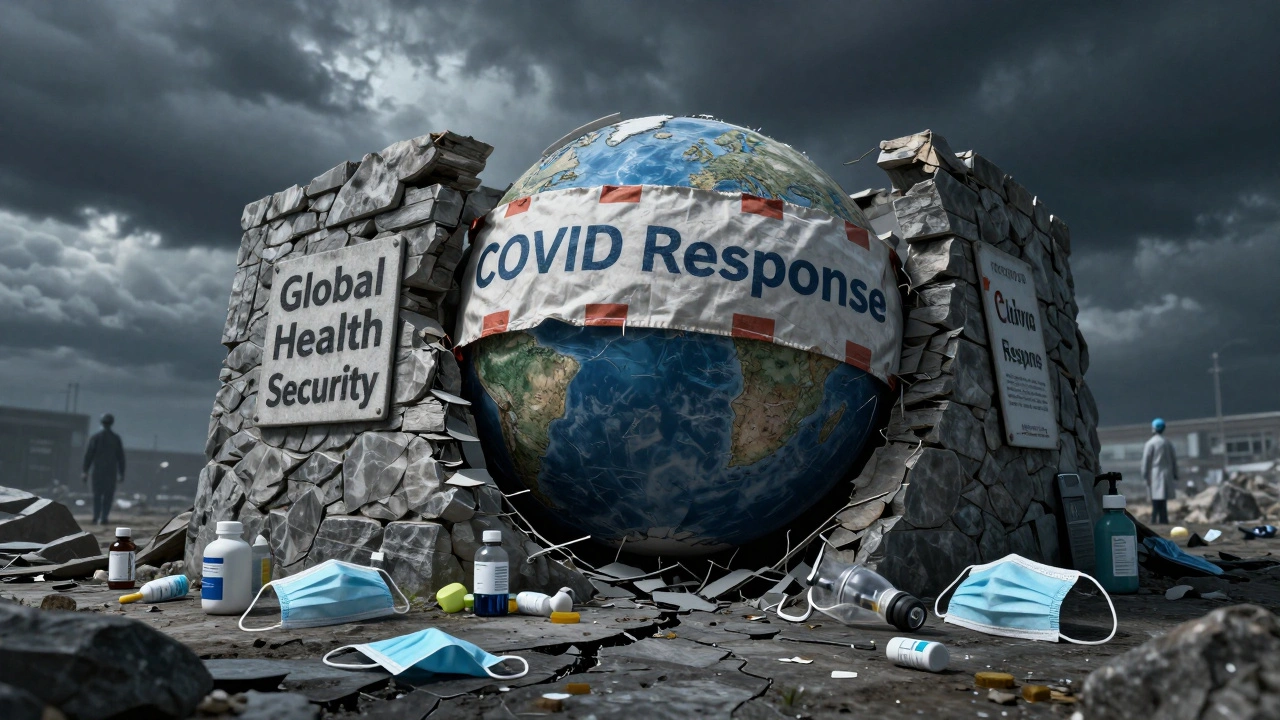
When the COVID-19 pandemic hit, countries scrambled. Labs opened overnight. Contact tracers were hired in weeks. Governments printed emergency guidelines and rushed vaccines through approval. But even as these emergency moves saved lives, they also exposed something deeper: the world was never really ready. Two years after the worst of it, the Global Health Security Index - the most detailed global scorecard on pandemic readiness - showed almost no improvement. And if you think things have gotten better since then, think again. The 2025 assessment, based on data collected through 2024, confirms what the 2021 report warned: the system is still broken.
What the Global Health Security Index Actually Measures
The Global Health Security Index isn’t just another report. It’s a detailed, data-driven evaluation of 195 countries, built on 37 indicators and 171 specific questions. Developed by the Nuclear Threat Initiative and Johns Hopkins Center for Health Security, it looks at six core areas: prevention, detection and reporting, rapid response, health systems, compliance with international rules, and risk environment. It doesn’t guess. It counts. How many hospital beds per capita? How many trained epidemiologists? How many countries have legally binding plans to distribute vaccines during a crisis? These aren’t abstract ideas - they’re measurable, concrete gaps.
For example, in the health systems category, the global average score is 31.5 out of 100. That’s worse than a D. Seventy-three countries scored in the bottom tier. In low-income nations, the average for medical staff and hospital capacity was below 20 out of 100. Think about that. In places where the next outbreak is most likely to explode, there’s often not enough staff to treat a broken arm, let alone a surge of critically ill patients.
The Illusion of Preparedness
During the pandemic, many countries looked like they were doing well. South Korea tested millions. Germany kept ICU beds open. The United States rolled out vaccines faster than any nation in history. But those were emergency responses - not preparedness. The GHS Index shows that countries that performed well during COVID-19 didn’t necessarily have strong systems before it. They built them under pressure. And now? Most of those emergency systems are gone.
Take the U.S., which ranked first in the 2021 Index. It has top-tier labs, a Strategic National Stockpile, and clear communication plans. But those systems are only as good as their funding. The stockpile ran out of masks and ventilators in early 2020. The workforce that built those systems? Many left. The funding? Reduced. The political will? Faded. The Index doesn’t measure how well you respond to a crisis - it measures whether you’ve built the foundation to handle one before it happens. And that foundation is crumbling.
The Missing 91%
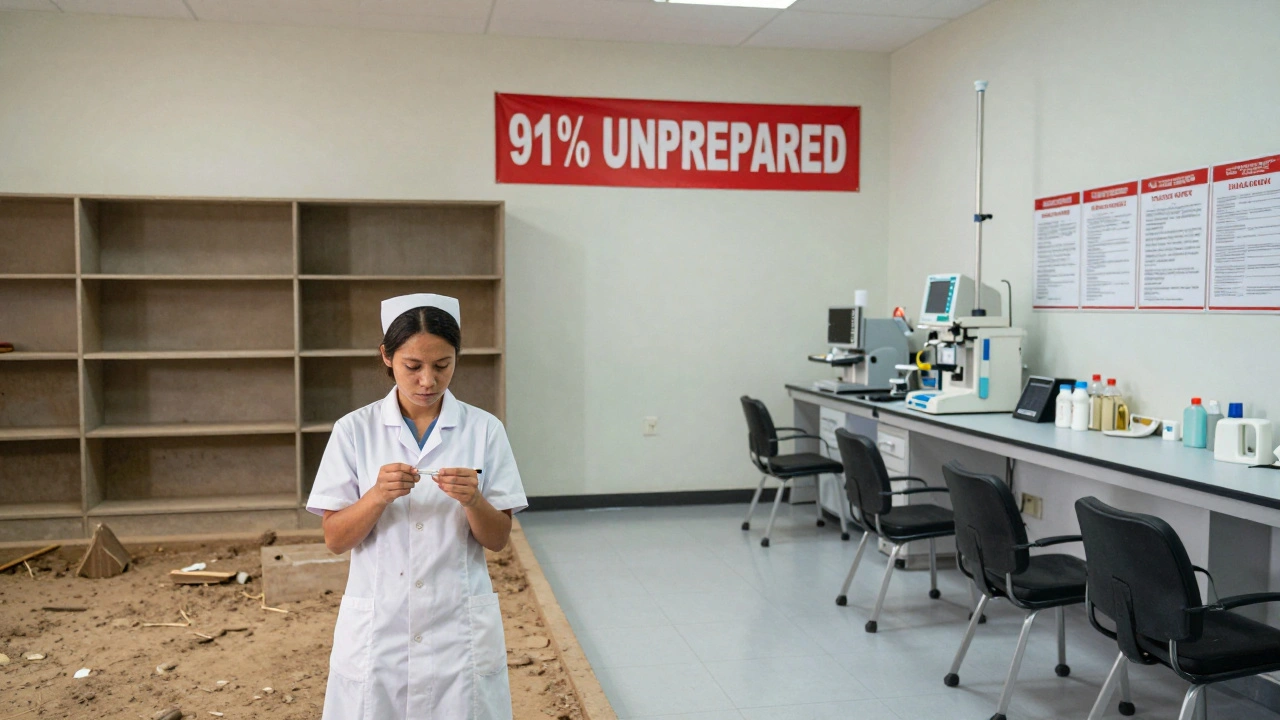
One of the most shocking findings in the 2021 Index was this: 91% of countries have no plan for distributing vaccines or antiviral drugs during a public health emergency. That’s not a typo. Ninety-one percent. No system. No logistics. No trained teams. No legal authority to override supply chains. Imagine a fire drill where no one knows where the extinguishers are - and then someone says, “Oh, we’ll figure it out when the fire starts.” That’s global health security today.
Even countries with strong economies and advanced healthcare systems didn’t plan for this. In the UK, the NHS struggled to deliver vaccines to care homes because there was no pre-established protocol for mobile vaccination units. In Brazil, rural communities waited months for doses because the national supply chain had no backup routes. The problem isn’t money - it’s structure. Without a legal framework, trained personnel, and pre-positioned supplies, even the best vaccines are useless.
Who’s Not Playing by the Rules
Global health doesn’t work without cooperation. The International Health Regulations (IHR 2005) require every country to report outbreaks to the World Health Organization within 24 hours. But 23 countries - including several high-income nations - never submitted their reports. Why? Because there’s no penalty. No enforcement. No accountability.
And it’s not just reporting. Only four countries have actually budgeted money to fix the gaps identified in their own WHO evaluations. That’s not negligence - it’s indifference. Countries are happy to score high on the Index, but they’re not willing to pay for the changes that would make those scores real. In Germany, for example, public health funding has declined for five straight years. In Japan, health workers are leaving the field because of burnout and low pay. These aren’t temporary problems. They’re structural.
Why the Index Is Flawed - And Why It Still Matters
A 2025 study in academic journals found that the Global Health Security Index didn’t always predict how well countries handled COVID-19. Some high-scoring countries had terrible outcomes. Some low-scoring ones managed surprisingly well. That’s true. The Index doesn’t measure leadership. It doesn’t measure public trust. It doesn’t measure how well a government communicates during panic. Those things matter. A lot.
But here’s the thing: if you don’t measure the basics - the number of hospital beds, the number of trained staff, the existence of a vaccine distribution plan - you can’t fix them. The Index doesn’t claim to capture everything. It captures what can be measured. And what it reveals is terrifying. Countries that scored below 40 in prevention, detection, and health systems were the ones that saw the highest death rates. The correlation isn’t perfect, but it’s strong enough to be a warning.
Think of the GHS Index like a car’s maintenance log. Just because your car started last time you drove it doesn’t mean you don’t need oil changes. The Index doesn’t tell you how good the driver is. But it tells you if the brakes work, if the tires are worn, if the fuel system is clogged. And right now, most countries are driving with bald tires and no brakes.
The Real Problem: No One’s Paying for It
There’s no shortage of experts, reports, or warnings. The problem is money. And political will. In 2023, global spending on health security dropped for the first time in a decade. The U.S. cut its global health funding by 15%. The EU redirected emergency pandemic funds to other priorities. Low-income countries? They never had enough to begin with.
Meanwhile, the next threat isn’t a question of if - it’s a question of when. New viruses are emerging faster. Climate change is pushing animal-borne diseases into human populations. Urbanization is creating super-spreader cities. We know this. We’ve seen it. And yet, we’re still building our defenses after the storm hits.
What Needs to Change
Here’s what actually works:
- Permanent funding for public health infrastructure - not emergency grants, but annual budgets tied to measurable outcomes.
- Legal requirements for every country to have a national medical countermeasure distribution plan - with drills, training, and accountability.
- Investing in rural and community health centers - not just big city hospitals.
- Training and retaining nurses, lab technicians, and epidemiologists - not just during crises, but always.
- Enforcing international reporting rules with real consequences - not just polite reminders.
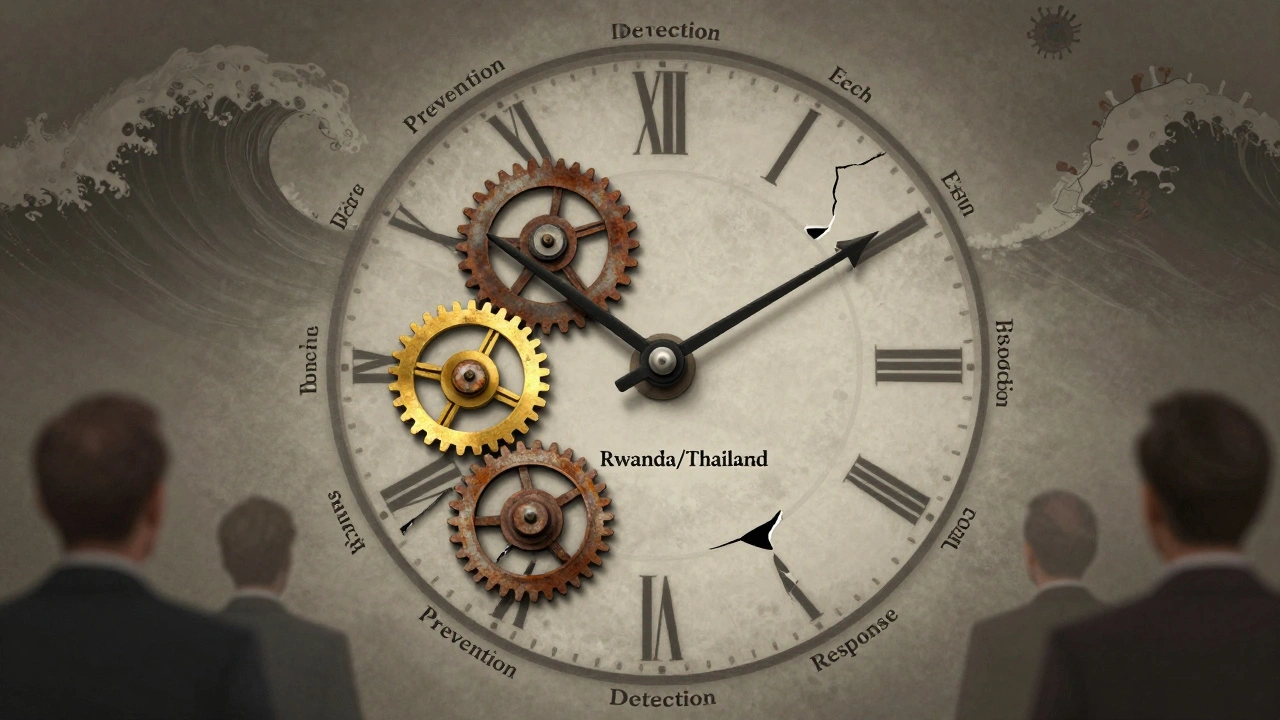
These aren’t radical ideas. They’re basic. Countries like Rwanda and Thailand have shown it’s possible. Rwanda built a nationwide network of community health workers who now track diseases in real time. Thailand has maintained its disease surveillance system since the SARS outbreak in 2003. They didn’t wait for a pandemic to act. They invested. And now, when outbreaks happen, they respond - fast, quietly, effectively.
The next pandemic won’t care about your GDP. It won’t care if you ranked high on a list. It will only care if you have enough beds, enough staff, enough vaccines, and enough courage to act before it’s too late. The Global Health Security Index isn’t a report card. It’s a countdown.
Is there a 2025 Global Health Security Index report?
As of early 2026, there is no official 2025 Global Health Security Index report. The most recent full assessment was released in 2021. The Index is updated every two to three years, and while data collection for a 2025 update may be underway, no new report has been published. Claims about a "2025 GHS Index" often refer to projections or analyses based on the 2021 data, not a new official release.
Why did the U.S. rank first if it had so many problems during COVID-19?
The U.S. ranked first in the 2021 Global Health Security Index because it had strong infrastructure before the pandemic: advanced labs, a national stockpile of medical supplies, trained scientists, and detailed emergency response plans. However, the Index measures capacity, not performance. During the pandemic, political fragmentation, supply chain failures, and inconsistent public messaging undermined the system. The Index showed the U.S. had the tools - but not the coordinated use of them.
Can the Global Health Security Index predict future outbreaks?
It doesn’t predict outbreaks - it predicts vulnerability. Countries with low scores in health systems, detection, and response were more likely to see higher death rates during COVID-19. But it doesn’t forecast which virus will emerge or where. Its value is in showing which countries are most at risk of collapsing under pressure - and why. It’s a risk map, not a crystal ball.
Why don’t countries fix the gaps the Index identifies?
Because fixing these gaps costs money - and the payoff isn’t visible until a crisis hits. Politicians prefer to fund things that show immediate results: roads, schools, tax cuts. Health security is invisible until it fails. And by then, it’s too late. Few governments budget for disasters they hope won’t happen. The Index highlights this blind spot - but it can’t force action.
Are low-income countries the only ones unprepared?
No. While low-income countries face the deepest gaps, even wealthy nations are dangerously unprepared. In the 2021 Index, countries like the U.S., UK, and Japan scored well overall but still had critical failures: lack of surge capacity, underfunded public health agencies, and no legal plans for vaccine distribution. The problem isn’t poverty - it’s neglect. Every country has blind spots.