USCDI v3 Compliance Checker
Determine if your healthcare system meets the USCDI v3 requirements effective January 1, 2026. This tool helps healthcare providers, IT teams, and administrators assess their compliance with mandatory health data standards.
What is USCDI v3?
The United States Core Data for Interoperability, Version 3, requires all certified EHR systems to include specific data elements. This is a mandatory requirement under the 21st Century Cures Act, with penalties for non-compliance.
USCDI v3 Data Elements
Social Determinants of Health (SDOH)
New in USCDI v3
Data includes housing stability, food access, transportation barriers, and education level. This is critical for connecting patients to community resources.
Allergies
Required data element
Allergies data must be coded using LOINC standards to ensure consistent interpretation across systems.
Medications
Required data element
Medication data must use RxNorm terminology for accurate identification of drugs.
Lab Results
Required data element
Laboratory tests and results must be identified using LOINC codes for standardization.
Vital Signs
Required data element
Vital signs including blood pressure, heart rate, temperature, etc., must be coded with LOINC.
Problem Lists
Required data element
Diagnoses and conditions must use SNOMED CT terminology for accurate interpretation.
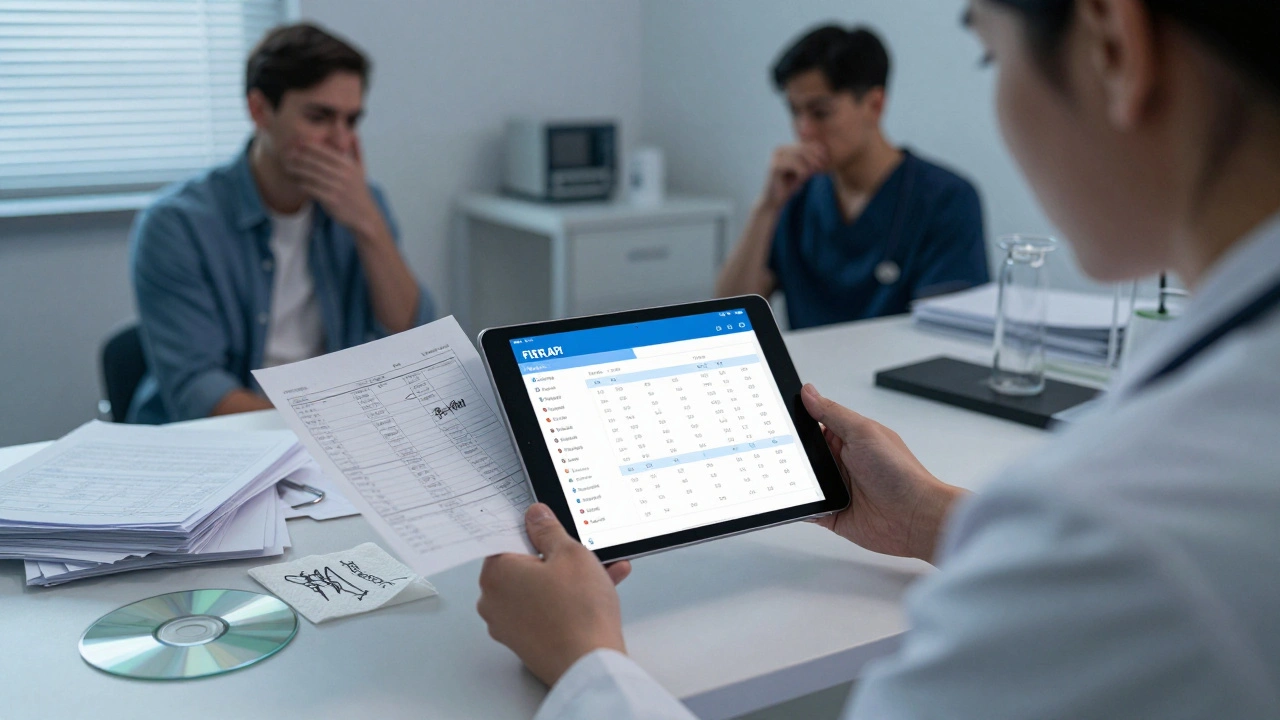
Health data doesn’t move well across systems. You’ve seen it: a patient walks into a clinic with a stack of printed lab results, old imaging CDs, and a list of medications scribbled on a napkin. The doctor spends 20 minutes trying to piece together what’s real, what’s outdated, and what’s missing. That’s not inefficiency-it’s a broken system. And it’s costing lives, money, and time.
Starting in 2026, the U.S. healthcare system is being forced to fix this. Not because it’s nice to do, but because the health data interoperability rules are now law. The CMS Interoperability Framework, built on the 21st Century Cures Act, demands that every electronic health record (EHR), hospital, payer, and clinic can talk to each other securely, quickly, and accurately. This isn’t about tech buzzwords. It’s about whether your next patient gets the right treatment before it’s too late.
What Exactly Is USCDI v3, and Why Does It Matter?
At the heart of the new rules is the United States Core Data for Interoperability, Version 3 (USCDI v3). Effective January 1, 2026, every certified EHR system must include this exact set of data elements. It’s not optional. It’s not a suggestion. It’s mandatory.
USCDI v3 adds one critical new class: Social Determinants of Health (SDOH). That means systems now have to capture and share data like housing stability, food access, transportation barriers, and education level. Why? Because poverty and isolation affect health more than most medications. A patient with diabetes who can’t afford insulin or get to a pharmacy needs more than a prescription-they need a social worker, a food pantry, and a ride. If that data stays trapped in a paper file or a disconnected spreadsheet, the system fails.
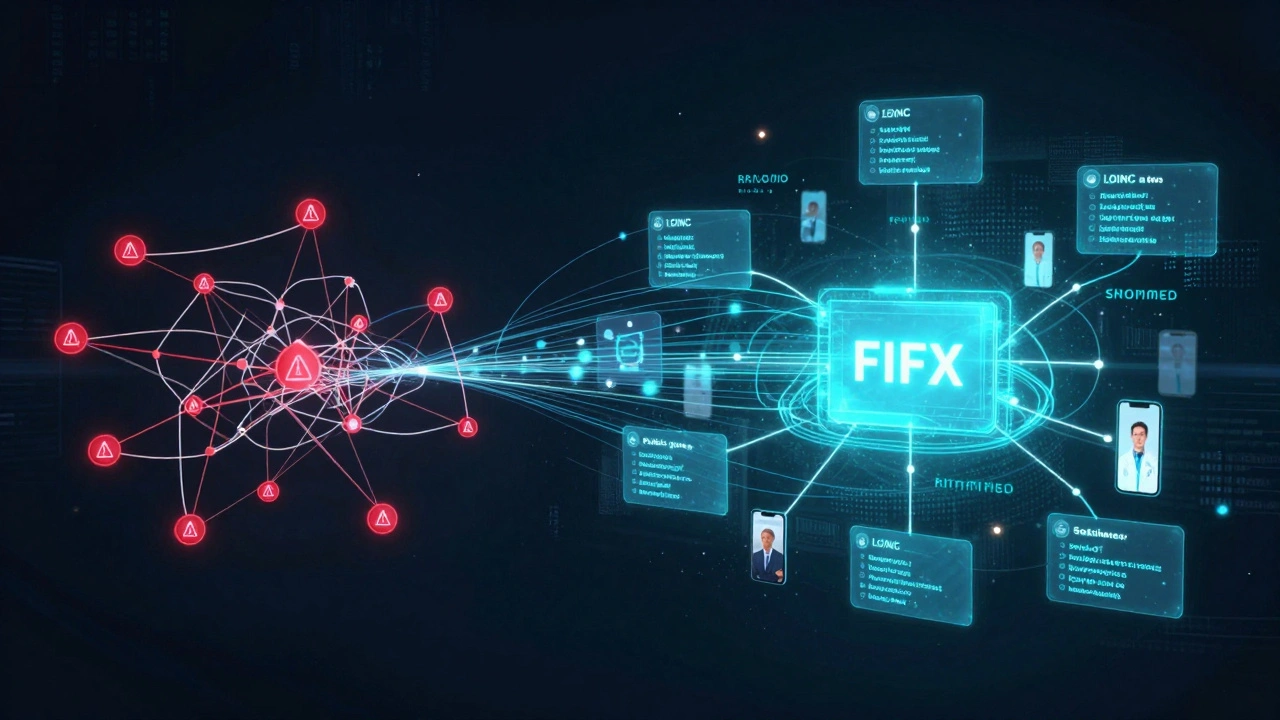
Other required data points include allergies, medications, lab results, vital signs, and problem lists-all standardized using specific code systems: LOINC for labs, RxNorm for drugs, SNOMED for diagnoses. No more guessing if "aspirin 81 mg" means the same thing across two systems. If it’s not coded right, the data is useless.
FHIR APIs: The Language That Makes It All Work
USCDI v3 tells you what data to share. FHIR APIs tell you how to share it.
Fast Healthcare Interoperability Resources (FHIR) is a modern, web-based standard that lets systems exchange data using simple, open protocols-like how your phone pulls weather data from the internet. By July 4, 2026, all certified health IT systems must support FHIR APIs that deliver USCDI v3 data in real time. That means patients can pull their own records via apps. Payers can check claims data without calling the hospital. Researchers can analyze population trends without waiting weeks for manual exports.
But FHIR isn’t magic. It only works if everyone speaks the same dialect. A study from KLAS Research in late 2025 found that 63% of providers still struggle with inconsistent formatting of clinical notes across different EHRs. One system might label a blood pressure reading as "BP," another as "Systolic/Diastolic," and a third as "Vital Signs - BP." If the system can’t map these automatically, clinicians end up doing manual cross-checks. That’s not interoperability-that’s digital busywork.
Privacy and Security: Not an Afterthought
Sharing data sounds great until someone hacks it. That’s why privacy and security aren’t add-ons-they’re built into every layer.
First, systems must meet HITRUST certification or an equivalent security validation approved by CMS. That means real, audited controls: encryption at rest and in transit, role-based access, multi-factor authentication, and regular penetration testing.
Second, identity verification is now non-negotiable. Patients and providers must log in using CMS-approved methods-like digital driver’s licenses (IAL2) or passkeys (AAL2). No more weak passwords or shared login credentials. If a nurse accesses a record without proper authentication, it’s a HIPAA violation.
Third, consent management must be granular. A patient should be able to say, "I’ll let my cardiologist see my full record, but only my primary care doctor gets my mental health notes." Systems that don’t support this level of control risk fines up to $1.9 million per violation, according to HHS guidelines.
And it’s not theoretical. In October 2025, a 12-hospital system had 72 hours of downtime after a FHIR migration failed because consent rules weren’t tested properly. The result? $2.3 million in lost revenue and an OCR investigation. That’s what happens when security is treated like an IT checkbox.
Who’s Ready? Who’s Not?
The gap between big hospitals and small clinics is widening.
Eighty-two percent of hospitals with 500+ beds have already implemented FHIR APIs. They have teams of developers, dedicated compliance officers, and budgets for middleware solutions that cost $50,000-$150,000 a year. They’re testing, iterating, and even using AI to clean up messy data.
Meanwhile, only 37% of rural clinics are ready. For them, the cost of full compliance? $150,000-$250,000. That’s more than their annual IT budget. Many are stuck on legacy systems from the 2000s that can’t even talk to modern APIs. Some are trying to patch things together with paper forms and fax machines-while the clock ticks toward January 2027.
And it’s not just money. It’s people. HIMSS found that 43% of healthcare organizations still lack proper testing environments. Vendors are promising updates, but many haven’t delivered clear roadmaps. Clinicians are exhausted. A November 2025 AMA survey showed 72% of physicians report more documentation burden since early interoperability features rolled out. They’re not resisting change-they’re drowning in it.
Real Benefits Are Already Showing Up
Despite the chaos, there are wins.
One hospital in Ohio cut prior authorization processing from 72 hours to under two. How? By letting payers query FHIR APIs directly instead of waiting for faxes. A clinic in Iowa saw patient satisfaction jump from 61% to 87% because people could finally see their imaging results on their phones within hours, not weeks.
And it’s not just convenience. Researchers at Mayo Clinic are now linking genetic data with clinical records in real time. A patient with a rare heart condition can be matched to a clinical trial within days, not months. That’s the promise of interoperability: turning fragmented data into actionable insight.
Wolters Kluwer’s Anne Donovan says organizations that don’t automate this will be left behind. They’ll face data silos, inconsistent coding, and a mountain of manual work. In 2026, that’s not just inefficient-it’s dangerous.
The Road Ahead: AI, Analytics, and the Next Frontier
The 2026 deadline isn’t the finish line-it’s the starting gun.
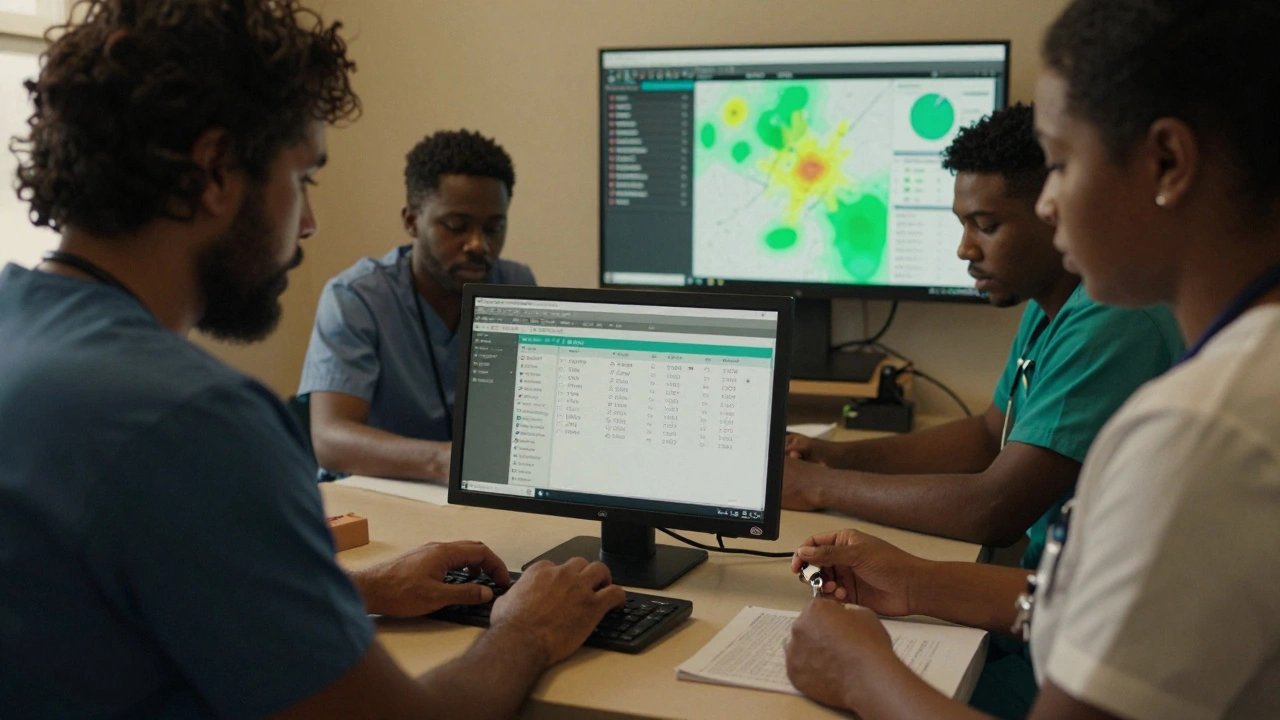
The next phase, hinted at in the proposed HTI-5 rule, will require systems to support advanced analytics for public health reporting. Think: predicting flu outbreaks by analyzing ER visit patterns across counties. Or identifying opioid overdoses before they happen by tracking prescription fills and emergency calls.
But AI can’t work if the data is messy. Dr. John Halamka of Mayo Clinic says semantic interoperability-the ability for systems to truly understand what the data means-is still the biggest hurdle. Two systems might both say "hypertension," but one might mean stage 1, another stage 2. Without standardized definitions and terminology services, AI will just spit out garbage.
Gartner warns that without fixing this, ROI for interoperability projects will stay below 30% through 2027. That’s not failure-it’s unfinished work.
The future belongs to systems that don’t just exchange data, but make it intelligent. That means better terminology mapping, real-time analytics, and automated alerts that actually help clinicians-not overwhelm them.
What You Need to Do Now
If you’re a provider, payer, or health IT vendor, here’s your checklist:
- Confirm your EHR is USCDI v3 certified by January 1, 2026.
- Test your FHIR APIs with real-world scenarios-don’t wait until July.
- Train staff on consent management and SDOH data entry.
- Validate your security controls with HITRUST or equivalent.
- Build a fallback plan. If your system goes down, how do you keep care flowing?
Don’t wait for the government to tell you what to do. The penalties are real. The risks are real. And the patients? They’re already waiting.
What happens if a healthcare provider doesn’t comply with the 2026 interoperability rules?
Non-compliant providers face financial penalties from CMS, including up to a 2% reduction in Medicare payments. They also risk HIPAA fines of up to $1.9 million per violation type. Beyond money, they risk losing patient trust, being excluded from payer networks, and falling behind in care quality metrics.
Is FHIR the same as HL7?
No. HL7 is an older messaging standard that uses complex, batch-based formats. FHIR is modern, web-friendly, and designed for real-time exchange using APIs. While HL7 v2 and v3 are still used in legacy systems, FHIR is now the mandatory standard for U.S. interoperability as of July 2026.
Can patients control who sees their health data under these new rules?
Yes. The CMS framework requires systems to support granular consent controls. Patients can choose which providers, apps, or organizations can access specific parts of their record-like mental health notes or HIV status-while allowing broader access to other data. This is enforced through digital credentials and audit logs.
Why is USCDI v3 adding social determinants of health data?
Because health isn’t just about medical care. Factors like housing, food access, transportation, and education heavily influence outcomes. By standardizing this data, providers can connect patients to community resources, reduce disparities, and improve population health. It’s a shift from treating illness to preventing it.
Are small clinics being left behind by these changes?
Yes, many are. Full compliance can cost $150,000-$250,000 for small providers, and many lack IT staff to manage it. Some are using middleware solutions or joining regional health information exchanges to share costs. But without support, they risk falling out of network contracts and losing patients to larger, compliant systems.