Hospital Surge Capacity Calculator
Calculate Your Hospital's Emergency Readiness
Based on CDC and AHA guidelines for ventilation, bed capacity, and ICU surge protocols
When a pandemic hits, a hurricane rolls through, or a mass casualty event occurs, hospitals don’t get to wait for the perfect moment to prepare. They either have the systems in place - or they don’t. The difference between life and death often comes down to three things: ventilation, bed capacity, and ICU surge protocols. These aren’t optional upgrades. They’re the backbone of survival in a crisis.
How Ventilation Keeps Hospitals Safe
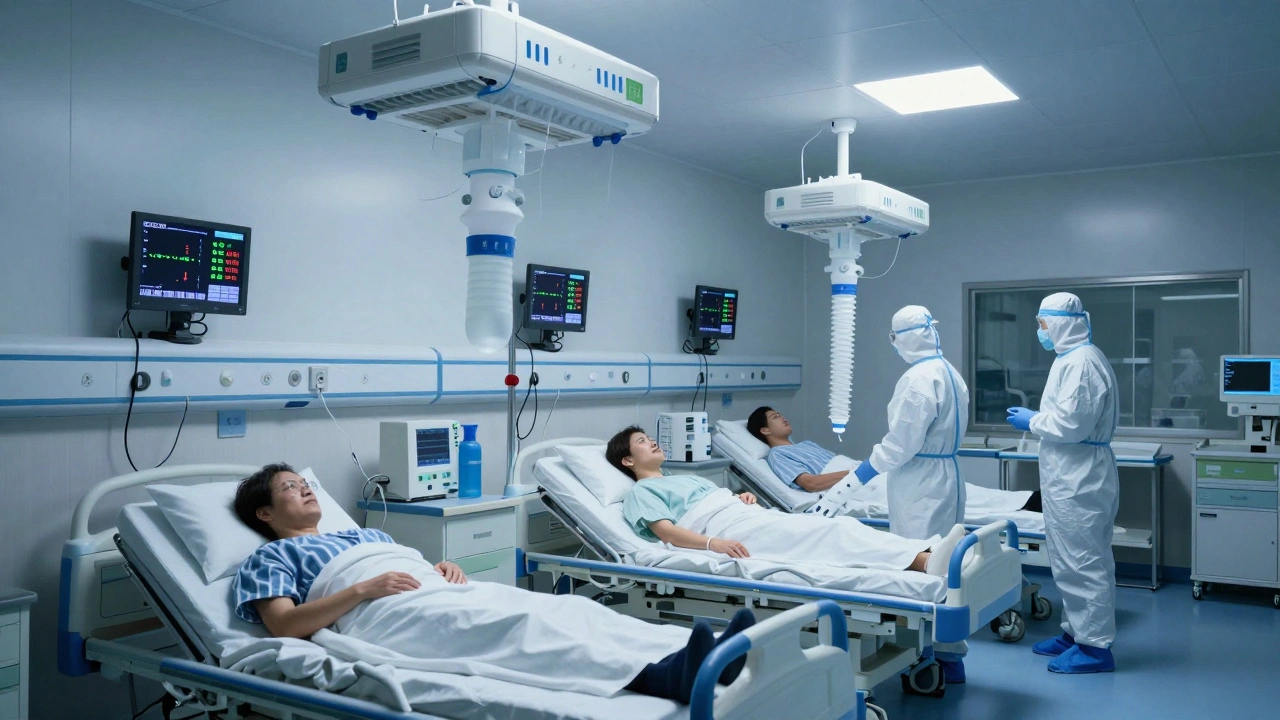
Bad air kills. In a hospital, that’s not a metaphor. During outbreaks like COVID-19 or tuberculosis, airborne pathogens spread through poorly ventilated rooms. The CDC recommends at least 12 air changes per hour (ACH) in isolation rooms and 15 ACH in operating rooms. But many hospitals, especially older ones, still operate with 6 to 8 ACH - barely above the minimum for offices.
It’s not just about volume. Pressure differentials matter. Negative pressure rooms - where air flows in but doesn’t escape - are critical for containing infectious patients. Standards require at least 0.01 inches of water column pressure difference between the room and hallway. If that’s not maintained, contaminated air leaks into corridors, stairwells, and even elevators.
HEPA filtration is another non-negotiable. In high-risk areas, filters must capture 99.97% of particles 0.3 microns or larger. Many facilities use MERV-13 filters as a stopgap, but those only catch about 85% of the same particles. During a surge, you can’t afford to gamble. A 2023 study of 127 U.S. hospitals found that 43% had ventilation systems that failed to meet CDC standards in at least one critical unit.
Bed Capacity: More Than Just Numbers
When a surge hits, hospitals don’t just need more beds - they need the right kind of beds, in the right places, with the right support. The standard baseline for surge planning is 10% above normal capacity. But that’s just the starting point.
For example, if a hospital normally has 200 inpatient beds, it should plan for 220. But during a large-scale emergency, like a chemical spill or mass shooting, the goal is to double capacity. That means converting recovery rooms, post-anesthesia care units, and even conference rooms into temporary care spaces.
ICU beds are the hardest to scale. Unlike general beds, they require specialized equipment: ventilators, infusion pumps, continuous monitoring systems, and trained staff. The American Hospital Association recommends a baseline of 1 ICU bed per 1,000 residents in the service area. But during a surge, that ratio can drop to 1:2,000 - and still be considered acceptable if triage protocols are in place.
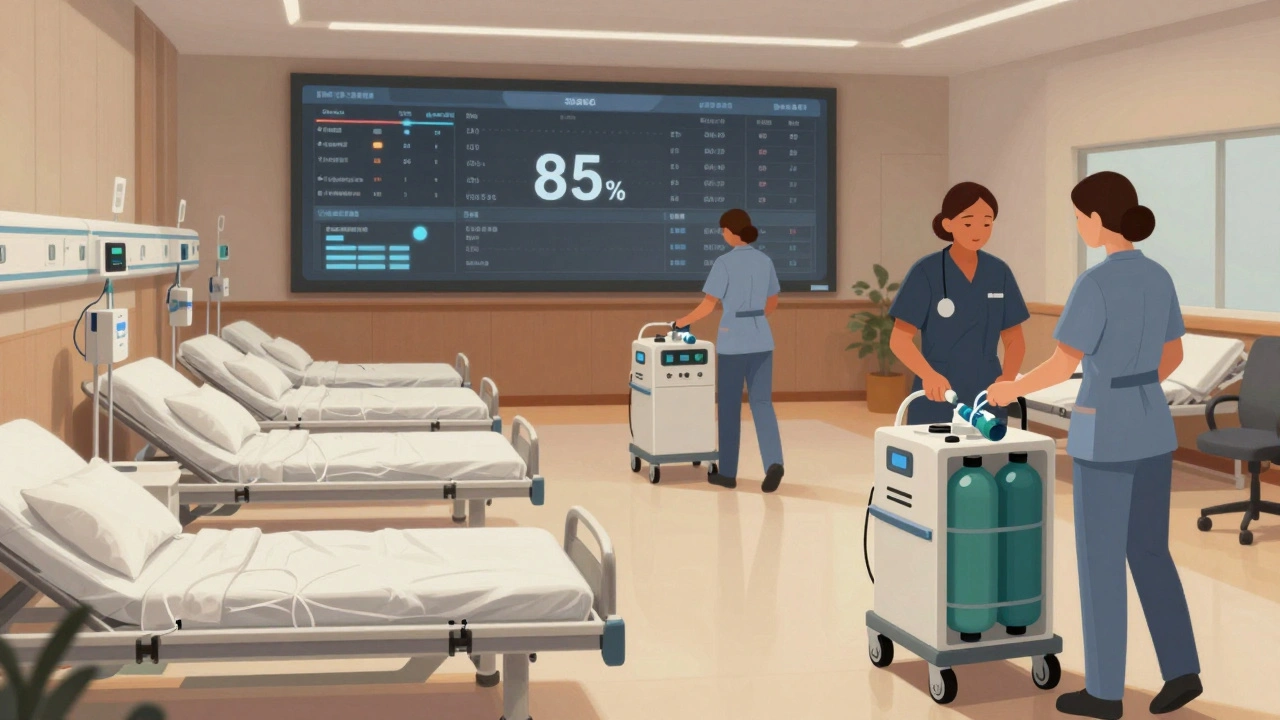
Here’s what works: hospitals that pre-identify surge zones - like outpatient clinics or rehab wings - and equip them with portable ventilators, mobile monitors, and oxygen delivery systems. Some hospitals in Texas and California now keep 20% of their ICU equipment in modular storage units, ready to deploy within 24 hours. That kind of prep cuts response time by half.
ICU Surge Protocols: The Real Test
Having extra beds means nothing if you don’t have the people or systems to run them. ICU surge protocols aren’t just about adding staff - they’re about redefining roles.
During the 2020 pandemic, some hospitals had to assign non-ICU nurses to manage ventilators. That only worked because they had pre-trained them. Now, leading hospitals require all nurses to complete a 16-hour surge certification course every two years. It covers ventilator basics, triage ethics, emergency oxygen protocols, and how to use portable monitors.
Staff-to-patient ratios shift during surges. Normal ICU ratios are 1:1 or 1:2. During a crisis, they go to 1:3 or even 1:4 - but only if protocols allow it. The CDC recommends a minimum of 1 trained clinician per patient, even at 1:4. That means no one is left alone. If a patient’s vitals crash, someone must be able to respond in under 90 seconds.
Equipment shortages are the biggest risk. Hospitals that survived the last surge kept backup ventilators - not just in storage, but in rotation. One hospital in New Mexico replaced 30% of its ventilators every 18 months, even if they still worked. Why? Because older units were harder to repair when parts were scarce.
Escalation triggers are another key. A hospital shouldn’t wait until it’s full to act. Triggers include: 85% bed occupancy for 48 hours, 3 consecutive days of ICU admissions over capacity, or a 50% spike in emergency department transfers. When those happen, surge mode activates automatically - no waiting for approval.
What Fails in Real Life
Most hospitals fail not because they lack money, but because they lack practice. A 2025 audit of 89 hospitals found that 68% had never run a full-scale surge simulation. Some didn’t even have a written surge plan. Others had plans, but they were 10 years old - written before the pandemic, before telehealth, before the rise of modular medical units.
Another common failure? Ignoring power and oxygen supply. During Hurricane Ida in 2021, two hospitals lost oxygen pressure because their backup tanks weren’t refilled. One patient died. Oxygen isn’t something you check once a year. It’s something you monitor daily - like fuel in a car.
Staff burnout is invisible but deadly. Hospitals that don’t rotate teams, provide mental health support, or guarantee rest periods during surges see higher error rates. One study showed that nurses working over 12 hours during a surge made 37% more medication errors. That’s not just bad policy - it’s a safety hazard.
What Works: Real Examples
St. Luke’s Regional Medical Center in Boise, Idaho, redesigned its entire surge system after 2020. They created a "Tiered Response" model:
- Tier 1: Normal operations - 10% buffer capacity
- Tier 2: Surge activated - 50% additional beds, 24/7 on-call staff
- Tier 3: Crisis mode - 100% surge capacity, all non-essential services paused, community clinics activated as triage hubs
They also installed real-time dashboards showing bed availability, ventilator status, and oxygen levels. Nurses can see at a glance if they’re approaching trigger points.
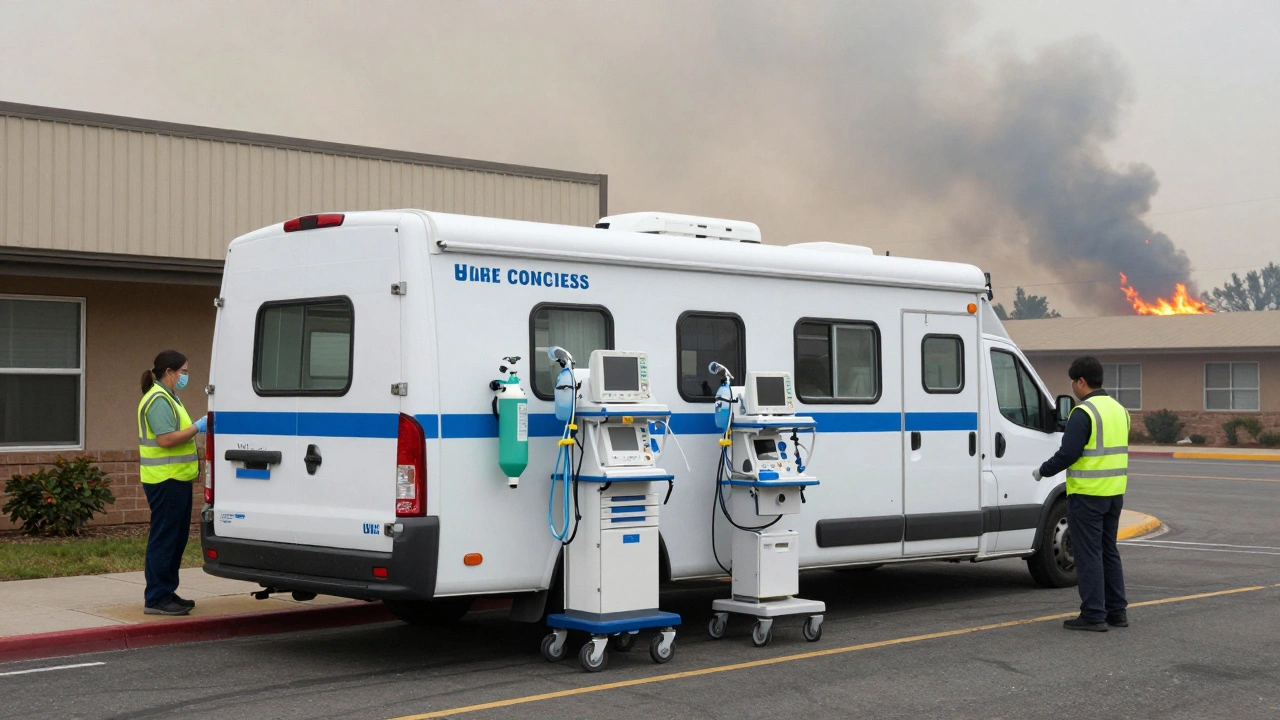
In Portland, Oregon, hospitals partnered with local fire departments to create mobile ICU units - vans equipped with ventilators, monitors, and oxygen tanks. During a wildfire season surge, they deployed 12 of them to community centers. No one had to be transported to a crowded ER.
Building Readiness: Your Next Steps
If your hospital hasn’t reviewed its readiness in the last year, you’re already behind. Here’s what to do:
- Test your ventilation system. Measure air changes per hour in every isolation and ICU room. If it’s below 12 ACH, upgrade immediately.
- Map your surge capacity. Count every possible bed - even if it’s in a storage room. Then count your oxygen tanks, ventilators, and backup power.
- Train every nurse on surge protocols. Not just ICU staff. Everyone. Use simulations - not PowerPoint.
- Set escalation triggers. Define clear thresholds. Automate alerts. Don’t wait for someone to call a meeting.
- Build a surge supply cache. Keep 15% of critical equipment in sealed, climate-controlled storage. Rotate it every 18 months.
Readiness isn’t about spending more money. It’s about planning smarter. The hospitals that survived the last crisis didn’t have the biggest budgets. They had the clearest plans - and they practiced them.
What are the CDC’s ventilation standards for ICU rooms?
The CDC recommends at least 12 air changes per hour (ACH) in ICU rooms, with negative pressure maintained at 0.01 inches of water column. HEPA filtration is required in high-risk areas. MERV-13 filters are acceptable for general use, but not for infectious disease isolation.
How many ICU beds should a hospital plan for per 1,000 people?
The American Hospital Association recommends 1 ICU bed per 1,000 residents in the service area as a baseline. During a surge, this ratio can drop to 1:2,000, but only if triage protocols, staff training, and equipment reserves are in place.
Can non-ICU staff manage ventilators during a surge?
Yes - but only if they’ve been trained and certified. Leading hospitals now require all nurses to complete a 16-hour surge certification that includes ventilator operation, emergency oxygen protocols, and triage decision-making. Without this training, assigning non-ICU staff is a safety risk.
What triggers a hospital to activate its surge protocol?
Common triggers include: 85% bed occupancy for 48+ hours, 3 consecutive days of ICU admissions exceeding capacity, a 50% spike in emergency transfers, or depletion of oxygen/ventilator reserves. These should be automated with real-time dashboards - not left to human judgment.
Do hospitals need to maintain backup oxygen tanks?
Absolutely. Oxygen supply is one of the most common failure points during surges. Hospitals should maintain at least 72 hours of backup oxygen, with daily checks for pressure levels and refill status. Many failed during the pandemic because they assumed their main supply would last.