IMF Voting Power Calculator
How Voting Power Works
The IMF's voting power is based on financial contributions, not population size. This creates significant representation gaps:
- Advanced Economies: 55.5% (16% of world population)
- Emerging Markets: 40.1% (75% of world population)
- Africa: 5.4% (17% of world population)
- Advanced Economies: 16% (current: 55.5%)
- Emerging Markets: 75% (current: 40.1%)
- Africa: 17% (current: 5.4%)
Calculate Your Country's Representation
When Lehman Brothers collapsed in 2008, the world's financial system teetered on the edge. But instead of chaos, a coordinated global response prevented total collapse. How? Through the G20, IMF, and central banks working together. This article breaks down how this system works, where it succeeds, and where it's still struggling.
How the System Was Born
G20 is an international forum of 20 major economies that coordinates global economic policy and crisis response. Before 2008, economic cooperation happened through smaller groups like the G7. But when Lehman Brothers failed, leaders from the world's 20 largest economies met in Washington D.C. in November 2008. This transformed the G20 from a ministerial-level forum into the central hub for global economic cooperation. They quickly agreed on a $1.1 trillion stimulus package and coordinated central bank actions to stabilize markets. In April 2009, the G20 created the Financial Stability Board is a global body that monitors and makes recommendations about the global financial system (FSB) in London. The FSB, based at the Bank for International Settlements is a Swiss-based organization that serves as a forum for central banks and supports global monetary and financial stability (BIS) in Basel, Switzerland, became the main body for monitoring financial regulation. Central banks have always played a key role here. Mark Carney, former Bank of England governor, chaired the FSB from 2011 to 2018. Today, Klaas Knot of De Nederlandsche Bank leads the FSB. The IMF is an international organization that provides financial assistance and policy advice to member countries also stepped up as the anchor of the Global Financial Safety Net, which now totals over $1.1 trillion in resources to help countries in crisis.
Core Mechanisms That Keep the System Running
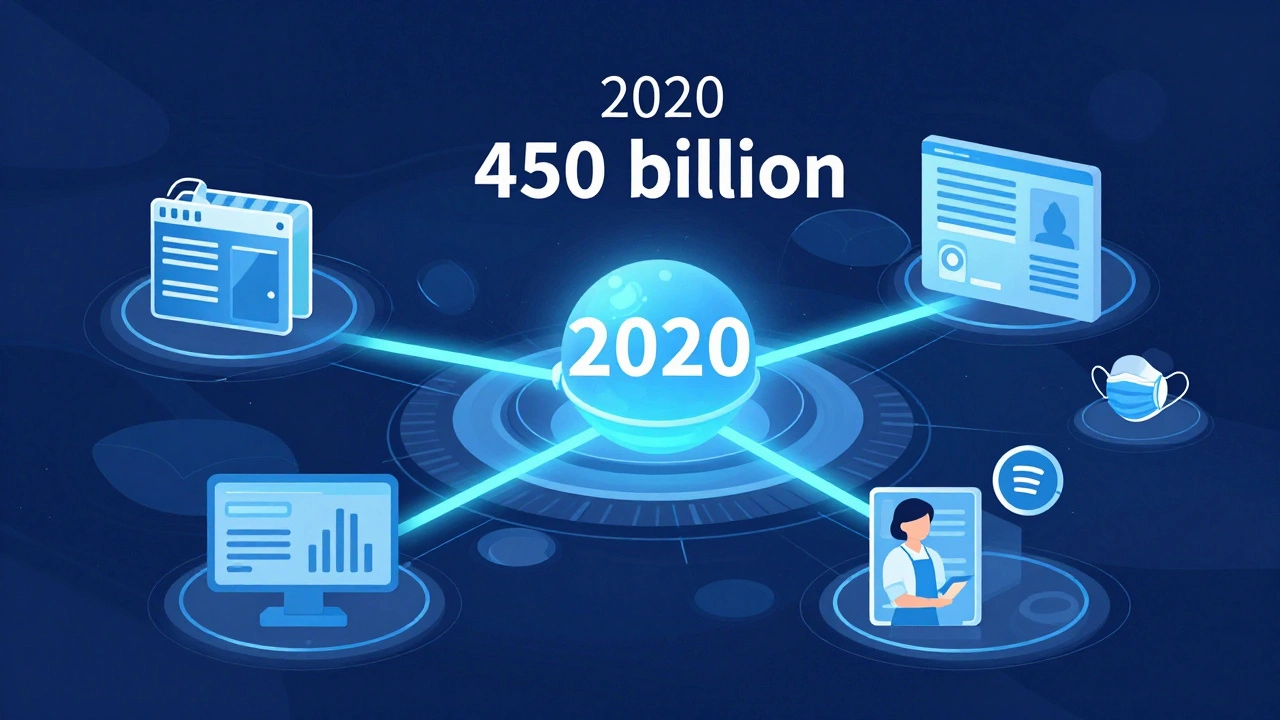
Coordination isn't just talk. It has real tools. One key mechanism is the Coordination Framework for Implementation Monitoring (CFIM), set up in 2011. It tracks how countries implement financial regulations. Another example is central bank swap lines. During the 2020 pandemic, the Federal Reserve set up temporary dollar swap arrangements with 14 central banks, providing $450 billion in liquidity by March 2020. This kept global markets from freezing. The G20 Data Gaps Initiative (DGI) also plays a role. Launched in 2010, it addresses missing financial data. By 2023, 21 specific data gap recommendations were being implemented across 107 countries. The IMF and Multilateral Development Banks (MDBs) also coordinate closely. Since 2017, they follow 13 principles for coordination, like sharing staff teams when countries face economic troubles. This helps avoid duplicated efforts and ensures better support for struggling nations.
Real-World Successes and Shortcomings
The system isn't perfect, but it has saved the day before. During the 2008 crisis, coordinated action prevented a total collapse. Compare that to the 1997 Asian Financial Crisis, where uncoordinated responses made things worse. Indonesia's experience shows how proactive compliance works. After the GFC, Indonesia implemented stricter bank capital rules-8.5% Common Equity Tier 1 requirements versus the Basel III minimum of 4.5%. This helped them handle the 2013 "taper tantrum" with only a 1.2% currency drop, while others saw 20-30% drops.
| Group | Voting Share | Global Population Share |
|---|---|---|
| Advanced Economies | 55.5% | 16% |
| Emerging Markets | 40.1% | 75% |
| Africa | 5.4% | 17% |
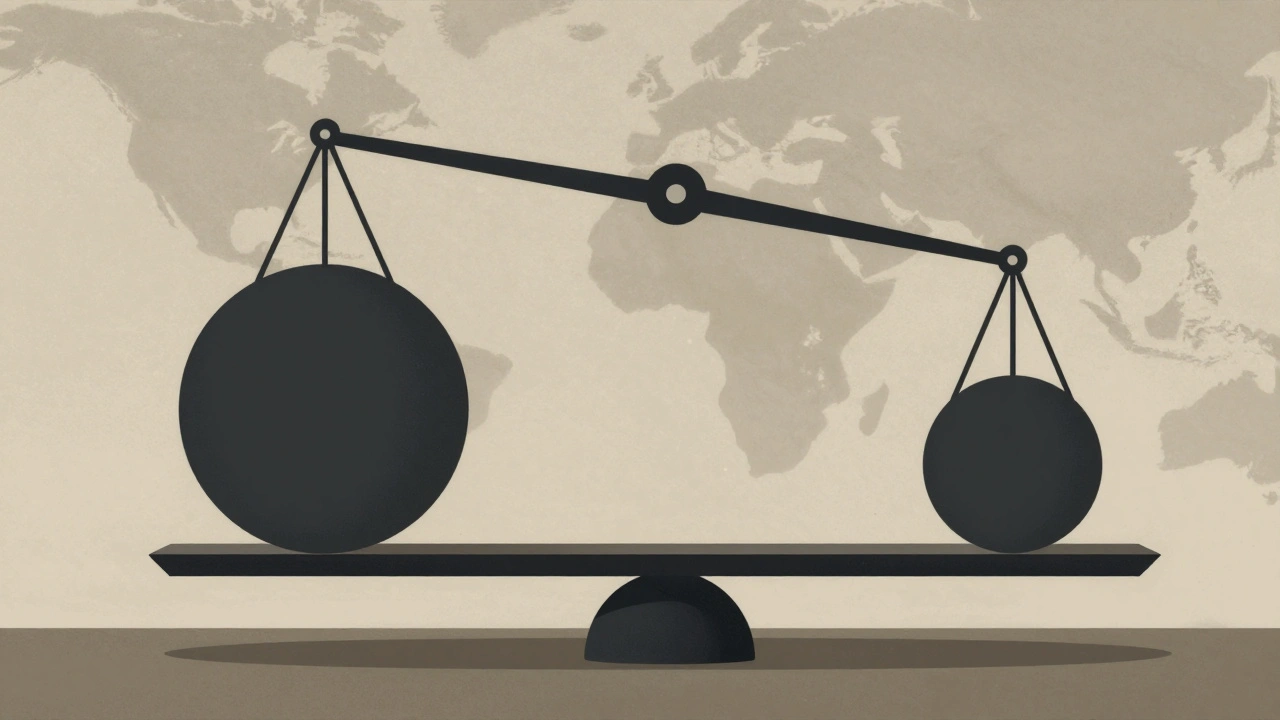
But there are failures too. Argentina's 2020 debt restructuring dragged on for months, causing market uncertainty. Why? There's no international legal framework for sovereign debt. The G20 promised one in 2015 but hasn't delivered. Voting power in the IMF still favors advanced economies. Despite a 2010 reform to boost emerging markets' shares, U.S. delays meant full implementation only in 2016. Today, advanced economies hold 55.5% of votes versus emerging markets' 40.1%. Africa, with 17% of the world's population, has only 5.4% of IMF voting power.
New Challenges in a Changing World
Today's financial system faces new threats. Crypto-assets and digital currencies are top concerns. The FSB reported in October 2023 that 78% of G20 countries have unique regulations for digital assets, creating fragmentation. But there's progress: all G20 members now require stablecoin issuers to hold 100% high-quality liquid assets. Climate change is another big issue. Only 32 of 119 jurisdictions have mandatory climate risk disclosure frameworks as of early 2024. The Network for Greening the Financial System is a global network of central banks and regulators focused on climate-related financial risks (NGFS), started by eight central banks in 2016, now has 123 members. They're pushing for better climate risk management. However, the IMF's October 2024 report warns that 45% of central banks' digital currency pilots lack cross-border interoperability standards. This could split the global payment system. The 2021 G20 Financial Inclusion Action Plan aims to reach 1.4 billion unbanked adults, but only 39% of target countries have set measurable metrics.
What's Next for Global Financial Stability
The future of financial stability coordination depends on filling gaps. The FSB's 2024 roadmap targets completing 17 remaining G20 financial regulatory reforms by 2026. Key areas include cross-border resolution of systemically important financial institutions (SIFIs). Currently, only 63% of jurisdictions have full bail-in powers. The April 2024 launch of the G20 Joint Finance-Health Task Force's Pandemic Fund shows how the framework is expanding into new areas. Capitalized with $1.7 billion from 24 donors, it addresses health and finance links. But real progress needs political will. The IMF's 2021 assessment found that medium-sized economies need 200-300 person-years of resources to fully comply with G20 standards. This creates lags, especially for low-income countries. As the world faces more complex crises-from climate shocks to cyber threats-the G20 and its partners must move beyond talk. Concrete actions, not just agreements, will determine if the system can handle the next crisis.
What's the role of the Financial Stability Board?
The Financial Stability Board (FSB) coordinates global financial regulation. It monitors how countries implement reforms, identifies risks, and sets standards. Created by G20 leaders in 2009, it's based at the Bank for International Settlements in Basel. The FSB ensures consistent regulation across borders to prevent future crises.
How do central bank swap lines work?
Central bank swap lines allow one central bank to lend currency to another. For example, during the 2020 pandemic, the U.S. Federal Reserve provided $450 billion in liquidity to 14 other central banks through these agreements. This helped keep global markets functioning by ensuring access to U.S. dollars when needed.
Why is sovereign debt restructuring difficult?
There's no international legal framework for sovereign debt restructuring. Countries like Argentina in 2020 faced prolonged negotiations because creditors and debtors couldn't agree on terms. The G20 committed to creating a framework in 2015, but progress has been slow due to disagreements over creditor rights and debtor protections.
What's the current status of climate risk disclosures?
As of Q1 2024, only 32 of 119 jurisdictions have mandatory climate risk disclosure frameworks. The Network for Greening the Financial System (NGFS), with 123 members, is pushing for more adoption. Without these disclosures, investors and regulators can't properly assess climate-related financial risks.
How effective is the G20 in preventing crises?
The G20 has improved crisis prevention. The IMF's 2023 Financial Stress Index shows volatility is 40% below 2008 peak levels. However, only 41% of finance ministry officials in a 2023 World Bank survey rated the G20 effective in managing ongoing crises. Africa's frustration over representation gaps shows the system still has work to do.