Community Resilience Calculator
This tool estimates how community support can reduce PTSD symptoms after a disaster, based on research from the article. According to studies cited in the article, strong community connections can reduce PTSD symptoms by up to 47% in rural areas.
Estimated Impact
Enter your community information to see your results.
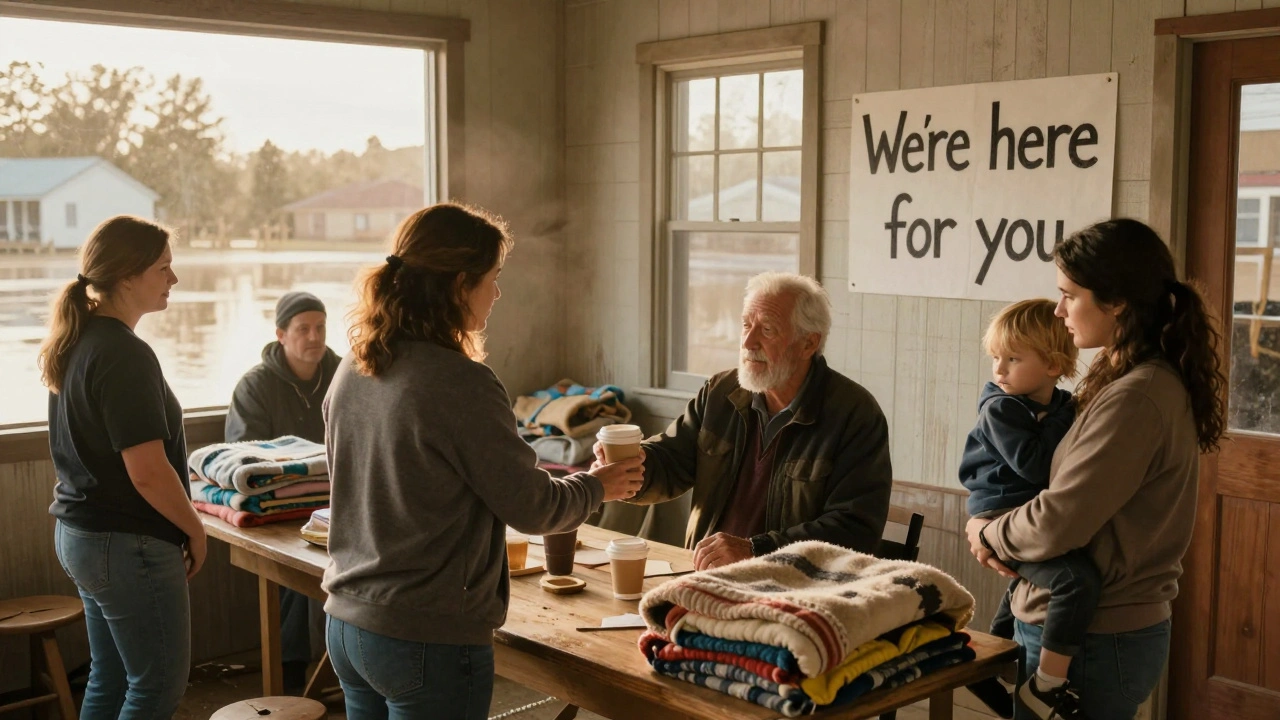
When a hurricane hits, a wildfire spreads, or a flood sweeps through a town, the damage isn’t just to buildings. The hardest hits are often invisible. People lose not just homes, but their sense of safety, their routines, and sometimes, their loved ones. In the weeks and months after, you’ll see people trying to rebuild-but many are also silently struggling with anxiety, nightmares, numbness, or anger they can’t explain. This is where disaster mental health comes in-not as an afterthought, but as a core part of recovery.
What Happens to People’s Minds After a Disaster?
It’s not just about feeling sad. After a disaster, up to 30-40% of survivors experience serious psychological distress, according to the National Child Traumatic Stress Network. Some develop PTSD, which affects about 7-10% of those exposed. Others struggle with depression, insomnia, or overwhelming fear that doesn’t fade. The trauma isn’t just from the event itself-it’s from losing everything: your home, your job, your community, even your sense of control over your life.
What makes this worse is how uneven the help is. In cities, you might find crisis counselors, telehealth apps, and clinics. In rural areas? There might be one mental health provider for 10,000 people. And in places with little infrastructure, like small towns or tribal communities, the gap is even wider. That’s why community-based models are no longer optional-they’re essential.
The Crisis Counseling Program: A Lifeline That’s Too Short
The federal government’s main tool for disaster mental health is the Crisis Counseling Program (CCP), run by FEMA and SAMHSA since 1981. It’s simple: trained counselors show up after a disaster, offer short-term talk therapy, connect people to resources, and hold group sessions. In 2023 alone, it helped over 1.2 million people. But here’s the catch-it only lasts 6 to 8 months.
That’s not enough. Studies show that 25% of Hurricane Katrina survivors still had PTSD symptoms 12 years later. Trauma doesn’t vanish when the funding runs out. People need ongoing support, especially as they face the slow, grinding reality of rebuilding. A house can be repaired. A job can be found. But the fear that it’ll happen again? That lingers. And without longer-term support, many slip through the cracks.
Community Resiliency Model: Training Neighbors, Not Just Professionals
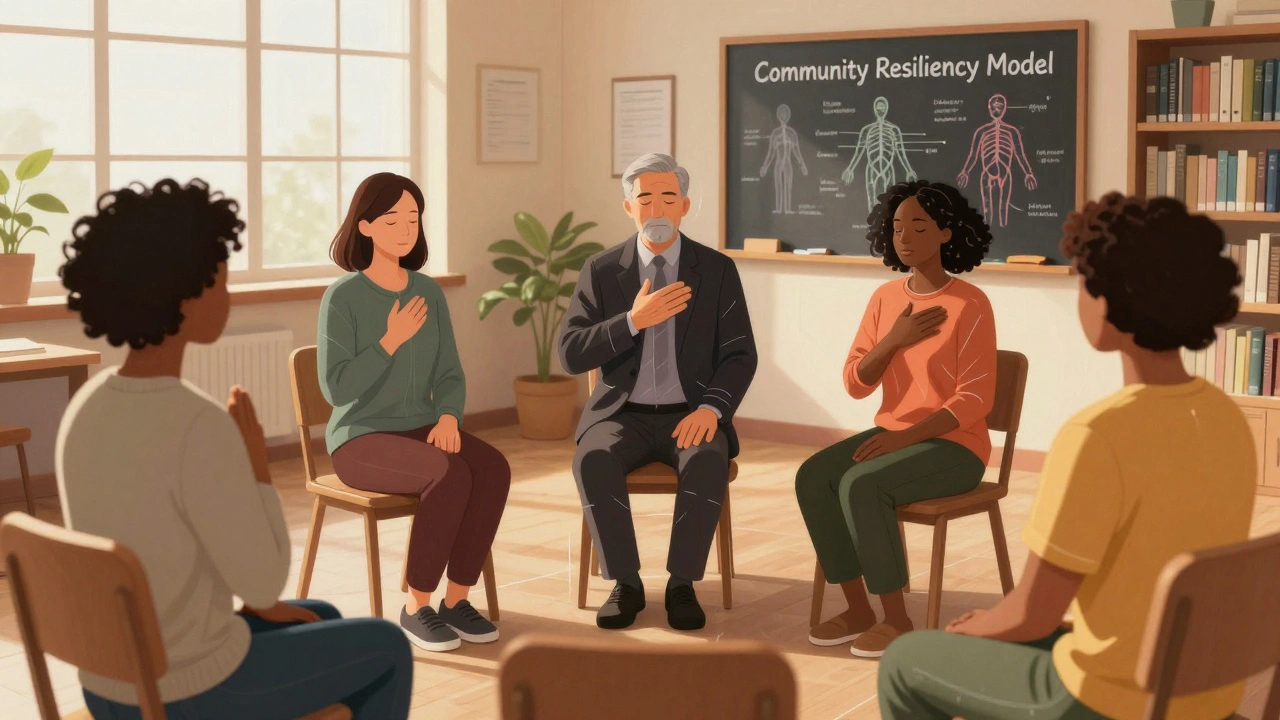
One of the most promising shifts in disaster mental health is moving away from top-down clinical care and toward peer-led models. The Community Resiliency Model (CRM), developed in 2011, trains everyday people-teachers, church volunteers, local librarians-to help their neighbors cope with stress using six simple skills based on how the body reacts to trauma.
These aren’t therapists. They’re neighbors who’ve been trained in how to recognize when someone is overwhelmed, how to help them calm their nervous system, and how to rebuild a sense of safety. The training takes 36 hours, and it’s not expensive. In Haiti, a study found that after a 3-day group intervention led by local workers, PTSD symptoms dropped by 23% and depression by 18%-and those improvements lasted over seven months.
CRM works best where trust matters more than credentials. In rural areas, where people know each other, this model outperforms traditional counseling by 32% in engagement. It’s not about fixing people. It’s about helping them remember they’re not alone.
Why Rural Communities Need Different Tools
Urban and rural disaster responses aren’t interchangeable. In cities, people are isolated by design-apartment buildings, long commutes, little interaction. After a disaster, they often don’t know who to turn to. But in rural areas, the opposite is true: neighbors help each other. That social glue is powerful.
A 2014 study of Hurricane Ike survivors found that in non-urban areas, community support reduced PTSD symptoms by 47%. That number didn’t exist in cities. Why? Because in rural places, people still gather at the general store, check in on each other after storms, and share food and tools. That kind of connection isn’t just nice-it’s protective. It replaces what was lost: safety, belonging, and predictability.
But rural communities have fewer resources. Only 41% have access to specialized disaster mental health services, compared to 89% in cities. That’s why task-shifting-training local people to deliver care-isn’t just smart, it’s necessary. A 40-hour certification program for community disaster workers increased responder effectiveness by 52%. That’s the kind of return on investment we can’t ignore.
Technology Can Help-But It Can’t Replace People
Telehealth has become a game-changer, especially in areas with no mental health providers. In urban settings, 28% more people used crisis counseling via phone or app than in person. The Disaster Distress Helpline, run by SAMHSA, answered over 38,000 calls in 2022-with an average wait time of just 37 seconds. That’s life-saving access.
But technology alone doesn’t fix isolation. Apps can’t hug someone who just lost their child. A chatbot can’t sit quietly with a widow who doesn’t want to talk. That’s why the most successful programs combine tech with human presence. A mobile app might help someone track their stress levels, but it’s the local volunteer who brings them soup and says, “I’m here if you need to cry,” that makes the real difference.
Culture Matters-A Lot
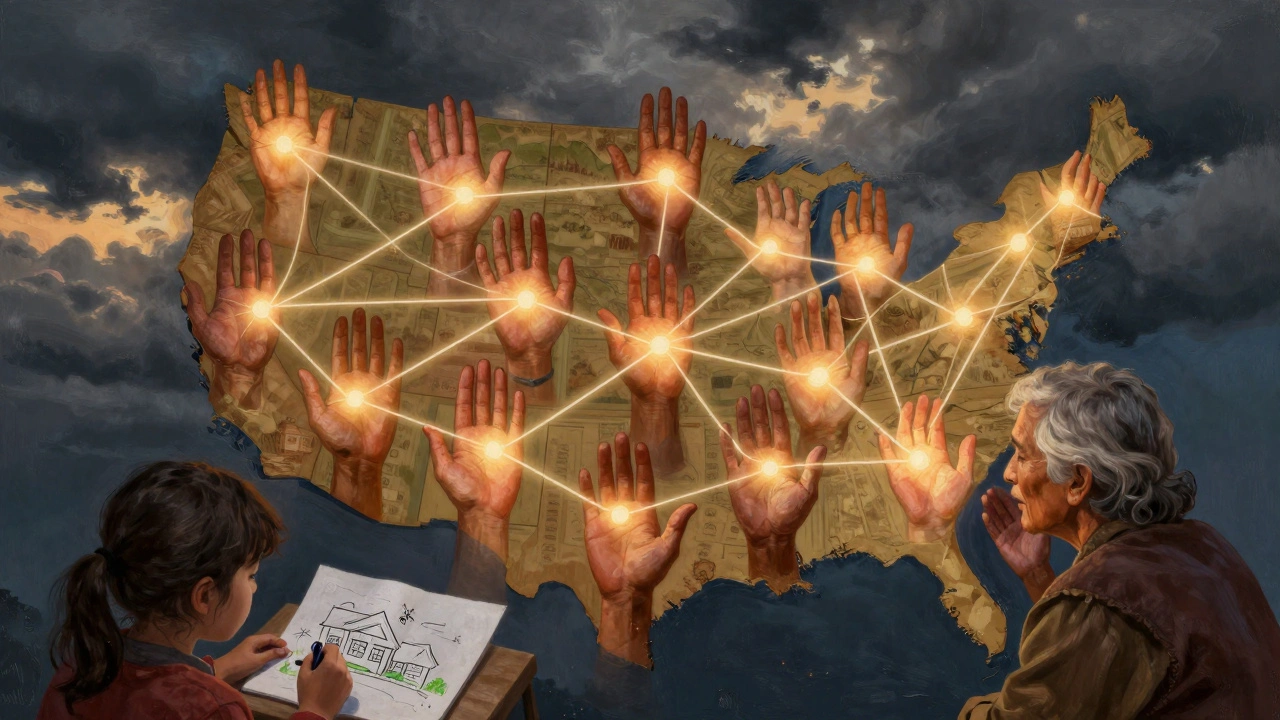
One-size-fits-all doesn’t work in disaster mental health. Native American communities, for example, have seen 44% higher engagement when interventions include traditional healing practices-ceremonies, storytelling, connection to land. Immigrant families respond better when services are offered in their language and by someone who understands their cultural context.
And yet, only 12% of disaster mental health programs include child-specific approaches, even though children make up 25% of disaster-affected populations. Kids don’t always say they’re scared. They act out. They withdraw. They have nightmares. Without trained, culturally aware workers who know how to talk to them, their trauma goes unaddressed.
Dr. Sandro Galea’s research shows ethnic minorities receive 22% less social support after disasters. That’s not accidental-it’s systemic. If your community doesn’t trust government agencies, or if services aren’t offered in your language, or if your spiritual practices aren’t respected-you won’t reach out. That’s why local leadership matters more than federal funding.
What Works in Practice: Real Strategies from Real Places
The Red River Resilience Project in Fargo, North Dakota, is one of the few models that’s been tested and scaled. After repeated floods, local leaders brought together the Red Cross, county mental health staff, health insurers, universities, and faith groups. They didn’t wait for a disaster. They built the network before one hit.
They trained 200 community members in Psychological First Aid. They turned the community center into a 24/7 mental health hub. They created a warning system that used local radio and door-to-door checks. After the next flood, they didn’t just respond-they were ready. Intervention effectiveness jumped 33% because people trusted the people helping them.
Other proven strategies:
- Hold regular community gatherings-this improves collective efficacy by 37%.
- Train local volunteers with 40-hour certifications-52% more effective than outside responders.
- Use culturally grounded approaches in Indigenous communities-44% higher engagement.
- Integrate mental health into disaster planning from day one-reduces post-disaster stress spikes by 27%.
- Invest in telehealth for rural areas-cuts treatment gaps by 22%.
The Big Picture: Mental Health Is Community Health
Every $1 invested in community mental health resilience returns $4.30 in reduced healthcare costs and lost productivity, according to RAND Corporation. That’s not just good policy-it’s smart economics. But more than that, it’s human.
Dr. Fran Norris, a leading researcher at the National Center for PTSD, says social support is the strongest predictor of recovery after a disaster-even more than how bad the event was. When people feel seen, heard, and held by their community, their brains start to heal. They don’t need a diagnosis. They need a neighbor.
The future of disaster mental health isn’t in big hospitals or federal grants alone. It’s in the PTA meeting, the church basement, the town hall, the local library. It’s in training a teacher to recognize panic, a pastor to listen without judgment, a teenager to check on their elderly neighbor.
Disasters will keep coming. Climate change is making them worse. But we don’t have to wait for the next one to be ready. We can build resilience now-not with more money, but with more connection.
How long do disaster mental health services typically last?
Most federally funded programs, like the Crisis Counseling Program, last only 6 to 8 months. But research shows that for many survivors, especially those who lost loved ones or homes, mental health needs extend for years. PTSD symptoms can persist over a decade, as seen in Hurricane Katrina survivors. This mismatch between funding and need is one of the biggest gaps in current disaster response.
Can community support really reduce PTSD symptoms?
Yes, and dramatically so. A 2014 study of Hurricane Ike survivors found that in non-urban areas, strong community ties reduced the link between personal loss and PTSD symptoms by 47%. This doesn’t mean trauma disappears-but when people feel connected and supported, their brains are better able to recover. Social connection replaces the safety and predictability that disasters destroy.
Why are rural areas more responsive to community-based models?
Rural communities often have stronger social networks. People know each other. They check in. They share resources. This existing cohesion acts like a natural support system. In contrast, urban environments are more fragmented. After a disaster, rural survivors are more likely to turn to neighbors than to outside professionals. That’s why training local volunteers in rural areas boosts engagement by 32% compared to urban settings.
What’s the difference between Psychological First Aid and trauma-informed care?
Psychological First Aid (PFA) is a short-term, immediate response-offering safety, comfort, and connection right after a disaster. It’s not therapy. It’s about stabilizing people. Trauma-informed care is longer-term and deeper. It recognizes how trauma changes the brain and behavior, and adjusts all interactions accordingly. For example, a trauma-informed worker won’t push someone to talk about the event. They’ll let the person lead, and focus on restoring control and choice. Both are needed, but they serve different stages of recovery.
Are there enough mental health workers for disasters?
No. In rural areas, only 41% have access to specialized disaster mental health services. Urban areas have 89%. That’s why programs like the Community Resiliency Model train laypeople-teachers, faith leaders, local staff-to fill the gap. These workers don’t replace clinicians, but they extend reach. A 40-hour certification can turn a volunteer into an effective first responder, and communities report 78% higher intervention fidelity when workers are from within the community.
What’s being done to help children after disasters?
Very little. Despite children making up 25% of disaster-affected populations, only 12% of programs include developmentally appropriate interventions for youth. Kids don’t always say they’re scared-they act out, shut down, or regress. Effective programs use play therapy, art, storytelling, and age-specific coping tools. The 2024 National Strategy for Disaster Behavioral Health now includes funding to improve youth services, but progress has been slow.