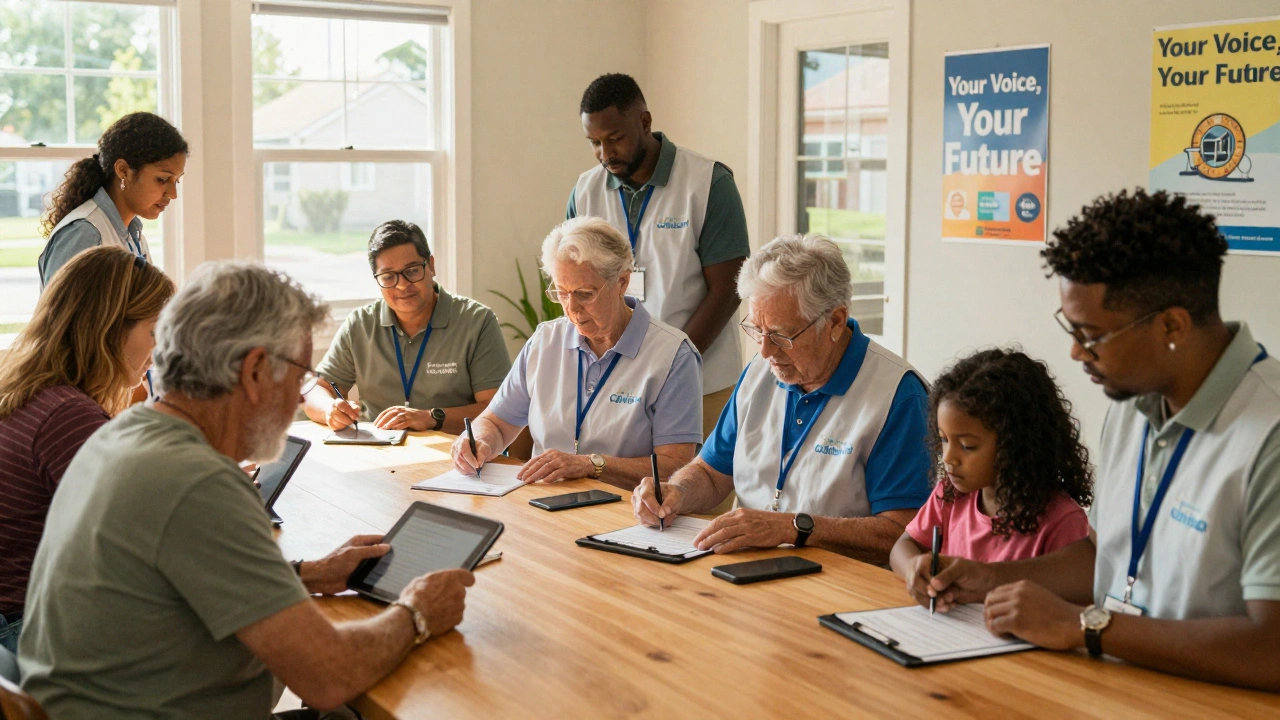
Census Funding Impact Calculator
How Accurate Counts Shape Your Community's Resources
Enter your community's population data to see how undercounting affects funding for schools, healthcare, and other essential services.
Your Community's Data
Funding Impact Analysis
Medicaid Funding
$0 in annual funding loss
Based on $4.3B per 1% undercountHead Start Programs
0 children missing services
Based on 5.4% undercount of childrenSchool Funding
$0 in annual funding loss
Based on $1,000 per childUnderstanding Your Community's Undercount
Communities with high minority populations, children under 5, and renters tend to be more undercounted. In 2020, the undercount was 5.4% for children and 2.64% for Black residents.
Why Your City’s Funding Depends on a Census You Might Have Ignored
Every ten years, millions of households in the U.S. get a letter asking them to count everyone living in their home. It feels like a formality-check a few boxes, hit submit, and forget about it. But what happens in that moment, and what happens after, directly affects how much money your school gets, whether your neighborhood gets a new bus route, and if your local clinic can afford to hire another nurse.
The 2020 U.S. Census counted about 331 million people. Sounds precise, right? But here’s the catch: nearly 16 million people were missed. That’s not a rounding error. That’s the population of New York City, vanished from the numbers. And when those people aren’t counted, their communities lose out on billions in federal funding. For Medicaid alone, a 1% error in population count means roughly $4.3 billion in misallocated funds each year. If your town’s child population was undercounted by 5%, that’s not just a statistic-it’s fewer Head Start slots, less school bus service, and longer wait times at the pediatric clinic.
How Censuses Are Supposed to Work-And Where They Fall Short
The U.S. Census isn’t just a survey. It’s a massive, decade-long operation that starts with updating 140 million addresses, trains half a million temporary workers, and processes over 150 million responses. The goal? To count every person, once, only once, and in the right place.
But reality doesn’t always cooperate. In 2020, the self-response rate dropped to 66.8%-down from 74% in 2010. That means more door-knocking, more follow-ups, more chances for human error. Enumerators missed homes in rural Alaska, miscounted households in crowded urban apartments, and struggled to reach people without stable addresses. And it’s not just about getting to the door. Language barriers played a big role: even though forms were available in 59 languages, an estimated 3.2 million households with limited English proficiency still didn’t respond.
Then there’s the digital divide. Older adults, low-income families, and rural residents are less likely to have reliable internet. The Census Bureau pushed hard for online responses, but that left behind people who couldn’t access it. Meanwhile, privacy fears grew. Some people worried their data could be used against them-by immigration officials, landlords, or even debt collectors. That fear, real or imagined, kept people from participating.
The Hidden Cost of Bad Numbers: Who Gets Left Behind
It’s not just about money. It’s about power.
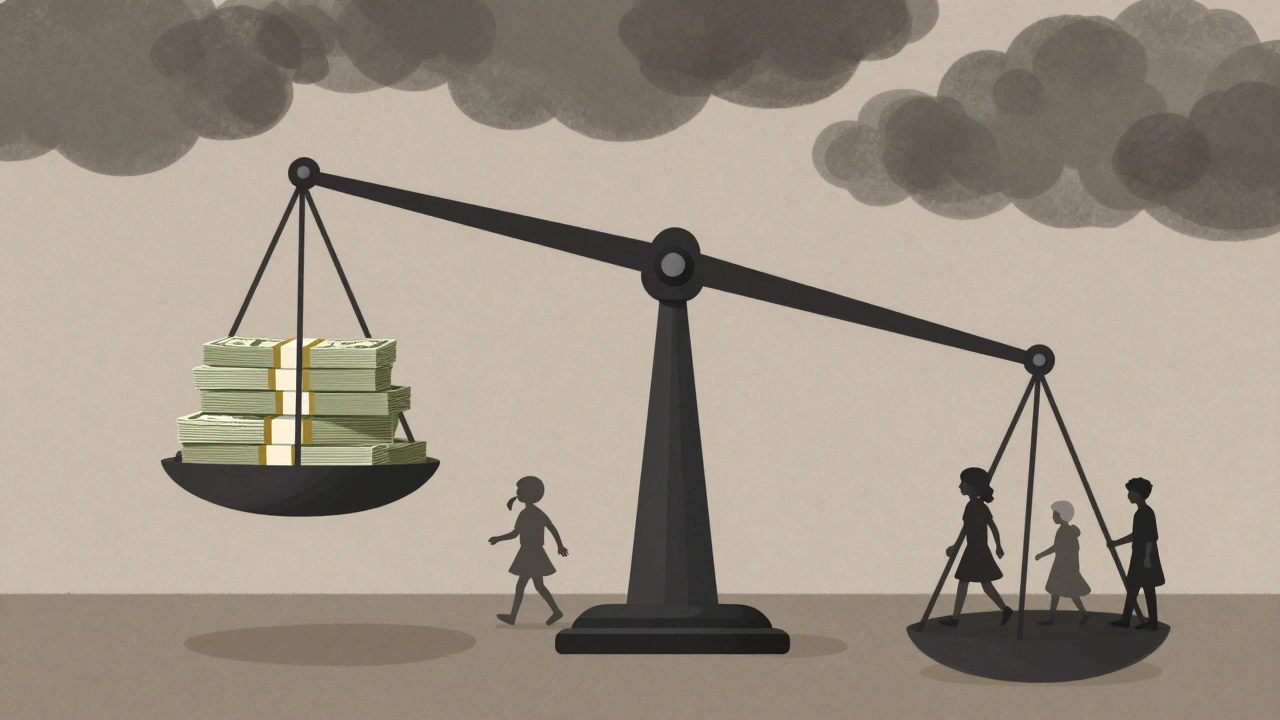
The Census determines how many seats each state gets in Congress. But it also shapes how districts are drawn. If a neighborhood with a high Black, Latino, or Indigenous population is undercounted, its political voice gets diluted. That’s not accidental-it’s systemic. The 2020 Census showed a 2.64% undercount for Black residents and a shocking 5.02% undercount for American Indian and Alaska Native people living on reservations. That’s not just a data glitch. It’s a failure of inclusion.
Children under five are the most undercounted group. Since 1980, the average undercount has been 5.8%. In 2020, it was 5.4%. That’s about one million kids missed. Why does that matter? Because federal programs for early childhood education, nutrition, and healthcare are allocated based on population. Missed kids mean missed funding. Schools don’t get enough preschool funding. WIC clinics run short on formula. Medicaid eligibility rolls don’t reflect the real need.
And it’s not just the U.S. Countries like Nigeria, which last counted its population in 2006, or Afghanistan, with data from 1979, are flying blind. Without accurate numbers, they can’t plan hospitals, roads, or schools. The World Bank estimates better data could improve development outcomes by 15-20% in low-income countries. That’s not a guess-it’s a measurable gap between what’s possible and what’s happening.
What Makes Census Data ‘Good’? It’s Not Just About Counting
High-quality census data isn’t just about how many people you count. It’s about how accurately you count them-and how well you know where you might be wrong.
The U.S. Census Bureau uses two key tools to check its work: Demographic Analysis (DA) and the Post-Enumeration Survey (PES). DA doesn’t rely on forms. It uses birth records, death records, and migration data to estimate what the population should look like. PES is a follow-up survey of 1 in 1,000 households after the main count. Together, they reveal the gaps.
For example, in 2020, DA showed the Census overcounted the total population by 0.05%. That sounds tiny. But when you drill down, the story changes. While white households were slightly overcounted, Black and Indigenous households were undercounted. That’s differential error-and it’s dangerous. It means policy decisions are being made on data that doesn’t reflect reality for entire communities.
Other countries use different models. Nordic nations like Denmark and Sweden don’t do door-to-door counts at all. Instead, they use their national registries-births, deaths, addresses, taxes-to build population numbers in real time. They update annually. Their data is cheaper, faster, and often more accurate. The U.S. still relies on a 1950s-style enumeration model. It’s expensive ($13.5 billion in 2020), slow, and prone to error.
The Future of Counting: Digital Tools, AI, and Privacy Trade-Offs
The 2030 Census is already being redesigned. The U.S. Census Bureau plans to link more data from tax records, Social Security, and driver’s licenses to reduce the need for door-knocking. Machine learning will help clean up address lists-fixing typos like “15000” instead of “15,000” before they cause miscounts.
But there’s a trade-off. To protect privacy, the Bureau added “differential privacy” to its 2020 data. That means it intentionally added small amounts of random noise to prevent anyone from identifying individuals. Sounds good, right? But Dr. John M. Abowd, former Chief Scientist at the Census Bureau, warned that this noise increased error margins by 30-50% in small areas. A city council trying to decide where to build a new clinic might get data that says “1,200 children live here”-but the real number could be 900 or 1,500. That’s not precise enough for local decisions.
Meanwhile, AI-generated misinformation is becoming a real threat. Fake websites mimicking official census portals, bots spreading false claims about data being used for deportation, and social media rumors are lowering trust. In 2020, only 54% of Americans said they trusted the Census results. That’s the lowest in decades. Without public trust, participation drops-and data gets worse.
What Can Be Done? Better Tools, Better Trust
Improving census data isn’t just about spending more money. It’s about smarter design and deeper community engagement.
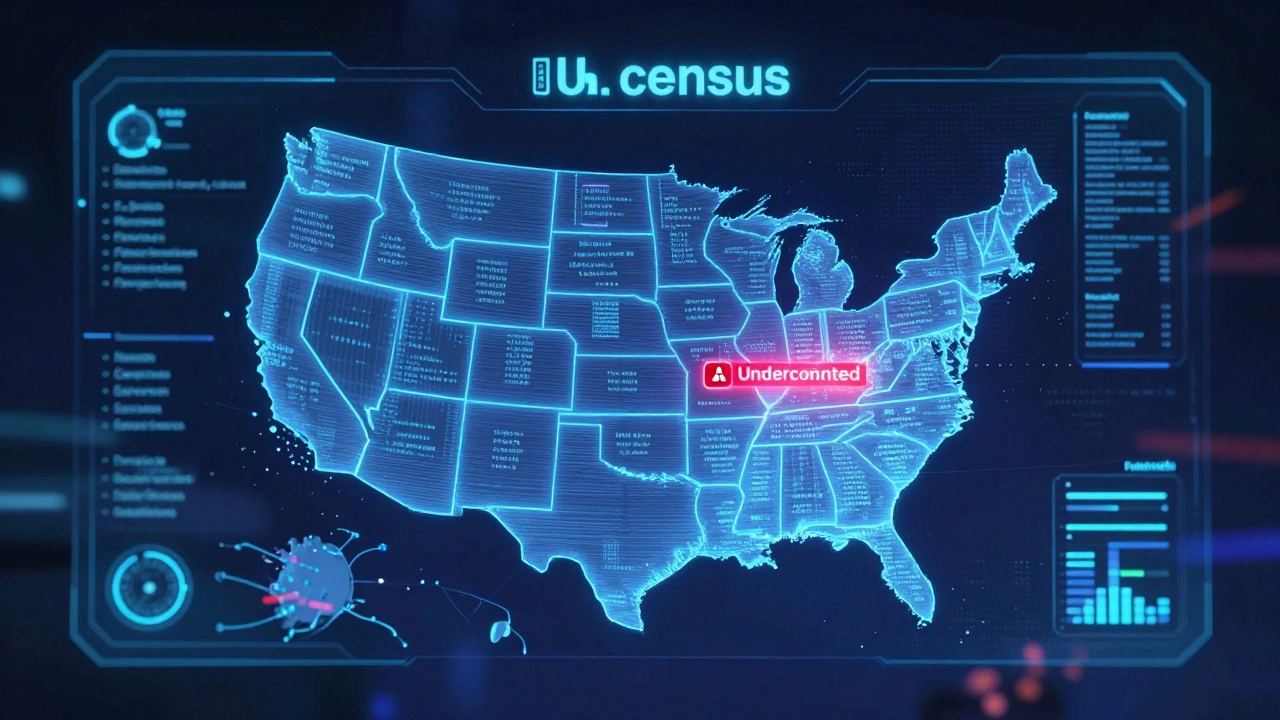
First, invest in local partnerships. Libraries, churches, community centers, and trusted local leaders can help reach people who distrust the government. In 2020, areas with strong local outreach had response rates 20-30% higher.
Second, make data quality transparent. Don’t just release numbers. Release error margins. Say: “We estimate 94% of children under five were counted. Here’s where we think we missed them.” That’s not weakness-it’s honesty. Policymakers can work with imperfect data if they know the limits.
Third, move toward hybrid models. The U.S. doesn’t need to copy Sweden overnight. But it can start using administrative data where it’s reliable-like linking birth certificates to school enrollment. That’s already happening in some states. Why not scale it?
And finally, treat census workers as professionals, not temporary hires. Training should be rigorous. Pay should reflect the importance of the job. When enumerators are respected, they do better work-and communities notice.
Why This Matters for You, Right Now
You might think, “I filled out my form. That’s enough.” But data quality isn’t a personal responsibility-it’s a public good. When your neighbor doesn’t respond, it affects your school district. When a child in your county goes uncounted, it affects the funding for the playground you use.
The next Census is in 2030. The tools will be better. The challenges will be different. But the stakes won’t change. Accurate data leads to fair funding. Fair funding leads to better schools, better health, better roads, and better lives.
It’s not about filling out a form. It’s about making sure everyone who lives here is seen-and counted.
Why does the census happen every 10 years?
The U.S. Constitution requires a census every ten years to determine how many seats each state gets in Congress. But it’s also the only way to get a full, nationwide snapshot of who lives where. While some countries update annually using administrative records, the U.S. still relies on a full enumeration because it’s the only method that captures hard-to-reach populations like renters, homeless individuals, and undocumented families. The 10-year cycle balances cost, accuracy, and legal requirements.
What happens if I don’t fill out the census?
There’s no penalty for not responding, but someone else might. If your household doesn’t respond, the Census Bureau sends an enumerator to your door. That costs more money and increases the chance of error. More importantly, your neighborhood loses influence. Every uncounted person means less federal funding for schools, clinics, roads, and housing programs. Your silence doesn’t protect you-it hurts your community.
Are my answers safe? Can the government use my census data against me?
By law, your census answers cannot be shared with immigration, police, tax agencies, or landlords. The Census Bureau is bound by Title 13 of the U.S. Code, which makes it a federal crime to disclose personal information. Even the data used for research is stripped of names, addresses, and identifiers. The real risk isn’t misuse-it’s mistrust. False rumors spread online, and those rumors keep people from participating, which hurts everyone.
How do I know if my community was undercounted?
The Census Bureau releases official undercount estimates after each count. For the 2020 Census, you can find these in the Post-Enumeration Survey report. Local universities, nonprofit research groups, and state data offices also analyze the results. If your area has high poverty, many renters, or a large immigrant population, it’s likely undercounted. Check with your city’s planning department-they often have maps showing estimated undercounts by neighborhood.
Can I trust data from countries that don’t do door-to-door counts?
Yes-often more than you can trust traditional censuses. Countries like Sweden, Denmark, and Germany use administrative records from tax, health, and housing databases to build population numbers every year. These systems are updated in real time, have fewer gaps, and cost 70% less. The downside? They only work if the government has a strong, reliable civil registration system. In places without that infrastructure, traditional counts are still necessary. The best approach combines both: use registers where they’re strong, and supplement with targeted enumeration where they’re not.