Talent Hub Cost Savings Calculator
Relocation Savings
Key Benefits
Your Potential Savings
For years, companies chased talent to the biggest cities - New York, San Francisco, London, Tokyo. But something’s changed. The best new hires aren’t just showing up in those crowded metros anymore. They’re moving to places like Albuquerque, Chattanooga, Tijuana, Surabaya, and Mekelle. These aren’t afterthoughts. They’re becoming regional talent hubs - and corporations are pouring money into them because they work better than the giants.
Why Secondary Cities Are the New Goldmine
Think about what companies actually need: skilled workers, affordable space, room to grow, and a stable environment. Megacities have none of that in abundance anymore. Rent is insane. Traffic eats up half your day. Talent is oversaturated, so salaries are climbing faster than inflation. Meanwhile, secondary cities - urban areas with populations between 100,000 and 500,000 - are quietly building everything companies are looking for.
Take the U.S. government’s Regional Technology and Innovation Hubs (a program run by the Economic Development Administration that funds local innovation ecosystems outside major metro areas). It’s not just a grant program. It’s a signal. The EDA isn’t throwing money at Silicon Valley. It’s backing places like Pittsburgh for robotics, Boise for semiconductor testing, and Huntsville for aerospace. Why? Because these cities have the talent, the infrastructure, and the willingness to adapt - without the chaos of a 10-million-person metropolis.
The Real Cost Advantage Isn’t Just Salaries
Yes, salaries in secondary cities are lower. But that’s not the main reason companies are shifting. The real savings come from everything else.
- Office space: In Austin, a 10,000 sq ft office might cost $18,000/month. In Columbia, South Carolina? $6,500. Same quality. Half the price.
- Commuting time: Employees in secondary cities spend 20-30% less time commuting. That means higher retention, better mental health, and more productive hours.
- Turnover: A 2024 study by the Brookings Institution found that employee turnover dropped by 22% in companies that relocated teams to secondary hubs - not because pay was higher, but because people felt more valued and had better work-life balance.
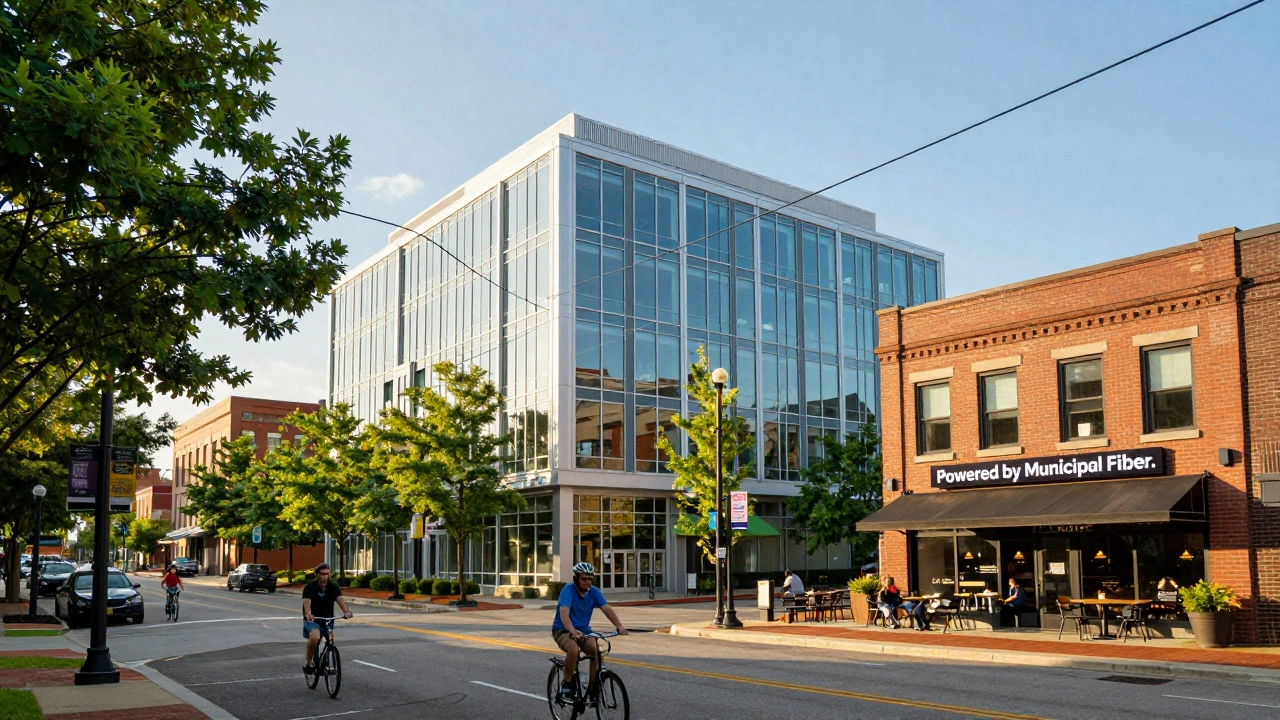
And here’s the kicker: companies aren’t just cutting costs. They’re building stronger teams. In places like Chattanooga, which became a tech hub after investing in municipal fiber-optic internet, employees stay longer because they’re part of a community - not just a cog in a corporate machine.
Talent Hubs Are Built, Not Bought
You can’t just move a company into a small city and expect talent to show up. You need a Talent Hub (a coordinated network of local governments, schools, employers, and nonprofits working together to train, attract, and retain skilled workers).
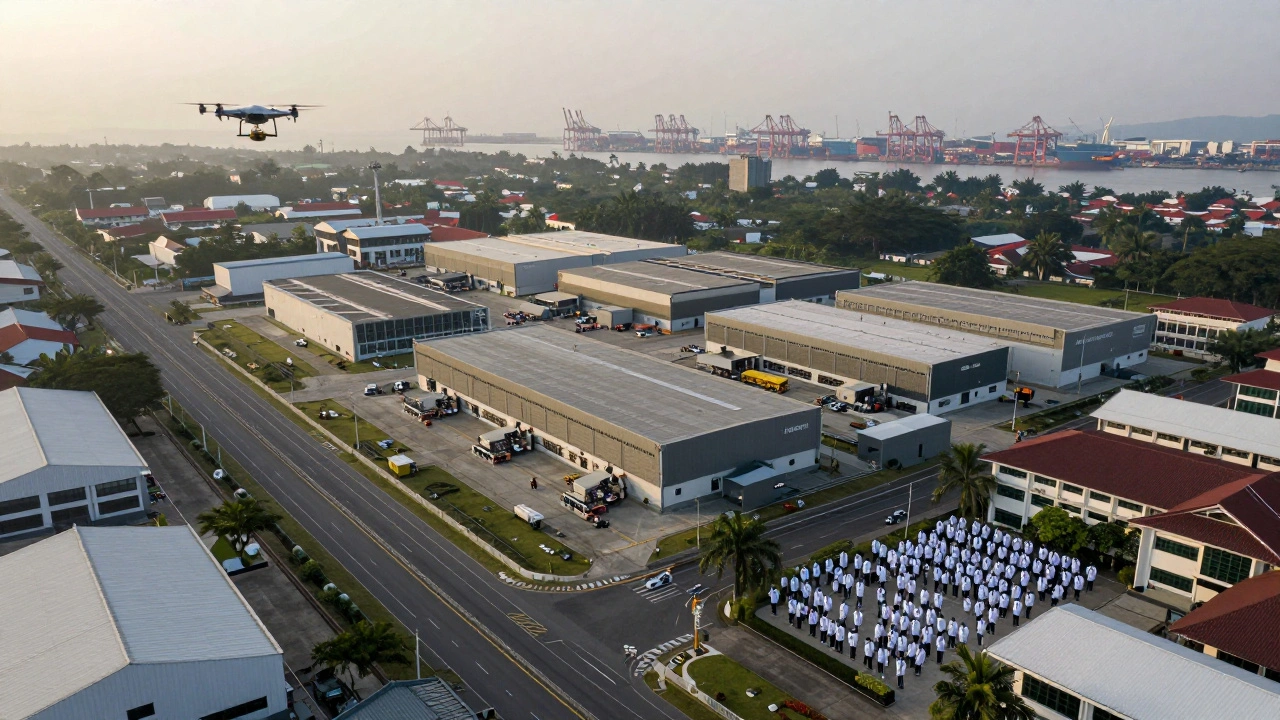
These aren’t random clusters. They’re intentional ecosystems. Take Greater Surabaya (a secondary city in Indonesia that’s become a manufacturing and logistics hub, with public-private partnerships training 15,000 workers annually in automation and logistics). Local colleges redesigned their curricula with input from 30+ companies. Factories started hosting apprenticeships. The city built affordable housing near transit lines. Within five years, Surabaya went from being a forgotten suburb to a top 10 destination for regional corporate expansion in Southeast Asia.
Same thing in Mekelle (a city in northern Ethiopia that’s become a center for agri-tech innovation, supported by a regional university and government-backed startup incubator). It’s not just about tech. It’s about creating pathways. A single mom in Mekelle can now train to become a drone operator for precision farming - a job that didn’t exist five years ago.
Three Types of Secondary Cities Winning Right Now
Not all secondary cities are the same. The ones winning corporate investment fall into three clear patterns.
- Regional Hubs: These are sub-national capitals or major service centers. Think Boise or Chattanooga. They have universities, hospitals, and government offices. Companies like Intel and Amazon have opened large tech centers here because they offer stability and a deep talent pool.
- Metropolitan Clusters: These are satellite cities that orbit a major metro but offer cheaper alternatives. Think Tijuana (next to San Diego) or Belém (in Brazil’s northern region). They’re perfect for manufacturing, logistics, and back-office operations. Companies save 40% on labor and still get access to a major market.
- Corridor Cities: These sit along highways, rail lines, or ports. Think Chattanooga again - it’s on the I-24 corridor - or Pemba in Mozambique, near key shipping routes. They’re ideal for distribution centers, export-focused manufacturing, and trade logistics.
Each type needs a different strategy. But they all share one thing: a clear identity. They’re not trying to be New York. They’re becoming the best version of themselves.
The Hidden Advantage: Less Competition, More Control
In megacities, every company is fighting for the same 10,000 software engineers. In a secondary city, you might be one of three big employers. That changes everything.
Local universities know who your competitors are. They design internships around your needs. City councils don’t just approve permits - they help you find land, negotiate tax breaks, and even recruit teachers for your employee’s kids. You’re not just hiring talent. You’re helping build the future of the city.
And that loyalty? It’s real. A 2025 survey of 800 employees who relocated from San Francisco to a secondary hub found that 71% said they felt more connected to their work and community. Only 23% said they missed the big city lifestyle. The rest? They said they finally had space - to breathe, to grow, to live.

Challenges? Yes. But They’re Solvable
Let’s be honest. Secondary cities aren’t perfect. Many still lack high-speed internet. Some have outdated public transit. Others struggle with housing shortages.
But here’s the thing: these problems are easier to fix than the ones in megacities. In a city of 300,000, you can get a mayor on the phone. In a city of 15 million? Good luck.
Look at Curitiba in Brazil. In the 1980s, it was a sleepy city with terrible traffic. Today, it has one of the world’s most efficient bus rapid transit systems - built because the city council said, “We’re not going to be another São Paulo.” That kind of vision is rare in megacities. It’s common in secondary ones.
And when companies invest, they don’t just bring jobs. They bring credibility. When Adobe opened a design center in Belém, it didn’t just hire 200 people. It made the city a destination for creative talent across Latin America.
What’s Next? The Quiet Revolution
The old model - centralize everything in the biggest city - is collapsing. Why? Because the world doesn’t work that way anymore.
Remote work didn’t create this shift. It just accelerated it. The real change is deeper: companies are realizing that talent doesn’t need to be in a skyline to be exceptional. It just needs opportunity, community, and a path forward.
By 2030, the World Bank estimates there will be twice as many secondary cities as there were in 1990. Many of them will be centers of innovation, manufacturing, and tech. The ones that thrive? Those that treat talent like a local asset - not a commodity to be poached.
Corporate leaders who still think only the biggest cities matter are missing the biggest opportunity of the decade. The future of work isn’t in the center. It’s in the regions.
What makes a city a "secondary city"?
A secondary city is typically an urban area with a population between 100,000 and 500,000 that serves as a regional center for government, commerce, education, or manufacturing - but isn’t the largest city in its country. These cities often support surrounding rural areas and act as economic bridges between rural communities and major metropolitan centers.
How do Talent Hubs actually work?
Talent Hubs are local partnerships between government, schools, employers, and nonprofits. They align training programs with real job needs - for example, a local community college might design a cybersecurity course based on input from the three biggest tech employers in town. They also help with housing, childcare, and transportation so workers can stay. It’s not just about hiring - it’s about building a system that keeps talent rooted in the region.
Are secondary cities only for manufacturing jobs?
No. While manufacturing and logistics are common, secondary cities are now hubs for tech, healthcare, education, and creative industries. Cities like Boise, Chattanooga, and Mekelle have thriving software, biotech, and agri-tech sectors. The key is having the right infrastructure and education partnerships - not the size of the population.
Can small businesses benefit from secondary city growth?
Absolutely. When big companies move in, they create demand for local services - accounting, marketing, maintenance, catering. Plus, many secondary cities offer grants, tax incentives, and co-working spaces specifically for small businesses. In Surabaya, for example, local entrepreneurs now supply parts to global manufacturers because the city built a supplier network that connects small shops to big clients.
Why are governments investing in secondary cities now?
Because megacities are overwhelmed. Traffic, housing shortages, pollution, and inequality are worse than ever. By spreading economic growth to secondary cities, governments reduce pressure on capitals, lower poverty rates, and create more balanced national economies. Programs like the U.S. EDA’s Tech Hubs and similar efforts in Latin America and Southeast Asia are designed to make this happen intentionally.