Credibility Score Calculator
The Ukraine-Russia war demonstrated that credibility isn't just about what you say—it's about how you say it. This calculator shows how different communication factors impact trust during crisis situations. Use it to understand why Ukraine's approach succeeded where Russia's failed.
Credibility Score
When Russia invaded Ukraine in February 2022, most experts expected a quick collapse. What followed wasn’t just a military conflict-it was the most advanced information war in modern history. Ukraine didn’t just defend its land. It defended its story. And in doing so, it changed how nations fight in the digital age.
The Power of a Message That Sticks
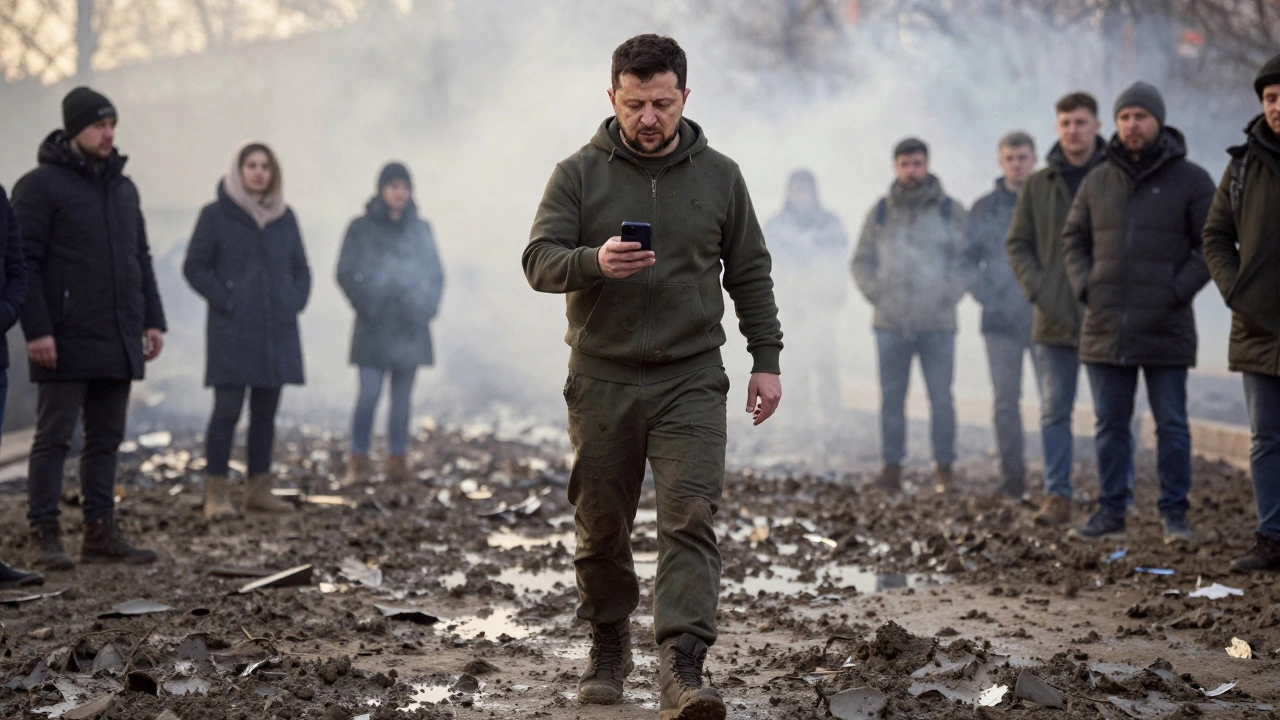
Ukraine’s communication strategy didn’t start on Day One of the invasion. It was built over years. Before the war, Ukraine’s government had already identified Russian disinformation as a weapon. They trained teams, tested messaging, and mapped out how lies spread. When the bombs fell, they were ready. President Volodymyr Zelenskiy became the face of that effort. Not because he was a politician, but because he was real. He filmed himself walking the streets of Kyiv, boots muddy, face tired, telling the world: We’re still here. That image didn’t come from a PR firm. It came from a leader who refused to flee. And it worked. Within three days of the invasion, Ukraine’s Instagram followers jumped from 130,000 to nearly a million. People didn’t just follow-they shared. They reposted. They became part of the message. This wasn’t about begging for help. It was about proving they were already winning. Ukrainian communicators shifted from saying, “We need weapons,” to saying, “Here’s how we’re using them.” They showed drone strikes taking out Russian tanks. They posted videos of civilians turning abandoned armored vehicles into public art. They didn’t hide the cost-they showed the courage.How Ukraine Built a Communication Army
Ukraine didn’t rely on state TV or official press releases. They created something new: the PR Army. A network of over 500 volunteers-journalists, students, coders, former soldiers-scattered across 30 countries. Their job? Connect Ukrainian witnesses with Western media. If a soldier in Kharkiv had footage of a Russian unit retreating, the PR Army made sure CNN, BBC, and Al Jazeera got it within hours. They used tools no one expected. Memes. Sarcasm. TikTok dances about missile defense. One post showed a Ukrainian soldier holding a sign: “Russia’s army is like my Wi-Fi-always dropping.” It went viral in Germany. Another showed a child drawing a tank with the words: “This is what my dad fights.” The message wasn’t propaganda. It was humanity. Behind the scenes, Ukraine’s Ministry of Digital Transformation built an AI system that monitored over 15,000 Russian disinformation channels. When a lie popped up-say, “Ukraine is using chemical weapons”-the system flagged it in under 15 minutes. Teams then released counter-narratives with video evidence, satellite images, and eyewitness interviews. By 2025, they had responded to over 22,000 false claims.Russia’s Message Was Always Broken
Russia’s approach was the opposite. Centralized. Slow. Inconsistent. While Ukraine responded to battlefield changes in under two hours, Russian state media took 24 to 72 hours to react. When Zelenskiy visited Washington in December 2022, Russia’s response was chaotic. Putin gave one interview. Medvedev posted angry rants. Lavrov gave a speech no one outside Russia watched. No unified message. Just noise. Worse, their stories didn’t hold up. Russian TV claimed Ukraine was run by Nazis. But when Western journalists visited towns like Bucha or Irpin, they found families, not fascist bunkers. Russian media claimed Ukraine was collapsing. But satellite images showed Ukrainian troops advancing. The disconnect was too big to ignore. By 2024, NATO surveys found only 12% of non-aligned countries trusted Russian messaging. In contrast, 87% trusted Ukraine’s. Even in countries like India and Brazil-where Russian state TV had strong reach-people began questioning what they saw.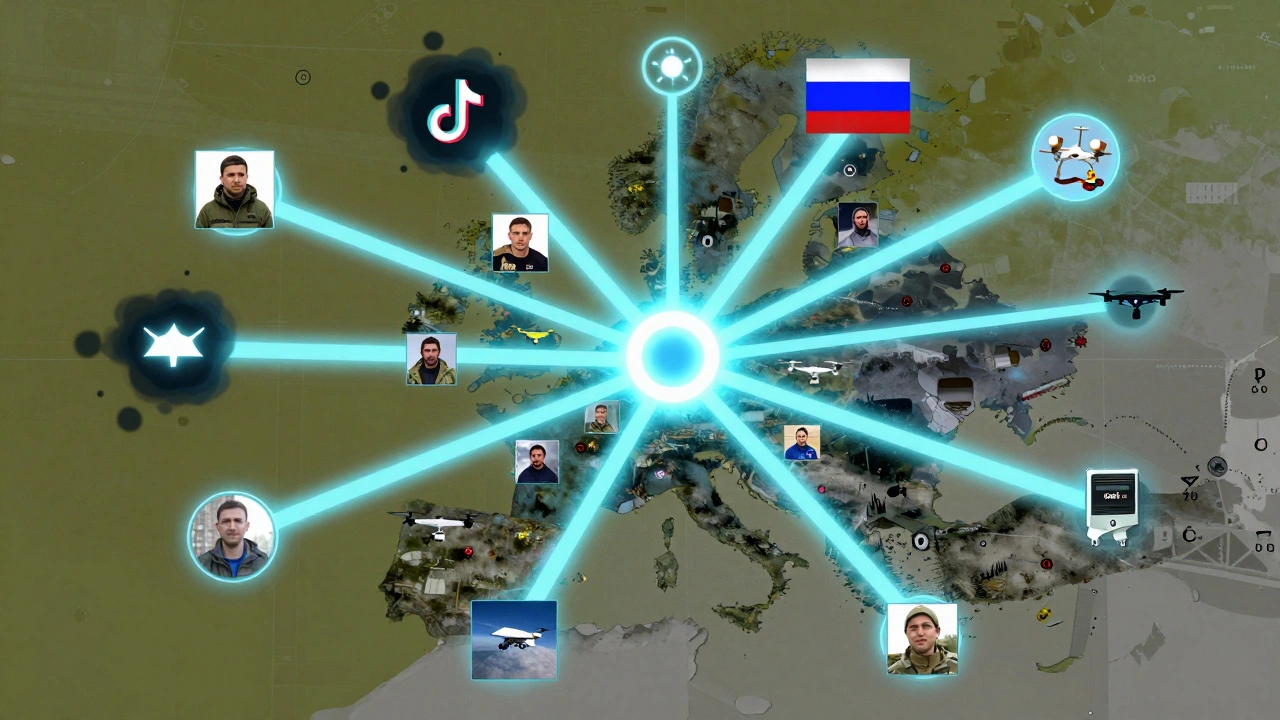
The Cost of Truth: Infrastructure Under Fire
Ukraine’s communication system didn’t work because of fancy tech. It worked because it was built to survive. By March 2022, 40% of Ukraine’s telecom infrastructure was destroyed. Cell towers gone. Fiber lines cut. Power out for days. So they turned to Starlink. SpaceX delivered 15,000 terminals in the first week. Soldiers used them to livestream from the front. Hospitals used them to call for supplies. Schools used them to keep teaching. When the Russians jammed signals during offensives, Ukraine switched to mesh networks-devices connecting directly to each other without cell towers. Signal and Telegram became lifelines. Volunteers trained civilians to use them. By 2025, over 4,300 people had been certified as strategic communicators through 12 regional training centers. It wasn’t glamorous. It was necessary.Public Opinion Is a Battlefield Too
Winning the war meant winning hearts-not just in Ukraine, but in Europe, the U.S., and beyond. In March 2022, 82% of Americans supported military aid to Ukraine. By January 2025, that number had dropped to 54%. War fatigue set in. People were tired of hearing about bombs. Tired of seeing refugees. Tired of paying higher gas prices. Ukraine’s response? They stopped asking for pity. They started showing results. They highlighted how Ukrainian drones were hitting Russian fuel depots. They showed how their counter-disinformation tools were helping Moldova and Georgia resist Russian lies. They proved their success wasn’t just moral-it was strategic. The result? Western aid commitments rose by $18.7 billion after Zelenskiy’s 2022 U.S. visit. The EU passed the Digital Services Act Amendments in 2024, cutting Russian disinformation reach by 63%. Ukraine’s StopFake platform, originally created to debunk lies at home, was adopted by 17 NATO countries. Even in Russia, cracks appeared. Independent outlet Meduza found that 41% of Russians in December 2025 were unsure about the war’s justification-up from 14% in 2022. Telegram channels filled with questions: “Why are we still fighting?” “Where are the weapons?” “Why is no one talking about the dead?”
The New Weapon: Predicting Lies Before They Spread
By late 2025, Ukraine launched something new: Truth Shield. This AI system scans 200+ data streams-Russian social media, state TV transcripts, Telegram bot networks, even encrypted forums-to predict disinformation campaigns before they go live. It doesn’t just react. It anticipates. In its first test, Truth Shield predicted a false narrative about Ukrainian forces attacking a hospital-48 hours before Russian media released it. Ukraine released counter-evidence, including hospital security footage and drone logs, before the lie even spread. The result? The false story peaked at 12,000 shares instead of the predicted 2.1 million. They’re now testing blockchain-verified eyewitness accounts. A civilian in Mariupol records a Russian tank passing through her street. Her phone encrypts the timestamp, GPS, and video. That data is stored on a decentralized ledger. No one can alter it. No one can delete it. If a Russian bot claims “Mariupol is peaceful,” Ukraine can show the truth-verified, timestamped, unchangeable.What’s Next? The War Won’t End, But the Rules Have Changed
Ukraine’s communication strategy is no longer just about winning the war. It’s about winning the next one. Forty-one countries are now studying their model. Moldova and Georgia copied key elements in 2024. Their information resilience scores jumped by 28% and 34% respectively. The cost? Ukraine spent $317 million on strategic communications in 2025-4.2% of its defense budget. Russia spent $1.2 billion. But Russia’s money bought silence. Ukraine’s bought trust. The biggest threat now isn’t Russian tanks. It’s Western apathy. With U.S. elections looming, aid could drop by $12 billion a year if leadership changes. Ukraine’s next challenge? Making sure the world remembers why this war matters-not because it’s tragic, but because it’s transformative. The lesson isn’t that truth wins. It’s that truth, when told clearly, quickly, and consistently, can outlast lies-even when the lies are louder, better funded, and backed by a nuclear power.What Ukraine Taught the World
- Disinformation can be defeated-not by censorship, but by faster, better storytelling.
- Morale isn’t built by speeches. It’s built by showing people they’re not alone.
- Public opinion is a resource. It can be drained… or it can be renewed.
- Technology matters, but human courage matters more.
- The best defense isn’t just weapons. It’s a story people believe in.
How did Ukraine manage to communicate during blackouts and destroyed infrastructure?
Ukraine relied on satellite internet from Starlink, which delivered 15,000 terminals in the first week of the war. When cell towers were destroyed, they switched to decentralized mesh networks using Signal and Telegram. Volunteers trained civilians to use these tools, and communication teams operated through battery-powered devices that worked during 72-hour blackouts. This resilience turned a weakness into a strength.
Why did Russian disinformation fail so badly?
Russian messaging was slow, inconsistent, and often contradicted itself. While Ukraine responded to battlefield events in under two hours, Russian state media took up to three days. Their stories didn’t match reality-like claiming Ukraine was run by Nazis while satellite images showed civilians rebuilding homes. Western audiences noticed the gap, and even Russian citizens began doubting official narratives, with 41% expressing uncertainty by late 2025.
What role did social media play in Ukraine’s success?
Social media was Ukraine’s primary weapon. Platforms like Instagram and TikTok allowed real-time storytelling without filters. Memes, videos of civilians helping soldiers, and live streams from the front created emotional connections. Ukraine’s Instagram following grew from 130,000 to nearly 1 million in just three days. This wasn’t advertising-it was organic, human-driven amplification.
How did Ukraine maintain credibility compared to Russia?
Ukraine focused on transparency and speed. They shared evidence-satellite images, drone footage, eyewitness accounts-alongside their messages. Russia relied on top-down propaganda with no room for correction. By 2024, NATO surveys showed 87% of Western audiences trusted Ukraine’s communications, compared to just 12% for Russia’s. Credibility wasn’t claimed-it was proven.
Is Ukraine’s communication model being copied by other countries?
Yes. At least 41 countries facing hybrid threats are studying Ukraine’s approach. Moldova and Georgia implemented similar systems in 2024, increasing their information resilience scores by 28% and 34% respectively. Ukraine’s StopFake platform, originally designed to fight domestic disinformation, is now used by 17 NATO countries to detect and counter false narratives.
What’s the biggest threat to Ukraine’s communication strategy today?
Western war fatigue. Support for Ukraine has dropped from 82% in March 2022 to 54% in January 2025 among key allies. Younger demographics show even lower support. The upcoming U.S. elections could reduce military aid by up to $12 billion annually. Ukraine’s next challenge is keeping the world engaged-not by pleading, but by proving their fight still matters.