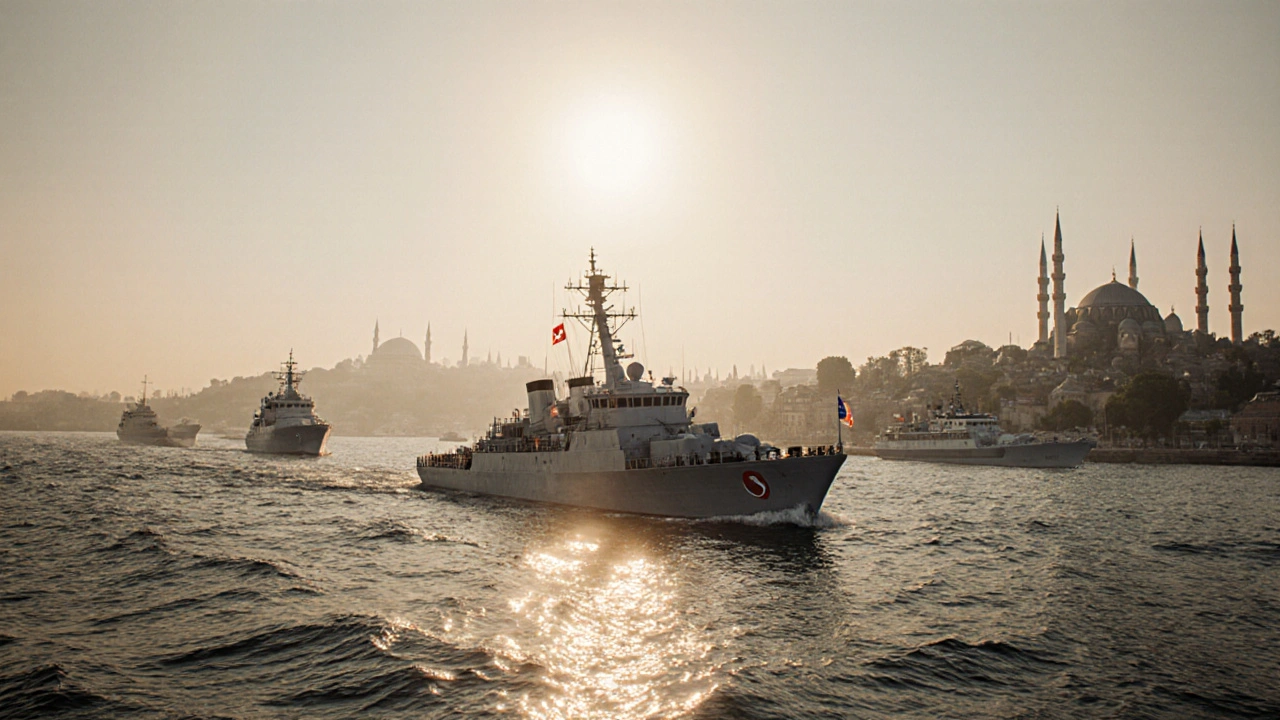
Turkey Regional Diplomacy
When we talk about Turkey regional diplomacy, Turkey’s strategic effort to influence neighboring countries and regional institutions through political, economic, and security channels. Also known as Ankara’s foreign policy maneuvering, it’s not just about talking to neighbors—it’s about controlling the levers of power in places where the U.S. and EU are pulling back. From the Black Sea to the Levant, Turkey doesn’t wait for permission to act. It builds alliances with Syria’s opposition, arms Libya’s government, brokers deals between Azerbaijan and Armenia, and keeps channels open with Iran—even as it stays in NATO.
This isn’t random. Turkey’s diplomacy is built on three things: geography, history, and pragmatism. Its location straddles Europe and Asia means it controls key trade routes, energy pipelines, and migration flows. That gives it leverage no other country in the region has. When the EU struggles to manage refugee flows, Turkey holds the keys. When Russia pushes into the Black Sea, Turkey uses its control over the Bosporus to slow or stop naval movement. And when the U.S. steps away from Syria, Turkey steps in—with troops, drones, and talks with local leaders.
It’s not all smooth. Turkey’s push for influence has created friction with Greece over islands and maritime borders, with Egypt over energy drilling, and with Saudi Arabia over who leads the Sunni world. But Turkey doesn’t back down. It uses its military exports, like the Bayraktar drone, as diplomatic tools. It offers debt relief to struggling neighbors in exchange for port access or mining rights. It hosts peace talks in Istanbul when no one else will. And it quietly works with Russia on energy deals while publicly criticizing its war in Ukraine.
What you’ll find in the posts below isn’t just news about Turkey. It’s the ripple effect of its moves. You’ll see how EU-Turkey relations, the complex mix of cooperation and conflict between Turkey and the European Union on migration, trade, and security shape border policies in Greece and Bulgaria. You’ll see how Middle East diplomacy, the web of alliances, rivalries, and backchannel negotiations that determine who controls territory and resources across the region shifts when Ankara backs a faction in Yemen or opens talks with Assad. And you’ll see how NATO strategy, the collective defense framework where Turkey’s role as a frontline member forces allies to rethink priorities changes when Turkey delays arms sales or refuses to join sanctions.
There’s no single playbook here. Turkey’s diplomacy works because it’s messy, flexible, and always moving. It doesn’t need to win every argument—it just needs to stay in the room. And in a world where big powers are distracted, that’s enough to change the game.