
Crisis Communication Timing Calculator
Select Stakeholder Group
Select a stakeholder group to see recommended communication timing.
When a crisis hits, your message to investors, regulators, and the community can’t be the same
Think about it: if your factory shuts down because of a chemical spill, your investors want to know how much money you’re losing. Your regulators want to know exactly what went wrong and what you’re doing to fix it. Your neighbors? They just want to know if their kids are safe and when things will go back to normal. One message doesn’t fit all. And if you try to use the same script for everyone, you’ll lose trust - fast.
Most companies don’t plan for this. They wait until the crisis hits, then scramble. That’s how rumors spread, how stock prices drop, and how communities feel ignored. The truth is, effective crisis communication isn’t about spinning the news. It’s about being clear, honest, and tailored to who you’re talking to. And it has to be ready before the crisis starts.
Investors: They care about impact, not emotion
Investors aren’t asking for sympathy. They’re asking for facts: What happened? How long will it last? What’s the financial hit? And what’s your plan to recover?
When a crisis hits, your first message to investors should come within hours - even if all you have is: “We’re aware of an incident at our facility in Albuquerque. We’re gathering details and will update you within 24 hours.” That’s better than silence. Silence screams negligence.
Follow up with structured updates: daily at first, then every 48 hours. Include hard numbers - estimated downtime, projected revenue loss, insurance coverage, and steps being taken to resume operations. Don’t hide bad news. Investors respect transparency more than optimism. If you say, “We expect a 15% drop in Q2 earnings,” and then it’s 18%, they’ll still trust you. If you say, “It’s under control,” and then it gets worse? You lose credibility forever.
Always use a Communication Approval Chain. Legal, finance, and CEO must sign off before anything goes out. One misworded sentence about liability can trigger lawsuits or SEC investigations. And never send investor updates through email alone. Use a secure investor portal, or a dedicated conference call line. Track who’s received it. Record the call. Paper trails matter.
Regulators: They’re not your enemy - they’re your checklist
Regulators don’t want to punish you. They want to make sure you’re not going to do it again. And they have the power to shut you down - permanently.
Your communication with regulators needs to be precise, timely, and documented. If there’s a spill, leak, or safety failure, you’re legally required to report it within hours. Miss that window? You’re not just unprepared - you’re in violation.
Set up Secure Communication Channels before anything happens. That means designated email addresses, encrypted file transfers, and a single point of contact who knows every regulation that applies to your business. Don’t let PR handle this. Don’t let your CFO wing it. Assign a compliance officer who works directly with legal and operations.
When you report, give them: the exact time and location of the event, the substances involved, the estimated volume, the people or areas affected, and your immediate containment steps. Then, follow up with a full Impact Assessment within 72 hours. Include timelines, corrective actions, and proof you’ve updated your procedures. Regulators don’t care how nice you sound. They care if your fix prevents the next incident.
And never guess. If you don’t know how many gallons leaked, say so. Then say: “We’re working with third-party environmental auditors to verify the numbers and will report by [date].” Honesty under pressure builds long-term trust.
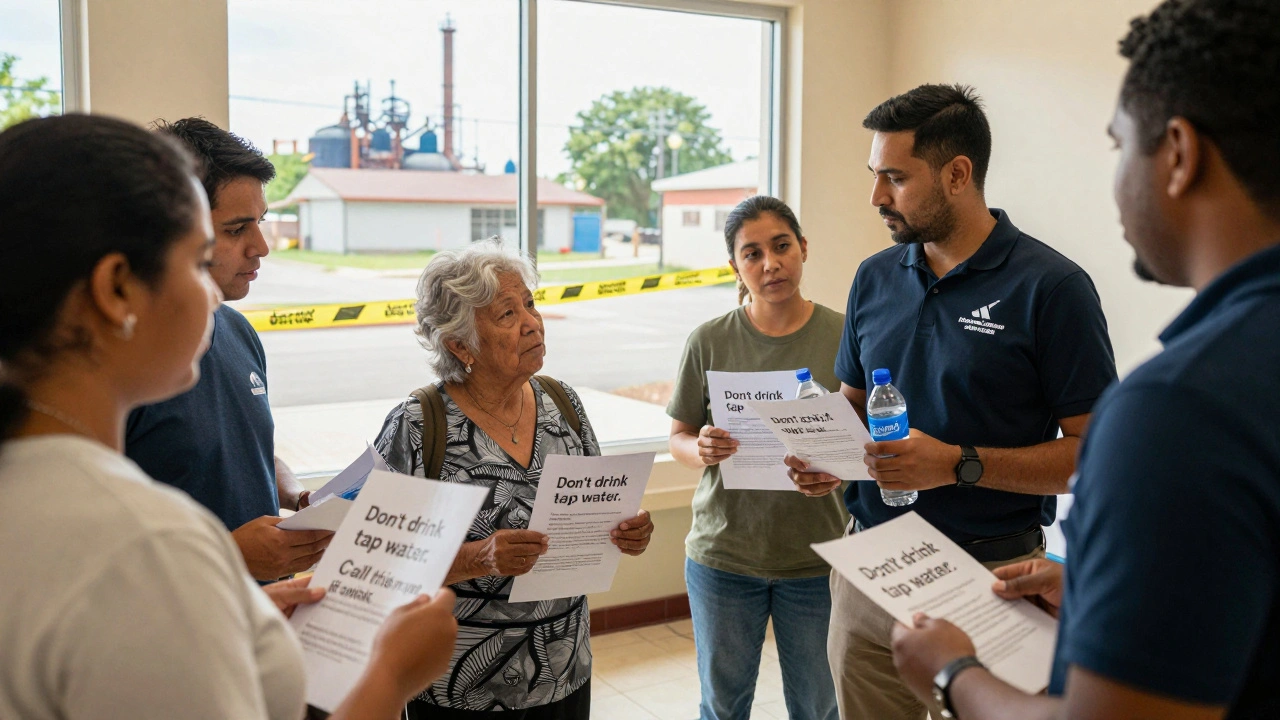
Community: Your neighbors don’t read annual reports
Here’s the hard truth: the community doesn’t care about your quarterly earnings. They care about their water. Their kids’ schools. Their property values. Their sense of safety.
Community communication isn’t about data. It’s about empathy. And clarity. No jargon. No corporate speak. Just plain language: “We’re sorry this happened. We’re working to fix it. Here’s what you need to do.”
Use every channel that works for your area. Text alerts. Local radio. Social media. Door-to-door flyers. Community center bulletins. If you’re in a rural area, partner with churches or local libraries to spread the word. If you’re in a city, use Instagram, TikTok, and Nextdoor. Tailor the message to how people actually get information - not how you wish they did.
Give them clear instructions: “Don’t drink tap water until further notice.” “Keep pets indoors.” “Call this number if you feel sick.” Don’t leave them guessing. Uncertainty causes panic. Clear guidance calms people.
And say you’re sorry - not because you’re legally required to, but because it’s human. “We know this affects your family, your business, your peace of mind. We’re here to help.” That’s not PR fluff. That’s the only thing that stops anger from turning into protest.
Track message receipt. Send a text: “Did you receive our update? Reply YES or NO.” If 20% don’t respond, send someone to knock on doors. If people don’t hear you, you’re not communicating - you’re shouting into the wind.
Build your team before the fire starts
You don’t wait for a hurricane to build a boat. You don’t wait for a crisis to train your team. And yet, over two-thirds of companies still do exactly that.
Create a Crisis Communication Team now. Not next year. Not after the next audit. Today. Include:
- A Crisis Communication Lead - someone who makes final decisions, not a CEO who’s too busy.
- Information Gatherers - ops, safety, environmental staff who collect real-time data.
- Message Drafters - writers who use pre-approved templates (more on that in a second).
- Technical Support - IT and comms techs who keep channels alive.
- Stakeholder Liaisons - one person for investors, one for regulators, one for community.
These people need to know each other. They need to have trained together. They need to have practiced.
Pre-written templates save lives
When a crisis hits, you don’t have time to write a press release from scratch. That’s why you need pre-approved message templates.
Create templates for the most likely scenarios: chemical leak, data breach, workplace accident, supply chain failure. For each:
- Define the key facts you’ll need to fill in (time, location, impact).
- Write the core message - clear, calm, factual.
- Include placeholders for stakeholder-specific details (e.g., investor section: “Estimated financial impact: [X]”).
- Get legal, HR, and compliance to sign off on each one.
Store them in a Centralized Information Repository - a secure, cloud-based folder only your team can access. Update it every six months. Test it in drills.
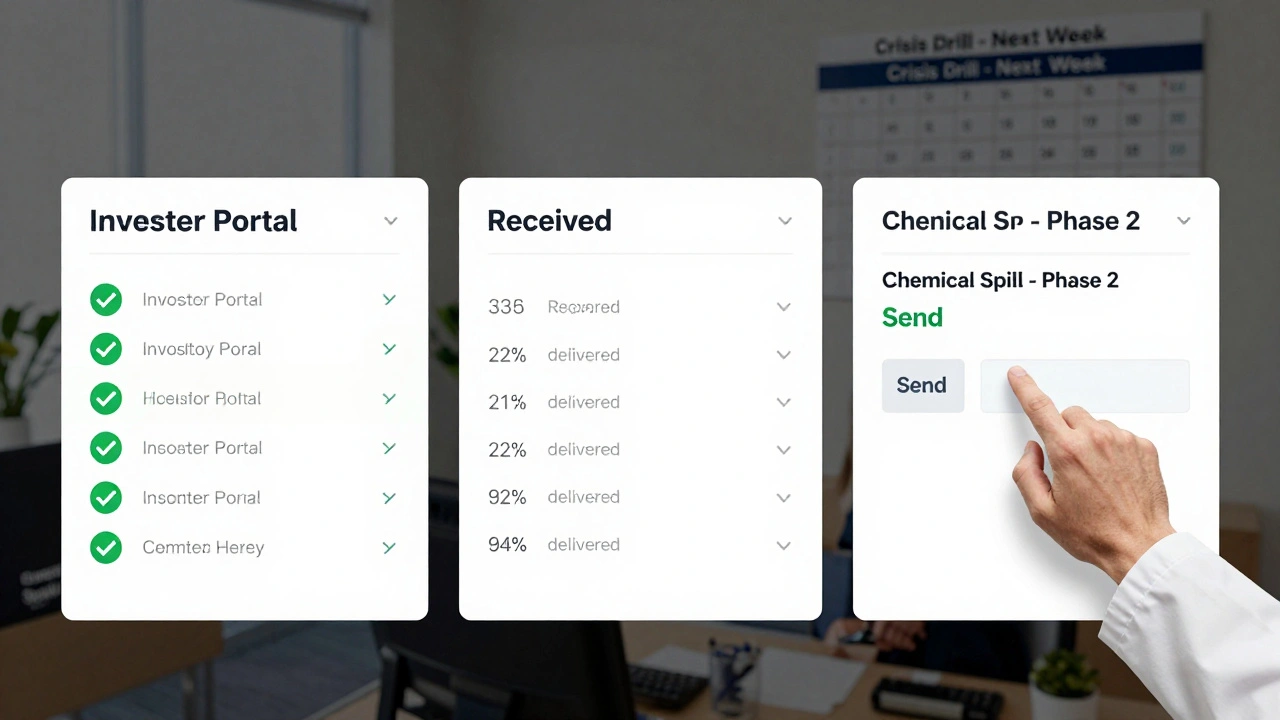
Timing isn’t optional - it’s a strategy
Investors: Update every 24-48 hours until resolution.
Regulators: Initial report within 2 hours. Full report within 72 hours.
Community: First update within 1 hour. Then every 6 hours during active crisis.
Don’t wait for “all the facts.” Say: “Here’s what we know. Here’s what we don’t. Here’s what we’re doing.” Then update as you learn more.
And never stop. Even after the crisis ends, keep talking. People forget quickly. If you go silent after 7 days, they assume you’ve given up.
After the crisis: Repair trust - don’t just move on
Most companies treat crisis communication like a fire drill. They put it out, then forget about it.
Don’t.
After the crisis, send a Resolution Announcement: “The incident is resolved. Operations are fully restored. All affected systems are confirmed safe.”
Then, send an Appreciation Message: “Thank you for your patience. We know this was difficult.”
Then, share a Lessons Learned Summary - not a corporate report. A real one. “We didn’t have enough staff on call. We didn’t test our text alert system. We didn’t know how to reach non-English speakers. Here’s what we’re changing.”
And survey your stakeholders. Ask investors: “Did our updates help you make decisions?” Ask regulators: “Did we provide what you needed?” Ask the community: “Did you feel informed and supported?”
Use that feedback. Update your templates. Train your team again. Because the next crisis won’t wait.
Bottom line: You’re not just managing a crisis - you’re proving your character
Crises don’t define companies. How you handle them does.
Investors remember who told them the truth - even when it hurt.
Regulators remember who didn’t try to hide.
Communities remember who showed up - not just with a press release, but with a plan, a voice, and a heart.
Build your plan now. Test it. Train your team. Update your templates. Because when the next crisis comes - and it will - you won’t be guessing. You’ll be ready.