WTO Dispute Path Decision Tool
Your Trade Dispute Situation
When two countries clash over tariffs, subsidies, or market access, they don’t just yell across borders. They have a system. And that system has two main paths: the formal, rule-bound WTO panel process, and the quiet, flexible world of bilateral negotiations. Most people think trade disputes are settled in courtrooms with gavels. They’re not. They’re settled in backrooms, through phone calls, and sometimes, after years of legal back-and-forth.
How the WTO Panel Process Actually Moves (Or Doesn’t)
The WTO’s dispute system looks like a courtroom, but it’s not. There’s no judge in robes. No jury. Just 164 member countries, a secretariat that handles paperwork, and a set of rules written in 1995 that still mostly work today. The process starts with something simple: consultations. Both sides sit down for 60 days to try to fix the problem without lawyers. This isn’t a formality. In nearly half of all cases, this is where the fight ends. If talks fail, the complaining country can ask the Dispute Settlement Body (DSB)-which is just the WTO’s General Council wearing a different hat-to set up a panel. The DSB doesn’t vote. It just has to not block the panel. That’s the key. Under the old GATT system, a country could stop a ruling just by saying no. Now, if one side wants a panel, it gets one. Unless every single member says no. And no one does that. Not anymore. Then comes the panel. Three experts, picked by the WTO Secretariat. The parties can reject them, but only if they give a good reason. In practice, they reject plenty. It takes an average of seven weeks just to pick the panel. Once they’re in, the panel holds two meetings. No public hearings. No media. Just written submissions and private oral arguments. Even companies affected by the dispute can’t speak. Only governments can. The panel’s draft report goes to the two sides first. Two weeks later, it’s sent to all 164 members. Then, in 60 days, it gets adopted-unless someone appeals. That’s where things get messy.The Appellate Body Crisis and What It Means
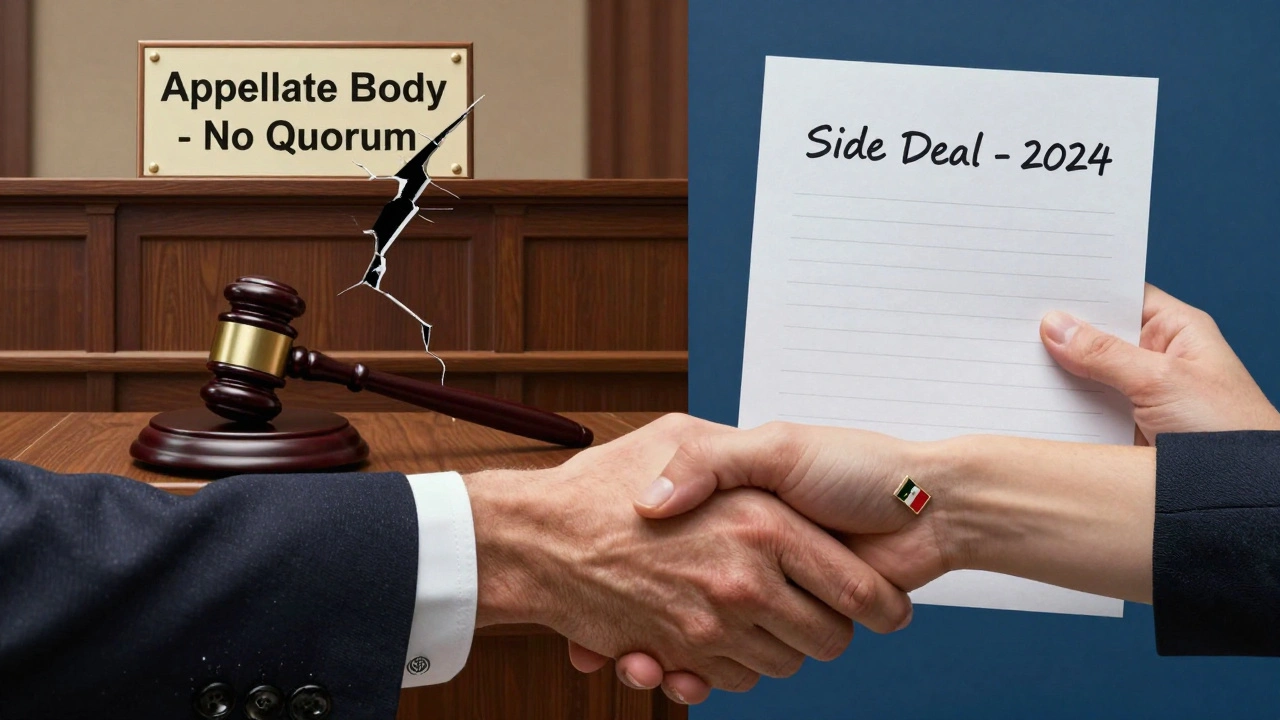
The Appellate Body was supposed to be the final word. Seven members, appointed for four-year terms, reviewing legal interpretations. But since 2019, it’s been dead. The United States blocked new appointments over concerns about judicial overreach. No replacements. No quorum. So now, if a country appeals, the appeal just... stalls. The panel report sits. It’s legally valid. But it can’t be enforced. That’s a huge problem. In 2025, 17 disputes were still hanging because no one could appeal-and no one could finalize. This isn’t theoretical. When Canada and the EU fought over aircraft subsidies, the panel ruled in favor of Canada. The EU didn’t comply. Canada asked for permission to raise tariffs on EU goods. The DSB approved it. But because the Appellate Body was down, the EU couldn’t challenge the decision. So they just... ignored it. For years. That’s the reality now: rulings are only as strong as the willingness of countries to follow them.
Bilateral Negotiations: The Quiet Way Most Disputes Get Solved
While the WTO system chugs along, quietly, most trade fights are settled without ever touching a panel. Think about it: if two countries are trading $200 billion a year, do they really want to drag each other through a 2-year legal battle? Probably not. Bilateral negotiations are the hidden engine of trade. They happen during those first 60 days of consultations. Or after the panel report is drafted. Or even after a ruling is ignored. They’re private. They’re fast. And they’re flexible. A country might say: “You’re dumping steel on us.” The other side might reply: “Okay, we’ll cut exports by 15% if you drop the case.” No ruling. No precedent. Just a deal. Sometimes, they link it to other issues: “We’ll ease your agricultural exports if you stop blocking our tech tariffs.” It’s transactional. It’s political. And it works. In 2024, the U.S. and South Korea quietly resolved a dispute over auto safety standards by agreeing to mutual recognition of testing protocols. No WTO panel. No public announcement. Just a memo between trade ministers. That’s how it’s done.Why Choose One Path Over the Other?
So when should a country go to the WTO? And when should they pick up the phone? Go to the WTO if:- You want a binding ruling that applies to everyone, not just your case
- You need the DSB to authorize retaliation (like raising tariffs on imports)
- You’re fighting a pattern, not a single policy (e.g., China’s state subsidies across dozens of industries)
- You’re a smaller economy and need the system to level the playing field
- You want to preserve the relationship
- You need an answer fast-within months, not years
- The issue is too new for WTO rules to cover (like AI-driven trade barriers or data localization)
- You’re willing to trade something else (like security cooperation or climate funding) to get a deal
What Happens After a Ruling?
Even if you win at the WTO, the real battle starts after the report is adopted. The losing country has 15 months to fix the problem. If they don’t? The winner can ask the DSB for permission to suspend trade concessions. That means they can raise tariffs on the loser’s exports. It’s not punishment. It’s leverage. But here’s the catch: if the loser is a big economy, and the winner is small, the retaliation might hurt more than it helps. A small country can’t afford to block $10 billion in exports from a major partner. So they often don’t. That’s why compliance rates are high-not because countries fear the WTO, but because they fear the cost of non-compliance. In 2025, 78% of adopted rulings were fully implemented within the deadline. The rest? A mix of delays, partial compliance, and quiet side deals.The Real Story: Rules vs. Reality
The WTO system was built on the idea that rules create order. And they do-but only if countries believe in them. Today, trust is fraying. The Appellate Body is broken. The U.S. and China aren’t using panels. The EU is filing fewer cases. And more countries are turning to regional deals, like the Indo-Pacific Economic Framework or the African Continental Free Trade Area. This isn’t the end of the WTO. It’s a shift. The system still matters for small countries and for setting global norms. But for big players, the real action is in the shadows-behind closed doors, in summit meetings, and in trade minister phone calls. The future of trade dispute resolution isn’t about legal technicalities. It’s about who you know, how much you’re willing to give up, and whether you’re ready to walk away from the rules when they don’t serve your interests.Can a country ignore a WTO ruling without consequences?
Yes, but only if they’re willing to risk retaliation. The WTO can’t force a country to comply. It can only authorize the winning side to impose trade sanctions-like raising tariffs. But if the loser is powerful (like China or the U.S.) and the winner is small, the threat of retaliation often doesn’t work. Many countries just delay, make partial changes, or quietly negotiate a deal behind the scenes. Compliance is more about political pressure than legal enforcement.
Why do some trade disputes never reach the WTO panel stage?
Because most are resolved during the 60-day consultation phase. Countries prefer to avoid the public, legal, and time-consuming process of a WTO panel. Bilateral talks are faster, confidential, and allow for creative solutions-like linking trade concessions to climate cooperation or security agreements. Over half of all trade disputes are settled before a panel is even formed.
How long does a WTO dispute typically take?
Without an appeal, it takes about a year: 60 days for consultations, 45 days to set up the panel, six months for the panel to write its report, and 60 days for adoption. With an appeal, it can stretch to 18-24 months. But since the Appellate Body stopped working in 2019, appeals are stuck. Many cases now sit unresolved for years, creating legal limbo.
Are bilateral trade deals legally binding?
They’re politically binding, but not legally enforceable through the WTO. If two countries agree to cut tariffs in exchange for access to government contracts, that agreement isn’t reviewed by any court. If one side breaks it, the other can retaliate diplomatically or economically-but they can’t go to the WTO to challenge it unless the deal violates an existing WTO rule. Most bilateral deals are designed to avoid that.
What’s the biggest weakness in the current WTO dispute system?
The lack of a functioning Appellate Body. Without it, rulings can’t be finalized if appealed, and countries have no way to challenge flawed panel decisions. This has led to a backlog of unresolved cases and reduced confidence in the system. Countries are increasingly turning to regional agreements or bilateral deals because they offer faster, more predictable outcomes.