Ukraine Reconstruction Aid Calculator
How Corruption Affects Reconstruction
Based on Operation Midas and other scandals, analysts estimate 10-15% of aid is lost to corruption. This calculator shows how much of your donation actually reaches reconstruction projects.
Funds Impact Analysis
15% Corruption RateReal-World Impact
$ could have provided housing for $ displaced families
$ could have repaired $ power stations
Ukraine is fighting for its survival on the battlefield, but behind the front lines, another war is being lost-not to tanks or missiles, but to stolen money. In November 2025, investigators from Ukraine’s National Anti-Corruption Bureau (NABU) uncovered a $110 million corruption scheme at Energoatom, the state-owned nuclear company. This wasn’t some small-time graft. It was a systemized theft, targeting critical infrastructure projects meant to protect the country’s energy grid from Russian attacks. The money didn’t vanish into thin air. It flowed through shell companies, into offshore accounts, and eventually into the hands of individuals linked to Russian intelligence. This scandal, dubbed Operation Midas, is the latest and largest in a string of corruption cases that are quietly sabotaging Ukraine’s ability to rebuild after war.
How a Nuclear Power Plant Became a Theft Target
The heart of the Operation Midas scheme was the Khmelnytskyi Nuclear Power Plant. Ukraine relies on this facility for nearly half its electricity. After Russia began targeting power infrastructure in 2022, upgrading security systems became a national priority. But instead of spending $20 million on real upgrades, officials inflated contracts to $23 million-and pocketed the difference. Contractors were told: pay the extra 10-15% as a "service fee," or risk losing future work. This wasn’t optional. It was enforced. Wiretaps captured conversations where officials threatened contractors with delayed payments and blacklisting. The stolen funds didn’t stay in Ukraine. They were funneled through an office tied to Andrii Derkach, a former Ukrainian MP turned Russian senator with known ties to the FSB. Derkach, sanctioned since 2021 and stripped of Ukrainian citizenship in 2023, allegedly used this network to launder money and maintain influence inside Ukraine’s most sensitive institutions.Who’s Really Behind the Scandal?
The names tied to this scandal aren’t obscure bureaucrats. They’re top officials who worked closely with President Zelenskyy. Herman Halushchenko, former Minister of Energy and later Minister of Justice, was arrested in February 2026 as he tried to flee the country. Oleksii Chernyshov, former head of Naftogaz and former Deputy Prime Minister, received over $1.3 million in cash transfers, according to NABU records. Rustem Umerov, now Ukraine’s chief negotiator in peace talks, was also implicated. His continued role raises serious questions: how can a country negotiate its future while its top officials are under investigation for stealing funds meant to defend it? Even Ihor Myroniuk, a former advisor to Halushchenko, was arrested. And then there’s Timur Mindich-a film producer and former business partner of Zelenskyy-who allegedly orchestrated the whole operation. The scandal didn’t just expose greed. It exposed a network of power, loyalty, and betrayal at the highest levels of government.The Pattern Isn’t New-It’s Getting Worse
Operation Midas didn’t come out of nowhere. It’s the peak of a five-year spiral. Since Russia’s full-scale invasion began in 2022, Ukraine has seen at least seven major corruption scandals. In January 2023, five regional governors and four deputy ministers were fired over a food supply scam meant to feed soldiers. In May 2023, the head of Ukraine’s Supreme Court was arrested for taking $1.8 million in bribes to sway rulings. In August 2023, all regional draft officials were removed after a system was found allowing wealthy men to avoid conscription. In September 2023, Defense Minister Oleksii Reznikov resigned after body armor was sold at four times its cost. In January 2024, officials were arrested for stealing $40 million from a failed artillery shell order. In May 2024, a presidential aide was charged with illegally acquiring luxury cars and property worth $400,000. And in November 2025, Presidential Aide Andriy Yermak resigned after his home was raided as part of Operation Midas. These aren’t random failures. They’re systemic. One scandal every three months. A pattern of institutional decay.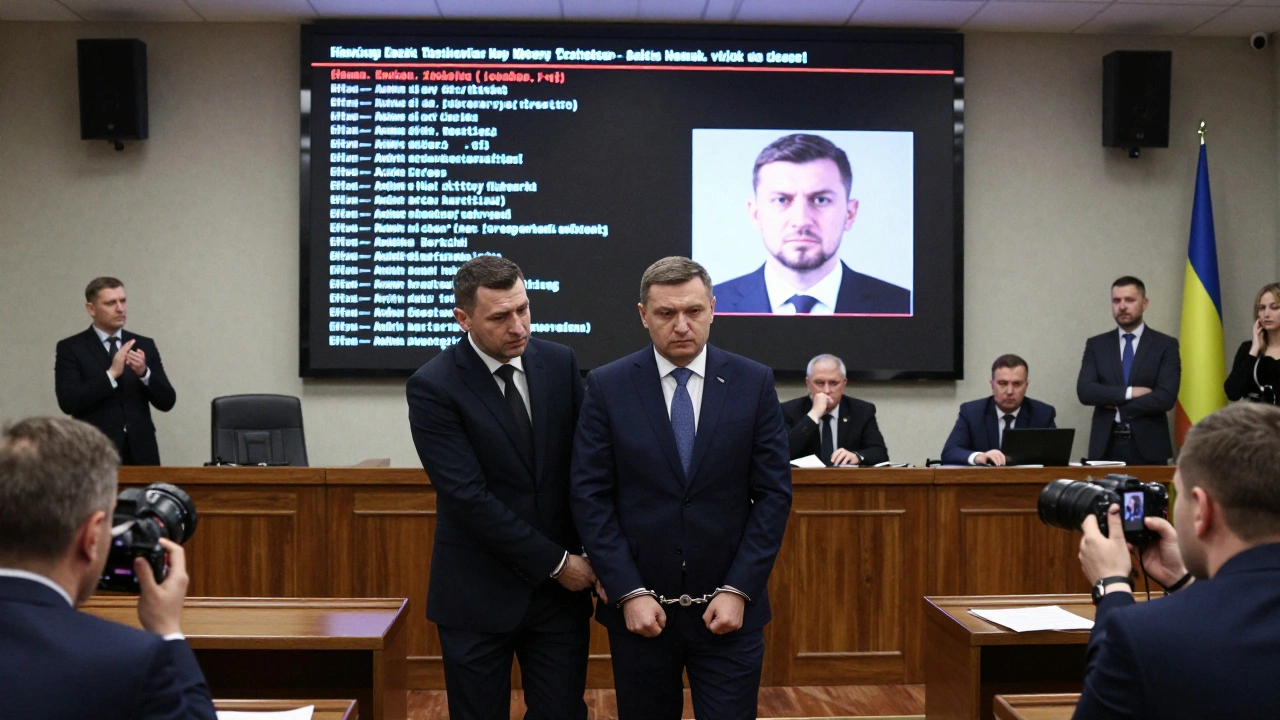
Why This Matters for Aid and Reconstruction
Ukraine will need over $500 billion to rebuild its cities, roads, hospitals, and power grids. The European Union, United States, and other allies have pledged hundreds of billions. But trust is the currency of aid. And trust is crumbling. Donors don’t just want to give money-they want to know it won’t vanish into private bank accounts. The Operation Midas scandal proved that even nuclear security projects, which require international oversight and cooperation, are vulnerable. The World Bank and European Bank for Reconstruction and Development are already tightening their conditions. They’re demanding independent audits, real-time tracking of funds, and direct oversight of contractors. These measures are necessary. But they also slow everything down. Projects that could be finished in six months now take two years. Every delay means more people living without heat, power, or clean water. And every dollar lost to corruption is a dollar that can’t be spent on housing for displaced families or repairing schools.The Dangerous Game of Weakening Anti-Corruption Tools
In July 2025, President Zelenskyy’s party pushed through a law that stripped NABU and other anti-corruption agencies of their independence. The move sparked the largest protests since the war began. Civil society, journalists, and international partners condemned it as a power grab. Within days, Zelenskyy reversed course and signed a new law restoring their autonomy. But the damage was done. Why would a president try to dismantle the very institutions that later exposed corruption within his own circle? The timing suggests a deeper problem: a belief that oversight is an obstacle, not a safeguard. That’s not just a policy mistake-it’s a threat to democracy. Post-war reconstruction won’t work if institutions are weak, if accountability is political, and if leaders see anti-corruption bodies as enemies rather than allies.